Landscape & Leisure is reader-supported. When you buy through links on our site, including Botanical Interests seed links, we may earn a commission at no extra cost to you. Prices change, so click through to confirm current pricing.
Every spring, Zone 4 gardeners ask the same question at the same moment: is it time yet? The seed packets say one thing, the weather says another, and the neighbor who planted too early is quietly replanting. Here is the calendar that settles it — built from the packets themselves, counted back from a Zone 4 last frost of about May 10.
Your own last frost may run a week or two either side of that date, so treat May 10 as the anchor and shift everything with it. The method matters more than the exact day: count back from your frost date, and the plants will tell you the rest.
| Crop | Start indoors | Move outside | Fall crop: start |
|---|---|---|---|
| Cabbage | 6–8 weeks before last frost (mid to late March) | 2–4 weeks before last frost (mid to late April) | 4–6 weeks before summer transplant |
| Broccoli | 4–6 weeks before transplanting (late March to mid-April) | After last frost (mid-May) | 12 weeks before first fall frost (early July) |
| Cauliflower | 4–6 weeks before transplanting (late March to mid-April) | After last frost (mid-May) | 12 weeks before first fall frost (early July) |
| Kohlrabi | 4–6 weeks before last frost (late March to mid-April) | Around last frost, or direct sow when soil reaches 45°F | 10–12 weeks before first fall frost (mid-July) |
| Collards | 4–6 weeks before last frost (late March to mid-April) | 2–4 weeks before last frost, or direct sow then | 14–16 weeks before first fall frost (early to mid-June) |
| Brussels sprouts | 4–6 weeks before transplanting (late March to mid-April) | About 4 months before first fall frost (late May to June) | This is the fall crop — start in spring |
Why cabbage goes out first
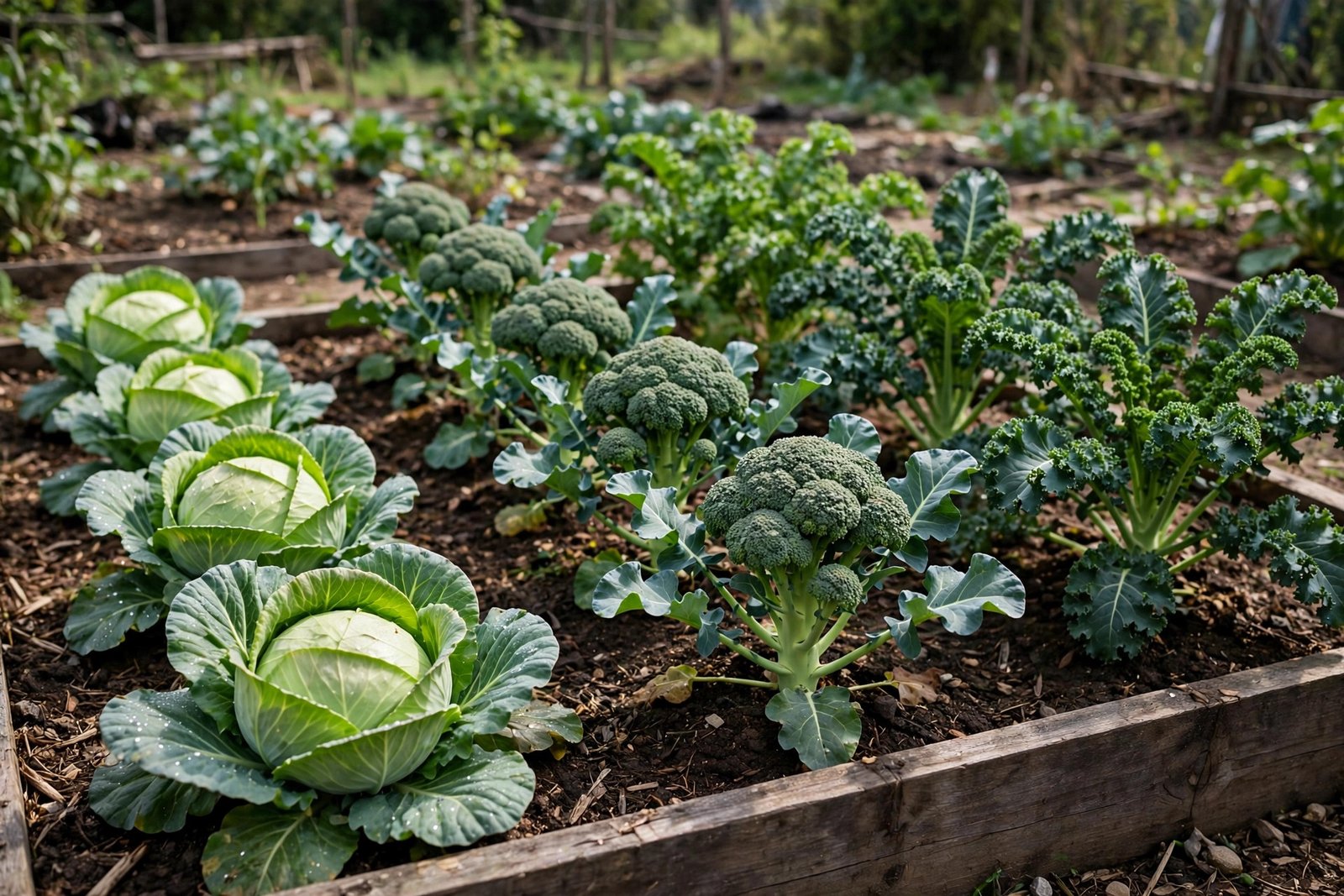
Cabbage is the exception in the family, and the one most gardeners get wrong by being too careful. Its packet says to transplant 2 to 4 weeks before your average last frost — in Zone 4, that means mid to late April. A light frost will not hurt it. What hurts cabbage is waiting until June, when the heat arrives before the heads do.
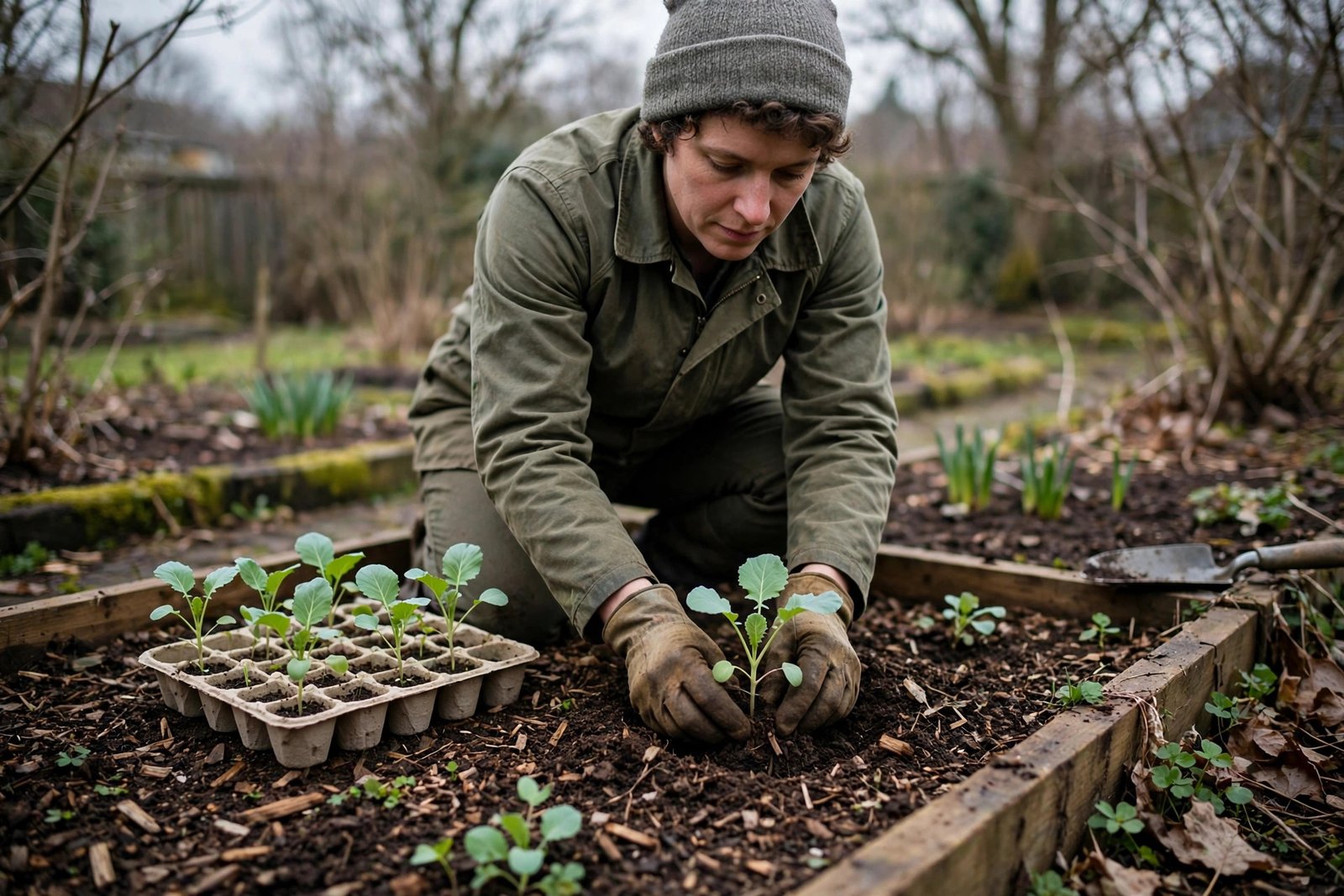
Start Copenhagen Market Cabbage indoors 6 to 8 weeks before last frost, which puts sowing in mid to late March for a May 10 frost date. Harden the seedlings off over a week — a few hours outside at first, building to a full day — and set them out 18″–24″ apart in rows 24″–36″ apart. Heads form best in cool weather, and a spring-planted cabbage that matures in 65 to 80 days beats the heat if it goes out on time.
Broccoli and cauliflower: after the frost, not before
Broccoli and cauliflower play by a different rule than cabbage. Their packets say to start indoors 4 to 6 weeks before transplanting outside after your average last frost. For a May 10 frost date, that means sowing indoors from late March to mid-April and moving plants out in mid-May.
That later start is a feature, not a delay. University of Minnesota Extension notes that spring-planted brassicas started indoors and held too long before transplanting are prone to buttoning — tiny premature heads that never size up. A plant that goes out on time, with a few true leaves and room to grow, matures faster than one that sat sulking in a too-small pot. Keep the soil around 70°–85°F for germination, then grow the seedlings on cooler, near 60°F.
For the varieties themselves, Waltham 29 Broccoli (75 days, cold-tolerant, with side shoots after the main head) and Snowball Y Cauliflower (70–80 days, self-blanching) are the short-season pair. Give both 24″ between plants and full sun.
Waltham 29 Broccoli Seeds
Cold-tolerant, 75 days, with side shoots after the main head — the most forgiving brassica for Zone 4.
The fast ones: kohlrabi and collards
Not every brassica needs the indoor treatment. Purple Vienna Kohlrabi can be direct-sown 4 to 6 weeks before last frost, once the soil reaches at least 45°F (65°–80°F is ideal), and it is ready in 50 to 69 days. Sow groups of 3 seeds every 4″ in rows 12″–18″ apart, thin to one plant every 4″ when they are 2″ tall, and pick the bulbs at 2″–3″ across.
Georgia Southern Collards is just as flexible: start indoors 4 to 6 weeks before last frost, or direct-sow 2 to 4 weeks before last frost when the soil is at least 55°F. It matures in 50 to 80 days, and because you pick the outer leaves as you need them, one planting feeds you for months. Space plants 18″–24″ apart.
The fall crop is the better crop
Here is the open secret of Zone 4 brassicas: the fall planting is often the better one. Fall-grown brassicas put on leafy growth in the warm summer, then form heads in the cool fall — conditions much closer to the Mediterranean climate they were bred for. Spring weather in Minnesota is variable, and a cold snap after a warm spell can trigger bolting or buttoning. Fall weather is steadier.
Count back from your first fall frost. For broccoli and cauliflower, start 12 weeks before that date — early July for a late-September frost. For kohlrabi, 10 to 12 weeks before, around mid-July. For Brussels sprouts, the whole game is fall: start indoors 4 to 6 weeks before transplanting, about 4 months before your average first fall frost, so the sprouts mature in cool weather and sweeten after a freeze.
That fall timing is also why Long Island Improved Brussels Sprouts (85–110 days, hardy to 10°F) belongs in a Zone 4 garden at all. Planted for fall, it is still standing and still sweetening when everything else has been pulled.
Long Island Improved Brussels Sprouts Seeds
Start it for fall and let the frost sweeten it — hardy to 10°F, picked bottom-up over weeks.
Seed-starting gear that earns its shelf space
Brassica seeds germinate best warm and grow best cool, which is hard to arrange on a windowsill in March. A heat mat under the trays holds germination soil at 70°–85°F, and sturdy cell trays keep the seedlings from getting root-bound while they wait for transplant day.
Seed Starting Heat Mat
Holds germination soil at the 70°–85°F brassicas want, so March sowings actually sprout on schedule.
Epic 6-Cell Seed Starting Trays
Sturdy cells that hold brassica seedlings until transplant day without the roots circling into a knot.
Three timing mistakes to avoid
First, holding seedlings too long indoors. If your broccoli has been in its cell for eight weeks, it is not getting stronger — it is getting stressed, and stressed brassicas button. Sow on the dates above, not a month early.
Second, planting everything on one day. Minnesota spring weather is unpredictable, and University of Minnesota Extension’s advice is to hedge: transplant a succession every couple of weeks. If one batch catches a cold snap that triggers bolting, the next one may not.
Third, skipping the hardening-off week. Seedlings raised at room temperature will sulk — or worse — if they go straight into a cold April night. A week of gradually longer outdoor days is the cheapest insurance in the garden.
Bottom line
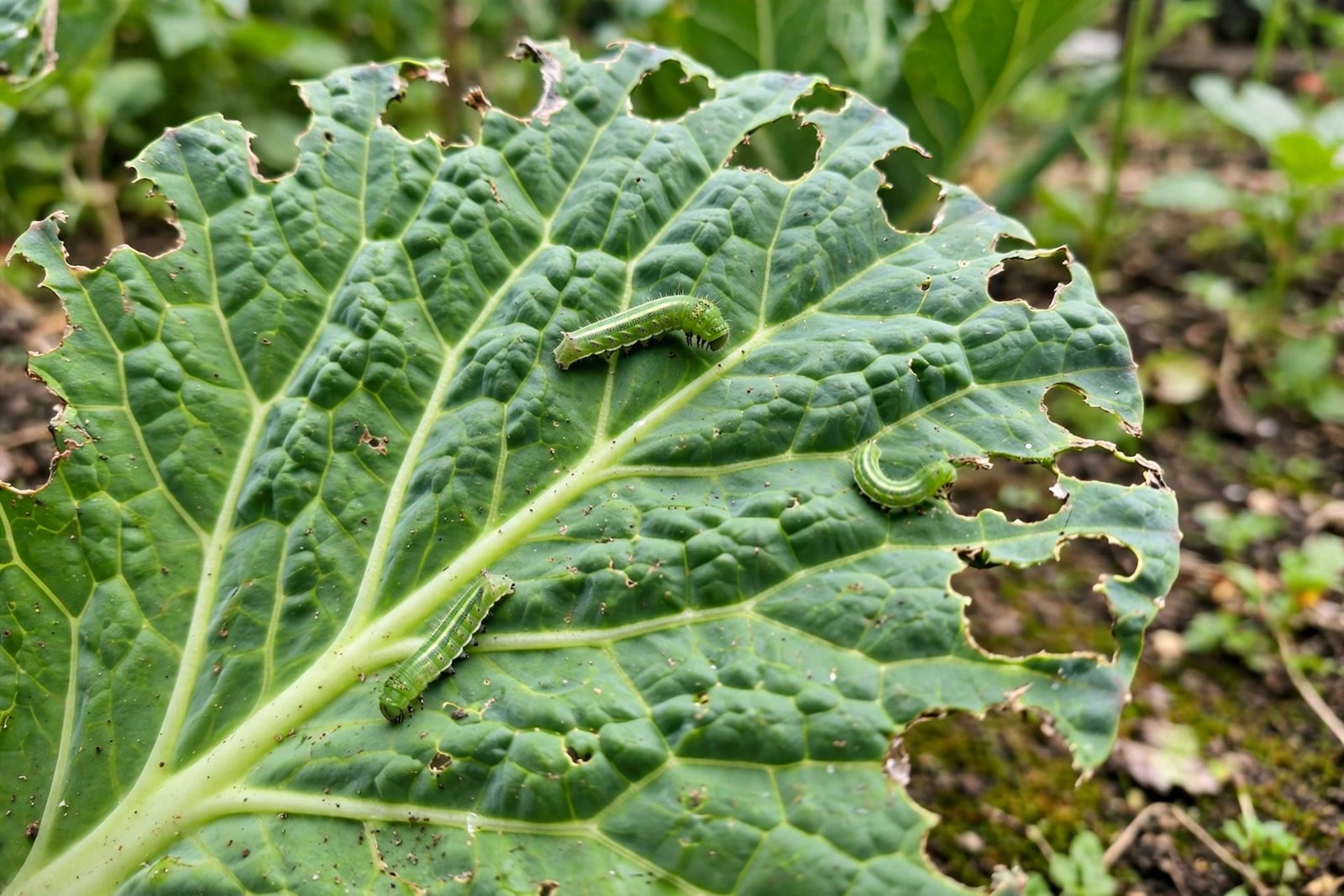
Cabbage goes out in mid to late April, broccoli and cauliflower after the May 10 frost, kohlrabi and collards whenever the soil is warm enough, and Brussels sprouts are a fall crop you start in spring. Work the count-backs from your own frost dates, and the calendar mostly takes care of itself. For the varieties behind these dates, see our best brassicas for short seasons, and when the caterpillars arrive, our cabbage worm diagnosis guide sorts out which one you are looking at.