Landscape & Leisure is reader-supported. When you buy through links on our site, including Botanical Interests seed links, we may earn a commission at no extra cost to you. Prices change, so click through to confirm current pricing.
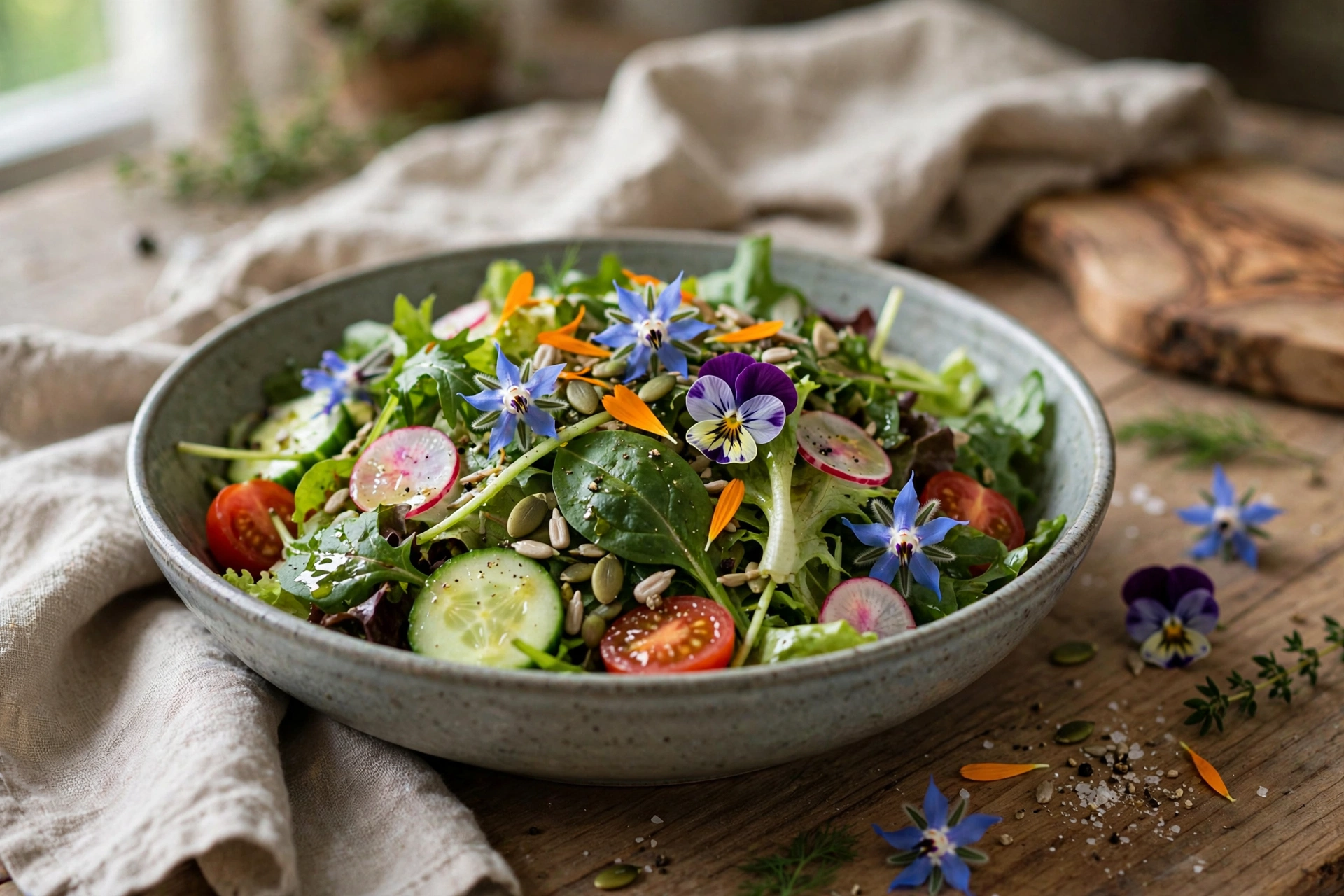
A salad with flowers on it is either dinner or a dare, and the difference is which flowers you picked. Grow the right ones and the plate looks like a restaurant garnish and tastes like something you meant to do. Grow the wrong ones and you are eating a centerpiece.
The seven varieties below are the ones worth growing from seed: peppery nasturtiums, golden calendula, cucumber-sweet borage, and a mix that covers the whole idea in one packet. For how to sow the two easiest of them, see our guide to growing nasturtiums and calendula from seed. For which parts to eat and which blooms to leave alone, see our edible-flower safety guide. If you want the flowers for tea instead of the plate, our best herbs for tea roundup picks up where this one leaves off.
Best Overall: Black Velvet Nasturtium
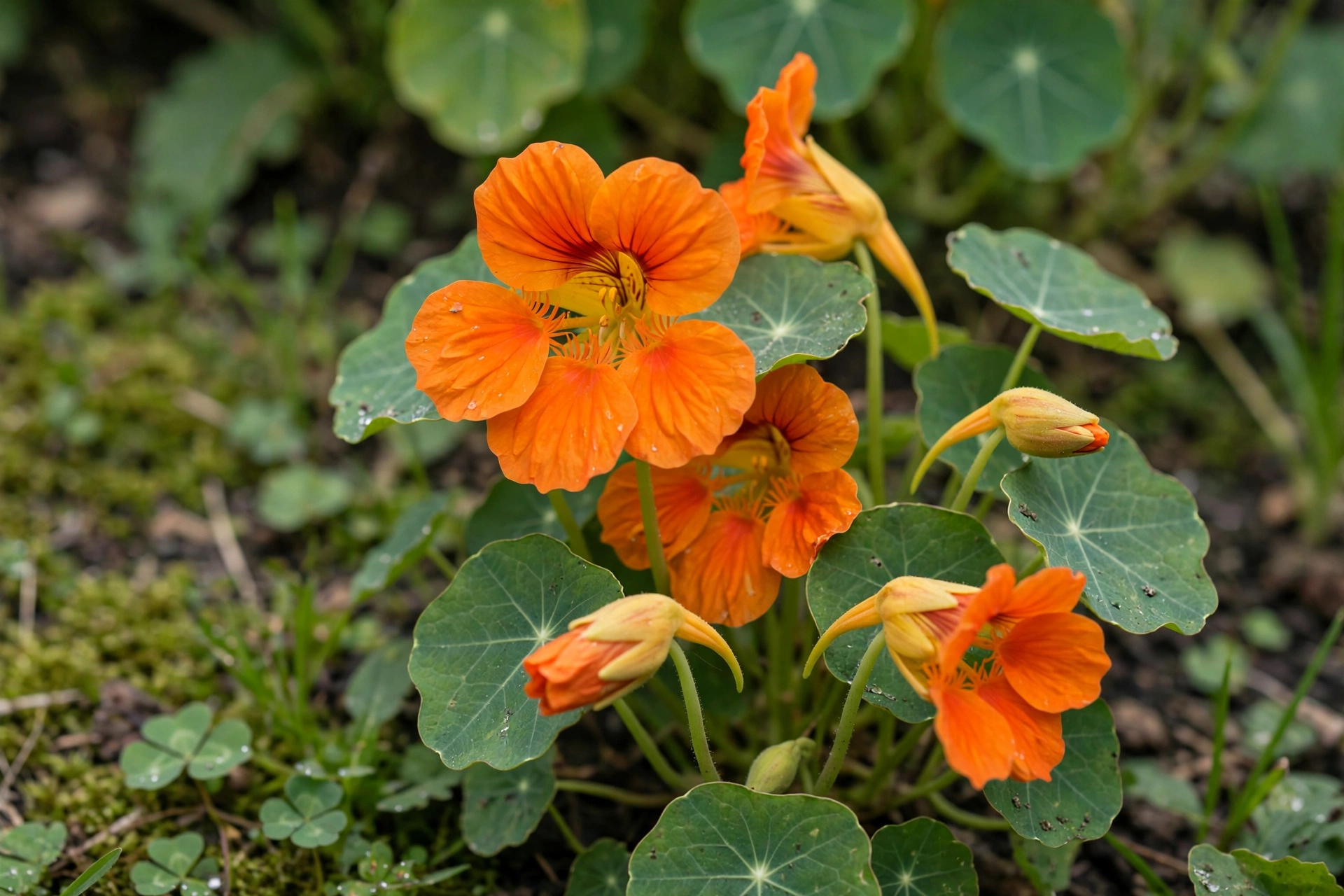
Black Velvet is the nasturtium that makes people ask what it is. The blooms are a deep ruby-black, two to two and a half inches across, on compact plants that stay under a foot tall — a dark flower that reads as deliberate, not accidental. It blooms from late spring to frost, and the flowers go straight onto salads and cheese plates, where the color does half the work.
The flavor is nasturtium’s familiar peppery bite, and the plant is as easy as the species gets: direct-sow a week or two after your last frost, a half inch to an inch deep, and it germinates in 7 to 14 days. Gardeners rate it 4.3 from 52 reviews, the largest review count of any nasturtium here.
Pros: striking ruby-black blooms; compact plants for edges and pots; blooms late spring to frost; the most-reviewed nasturtium in this roundup.
Cons: frost sensitive like all nasturtiums — one cold night ends it; dark flowers can be hard to spot for picking.
Black Velvet Nasturtium Seeds
Ruby-black blooms on compact plants — the edible flower that looks like you planned it.
Best Value: Single Blend Trailing Nasturtium
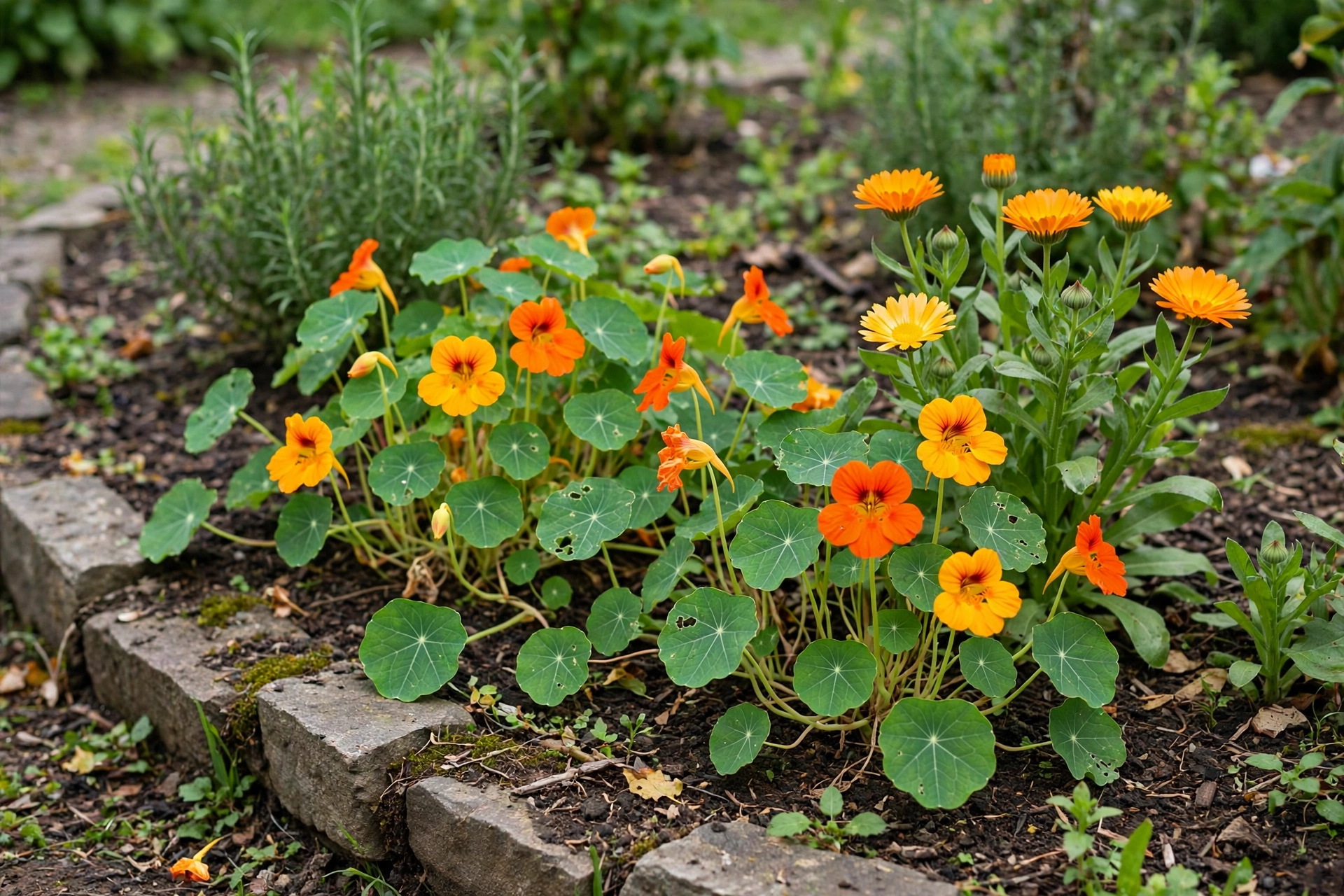
Single Blend is the nasturtium to buy when you want a lot of flowers for very little money. At $2.69 a packet it is one of the two cheapest picks in this roundup, and it earns its keep: scarlet, gold, orange, and yellow single flowers on long trailing stems you can train up a trellis or let spill over a wall. Gardeners rate it 4.5 from 36 reviews.
The blossoms and the leaves are both edible, with a peppery kick like watercress, so one plant seasons salads two ways. It is the trailing habit that sets it apart from Black Velvet above — plant Single Blend where it can climb or cascade, and Black Velvet where you want a tidy edge.
Pros: one of the lowest prices in the roundup; trailing stems for trellises and baskets; flowers and leaves both edible; strong 4.5 gardener rating.
Cons: needs something to climb or spill over; a mixed blend, so you cannot choose the color that lands where.
Single Blend Trailing Nasturtium Seeds
Peppery blossoms and leaves on trailing stems — the most flower per dollar here.
Best for Salads: Resina Calendula
Resina is the calendula to grow if you cook with your flowers. The bright yellow, daisy-like blooms are pretty enough on their own, but this variety was bred for resin-rich petals — the part herbalists prize — and the petals are edible in egg dishes, casseroles, baked goods, salads, and sandwiches. It is very frost tolerant, and may even be seen blooming in snow.
Gardeners rate it 4.8 from 25 reviews, one of the two highest ratings in this roundup. The flavor is mild and slightly bitter, so calendula earns its place more for color than for taste — scatter the petals like confetti and let the nasturtiums do the seasoning.
Pros: resin-rich petals for cooking and herbal use; very frost tolerant; one of the highest gardener ratings here; sows early and blooms for months.
Cons: flavor is mild and slightly bitter — color, not seasoning; a few gardeners report poor germination in a bad year.
Resina Calendula (Pot Marigold) Seeds
Golden petals that are as useful in the kitchen as they are in the bed — and tough enough to bloom in snow.
Best Flavor: Borage
Borage tastes like cucumber and looks like a starry blue sky, which is a combination no other flower in this roundup offers. The 2- to 3-foot plants carry blue, sometimes pink, flowers from spring to summer, and the flavor is clean and cool — a natural garnish for dips, salads, and summer drinks, or candied with sugar for later. Young leaves are edible too, steamed like spinach.
It shares the roundup’s highest rating, 4.8 from 76 reviews — the most reviews of any pick here, by a wide margin. It is also the tallest plant in the group, so give it the back of the bed and let it attract the bees while it is at it.
Pros: the best flavor here — cool and cucumber-like; the most-reviewed pick in the roundup; attracts bees and beneficial insects; leaves are edible too.
Cons: grows 2 to 3 feet tall — too big for the front row; old leaves get tough and hairy, so harvest young.
Borage Seeds
Blue star-shaped flowers that taste like cucumber — the tastiest bloom in the roundup.
Best Dark Bloom: Black Magic Bachelor’s Button
Black Magic is the dark horse of the cutting garden and the plate alike. The flowers are just a half inch to an inch wide, very dark maroon, on 12- to 24-inch plants — small blooms with an outsized presence. The edible petals make a striking garnish for salads, crudités platters, and dinner plates, and the same flowers dry well for arrangements.
It also looks after itself: bachelor’s button self-sows for another crop the following season, and birds love the seed heads. Gardeners rate it 4.7 from 25 reviews. One practical note — chill the seed in the refrigerator for 5 days before sowing for the best germination.
Pros: the darkest edible bloom here; petals garnish and dry well; self-sows for next year; strong 4.7 gardener rating.
Cons: small flowers — you need several plants for a garnish; needs a 5-day chill in the fridge before sowing.
Black Magic Bachelor’s Button Seeds
Deep maroon petals for the plate and the vase — and a plant that reseeds itself for next year.
Best Mix: Edible Beauties Flower Mix
Edible Beauties is the one-packet answer for a gardener who wants the whole idea at once. The mix holds eleven edible species — arugula, bachelor’s button, basil, borage, calendula, chives, fennel, Johnny-jump-up, nasturtium, radish, and signet marigold — in bright orange, blue, yellow, and pink. Scatter about 20 seeds per square foot, rake them in a quarter inch deep, and the bed fills itself in.
The honest trade-off is the rating: 3.8 from 27 reviews, the lowest of any pick here, which is the usual story with a mix — some species in it will thrill you and some will not, and you do not choose which lands where. For a first try at edible flowers, though, one packet that covers eleven flavors beats eleven packets you have to choose between.
Pros: eleven edible species in one packet; dead simple to sow — scatter and rake in; flavors from peppery to clove-like to light onion.
Cons: the lowest gardener rating in this roundup; you cannot control which species grows where.
Edible Beauties Flower Mix Seeds
Eleven edible flowers in one packet — the fastest way to find out which flavors you actually like.
Best for Tea: German Chamomile
German Chamomile is the flower you grow for the cup, not the plate. The small white-and-yellow blooms dry into the classic calming tea, and the plant is a tireless self-seeder once it is established — sow it once and it finds its own corners of the garden. Gardeners rate it 4.5 from 60 reviews.
It earns its place in an edible-flower roundup because the flowers are the crop: pick them in the morning, just before they fully open, dry them, and steep. Our best herbs for tea roundup covers chamomile in more depth, including how it compares with the other tea herbs. One caution worth knowing before you plant a lot of it: if you are allergic to ragweed, you may be allergic to chamomile too.
Pros: the classic tea flower, grown from seed for pennies; self-seeds freely; strong 4.5 gardener rating from 60 reviews.
Cons: a tea flower, not a salad flower — the use is narrower than the rest of this roundup; ragweed allergy caution applies.
German Chamomile Seeds
The tea flower — small blooms that dry into the classic cup, from a plant that reseeds itself.
The One to Skip: Butterscotch Nasturtium
Butterscotch Nasturtium sounds lovely — warm butterscotch colors on short plants made for containers — and a few gardeners love it. But it carries the lowest gardener rating of any nasturtium in the collection, 2.5 from 20 reviews, with repeated complaints that the seed simply did not germinate, and it is the priciest nasturtium here at $3.49 to $6.49. The two nasturtiums above cost less, rate higher, and actually come up. Buy one of those instead.
Side-by-Side Comparison
| Variety | Flavor | Height | Best for | Rating |
|---|---|---|---|---|
| Black Velvet Nasturtium | Peppery | Under 12 in | Salads, cheese plates | 4.3 (52) |
| Single Blend Nasturtium | Peppery, like watercress | Trailing | Trellises, baskets, salads | 4.5 (36) |
| Resina Calendula | Mild, slightly bitter | Up to 24 in | Cooking, color, herbal use | 4.8 (25) |
| Borage | Cucumber-like | 2–3 ft | Drinks, garnishes, bees | 4.8 (76) |
| Black Magic Bachelor’s Button | Mild, clove-like | 12–24 in | Garnishes, drying, self-sowing | 4.7 (25) |
| Edible Beauties Mix | Mixed, 11 species | Over 24 in | Trying everything at once | 3.8 (27) |
| German Chamomile | Apple-scented, for tea | Over 24 in | Tea, self-seeding | 4.5 (60) |
Final Thoughts
Plant Black Velvet first. It is the edible flower most likely to make dinner feel like an occasion, and the one your guests will ask about. Then add borage for flavor and calendula for color, and read our nasturtium and calendula growing guide before you sow — the one mistake that ruins an edible-flower season is planting them like ornamentals and forgetting you are growing food.