Landscape & Leisure is reader-supported. When you buy through links on our site, including Botanical Interests seed links, we may earn a commission at no extra cost to you. Prices change, so click through to confirm current pricing.
Most people buy the sunflower with the prettiest packet photo, then spend the summer with the wrong plant: one giant bloom when they wanted a vase full, or a branching bush when they wanted seeds to roast. That is the decision that actually matters, and it gets made at the seed rack, not in August when the plant shows you what it is.
Three jobs, three different plants. Our best sunflower varieties roundup covers all seven varieties in detail, and our spacing, staking, and harvest guide covers how to grow whichever you choose.
The Three Jobs
| Job | What to plant | What you get | Watch out for |
|---|---|---|---|
| Cutting | Branching types, pollenless where possible | Stems for weeks, all summer | Color varies in mixed-color varieties |
| Snacking | Single-stem giants with big striped seeds | One huge head per plant, full of seed | One bloom only; needs staking and room |
| Oil | Small black-seeded oilseed types | Seed for pressing | No dedicated oilseed variety in this catalog |
Cutting: Branching Plants, Long Stems, No Pollen on the Table
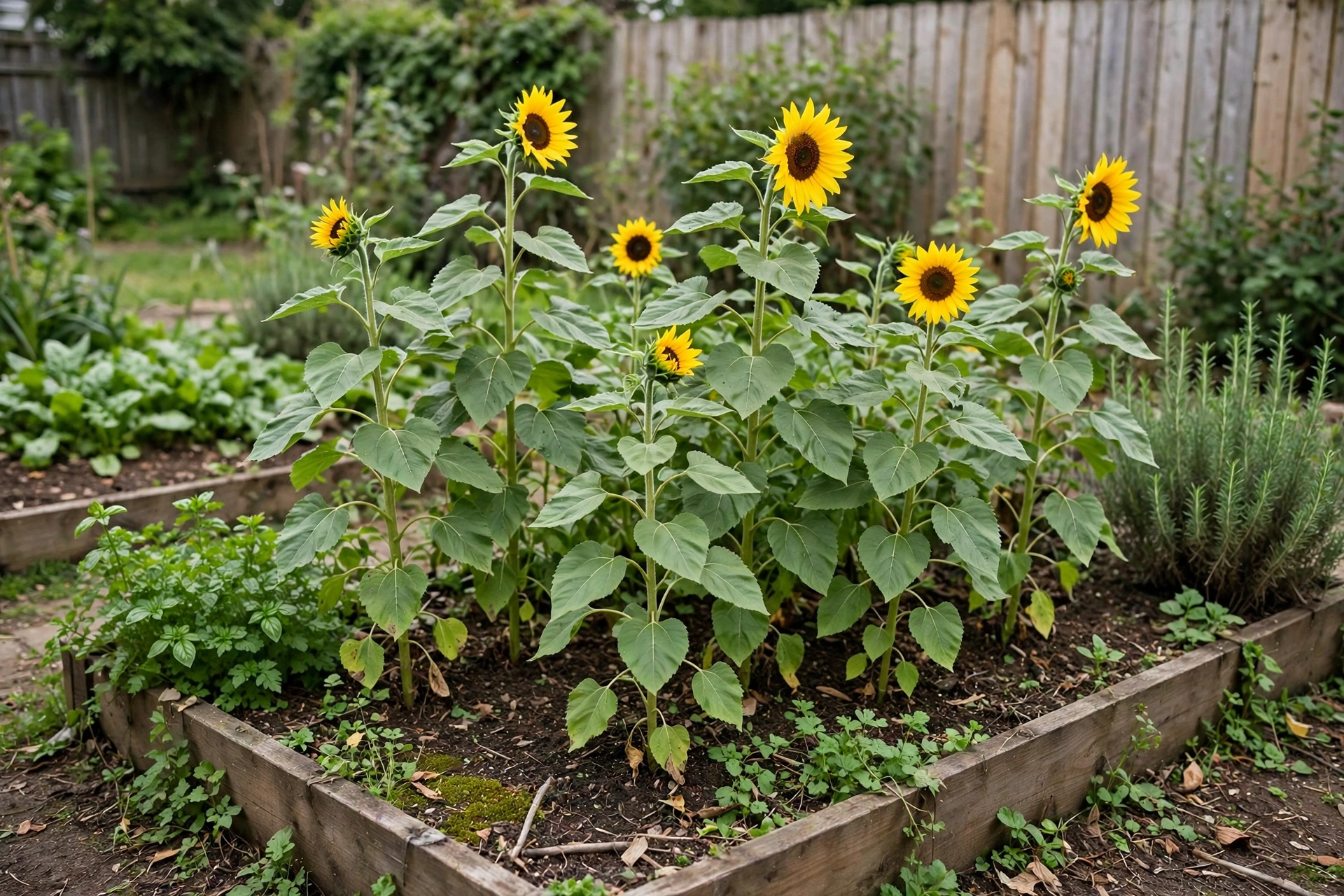
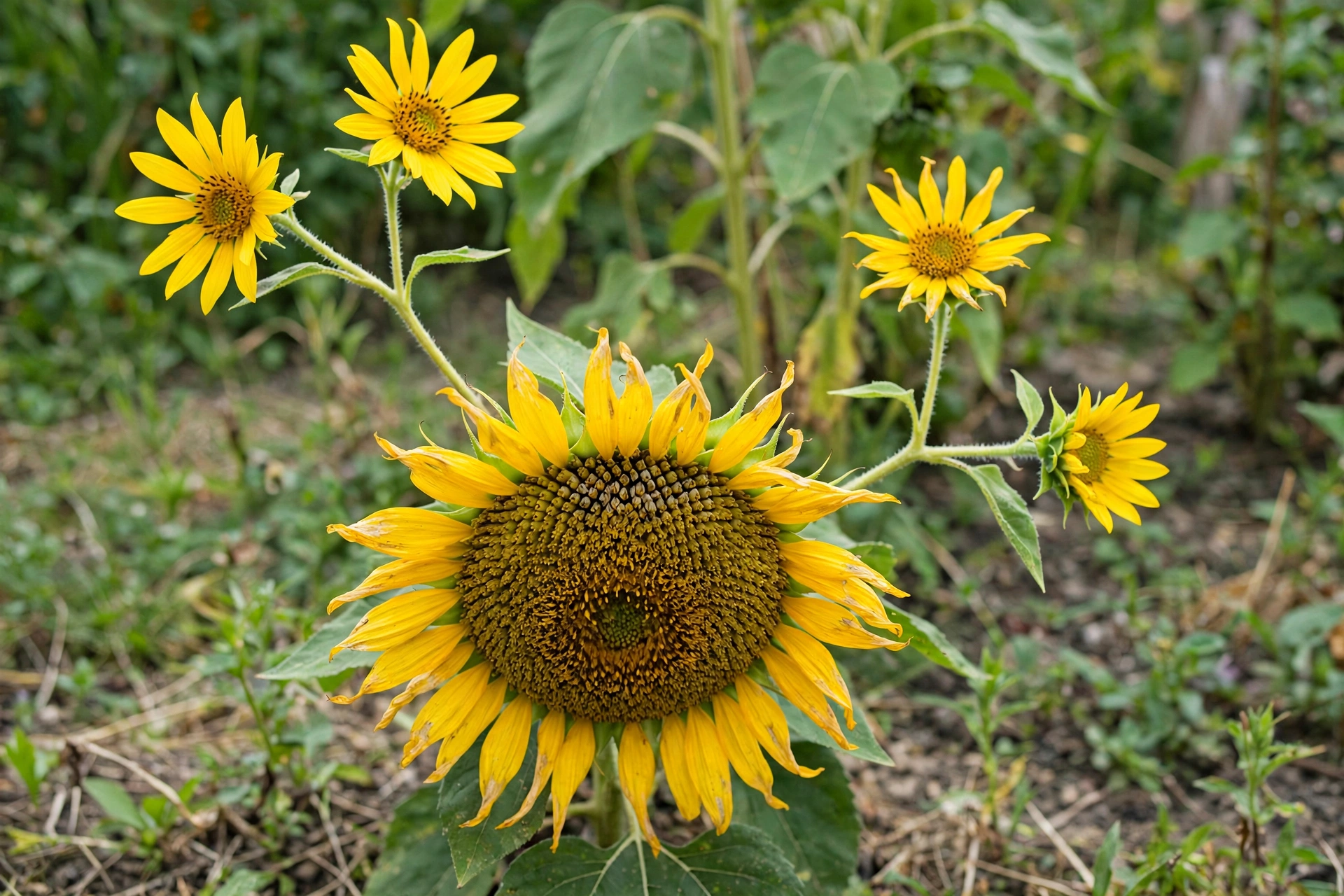
Cutting is a numbers game. One plant that throws a dozen stems beats one plant with one perfect bloom, and that means branching types. Evening Sun is the workhorse: 4- to 6-inch blooms in sunset shades, several tones on a single plant, blooming in abundance over a long period. Cut in the early morning, when the petals have just begun to lift from the center, and a stem lasts a week or more in the vase.
Rouge Royale is the cutting type to buy when color matters more than volume. It is a true red sunflower on multi-branching plants, and it does not drop its pollen, so arrangements stay clean and the table stays clean. Plant it a little closer together and you get longer stems and smaller flowers — the exact shape a bouquet wants. Cut before the flower is completely open for the longest vase life. Gardeners rate it 4.7 from 29 reviews.
The mistake here is buying a giant for the vase. A single-stem plant gives you one stem and then it is done. Save the giants for the seed job below.
Pros: branching plants cut for weeks; pollenless types keep arrangements clean; closer spacing gives longer stems.
Cons: mixed-color varieties vary — some Evening Sun plants bloom plain yellow; cutting types need regular cutting to keep producing.
Evening Sun Sunflower Seeds
Branching plants loaded with sunset-colored blooms — the cutting garden’s reliable producer.
Rouge Royale Sunflower Seeds
A true red sunflower that drops no pollen — clean stems, clean table, long vase life.
Snacking: The Giants Earn Their Keep
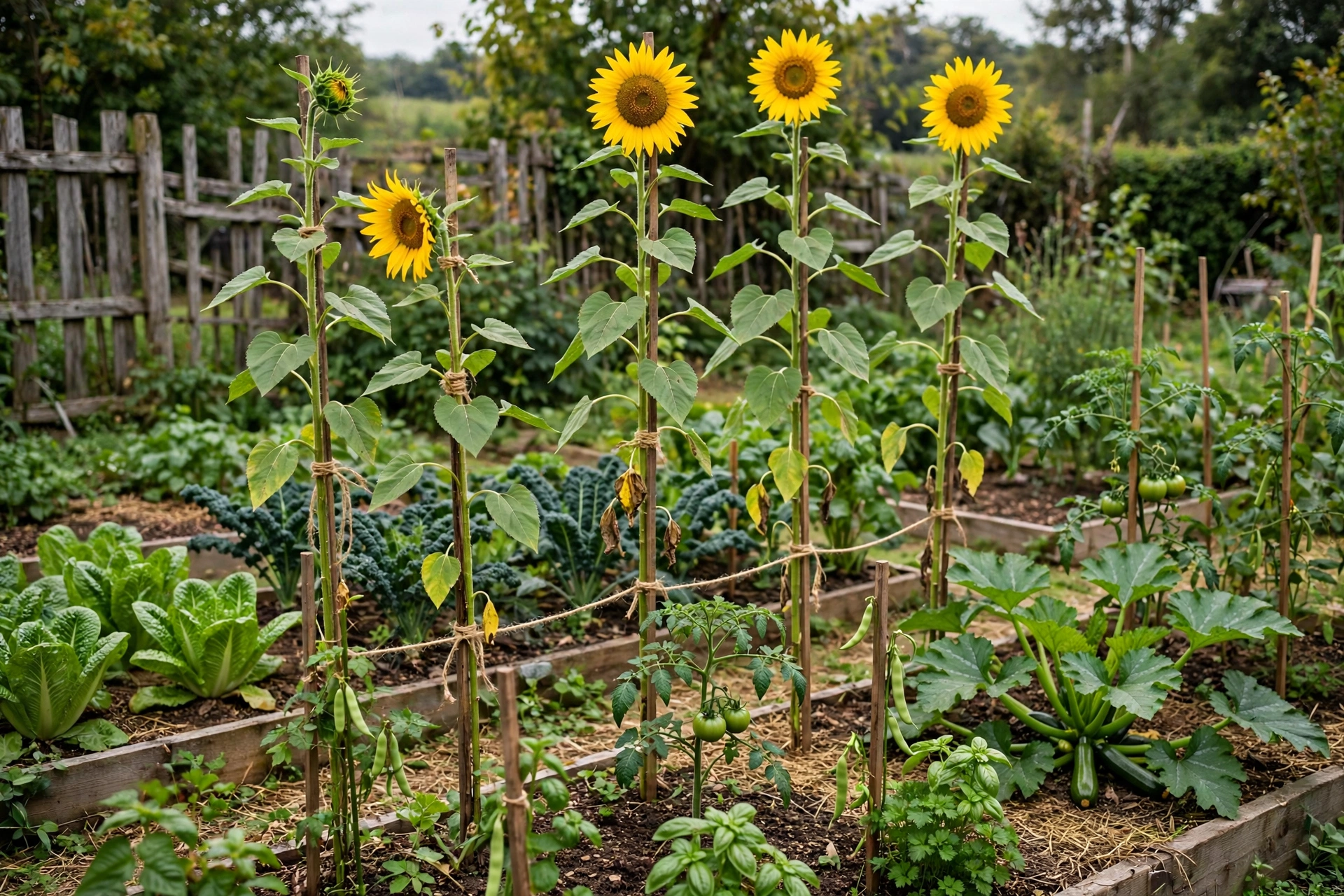
Snacking wants the opposite plant. Big striped seeds come from big heads, and big heads come from single-stem giants given full room. Mammoth grows a 12-foot stalk with one flower 10 to 12 inches across, and gardeners rate it a perfect 5.0 from 23 reviews. Mongolian Giant goes further: one flower up to 18 inches across, packed with extra-large seeds. Oregon State Extension names both among the varieties that make large seeds great for snacking.
The cost is patience and space. One bloom per plant, one shot at the season, and a head that heavy needs staking and 24 to 36 inches of room. Harvest when the back of the head turns yellow-brown and the head starts to droop, then cut it with a foot of stem and hang it to dry. Leave the heads you do not bag for the birds — they consider a Mammoth head a full-service restaurant, and they are not wrong.
Pros: the biggest seeds and the biggest harvest per plant; proven snacking varieties, named by Extension; drought tolerant.
Cons: one bloom per plant; needs staking, shelter, and wide spacing; birds will take unbagged heads first.
Mammoth Sunflower Seeds
The classic giant — a 12-foot stalk, a dinner-plate bloom, and the highest gardener rating in the collection.
Mongolian Giant Sunflower Seeds
An 18-inch bloom and extra-large seeds — the giant to plant when snacking is the whole point.
Oil: The Honest Answer
Here is the part most seed roundups skip. Oil sunflowers are a different type of plant from the ones above: small black seeds, grown in quantity and pressed for oil, not the big striped seeds you eat by the handful. This catalog does not carry a dedicated oilseed variety. Every sunflower in the collection is bred for flowers, for snacking seed, or for the birds.
That does not make the giants useless for oil — all sunflower seeds contain oil — but growing a handful of Mammoth heads to press at home is a poor return on a season of work. If pressing oil is the goal, buy oil. If the goal is a garden that feeds the house and the birds, the giants above are the right plants, and the honest name for their third job is birdseed, not oil.
The Verdict
Plant one of each. A branching cutting type — Evening Sun for volume, Rouge Royale for clean red stems — plus one giant for seed, Mammoth if you want the proven classic, Mongolian Giant if you want the biggest head in the neighborhood. That pair covers the two jobs a home garden can actually do well. Skip the oil idea from this catalog: the striped giants are snacking and birdseed plants, and pretending otherwise wastes a season.