Landscape & Leisure is reader-supported. When you buy through links on our site, including Botanical Interests seed links, we may earn a commission at no extra cost to you. Prices change, so click through to confirm current pricing.
By late spring the garden is finally ahead of the kitchen. The soil has warmed, the last frost is behind you, and the two easiest edible flowers in the seed catalog are ready to go straight into the ground.
Nasturtiums and calendula are the pair to start with because they ask for almost nothing and forgive almost everything — no lights, no trays, no hardening off, just seed in soil at the right week. For the full lineup of edible varieties, see our best edible flowers roundup. For which parts are safe to eat, see our edible-flower safety guide.
Two Flowers, Two Temperaments
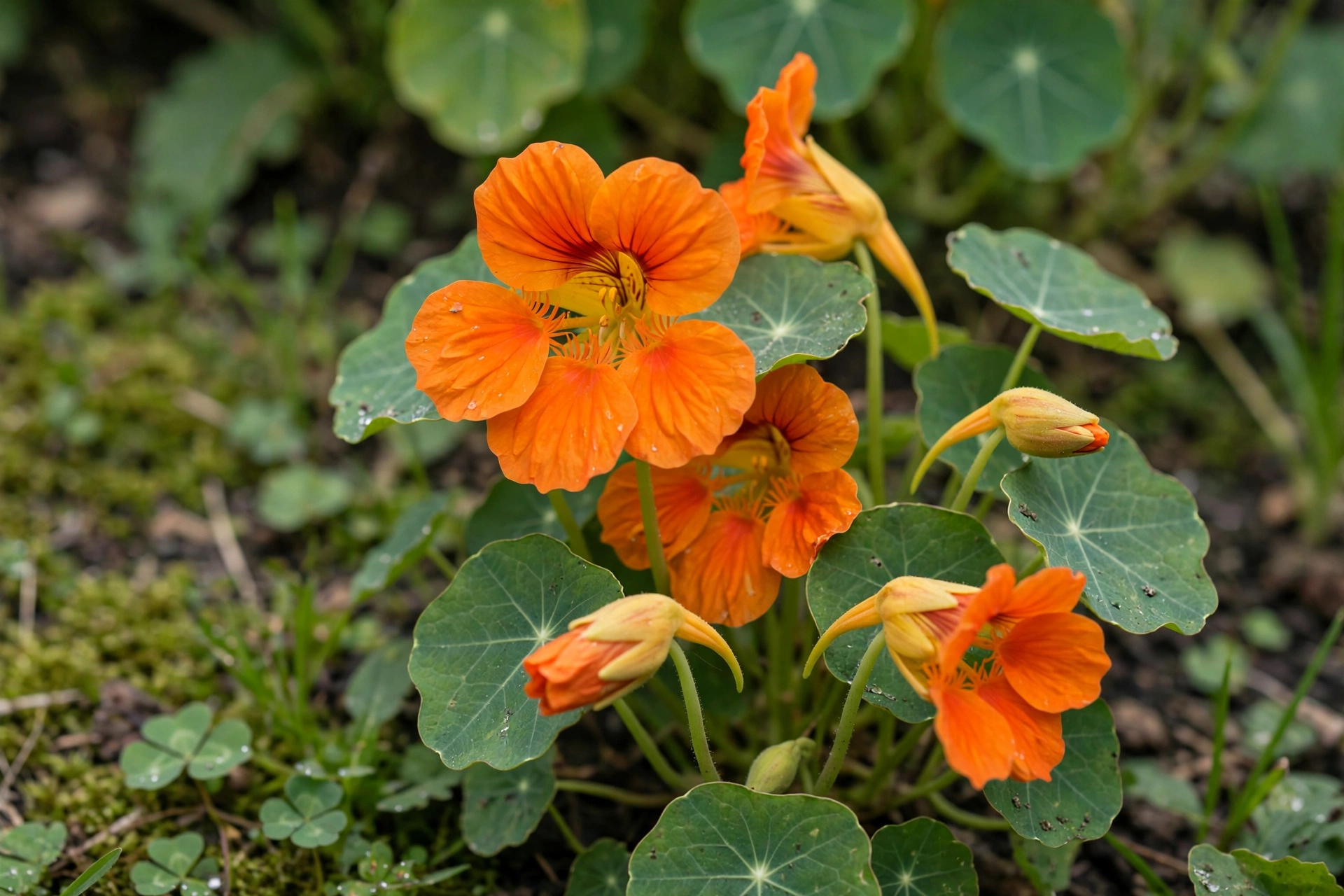
The one thing to get straight before you sow is that these two flowers want opposite weather. Nasturtium is a warmth lover: it waits for the soil to reach 55 to 65 degrees and sulks through a cold spring. Calendula is a cool-season flower: it prefers to start while the soil is still cool, and it keeps blooming through light frosts that would finish a nasturtium.
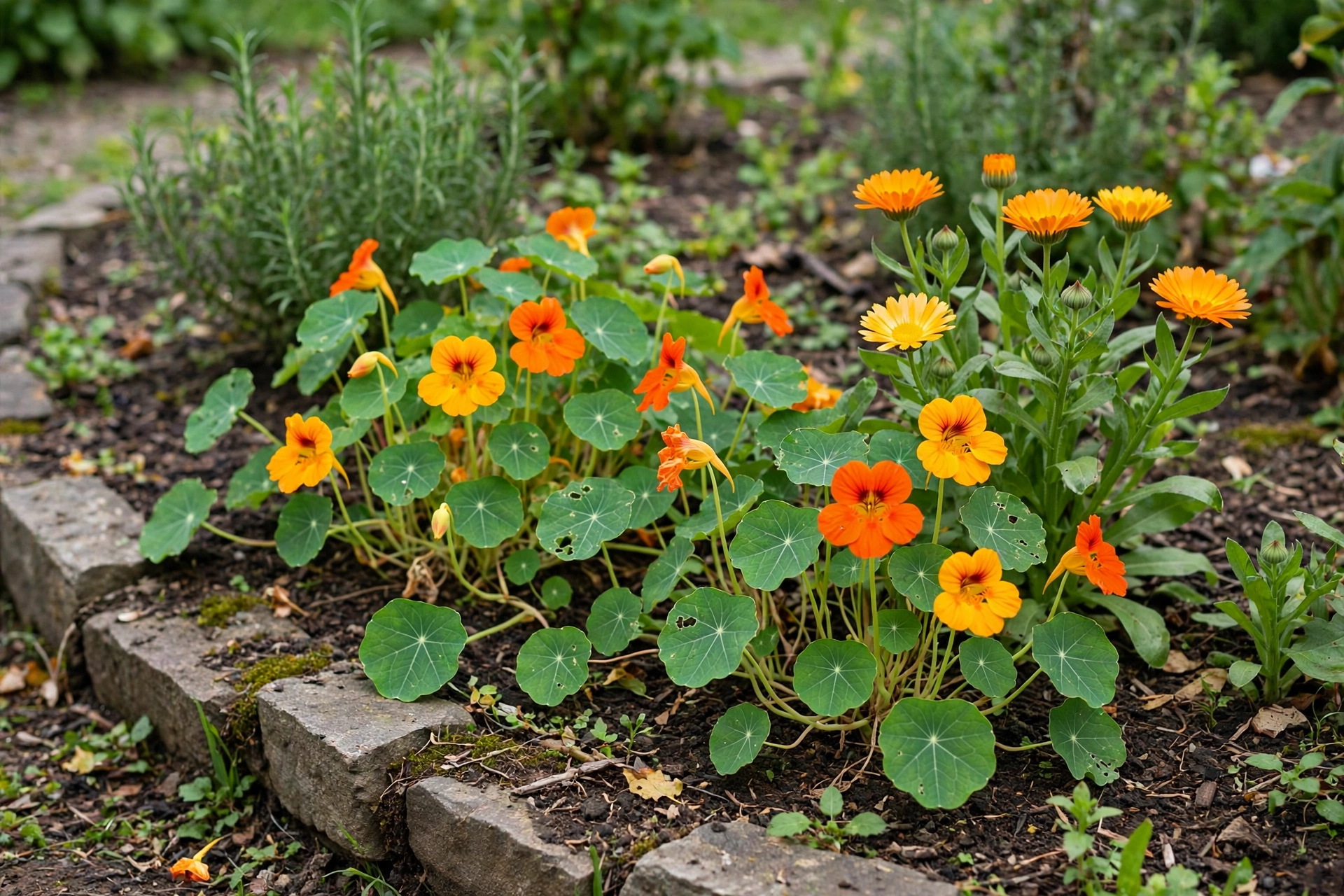
That split is the whole plan. Calendula goes in first, a week or two before your last frost. Nasturtium goes in second, a week or two after it. The photo below shows the pair side by side — nasturtium’s round leaves and trumpet blooms on the left, calendula’s daisy-like yellow flowers on the right — and once you have seen them together, you will not mix them up again.

Sowing Nasturtiums
Direct-sow nasturtiums one to two weeks after your average last frost date, when the soil has warmed to 55 to 65 degrees. Sow the seed a half inch to an inch deep, in groups of three every 8 to 12 inches, and expect sprouts in 7 to 14 days. When the seedlings are 2 inches tall, thin to one plant every 8 to 12 inches.
Do not start nasturtiums indoors if you can help it. Their roots resent transplanting, and the seed packet says so plainly — if you must start early, use biodegradable pots that go straight into the ground. And here is the counterintuitive part: nasturtiums bloom best in lean soil. Rich, freshly amended soil grows a mountain of flawless leaves and very few flowers. Plant them in the bed you have not been feeding, and they will reward you with blooms.
Pick the trailing type when you want the plant to climb or spill, and the compact type when you want a tidy edge or a pot. Both are in the cards below.
Single Blend Trailing Nasturtium Seeds
Scarlet, gold, orange, and yellow blooms on long stems that climb a trellis or spill over a wall.
Black Velvet Nasturtium Seeds
Ruby-black blooms on compact plants under a foot tall — the nasturtium for a border or a container.
Sowing Calendula
Calendula goes in earlier, and it is the more forgiving of the two. Direct-sow a quarter inch deep, one to two weeks before your last frost — the seed does not need light to germinate and does slightly better with that light soil covering. Seedlings usually appear in 7 to 15 days at soil temperatures around 60 to 70 degrees. Once they have their first true leaves, thin them to 8 to 16 inches apart so air can move between the plants.
If you want an earlier start, sow indoors 6 to 8 weeks before your last frost at the same quarter-inch depth, then harden the seedlings off for a week or two before setting them out. Either way, the habit that matters most is succession: sow a fresh short row every 2 to 3 weeks through late spring and into early summer, and young plants keep coming into bloom just as the earlier ones slow down.
Calendula reaches bloom in about 45 to 60 days from seed. Full sun gives the strongest bloom, though a little afternoon shade in a hot climate can stretch the season. Keep the soil evenly moist while the seed germinates — never soggy — and the plants will do the rest.
Resina Calendula (Pot Marigold) Seeds
Resin-rich golden petals for the kitchen, on a plant that shrugs off light frost.
Keeping Them Blooming
Both flowers pay you back for picking. Snip nasturtium blooms for the salad bowl and the plant throws more; leave the flowers and the plant sets seed and slows down. Deadhead calendula every few days — pinch or snip off each faded bloom just above a leaf node — and one planting will flower for months, right up to a hard frost.
Harvest in the morning, when the blooms are fresh and the flavor is at its best, and use them the same day. Shake each flower gently to check for insects rather than washing it — water collapses the petals. And a last timing note: calendula self-seeds readily if you let a few flowers go to seed, so leave one plant unpicked at the end of the season and you may find volunteers next spring.
Sowing at a Glance
| Task | Nasturtium | Calendula |
|---|---|---|
| Direct sow | 1–2 weeks after last frost | 1–2 weeks before last frost |
| Depth | ½–1 in | ¼ in |
| Spacing | Group of 3 every 8–12 in | Thin to 8–16 in apart |
| Germination | 7–14 days | 7–15 days |
| Start indoors | Not recommended | 6–8 weeks before last frost |
| First blooms | Late spring to frost | 45–60 days from seed |
What to Watch Next
If the nasturtiums come up all leaves and no flowers, the soil is too rich — that is the plant telling you it is too comfortable to bother blooming. If the calendula stalls, check the depth first: seed sown deeper than a quarter inch struggles to push through, and seed left on the surface dries out. Get those two things right and the pair will carry your salads from early summer to frost. Our beginner’s seed-starting guide covers the indoor-starting basics if you want calendula going even earlier, and our best cut flowers roundup is the next step once you have the edible pair down.