This post contains affiliate links. We may earn a commission if you make a purchase after clicking one — at no extra cost to you.
The thigh sticks because the pan was not ready for it — or because the thigh was wet, or because somebody peeked. Chicken thighs are the most forgiving cut in the kitchen, and they still punish exactly three mistakes: a wet surface, a cold pan, and a cook who cannot leave them alone.
Get those three right and the skin does the work for you. It crisps, it browns, and then it lets go of the pan all by itself, which is the whole secret: a proper sear releases. If you have to pry it off, it was not ready yet.
Start dry — the step that matters most
Pat each thigh dry with paper towels, both sides, until the skin feels dry to the touch. Any moisture on the surface steams instead of searing, and steamed skin sticks and turns rubbery. This is the single most important part of the whole process, and it takes thirty seconds.
Let the thighs sit out for ten to fifteen minutes while you do it, so the chill comes off. Cold meat in a hot pan sears unevenly and tightens up — room temperature is not a fussy-chef rule, it is the difference between an even crust and a patchy one. Season both sides with salt and pepper while they wait.
Heat the pan first, then the oil
Set a heavy skillet — cast iron or stainless steel — over medium-high heat and let it heat for a solid three to five minutes. A heavy pan holds its heat when the chicken lands; a thin pan drops temperature the moment the meat touches it, and that temperature drop is what makes food stick.
Flick a drop of water in to test it: it should sizzle and vanish almost instantly. Then add a tablespoon or two of oil with a high smoke point — vegetable, canola, or avocado — and let it shimmer. The oil is there so the skin sears evenly, not so the chicken floats. Do not put the chicken in before the oil shimmers.
Nonstick looks like the obvious answer here, and it is the wrong one. A nonstick coating keeps the skin from browning deeply, and it gives you no fond — the browned bits that become a pan sauce. Cast iron or stainless steel browns harder and releases just as cleanly once the crust forms.
Lay them down and walk away
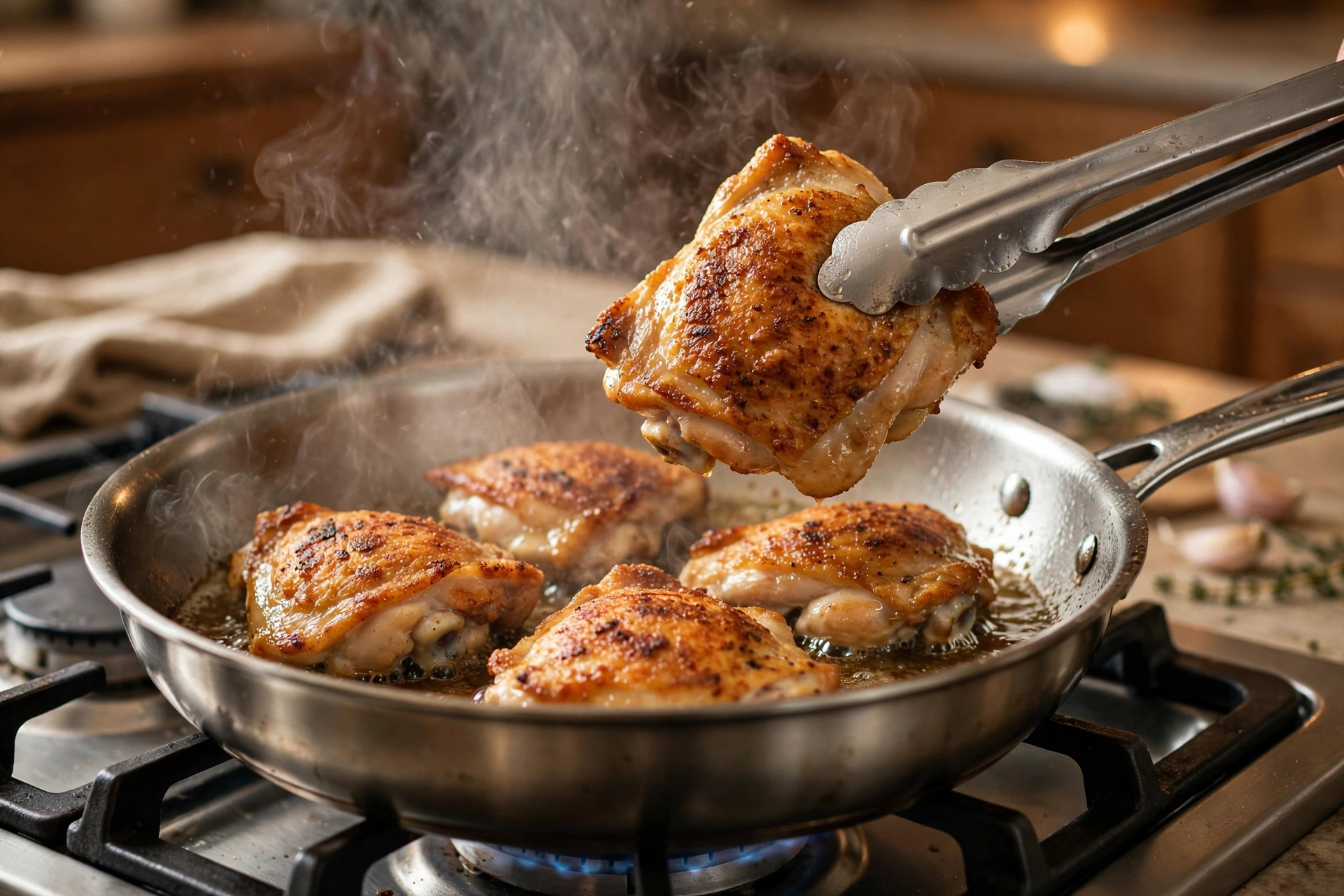
Place the thighs skin-side down, away from you so nothing splatters toward your hand, and leave space between them. Crowding drops the pan temperature and steams the batch — cook in two rounds if the pan is full.
Then do nothing. Do not move them, do not press them, do not lift a corner to check. Five to seven minutes, undisturbed, while the skin renders its fat and a golden-brown crust forms. The skin sticks at first — raw meat always does — and then, as the crust sets, it releases. When you can lift a corner with tongs and it comes away easily, it is time to flip. If it still holds, give it another minute or two. The pan is telling you it is not done yet.
Flip once and cook the second side for four to six minutes. A thermometer in the thickest part should read 165°F — the USDA safe minimum for chicken — and the dark meat is at its best a little past that, around 175°F, where the collagen has had time to soften. Pull the thighs at 165°F and let them rest for five minutes; the temperature climbs a few degrees on its own while the juices settle.
What to do with the pan after
Do not wash away the browned bits. That fond is the start of a pan sauce: a splash of stock or wine into the hot pan, scraped loose with a wooden spoon, and you have something to spoon over the thighs. Deglazing while the pan is hot also makes cleanup easier — and never pour cold water into a screaming-hot cast iron pan.
WORTH ADDING
Lodge 12-Inch Cast Iron Skillet
Holds its heat through the whole sear, so the skin crisps instead of steaming — and it goes from stovetop to oven without a second thought.
Use it with
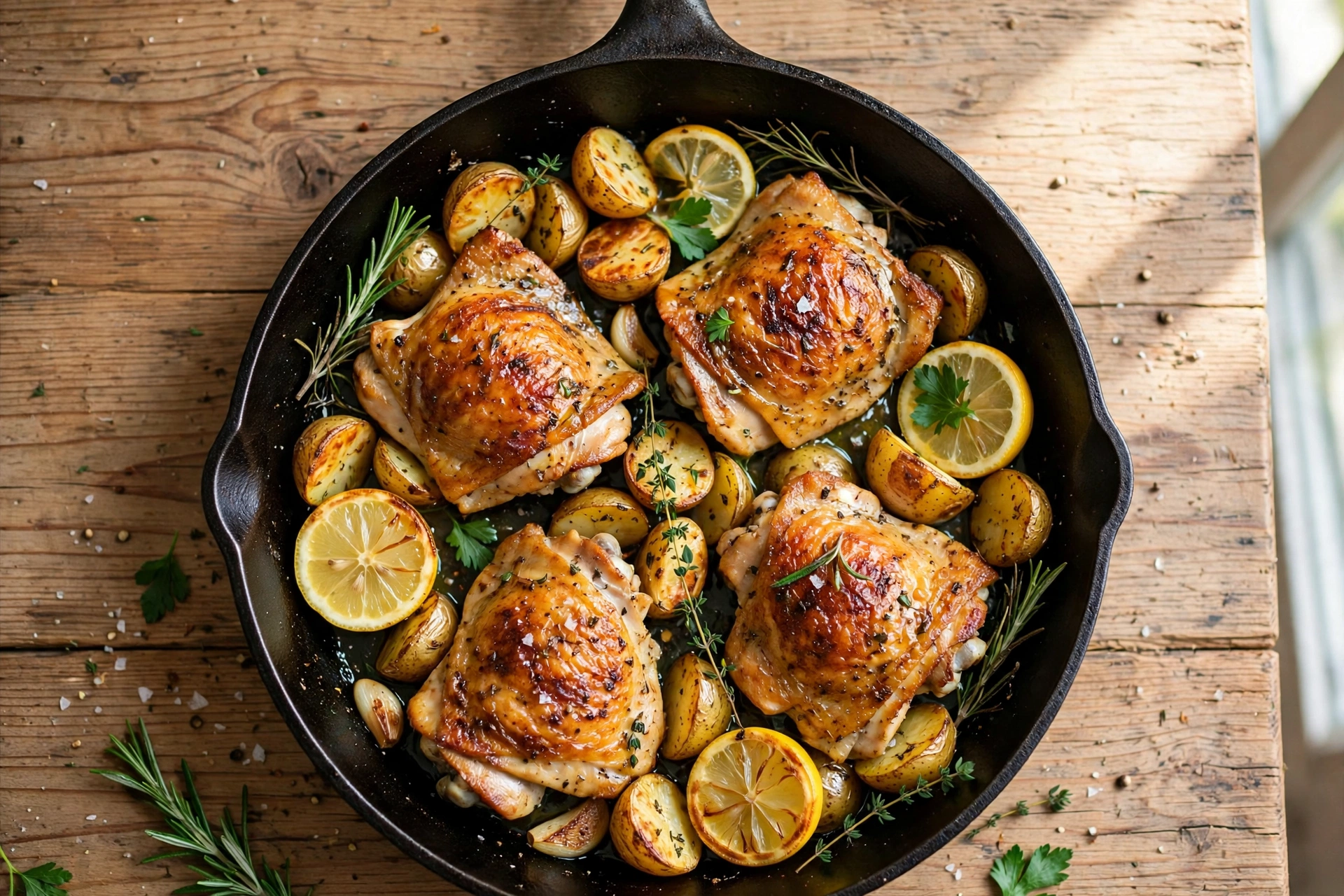
Put the technique to work tonight in the one-pan lemon herb chicken and potatoes — the same dry-skin, hot-pan rules, with the oven doing the second half of the job. And if you want the same sear on the grill instead, the grilled pork chops with apples and sage reward the same patience: hot surface, no peeking, flip once.