This site contains product affiliate links. We may receive a commission if you make a purchase after clicking on one of these links.
Your crisp came out of the oven golden and crackling, then went soft by dessert. The topping that was supposed to shatter under the spoon turned damp and flat while nobody was looking. It happens to nearly every crisp, and it has a fix — five of them, actually, and they all come down to keeping moisture away from the topping until the moment it is served.
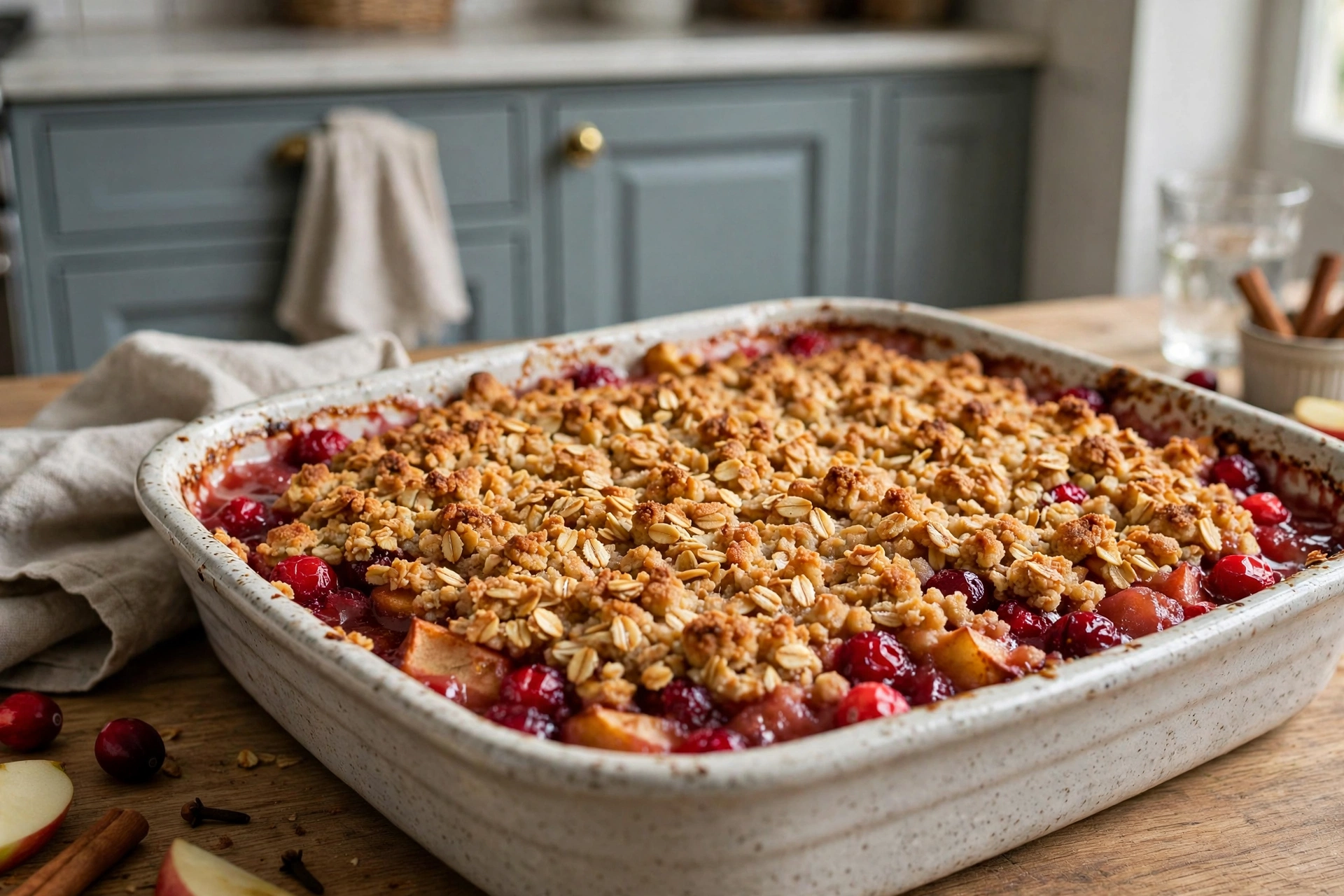
Use it with the cranberry apple crisp, or any fruit crisp on your table this season. The rules below are the same ones that make that topping work.
Start With Cold Butter
This is the single biggest lever, and the one most often skipped. Butter is roughly 16 to 18 percent water. Cut it in cold, in pea-size pieces, and that water turns to steam in the oven, pushing the crumb apart into the craggy, open texture that reads as crunchy. The fat coating the flour also keeps gluten from forming, so the topping stays tender instead of tough.
Melted butter does the opposite. Stirred in warm, it coats everything evenly and bakes into a flat, sandy layer — closer to a cookie than a crisp. Good eating, but not crunch.
Keep the butter in the fridge until the moment you need it, cube it cold, and work it in quickly with a pastry cutter or your fingertips. If the bowl warms up in your hands, slide it into the freezer for ten minutes and carry on. Chill the finished topping while the oven preheats, too. Cold topping hitting a hot oven sets its structure before the butter can melt out.
Get the Ratio Right
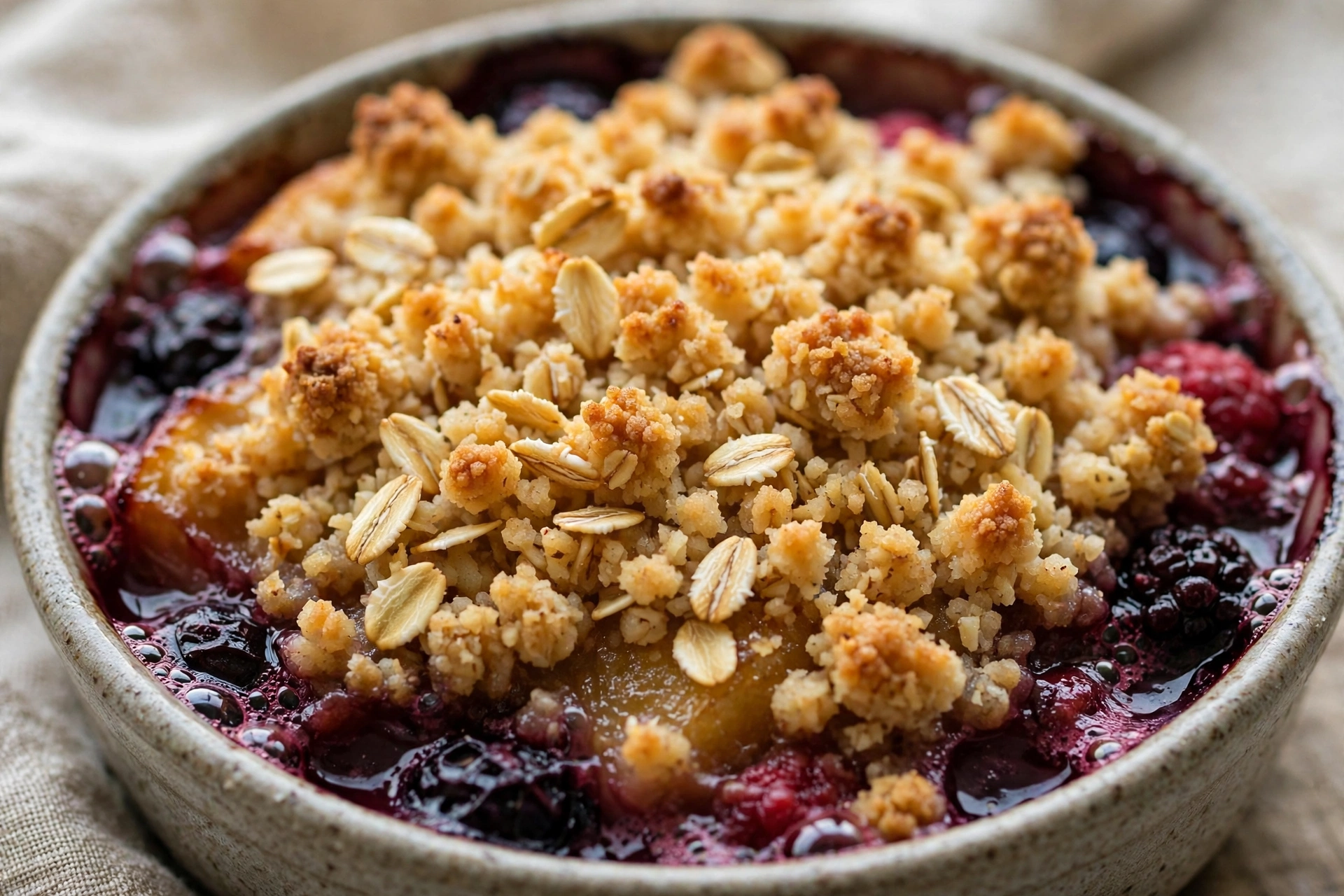
A topping that is mostly flour absorbs moisture from the fruit below and turns doughy. Oats are the backbone of the crunch: whole rolled flakes toast in the butter and sugar and stay distinct, while quick oats are cut smaller and rolled thinner, so they soak up butter and juice and bake into a paste. Steel-cut oats stay hard even after an hour. Old-fashioned rolled oats are the only ones that belong here.
A good working ratio is roughly equal parts oats and flour by volume, with about half as much butter again — for a 7 x 11-inch dish, that looks like three-quarters of a cup each of oats and flour to eight tablespoons of butter, with a half cup of brown sugar and a pinch of salt. The sugar matters too: brown sugar caramelizes as it bakes and helps the crumbs set into a crisp lid.
A tablespoon of cornstarch stirred into the topping adds extra crisp edges. A handful of chopped pecans or walnuts does the same work in a different register, adding crunch that does not depend on the bake at all.
Bake Uncovered, Until the Center Bubbles
Covering a crisp traps the very steam you are trying to drive off. Bake uncovered from start to finish, and do not pull it when the edges look done. The filling needs to bubble in the center, not just around the rim — that is the sign the fruit is fully cooked and the topping has had time to dry out and set.
Most crisps need 45 to 50 minutes at 350°F to get there. If the topping browns before the filling bubbles, tent it loosely with foil for the last stretch, then uncover it again for the final minutes so the top can re-crisp.
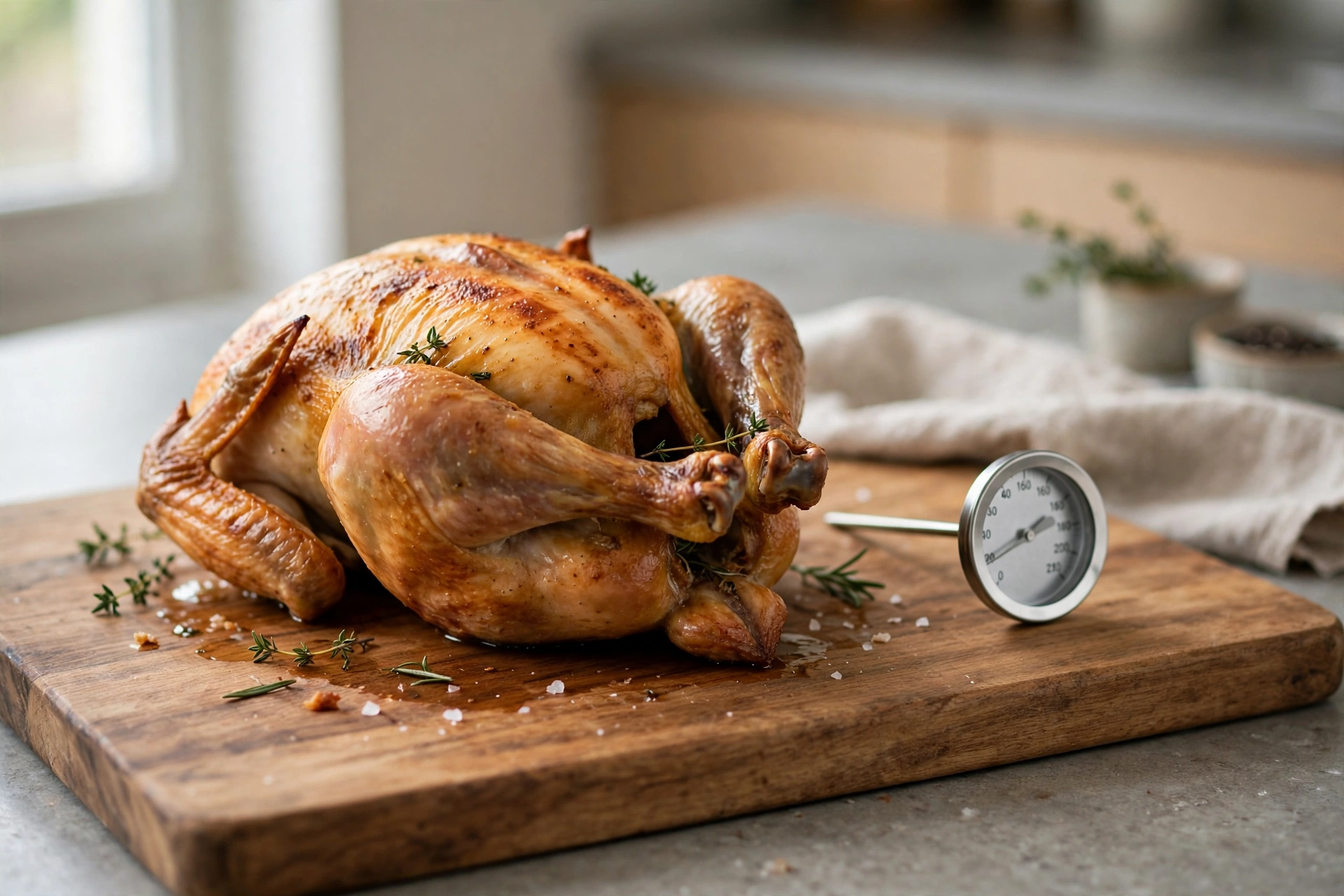
Your oven may also be lying to you. Most ovens run 10 to 25 degrees off their dial, and a cool oven lets the butter melt out of the topping before the structure sets. An oven thermometer settles the question for good.
WORTH ADDING
Taylor 5932 Large Dial Oven Thermometer
A 3-1/4-inch dial that reads from 100°F to 600°F, so you know whether your oven is actually at 350°F before the topping goes in.
Let It Cool Uncovered
The topping is at its crispiest the moment it leaves the oven, and the next thirty minutes decide whether it stays that way. Let the crisp cool uncovered on the counter. Covering it while it is still warm traps steam under the cover, and that steam goes straight into the topping.
Give it at least thirty minutes before serving. The filling thickens as it rests, which keeps the juices from soaking upward into the crumbs when you cut into it.
Store It Loose, Re-Crisp in the Oven
The fridge is where most toppings die. A covered dish in the cold pulls moisture out of the filling and into the topping overnight, and by morning the crunch is gone. If you are eating it the next day, keep it loosely covered at room temperature for up to a day instead.
Past a day, refrigerate for up to three days — and never reheat in the microwave, which steams the topping soft again. Warm servings uncovered on a sheet pan at 350°F for 10 to 15 minutes. The butter re-crisps, the topping firms back up, and the crisp tastes like it did out of the oven.
The topping is not fragile. It just needs cold butter, real oats, an uncovered bake, and a dry place to rest. Give it those four things and it stays crunchy all the way to the last spoonful.