Landscape & Leisure is reader-supported. When you buy through links on our site, including Botanical Interests seed links, we may earn a commission at no extra cost to you. Prices change, so click through to confirm current pricing.
When the soil is finally warm enough to trust, marigolds are the first seeds worth reaching for. They germinate in 5 to 14 days, bloom from summer to frost, and ask for almost nothing along the way — but they do ask for warm soil, and that one condition is where most marigold seasons go wrong.
Start them indoors 4 to 6 weeks before your average last frost, or sow them straight into the garden 1 to 2 weeks after it, once the soil has reached 70 to 80 degrees. Either way works. What does not work is rushing them into cold ground and wondering why nothing comes up. For which variety to sow, see our best marigold varieties roundup. For the African-versus-French decision, see our French vs. African marigolds comparison.
When to Start Marigolds
Marigolds are heat lovers, and the calendar matters less than the soil thermometer. Indoors, start 4 to 6 weeks before your average last frost date — that head start is why Botanical Interests recommends indoor sowing. Outdoors, wait until 1 to 2 weeks after your average last frost, and only when the soil temperature is 70 to 80 degrees. A packet sown into 55-degree soil will sit there, and by the time it decides to sprout, the season is already half gone.
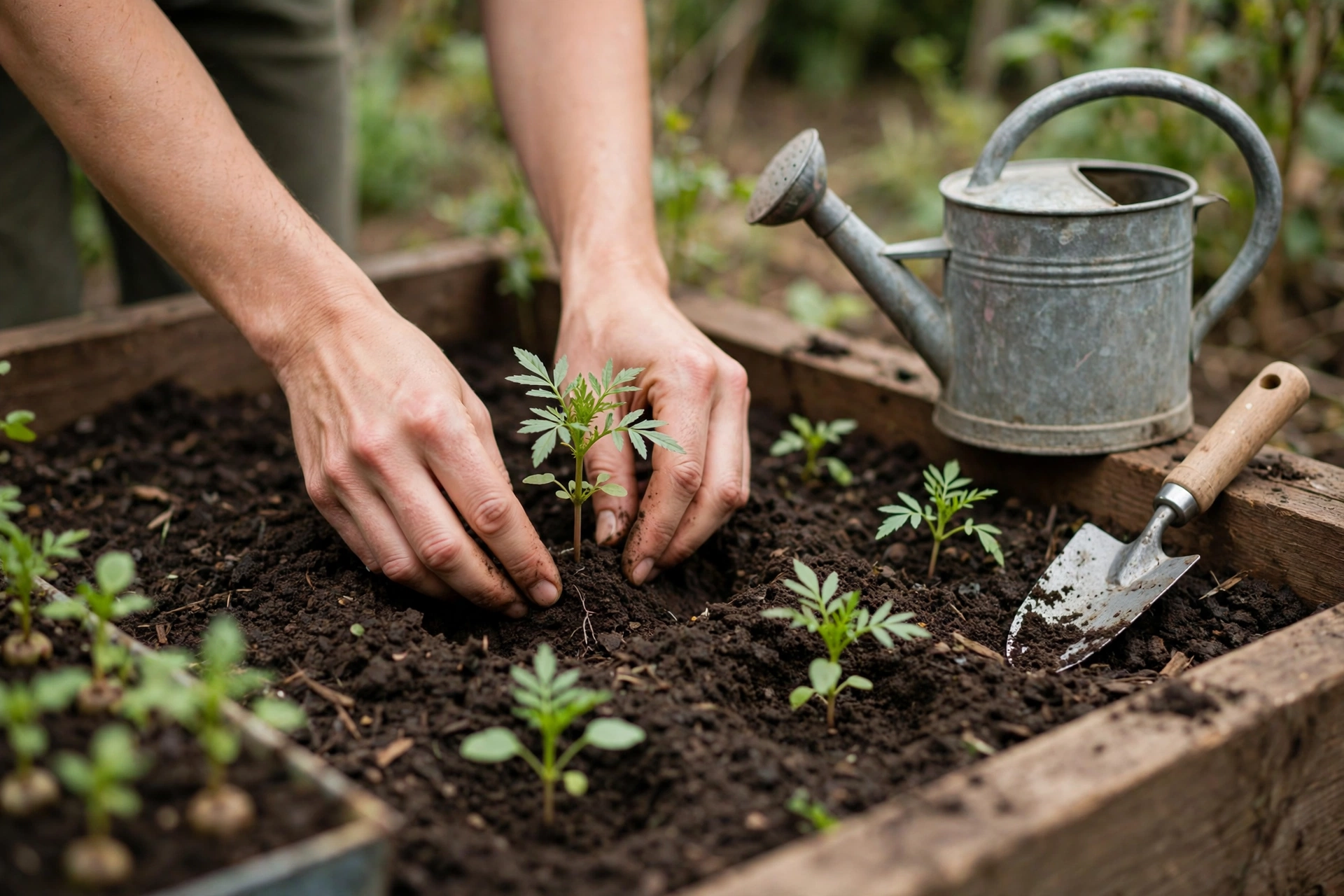
If you are in a short season, the indoor start is worth the shelf space. Four to six weeks indoors buys you blooms weeks earlier, and marigolds transplant easily as long as you harden them off first — a few days of outdoor time in increasing doses before they move to the bed for good.
How to Sow Marigold Seeds Indoors
Use a light mix. Sow into a lightweight seed-starting mix, not potting soil — sterile and lighter, so the tiny roots can push through without damping off.
Sow shallow. Marigold seeds go ¼ inch deep. Deeper than that and they struggle to reach the surface; shallower and they dry out.
Sow 3 to 4 seeds per pot. Sow in 4- or 6-cell packs, or in 1- to 2-inch containers. Once leaves appear, thin to the strongest plant — clip the extras at the soil level with scissors, rather than pulling them and disturbing the survivor’s roots.
Pick the strong one, not the tall one. The strongest seedling may not be the tallest. Look for thick, strong stems and deep color. A tall, pale seedling is reaching for light it does not have, and it will flop in the garden.
Spacing: Give Them Room to Bush Out
Marigolds look small in the cell pack and then surprise you. Crowded plants stretch for light, grow leggy, and bloom less. Thin early, and give each plant the space its packet asks for.
| Variety | Seed spacing | Thin to | Height |
|---|---|---|---|
| Crackerjack African | A group of 3 seeds every 18 in | 1 plant every 18 in, when 1 in tall | Tall, over 24 in |
| Phyllis African | A group of 3 seeds every 10–12 in | 1 plant every 10–12 in, when 2 in tall | 12–24 in |
| Kilimanjaro White African | A group of 3 seeds every 9–12 in | 1 plant every 9–12 in, when 2 in tall | Medium |
Direct-sown marigolds follow the same rule: sow a small group of seeds at each spacing point, then thin to one plant once the seedlings are an inch or two tall. Cutting healthy seedlings feels wasteful, but the one that remains will grow into a much stronger plant than the crowded three ever would.
Crackerjack African Marigold Seeds
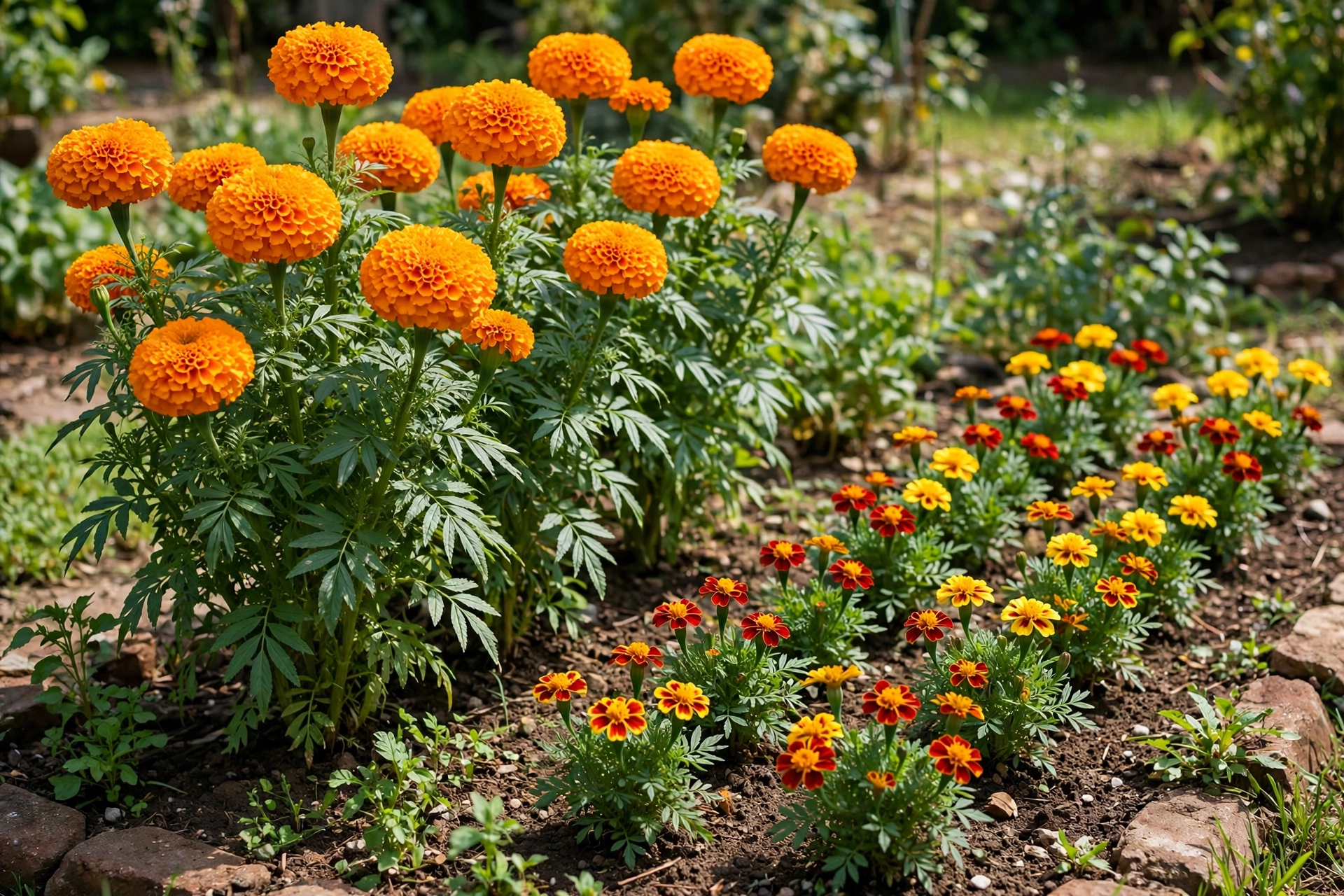
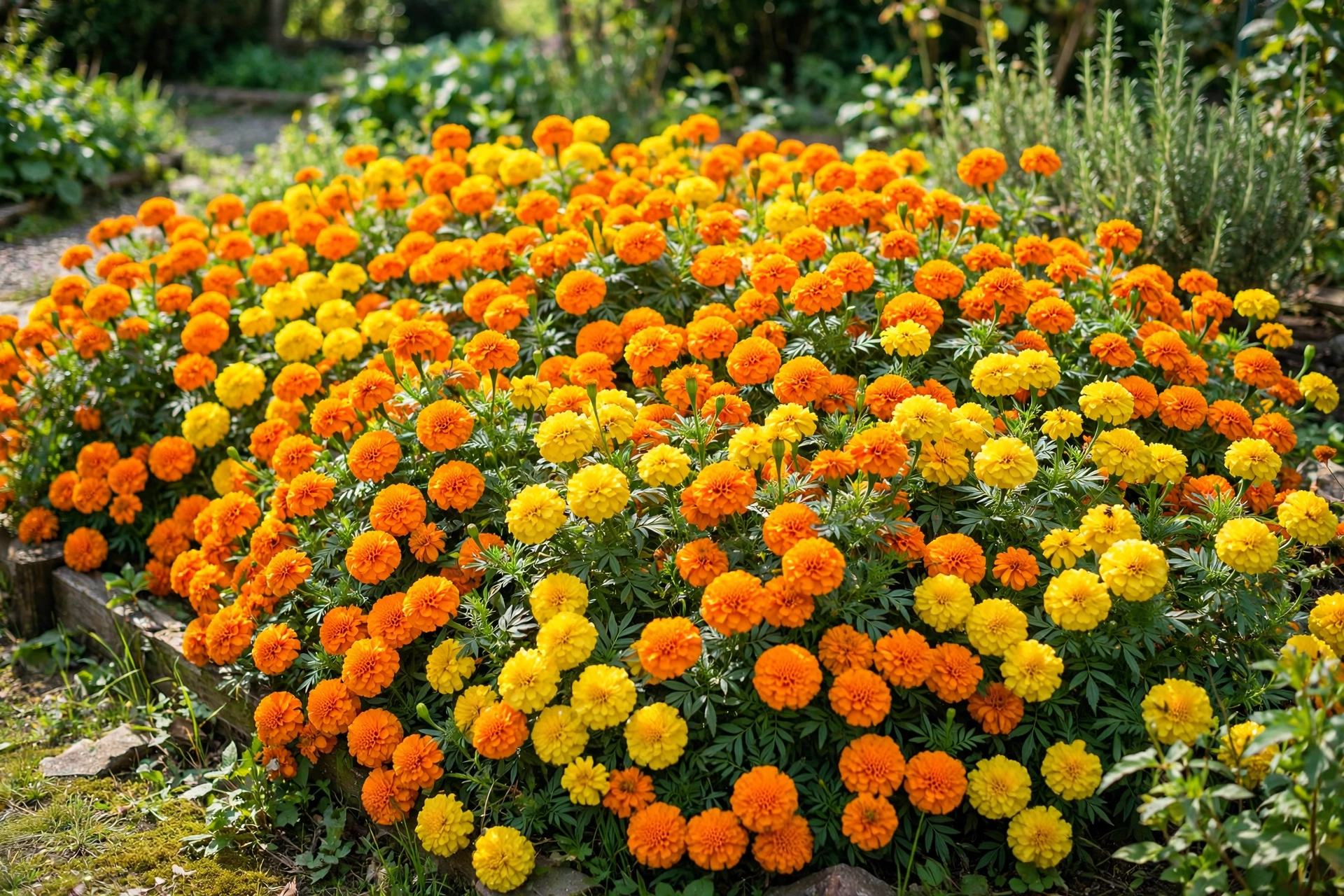
Big 4-inch blooms in tangerine, gold, and yellow, on tall plants that keep cutting from summer to frost.
Favourite Blend French Marigold Seeds
Single-row petals that bees and butterflies can actually reach, on compact plants that bloom from spring to frost.
Epic 6-Cell Seed Starting Trays
The 6-cell size Botanical Interests recommends for marigolds — room for 3 to 4 seeds per cell, easy thinning, easy transplanting.
Pinching: The Cut That Doubles Your Blooms
Once seedlings have 4 to 5 sets of leaves, cut them back to just above the 3rd or 4th set of leaves. It feels wrong the first time — you are cutting off the top of a plant you just grew — but pinching is what makes a marigold branch instead of growing one tall, bare stem with a single flower on top. A pinched plant grows bushier, holds more blooms, and stands up better in wind.
Pinch once, early, and let the plant do the rest. There is no need to keep pinching all season; the first cut sets the shape.
Deadheading: Keep the Blooms Coming
Deadheading — removing spent blossoms just above the next lower branch — keeps marigolds blooming instead of setting seed. Do it regularly through the season and the plants will keep producing new flowers until frost. Skip it and the plants slow down, putting their energy into seed instead of blooms.
One trade-off to know: deadheading regularly will reduce or eliminate reseeding. If you want volunteers next year, let a few late-season flowers go to seed and leave them alone. If you want blooms until frost, keep deadheading and buy a fresh packet in spring — at $2.69, it is the cheapest garden decision you will make all year.
Water, Food, and the Vegetable Garden
Marigolds are fairly drought tolerant once established. Water only when the top inch of soil is dry — they would rather be a little dry than soggy, and overwatering is a faster way to hurt them than underwatering. They do not need much fertilizer, but if your soil is poor, a slow-release balanced fertilizer before sowing, or a liquid feed a couple of weeks after seedlings emerge, will help them get going. Once plants mature, a phosphorus-rich liquid feed encourages flowering.
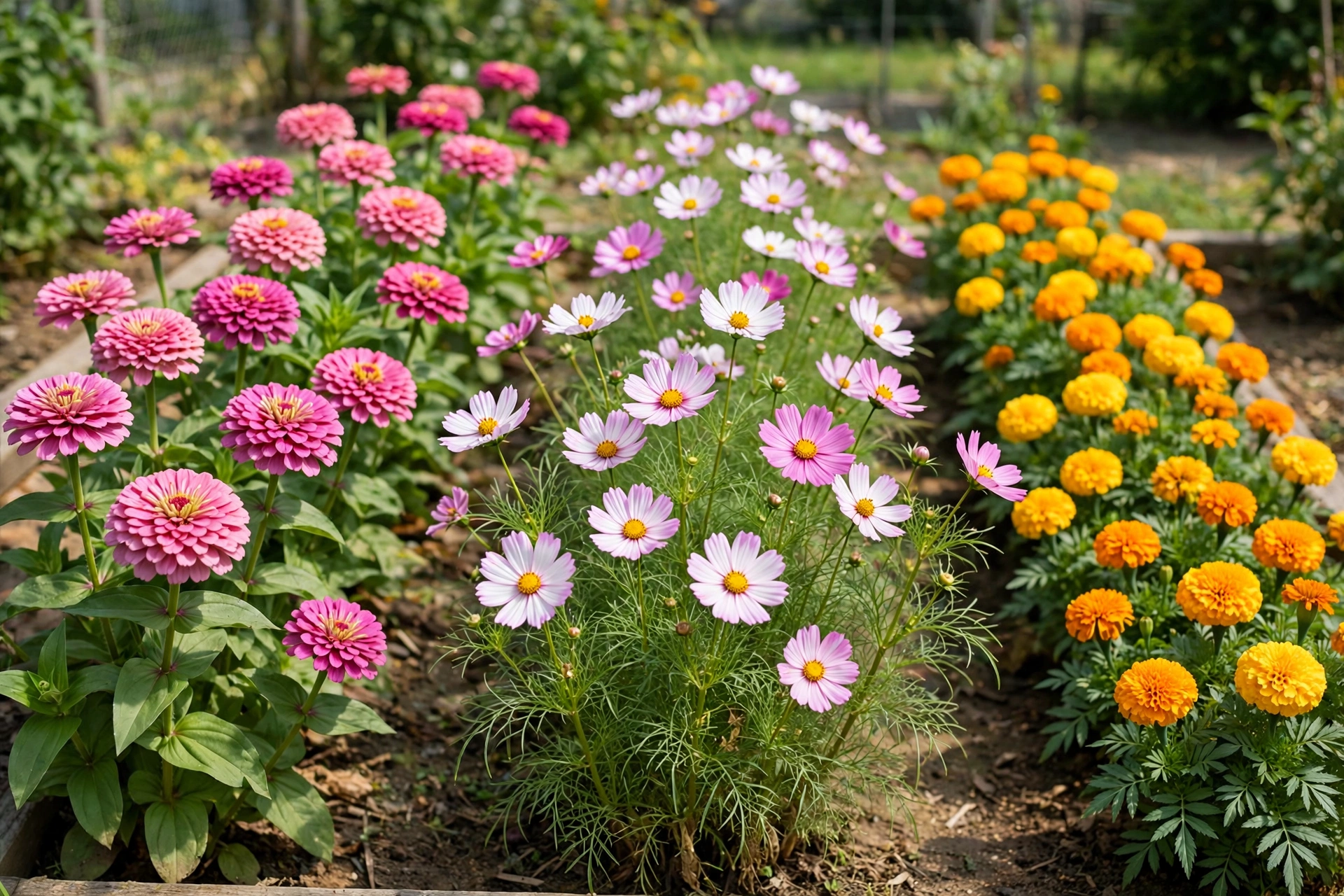
Marigolds earn their place in the vegetable garden, too. They naturally release a chemical known to suppress many types of nematodes, the microscopic worms that damage plant roots, so tucking French marigolds between tomatoes and other vegetables is a working planting, not just a pretty one. And the petals are edible, in moderation, with a spicy, tarragon-like flavor — a garnish for salads and cold drinks. For more on eating what you grow, see our best edible flowers roundup.
The Three Mistakes That Ruin a Marigold Season
Sowing into cold soil. Marigolds need soil at 70 to 80 degrees to germinate well. A packet sown into cold ground is a packet wasted — wait for the warmth, or start indoors.
Skipping the thinning. Three seedlings in one spot will fight for light and water, and all three will lose. Thin to one plant at each spacing point, early, and the survivor will reward you.
Never pinching or deadheading. An unpinched marigold grows one stem and one flower. An undeadheaded marigold sets seed and quits. Both fixes take minutes, and both are the difference between a plant and a display.
What to Watch Next
Once your marigolds are in the ground and pinched, watch for the first buds — and then keep deadheading. The plants will tell you when they are happy: bushy growth, deep green leaves, and new buds forming below every spent flower you remove. If a plant goes leggy, it is reaching for light it does not have — move the next planting to a sunnier spot, and thin harder next time.