Landscape & Leisure is reader-supported. When you buy through links on our site, including Botanical Interests seed links, we may earn a commission at no extra cost to you. Prices change, so click through to confirm current pricing.
Most people buy marigolds by the color on the packet, then spend the summer with a three-foot plant in a pot built for a six-inch one — or a neat little edging plant where they wanted a vase full of cut flowers. The color was never the decision. The height was, and the packet buries it in small print.
African and French marigolds are different plants wearing the same name, and they do different jobs. Pick the wrong one and no amount of watering fixes it — height is set by the variety, not by how you grow it. Pick the right one and the plant does the work for you. For the variety-by-variety picks, see our best marigold varieties roundup. For how to grow whichever you choose, see our guide to timing, spacing, and deadheading.
African Marigolds: The Tall Ones
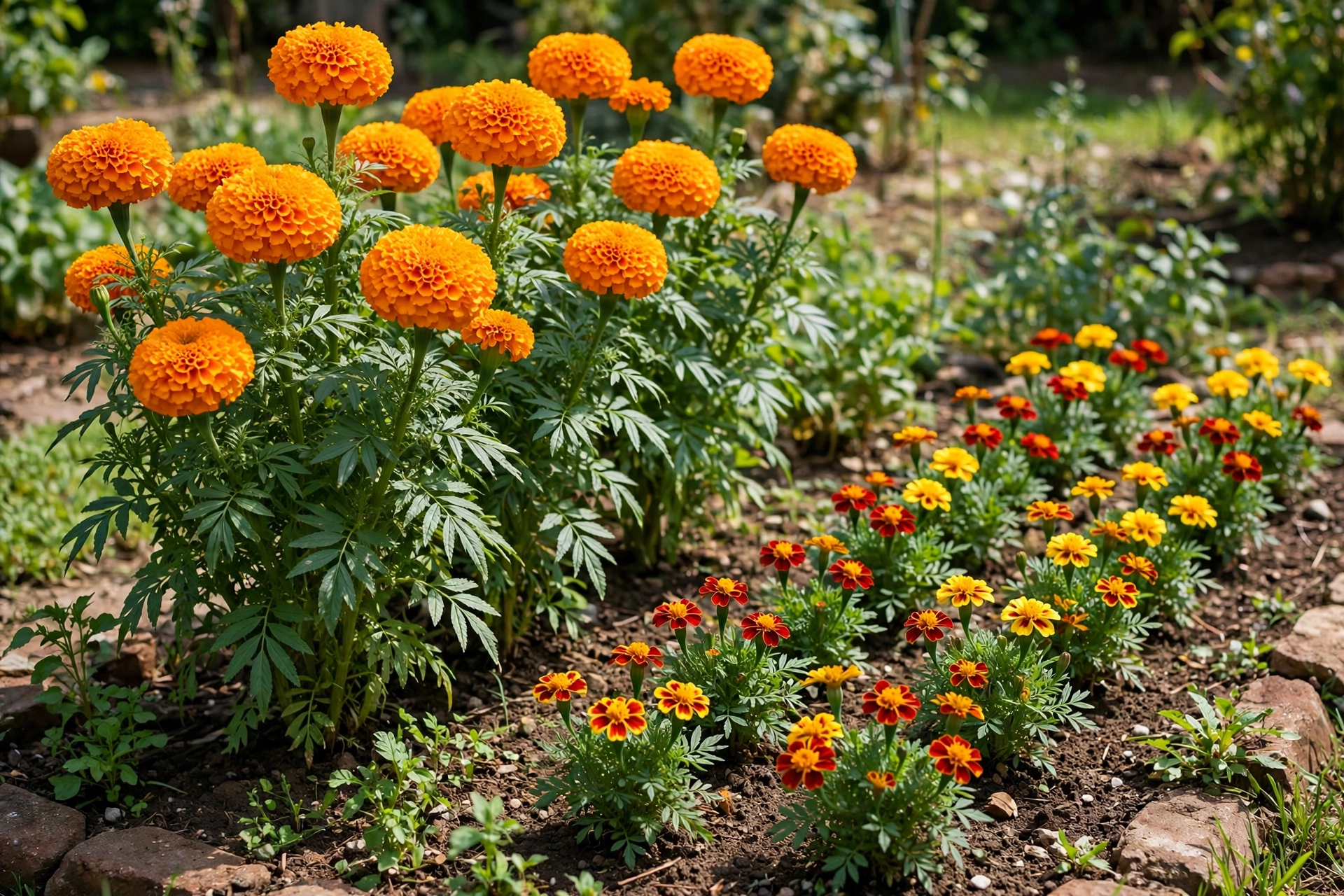
African marigolds (Tagetes erecta), also called American or Aztec marigolds, are the big ones: 2 to 3 feet tall, with large double blooms 4 to 5 inches across on long, sturdy stems. They are the marigold for the back of a bed and the cutting garden — the one that fills a vase and holds up in it. Crackerjack, the best-known African in the collection, carries 4-inch blooms in tangerine orange, rich gold, and lemony yellow, and gardeners rate it 4.3 from 47 reviews.
The cost of that size is space. A tall African needs about 18 inches between plants, and it will shade out anything small planted behind it. Put it at the back of the bed or in its own row, never at the front, and never in a small pot — a three-foot plant in a six-inch pot is a plant that falls over in the first wind.
One African worth a special mention is Kilimanjaro White, the only white marigold in the collection. It took 21 years to breed a white marigold, and this one debuted in 1975: soft, creamy vanilla-white 2½-inch blossoms with a sweet scent. It is a medium-height plant, and it makes a striking contrast in a bed full of orange and yellow.
Crackerjack African Marigold Seeds
Big 4-inch blooms in tangerine, gold, and yellow, on tall plants that keep cutting from summer to frost.
French Marigolds: The Compact Ones
French marigolds (Tagetes patula) are the small ones: bushy plants 6 to 18 inches tall with smaller double blooms, up to 2 inches wide. They are the marigold for the front of a bed, the edge of a path, a window box, or a pot — and for tucking between vegetables, where their compact size stays out of the way and their roots may help with soil nematodes. Naughty Marietta, the 1947 All-America Selections winner, is the classic: yellow-and-maroon flowers on a tough, compact plant, rated 4.8 from 16 reviews.
The cost of that compact size is bloom size. A French marigold will never fill a vase the way an African does — the flowers are too small, and the stems are too short. Buy French marigolds for the garden, where their size is the point.
One French variety breaks the size rule and is worth knowing about: Red Metamorph grows stout and dense at about 2 to 3 feet tall, and its flowers change color with the weather — deep burgundy in cool weather, splashed with yellow when it warms. It works as a garden hedge, not an edging plant, so do not buy it for a window box.
Naughty Marietta French Marigold Seeds
Yellow-and-maroon flowers on a tough, compact plant — a 1947 award winner that still earns its place.
Favourite Blend French Marigold Seeds
Single-row petals that bees and butterflies can actually reach, on compact plants that bloom from spring to frost.
Signet Marigolds: The Third Type
There is a third type, and it is worth a paragraph because it confuses people. Signet marigolds (Tagetes tenuifolia) have petite, single flowers with fine, lacy, lemon-scented foliage. They are smaller and airier than either African or French types, and they read as a different plant altogether in the garden. The signet variety Botanical Interests carries, Lemon & Tangerine Gems, is sold out right now, so there is no packet to recommend here — but if you see signet seeds elsewhere, know that they are the edging and container marigold taken to its smallest, most delicate extreme.
Side-by-Side Comparison
| Feature | African marigold | French marigold |
|---|---|---|
| Botanical name | Tagetes erecta | Tagetes patula |
| Height | 2–3 ft tall | 6–18 in tall (Red Metamorph excepted, 2–3 ft) |
| Bloom size | Large double blooms, 4–5 in | Smaller double blooms, up to 2 in |
| Best use | Back of bed, cutting garden, bouquets | Bed edges, paths, pots, between vegetables |
| Spacing | About 18 in apart (Crackerjack) | Closer — compact plants, check the packet |
| Cut flowers | Yes — long stems, long vase life | No — stems too short, blooms too small |
| Edible petals | Yes, in moderation — slightly bitter, citrusy | Yes, in moderation — strong, pungent flavor |
The Verdict: Which to Plant
Plant African marigolds when you want flowers you can cut. Tall plants, big blooms, long stems — that is the whole job, and nothing else in the annual bed does it for $2.69 a packet. Plant French marigolds when you want a plant that stays where you put it: the front of a bed, the edge of a path, a pot on the steps, or tucked between the tomatoes, where they may help with soil nematodes and will not shade anything out.
Most gardens want both. A row of Crackerjack at the back for the vase, a run of Naughty Marietta or Favourite Blend at the front for the edge and the pollinators — that is the planting that makes a marigold bed look planned instead of accidental. And if you are choosing between marigolds and the other easy annuals for the cutting garden, our zinnias vs. cosmos vs. marigolds comparison settles that question, too.