Every November the ground under your pines disappears under a drift of oak and maple leaves, and the question is whether to bother moving them at all. The needles underneath look like they could use the cover. The grass underneath does not agree. Clear the leaves — but leave the needles where they help.
Yes, clear them — here’s what happens if you don’t
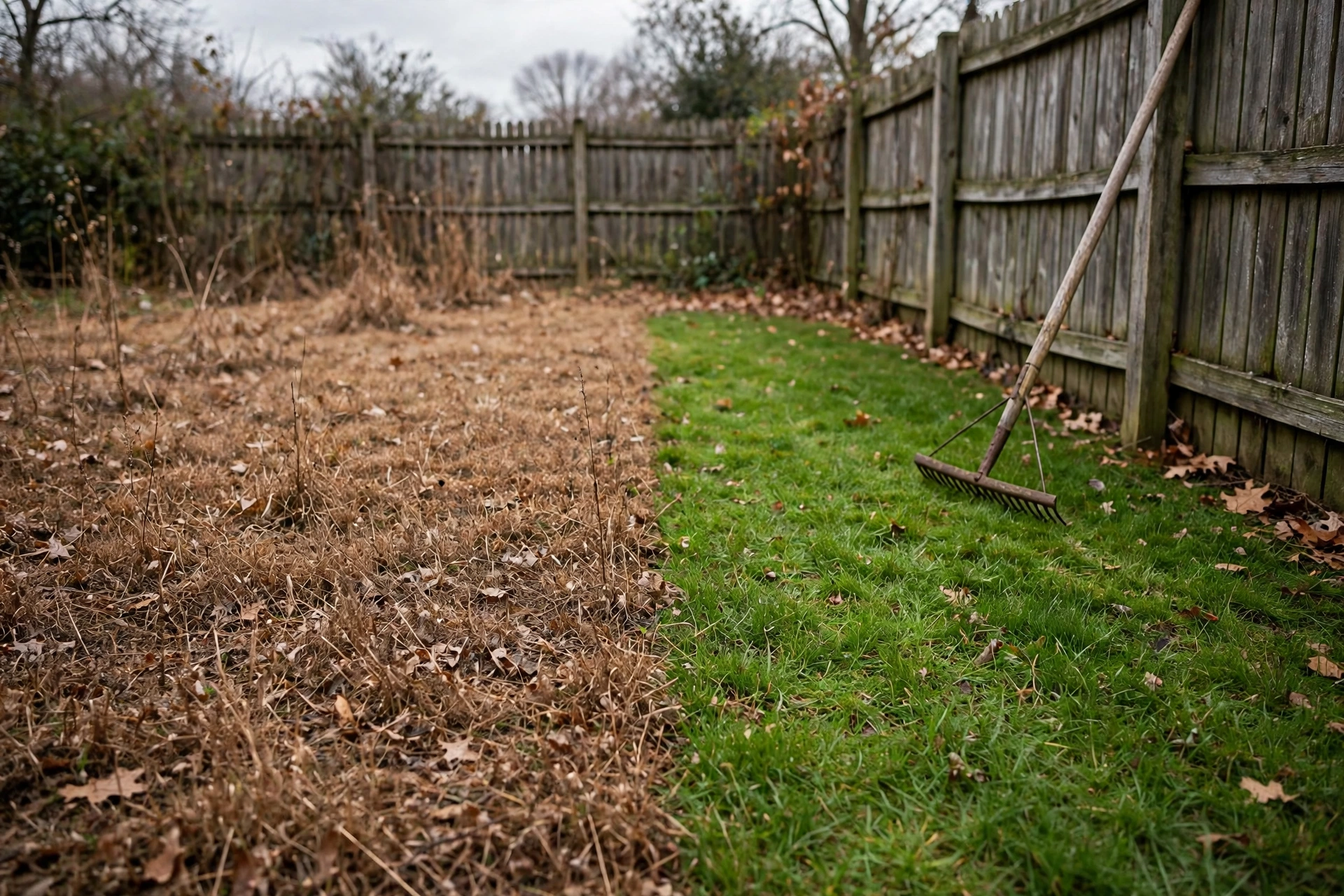
A thick layer of leaves over pine needles is not the same as a layer of pine needles on their own. Leaves mat down when they get wet. That wet mat sits on the grass all winter, blocking light and air, and by spring the grass underneath is thin, yellow, or gone entirely. A matted layer also holds moisture against the soil, which is an open invitation to snow mold — and to voles, which tunnel happily under a leaf blanket all winter and chew grass crowns and bark while they’re at it.
A thin scattering of leaves is no emergency. The problem is the drift: three or four inches of wet leaves packed over the needles. If you can see grass through the leaves, leave it. If you can’t see the ground at all, it’s time to clear.
The needles underneath are a different story
Pine needles on their own are not the enemy. They fall in a loose layer that air and water move through, they break down slowly, and they make a perfectly good mulch in garden beds. They also don’t acidify your soil the way people assume — a layer of needles has almost no effect on soil pH, because the acidity washes out long before the needles break down.
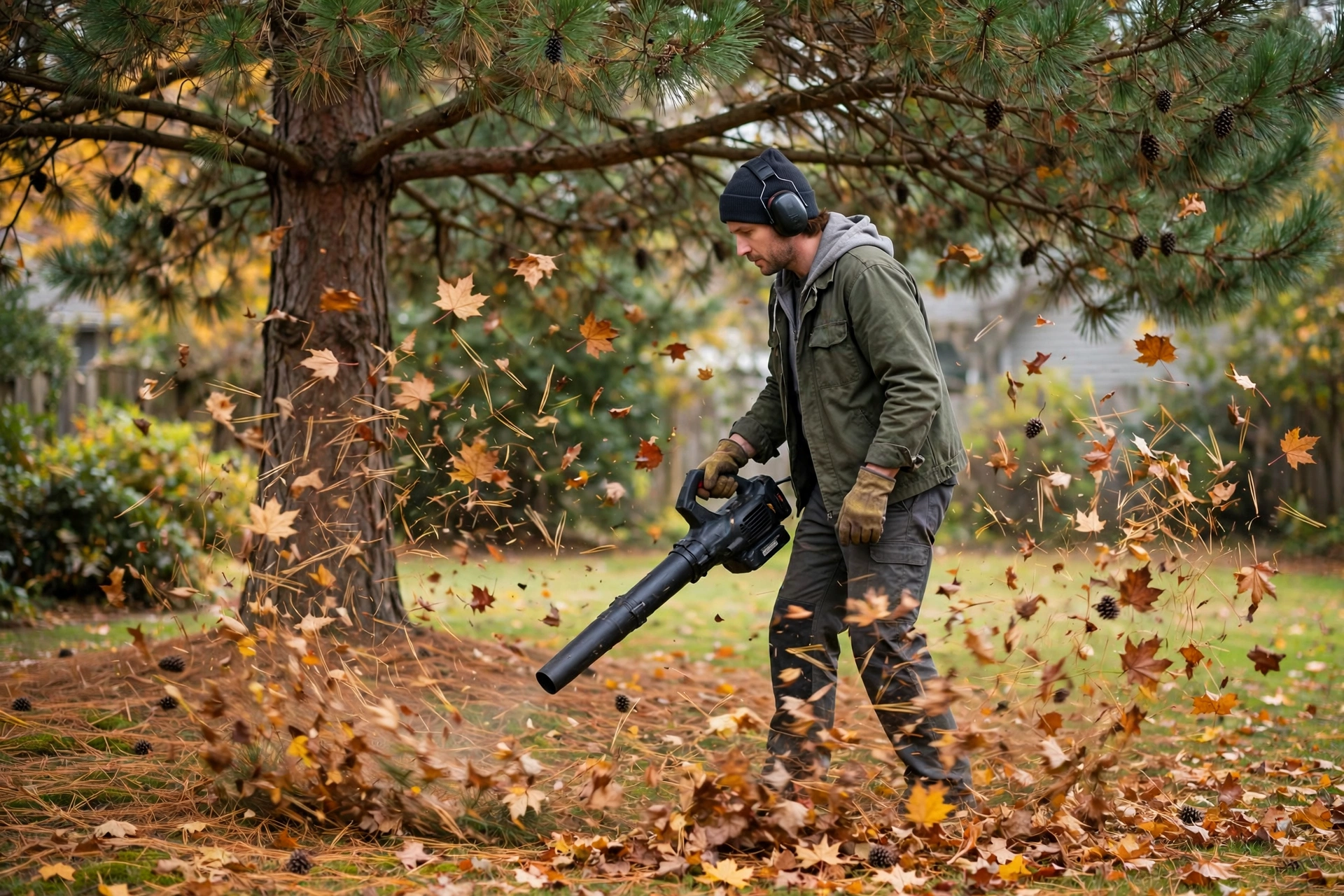
So the job isn’t to strip the ground bare under your pines. It’s to get the leaves off the needles. A blower on a low setting will lift broad leaves without scattering the needle layer underneath, and a light raking pass does the same thing by hand. What you leave behind — a thin, airy layer of needles — is doing the soil a favor.
The fastest way to clear them
Wait until most of the leaves are down. Clearing under pines twice is a waste of a Saturday; one good pass after the last big drop does the job. Then work in this order:
Blow the leaves out onto the open lawn first. Set the blower low and work from the trunk outward, so the leaves land on grass where you can collect them easily. High speed just buries the leaves deeper into the needle layer and throws needles everywhere.
Rake what’s left by hand. A fan rake or a pine-needle rake pulls the stragglers out of the needle layer without tearing up the ground. This is the step that separates a job that looks done from one that actually is.
Collect with a tarp, not a wheelbarrow. Spread a tarp on the lawn, blow or rake the leaves onto it, and drag the whole load to the compost pile or the curb in one trip. If your blower is doing most of the work, our pick of the best leaf blowers for pine needles covers which machines handle the needle-and-leaf mix without clogging.
Where the leaves should go
The leaves you clear from under pines are still useful — just not there. Shredded leaves make good compost and good mulch in garden beds, where they break down over winter. Whole leaves go on the compost pile, not in a heap against the trunk: piling leaves against a pine trunk holds moisture against the bark and invites the same vole damage you were trying to avoid. If you want the full routine, our pine-needle cleanup guide walks through every method, the tools, and how long each one takes — and the composting guide covers what to do with the needles themselves.
What not to do
Don’t mow over a thick, wet mat of leaves and expect it to disappear. A mower mulches a thin scattering just fine, but a thick wet layer clumps, smothers the grass underneath, and leaves a paste that rots instead of breaking down. Clear the deep drifts first, then mow over what’s left.
Don’t wait until spring, either. Leaves that sit all winter are the ones that kill grass and shelter voles. A November pass is quick work; a spring repair takes a season.
Bottom line
Blow the leaves out from under your pines once the last big drop is down, leave the thin layer of needles where it lies, and get the leaves onto the compost pile. The grass under the trees will thank you in April — and so will the pine, which would rather have air around its roots than a wet blanket.