You are buying seed for a lawn you will not see until spring — so how much, and when, are the whole job. Get the rate right and the seed sits quiet all winter and fills in on its own in April. Get it wrong and you either waste money on seed that was never needed, or wake up to a thin lawn and a second seeding. The numbers below come from the grass-seed calculator, and the timing comes from University of Minnesota Extension guidance.
How much seed: the rate
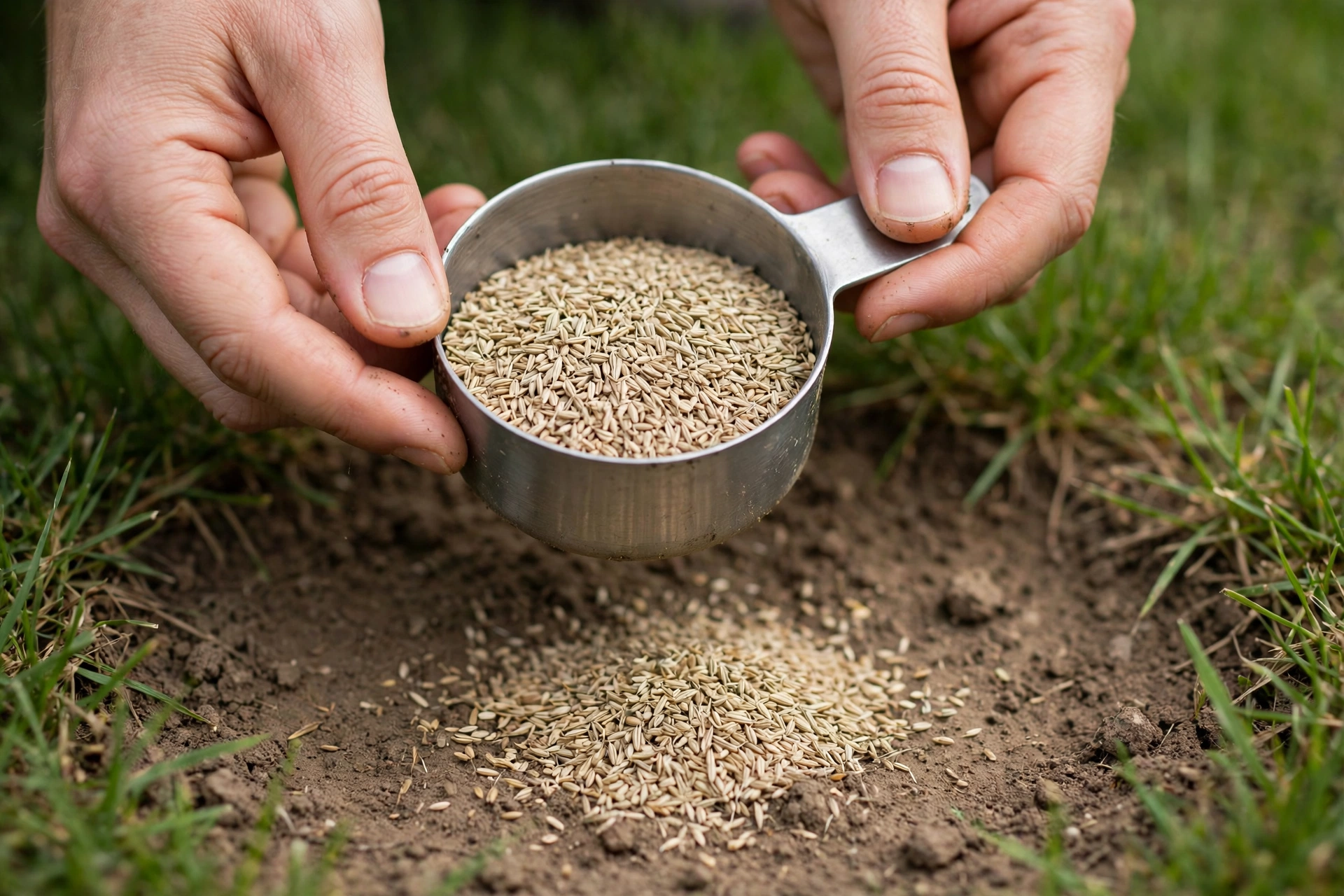
The calculator’s dormant-seeding mode uses 3 to 4 pounds per 1,000 square feet for average mixes — the figure comes from a University of Minnesota Turf repost. That is noticeably heavier than a fall overseed of Kentucky bluegrass, which runs 1 to 1.5 pounds per 1,000 square feet. The reason is simple: some seed is lost over winter to birds, wind, and weather before spring, so you start with more.
| Job | Rate (lbs per 1,000 sq ft) |
|---|---|
| Overseed Kentucky bluegrass | 1–1.5 |
| Overseed tall fescue | 3–4 |
| Overseed perennial ryegrass | 4–6 |
| Dormant seed, average mix | 3–4 |
Work it out for your lawn: a 5,000-square-foot lawn at 3 to 4 pounds per 1,000 needs 15 to 20 pounds. A 10,000-square-foot lawn needs 30 to 40 pounds. The grass-seed calculator does the math for any lawn size, including the adjustment for seed purity and germination from the label — a bag that is 92% pure with 80% germination is only 73.6% live seed, so you buy more bagged seed than the rate says. For tall fescue specifically, the tall fescue seeding rate calculator works out the same job by species, and the recommended seeding rates table lists every species side by side.
One thing the rate does not cover: seed quality. Cheap seed with low germination costs more per living seedling than good seed at a higher price per bag. Check the label for purity and germination percentages before you buy, and run them through the calculator’s adjustment rather than guessing.
When to spread it
Timing is a soil-temperature decision, not a calendar date. Wait until the soil is consistently below 50°F — the point where cool-season seed stops germinating — and ideally below 45°F for several days, with no warm stretch in the forecast. University of Minnesota Extension’s working line is soil below 40°F, and its window runs from early November to mid-March. In colder regions the window opens in early November; farther south it may not open until December.
Push a soil thermometer four inches down in the morning and check it three mornings running before you seed. If the soil is still warm enough to sprout seed, wait. A warm snap that wakes the seed up in November kills the seedlings in the first hard freeze, and that is the one timing mistake that wastes the whole job.
The other boundary is snow. Spread seed before consistent snow cover arrives — once the ground is covered, seed lands on snow and washes away with the melt. If the snow has settled in for the season, the window has closed for now; it opens again in late winter, when the ground is bare and still cold.
This timing only applies to cool-season lawns — Kentucky bluegrass, fine fescues, tall fescue, perennial ryegrass. Warm-season grasses need warm soil to germinate, so bermudagrass and zoysiagrass wait for spring. For the full explanation of why the window works the way it does, see Is It Too Late to Overseed? Dormant Seeding Explained.
The steps
1. Measure the lawn. Pace it off or check your lot records — the rate is per 1,000 square feet, so a rough size is fine, but a guess that is off by half doubles or halves the seed you buy. The calculator takes square feet and returns pounds.
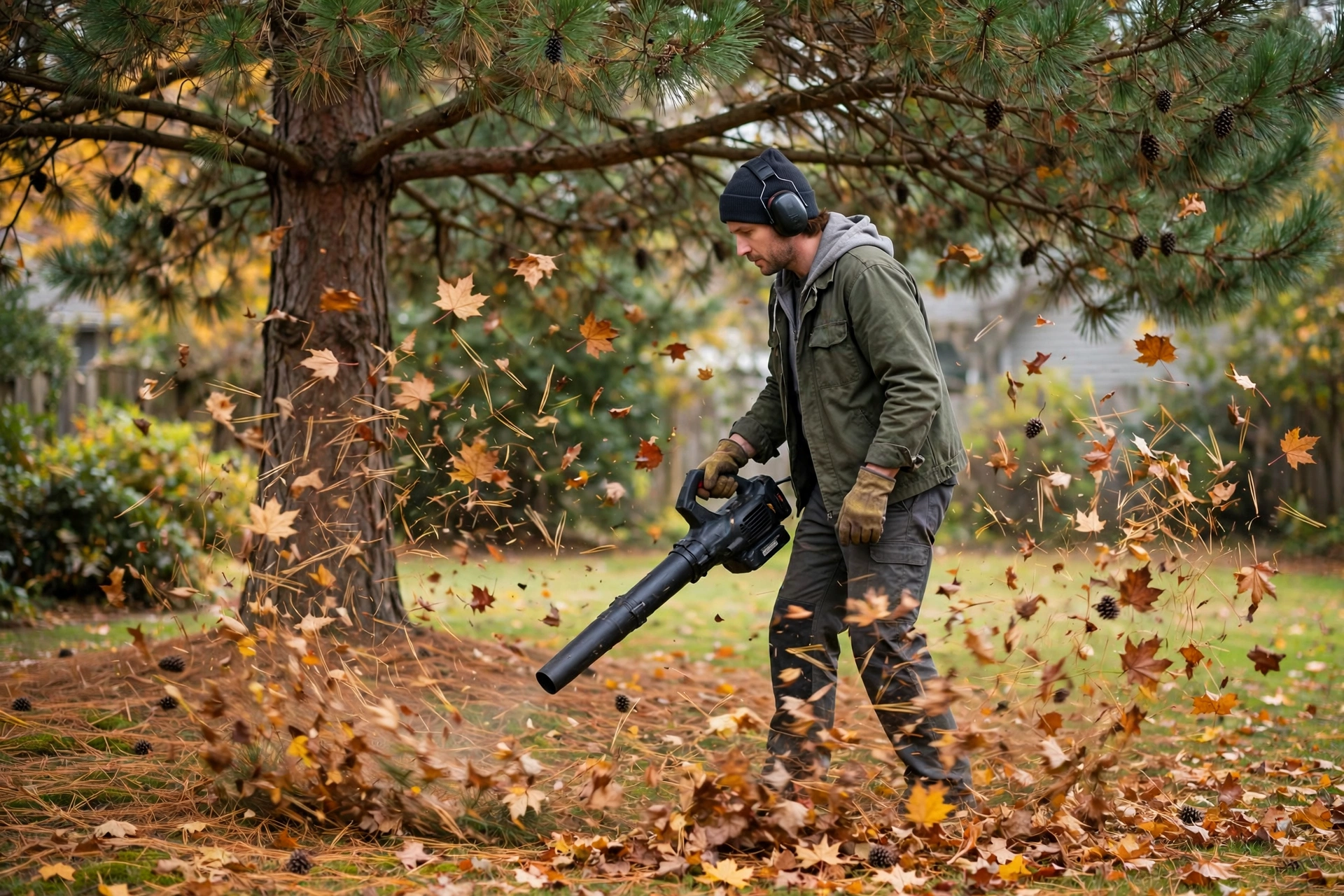
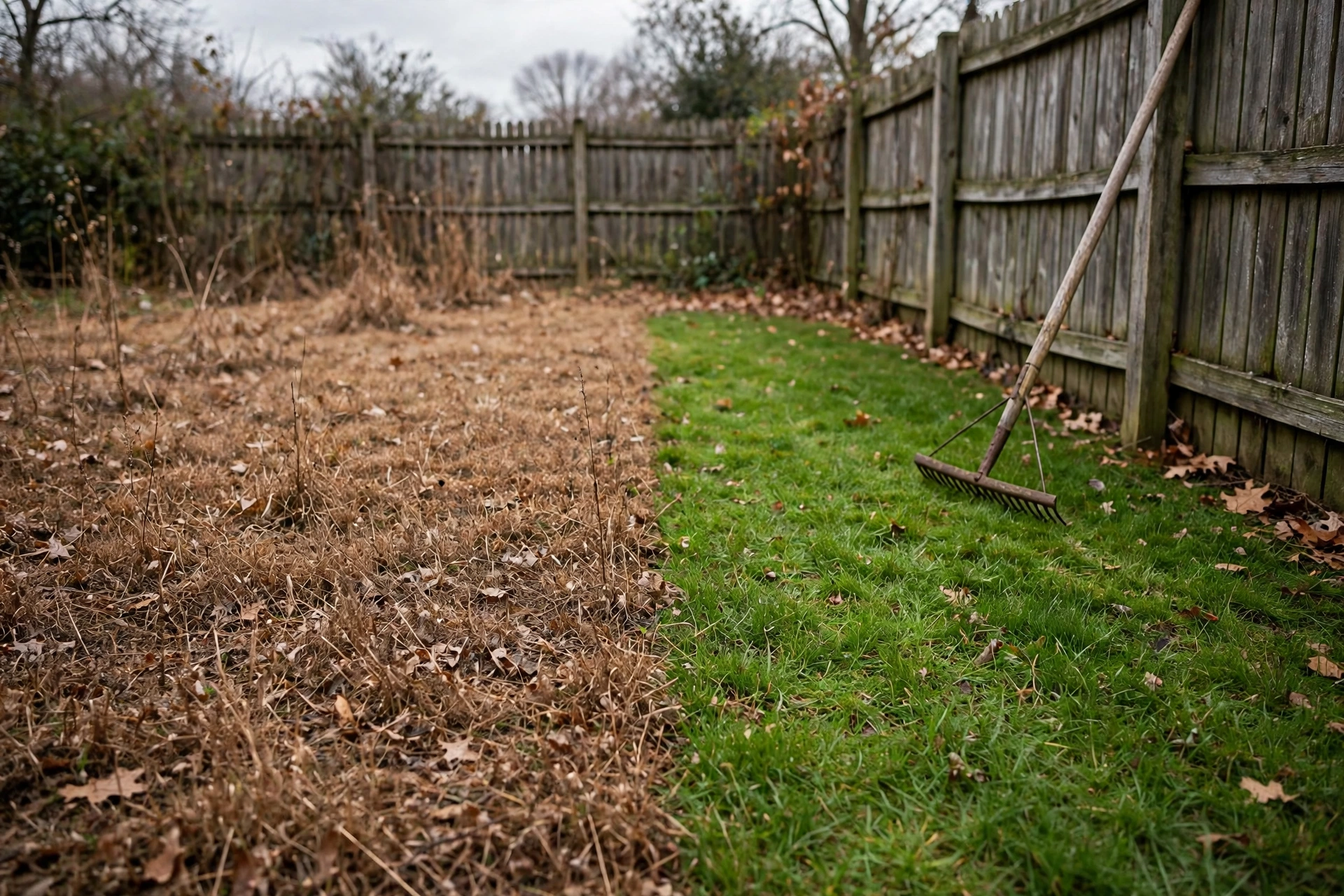
2. Mow and clear. Cut a little shorter than usual and rake off the leaves. Seed needs to touch soil, and a leaf mat keeps it sitting on top where birds find it.
3. Spread in two passes. Set the broadcast spreader to half the rate and walk the lawn north to south, then set it again and walk east to west. Two light passes at right angles cover evenly; one heavy pass leaves stripes.
4. Rake it in lightly. A pass with the back of a leaf rake settles the seed into the soil surface. You are not burying it — a quarter inch of contact is enough, and the winter freeze-thaw cycle will do the rest.
5. Leave it alone. Do not water and do not fertilize now. The seed is meant to sit dormant, and watering a cold lawn invites the damp, mild conditions that trigger early germination.
What happens in spring
Nothing visible happens until the soil warms past about 50°F. Then the seed germinates on its own, already in position — a few weeks ahead of anything sown in April. Expect the new grass to show in thin patches first and fill in over several weeks.
Do not rake the lawn hard in early spring. A heavy raking pulls dormant seed out of the soil before it has rooted. Mow high for the first few cuts, and start watering once the new grass is actively growing. Thin spots may need a second pass of seed in spring, but most lawns fill in well from one dormant seeding.
If you are unsure whether your lawn needs seed at all, check first: Is Your Lawn Dormant or Dead? walks through the tug test, the crown check, and the watering test. A lawn that is only dormant needs patience, not seed.
What can go wrong
A warm snap after seeding. Seed that sprouts in a November thaw dies in the next freeze. This is why the soil-temperature check matters more than the calendar — if a warm week is coming, wait it out.
Seed washing off slopes. Dormant seed on a slope can move with heavy rain or melt water. On slopes, the light raking matters more, and a thin layer of straw or an erosion blanket holds seed in place until spring.
Birds. Some seed will be eaten — that is part of why the dormant rate runs heavier than a fall overseed. Raking the seed in, rather than leaving it sitting on the surface, keeps most of it out of reach.
Thick thatch. Seed sitting on a thatch layer never reaches soil. If you can push a finger through the thatch to the soil, it is fine. If the thatch is a solid mat more than half an inch thick, dethatch first — otherwise the seed has nothing to root into.
The bottom line
For a typical lawn, the answer is 3 to 4 pounds per 1,000 square feet, spread once the soil has stayed below 50°F for several days and before the snow settles in. Run your lawn size through the grass-seed calculator to get the exact pounds, spread it in two crossing passes, rake it in lightly, and leave it alone until spring.