Your lawn went brown in a week and now you are standing over it wondering whether it is sleeping or gone. It is the question every cool-season lawn asks in November, and it has a real answer — not a guess. Three quick checks, done in ten minutes, sort a dormant lawn from a dead one. Run them before you buy seed, because the fix for a sleeping lawn is patience and the fix for a dead one is seed, and buying the wrong one wastes the money either way.
What dormancy looks like
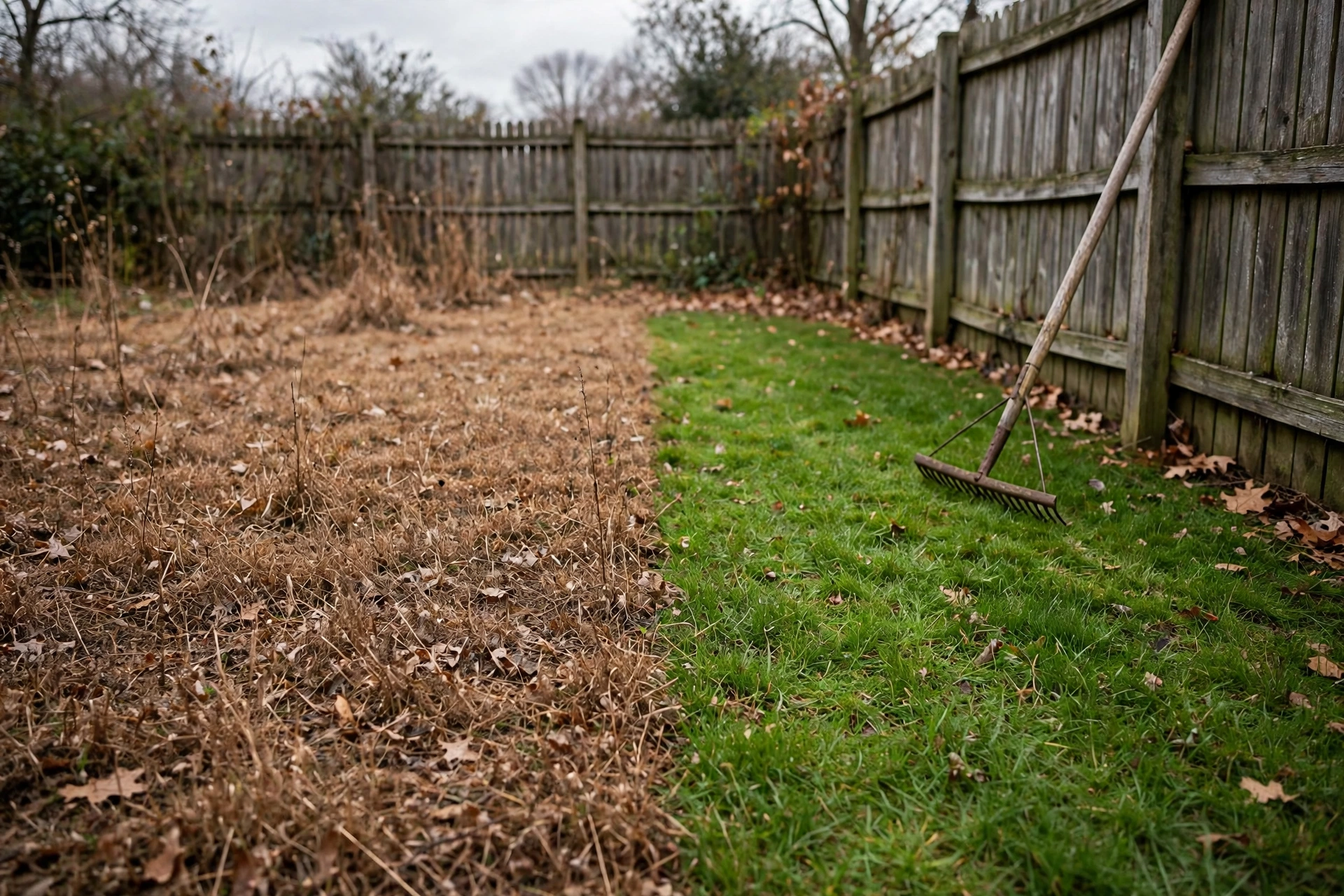
A dormant lawn goes brown more or less all at once, and it goes brown evenly. The blades dry out and fade to tan or straw, but the plant underneath is alive. Cool-season grasses shut down like this on purpose — in a cold snap, or in a dry spell when water runs short — and they come back when conditions improve. Dormancy is the plant shutting down on purpose until conditions improve.
A dead lawn looks different once you know what to look for. The brown is patchy rather than even. Blades feel brittle and snap instead of bending. And at the base of the plant, where new growth starts, there is nothing green at all. The three checks below are how you tell which one you are looking at.
Check one: the tug test
Grab a small handful of brown grass and pull gently, the way you would tug a loose thread. A dormant plant holds. Its roots are still gripping the soil, so the blades resist and stay put. A dead plant lifts out easily, roots and all, with almost no resistance — because there is nothing alive holding it down.
Do the tug test in several spots, not one. Lawns rarely die evenly: a dead patch by the driveway and a dormant stretch in the middle is a common combination, and each area gets a different fix. If the grass holds everywhere, your lawn is almost certainly dormant. If it pulls free in a wide area, that area is dead and needs seed — and November is still in time, as dormant seeding explained shows.
Check two: the crown
The crown is the pale, slightly thickened base of the grass plant right at soil level, where the blades meet the roots. It is where all new growth starts, so it is the most honest part of the plant. Part the grass with your fingers and look at the base in good light.
A dormant crown is pale green or whitish, and it feels pliable when you press it between your fingers — firm, a little springy, alive. A dead crown is brown all the way through, dry, and brittle. It snaps instead of bending, and there is no green anywhere at the base, even on the newest-looking blades.
Trust the crown when the tug test is unclear. Grass that is dormant but dry can feel stiff, and grass that is dead but matted down can feel stuck. That is why the crown settles it: green and pliable means alive, brown and brittle means gone.
Check three: the watering test
When the first two checks disagree, water can settle it — with one November caveat. Pick a small patch, a square foot or two, and soak it thoroughly once a day for a week. In warm weather, a dormant lawn greens up in that patch within five to seven days as the crown wakes and pushes new blades. A dead lawn stays brown no matter how much water it gets.
But in November, cold is doing the shutting down, not drought. A dormant lawn may stay brown even with water, because the plant is waiting on temperature, not moisture. So in cold weather, treat the watering test as a supporting check, not the deciding one: green means alive, but no green proves nothing. The crown check above is the one that decides it in November.
If it is dead, what killed it?
Most brown lawns in November are simply dormant, but when a patch is truly dead, the cause matters — because seeding over a problem that is still there just kills the new grass too. Ranked by likelihood:
Drought stress that went too far. Dormancy has a limit. A lawn that goes weeks without water in heat will cross from dormant to dead, usually in the sunniest, thinnest spots first. The pattern is broad and even, and the soil underneath is bone dry.
Grubs. White grubs eat roots from below, so the grass dies in irregular patches that lift like loose carpet — the tug test fails badly here, with whole handfuls coming up. Peel back a square foot of turf: six or more grubs in that square foot means grubs did it.
Disease or salt. Fungal disease leaves patchy, sometimes ring-shaped dead spots with a distinct edge. Salt damage from winter de-icing shows up in strips along driveways and sidewalks. Both leave the crown dead, so the checks above still apply — the cause only changes what you fix before you reseed.
When to wait and when to reseed
Wait when the crown is green and pliable and the tug test holds. That lawn is dormant, and it will green up on its own when the soil warms in spring. Watering it now will not help — the plant is shut down for the season, and it wakes on temperature, not on your schedule. Leave it alone.
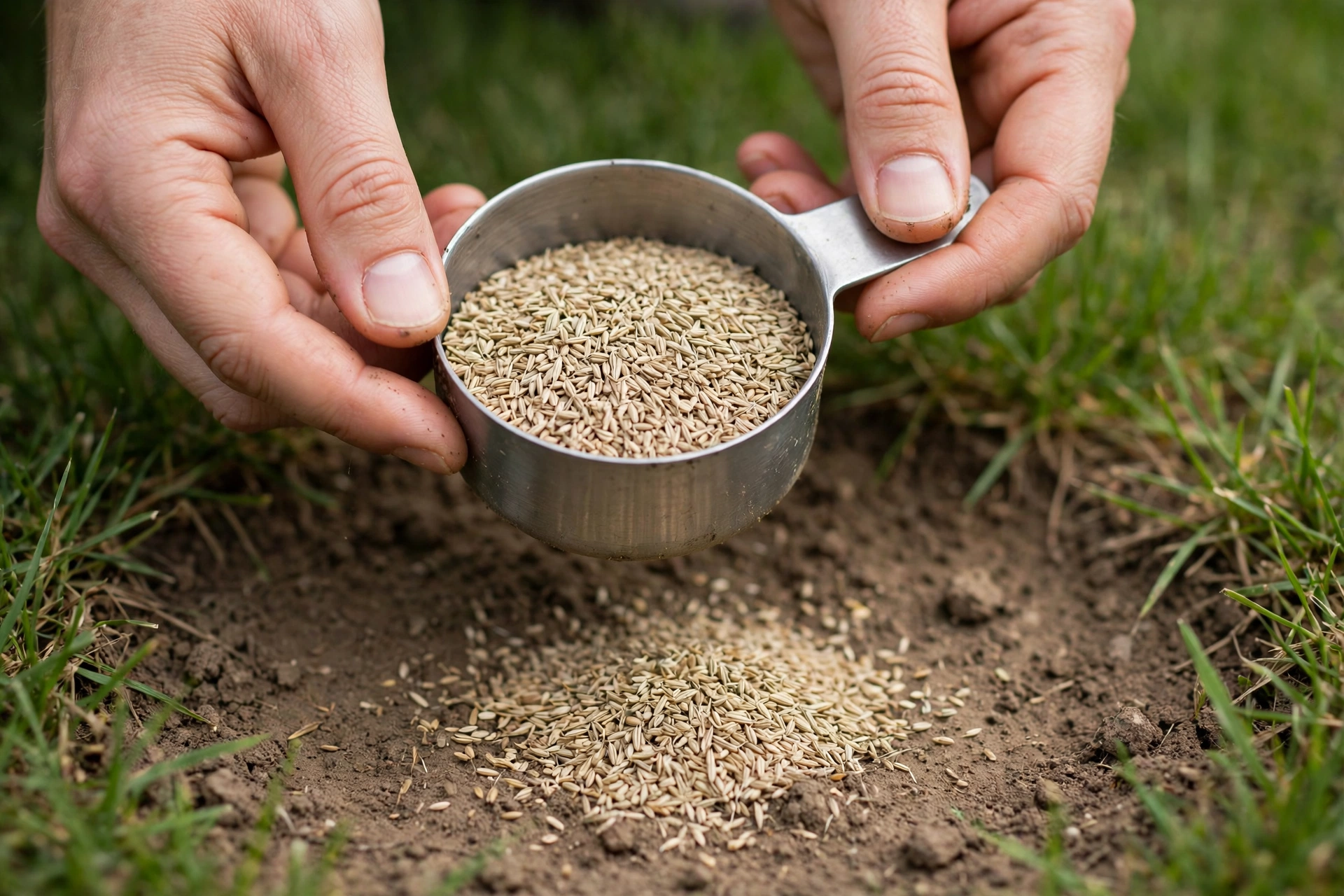
Reseed when the crown is brown and brittle and the grass pulls free across a real area — not one bare spot, but a patch worth fixing. November is still in the window: dormant seeding puts seed down now for spring germination, and how much seed to spread and when works out the rate. The grass-seed calculator will do the pounds for your lawn size.
One warning: if the cause was grubs or disease, deal with that first. Seed sown into a grub-damaged lawn feeds the next generation of grubs, and seed sown onto a disease patch faces the same fungus in spring. Fix the cause, then seed.
The bottom line
Run the checks this weekend: tug a handful, and look at the crown — green and pliable at the base means the lawn is asleep, so leave it alone and let spring wake it. If the crown looks borderline, water one small patch for a week; green means alive, but no green in cold weather proves nothing, and the crown is the final word. Brown and brittle, pulling free in your hand, means that patch is gone — and while the soil is still cold and the snow has not settled in, dormant seeding is the fix.