Landscape & Leisure is reader-supported. When you buy through links on our site, including Botanical Interests seed links, we may earn a commission at no extra cost to you. Prices change, so click through to confirm current pricing.
Here is the mistake: you grow a beautiful row of sweet onions, cure them carefully, stack them in the pantry — and by Christmas they are soft, sprouting, and headed for the compost. Sweet onions do not fail in storage because you cured them wrong. They fail because they were never meant to be stored. The onion you eat in July and the onion you eat in February are two different plants, and buying the wrong one costs you a whole harvest.
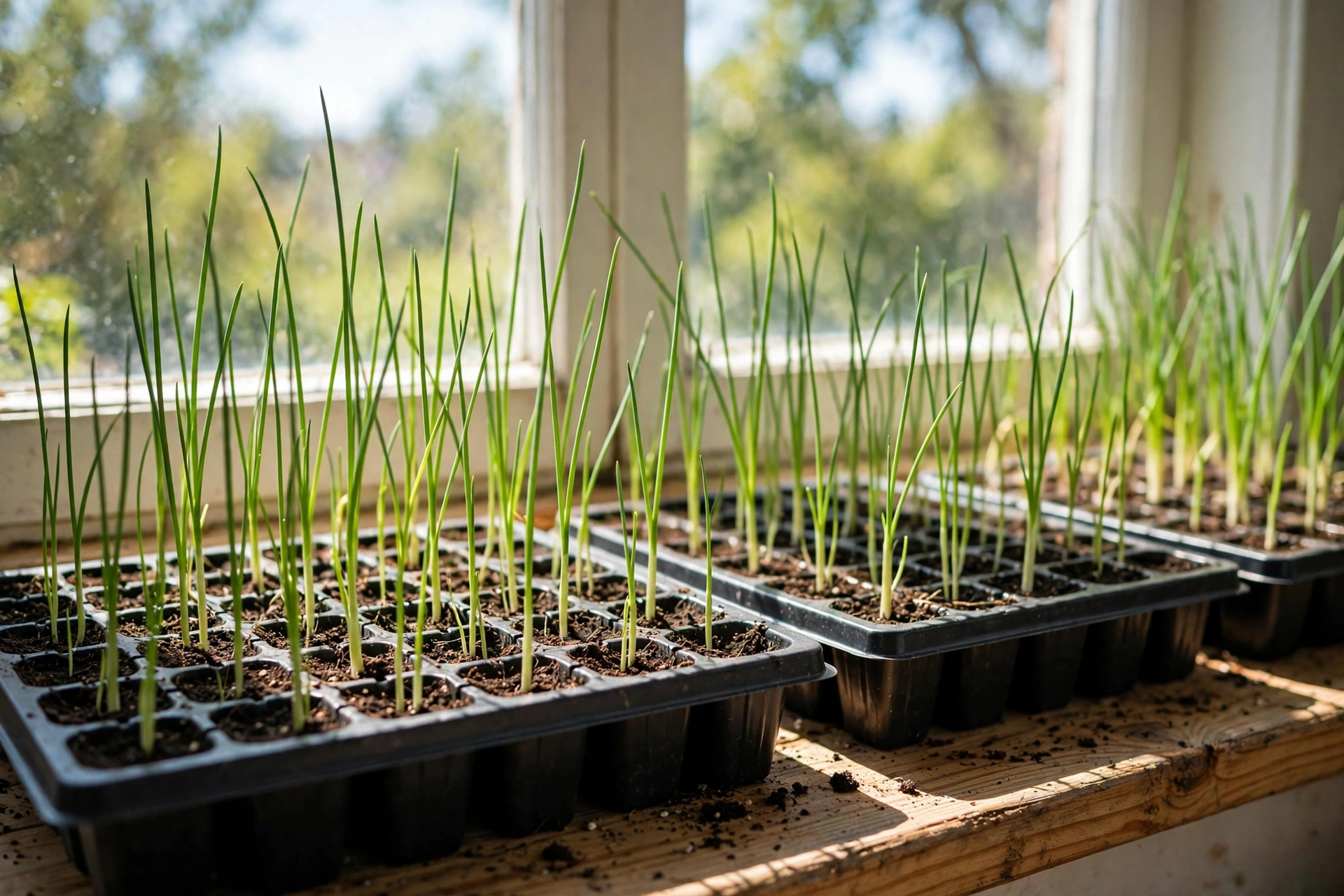
The choice is really about your kitchen. If you eat onions fresh all summer and buy your winter onions at the store, grow sweet. If you want to eat your own onions in February, grow storage. Most gardens should grow both. For the full variety list, see our best onion varieties roundup, and for how to start them, our guide to starting onions from seed indoors.
What Makes an Onion Sweet — and What Makes It Keep
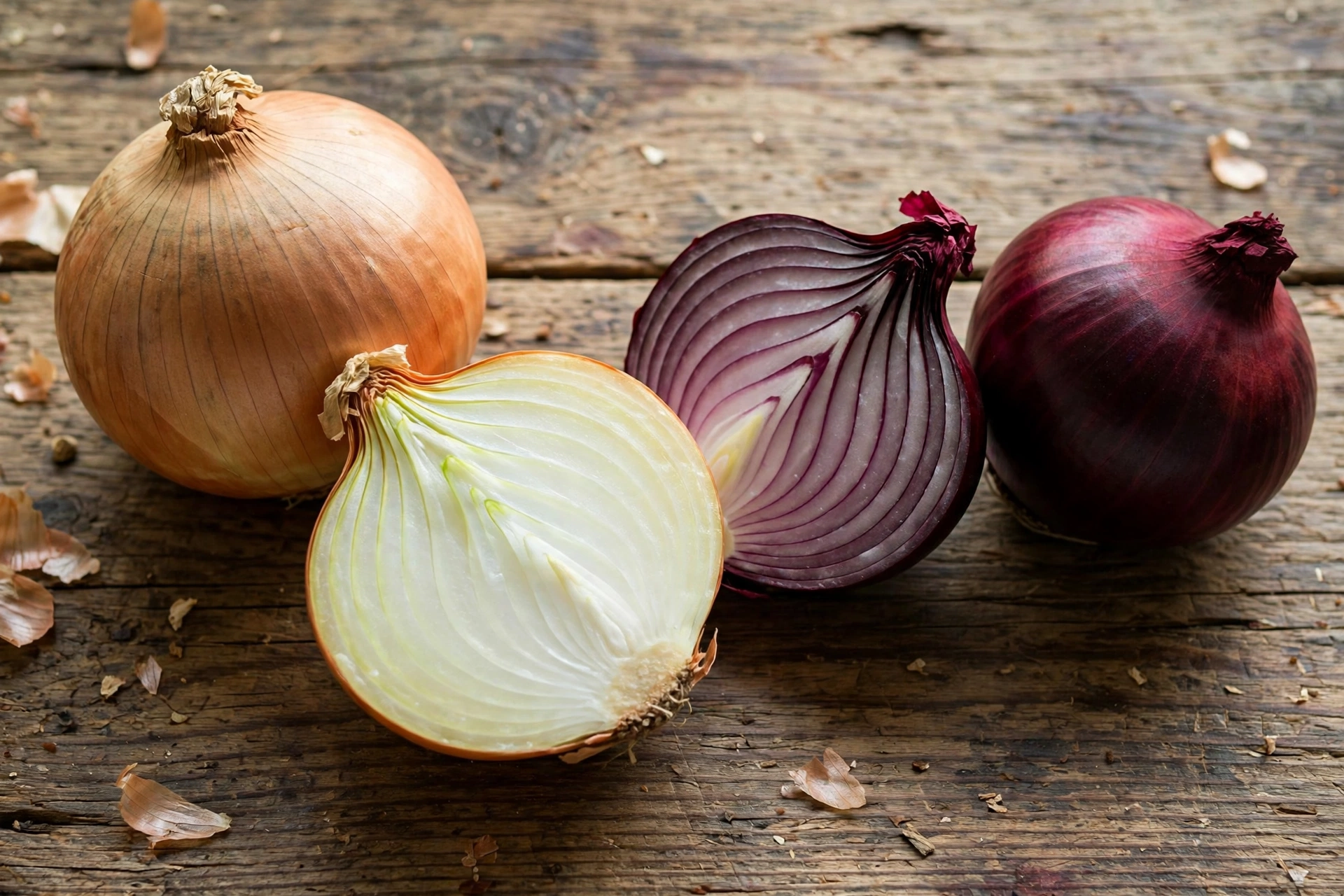
Sweetness in an onion is mostly water and low sulfur. Sweet varieties like Walla Walla and Texas Early Grano hold a lot of water in thin skins, which is why they slice so mild and caramelize so well — and why they rot fast. A storage onion has denser flesh, tighter dry skins, and less water, which is what lets it sit for months without sprouting or softening. A sweet onion kept till spring rots in the basket. A storage onion eaten raw in July bites back. You cannot have both in one bulb.
The photo below shows the two types side by side: the pale yellow sweet onion you eat now, and the dark red storage onion you eat in February.

The Sweet Side: Eat Them Now
Sweet onions are the summer onion. Walla Walla bulbs run 4 to 6 inches across and around 2 pounds, with a juicy mild flesh that is famous for eating fresh — but a short storage period, so they belong on the table within weeks of harvest. Texas Early Grano is the southern version, softball-sized bulbs up to a pound with white flesh and straw-colored skin, and a short to moderate storage period. Yellow Sweet Spanish Utah is the long-day classic, large 3- to 6-inch globes with an amazingly mild flavor, and the same eat-it-soon rule.
Grow sweet onions for the grill, the burger, the salad, and the pan. Do not grow them for the pantry. If your plan is to fill a shelf for winter, a sweet onion is the wrong plant, no matter how big the bulb.
Walla Walla Bulb Onion Seeds
Sweet bulbs up to 2 pounds — the onion for the summer table, not the winter shelf.
The Storage Side: Cure Them Right and They Keep Till Spring
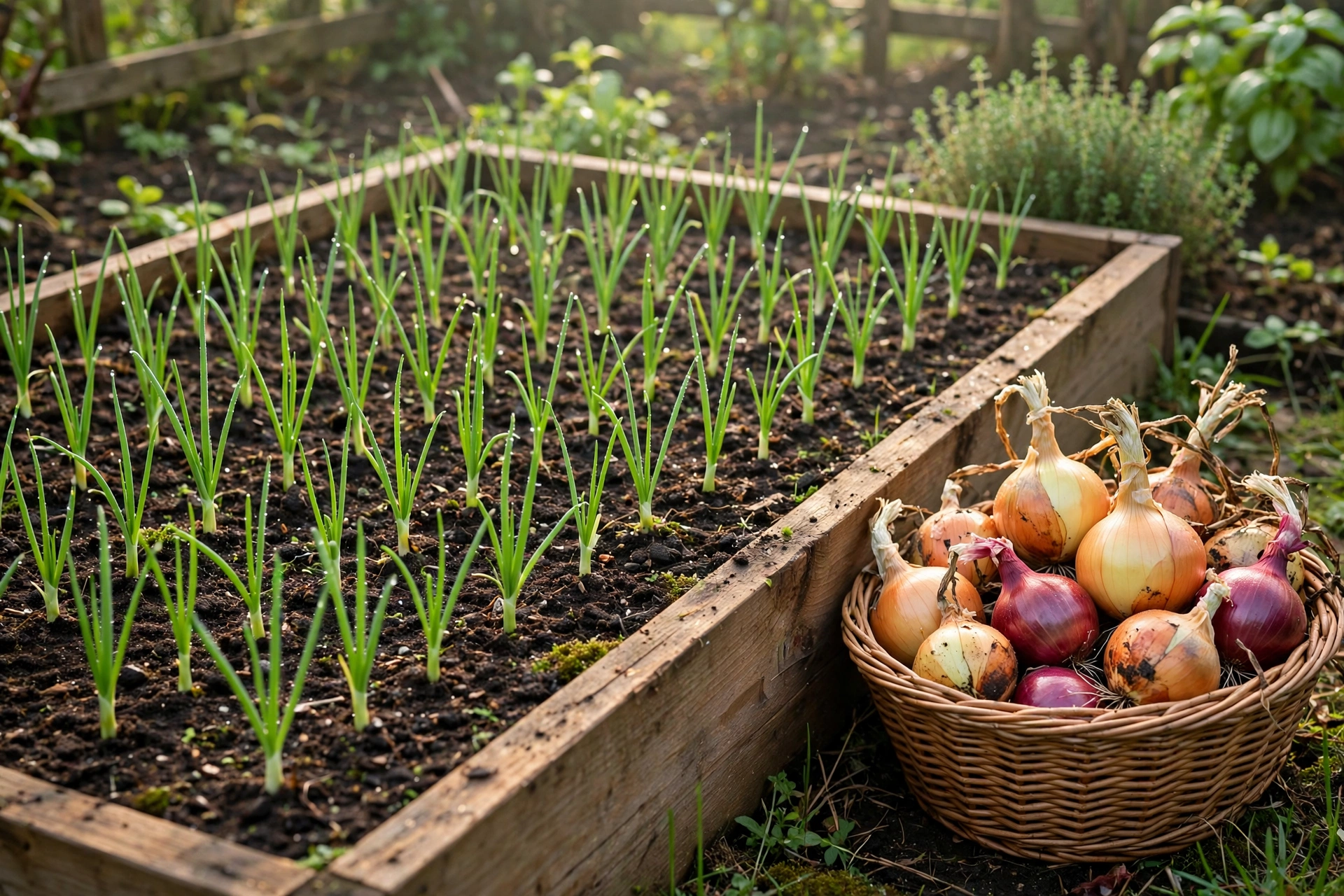
Storage onions earn their keep after harvest, not before it. Monastrell is the keeper in this roundup: uniform red globes 3½ to 4 inches across that store for up to 6 months. But storage is not automatic — it is a process. Harvest when the tops discolor and fall over, lift the bulbs with a fork, and let them cure in a dark, dry place with good air circulation for a week or two. After curing, trim the tops off and store the bulbs in a basket or bowl — not the refrigerator, where the damp and cold push them to sprout.
The trade-off is flavor. A storage onion is sharper than a sweet onion, especially raw. Cooked, the difference mostly disappears — and in February, a homegrown onion that is still firm beats a store-bought one that is not.
Monastrell Bulb Onion Seeds
Uniform red globes that store up to 6 months — the onion for the winter pantry.
The Middle Ground: Red Amposta
Red Amposta is the onion for gardeners who do not want to choose. It is an intermediate-day onion for latitudes 32 to 42, producing large reddish-purple globes with red-and-white rings and a snappy, sweet flavor. It eats beautifully fresh in salads and on burgers, and it keeps better than the true sweets — not a six-month keeper like Monastrell, but a solid middle-ground onion that covers the fall table while the storage crop cures. Gardeners rate it 4.4 from 12 reviews.
The trade-off is that a middle ground is a compromise on both ends. It will not out-store Monastrell, and it will not out-sweeten Walla Walla. If you grow one variety only, it is the best single choice. If you grow two, it is the one to skip in favor of a true sweet and a true keeper.
Red Amposta Bulb Onion Seeds
Snappy, sweet red globes that eat fresh and keep better than the true sweets.
Sweet vs. Storage, Side by Side
| Sweet onions | Storage onions | |
|---|---|---|
| Eat them | Fresh, within weeks of harvest | All winter, after curing |
| Storage life | Weeks — Walla Walla is short, Texas Early Grano short to moderate | Months — Monastrell keeps up to 6 months |
| Flavor raw | Mild, juicy, sweet | Sharper, stronger bite |
| Flavor cooked | Caramelizes beautifully | Difference mostly disappears |
| Curing needed | Minimal — eat them fresh | 1–2 weeks, dark and dry, good air flow |
| Best examples | Walla Walla, Texas Early Grano, Yellow Sweet Spanish Utah | Monastrell, with Red Amposta as the middle ground |
What About Shallots and Bunching Onions?
Shallots and bunching onions play by the same rules with a different payoff. Zebrune shallot is a large, easy-to-peel banana-type shallot with a sweet, mild flavor — but it is a long-day shallot, so it belongs in northern gardens, and the day-length warning matters more here than with bulb onions because a shallot that never bulbs is a season wasted. Solbunch is a specialty bunching onion with sweet, tender stalks made for grilling — the Cebollitas Asadas onion for the taqueria end of the garden. Neither one replaces a bulb onion; both are worth a row if you cook that way.
The Verdict
Grow both. Plant Walla Walla for the summer table and Monastrell for the winter pantry, and you never have to choose between flavor and keeping — you get both, from the same bed, in the same season. If you only have room for one row, plant Red Amposta and accept the compromise. And whatever you grow, cure the keepers properly: a week or two in a dark, dry place is the difference between onions in February and compost in December. For the curing and storage habits that carry over to other crops, our potato curing and storage guide runs on the same principles.