This site contains product affiliate links. We may receive a commission if you make a purchase after clicking on one of these links.
You step out after dark and the walk to the door has gone soft at the edges. You know where the path is, mostly. Your feet know it better than your eyes do, and that is the problem — the one step down to the patio, the curve past the bed, the place where the flagstones end and the lawn begins. A porch light throws a bright circle by the door and leaves everything past it dark.
Vevor’s low-voltage path lights are the low-drama answer to that walk. Twelve small fixtures, each one throwing a warm 3000K pool of light down at the ground, for $126.90. They run on low voltage, so there is no trench to dig and no electrician to book — just a transformer, some cable, and an afternoon. Here is the verdict up front: if your yard has a path worth walking after dark, this is a straightforward, good-looking way to light it, and the owners who have bought this exact 12-pack rate it 4.5 out of 5 across 29 reviews. The one thing to know before you buy is that the transformer is a separate purchase, and the real price of the system is the lights plus that box.
That is how low-voltage lighting works, and once you have it straight, the rest of the decision is easy. The lights are the pretty part. The transformer is the part that makes them glow.
What you are actually buying
Twelve path lights, model JS-LDL003, each one standing about 21.65 inches tall — a proper path-light height, low enough to light the ground and not the faces of the people walking past. Each fixture draws 3 watts and puts out 210 lumens of warm white light at 3000K, which is the color of a porch bulb on a good evening: warm, not yellow, and kind to the garden around it. The whole set weighs 15.43 pounds in the box.
The build is die-cast aluminum with an IP66 waterproof rating, which means rain, snow, and a sprinkler overspray are all part of the job description, not a threat to it. The bulbs are replaceable, so a burned-out bulb is a bulb swap, not a new fixture — a small detail that matters a lot three winters from now, when one light in the row goes dark and you would rather spend two dollars than two hours. Quick connectors come in the box, and the fixtures run on 12 to 24 volts AC or DC, so they will work with the standard low-voltage transformers most yards already use.
What you will not find in the box is a transformer, cable, or timer. The lights are the lights. Everything that powers them is yours to add, which is exactly why the price looks so friendly — and why the next section matters more than the price tag.
The one cost the price tag does not show
Twelve lights at 3 watts each draw 36 watts in total. That is a small load, and it means a modest transformer covers this whole set with room to spare for a few more fixtures later. The transformer is the box that plugs into a standard outdoor outlet and steps the power down to the low voltage these lights want. It is also where the timer or dusk-to-dawn sensor lives, so the lights come on by themselves and you never have to think about them again.
If you already own a low-voltage transformer with spare capacity, this set drops straight into your system. If you do not, budget for one on top of the $126.90 — the lights are only half the purchase. Our guide to sizing a landscape lighting transformer without overloading it walks through the math: add up your watts, leave headroom, and match the transformer to the run length so the last light on the line is as bright as the first.
The honest way to think about the price is this: $126.90 buys twelve well-made fixtures. The system — fixtures plus transformer plus a spool of low-voltage cable — costs more, and it is still a fair price for a lit path. Just do not compare the $126.90 to a solar light that needs nothing else. They are different purchases, and the low-voltage set will outshine and outlast the solar one on the nights that matter.
Living with them
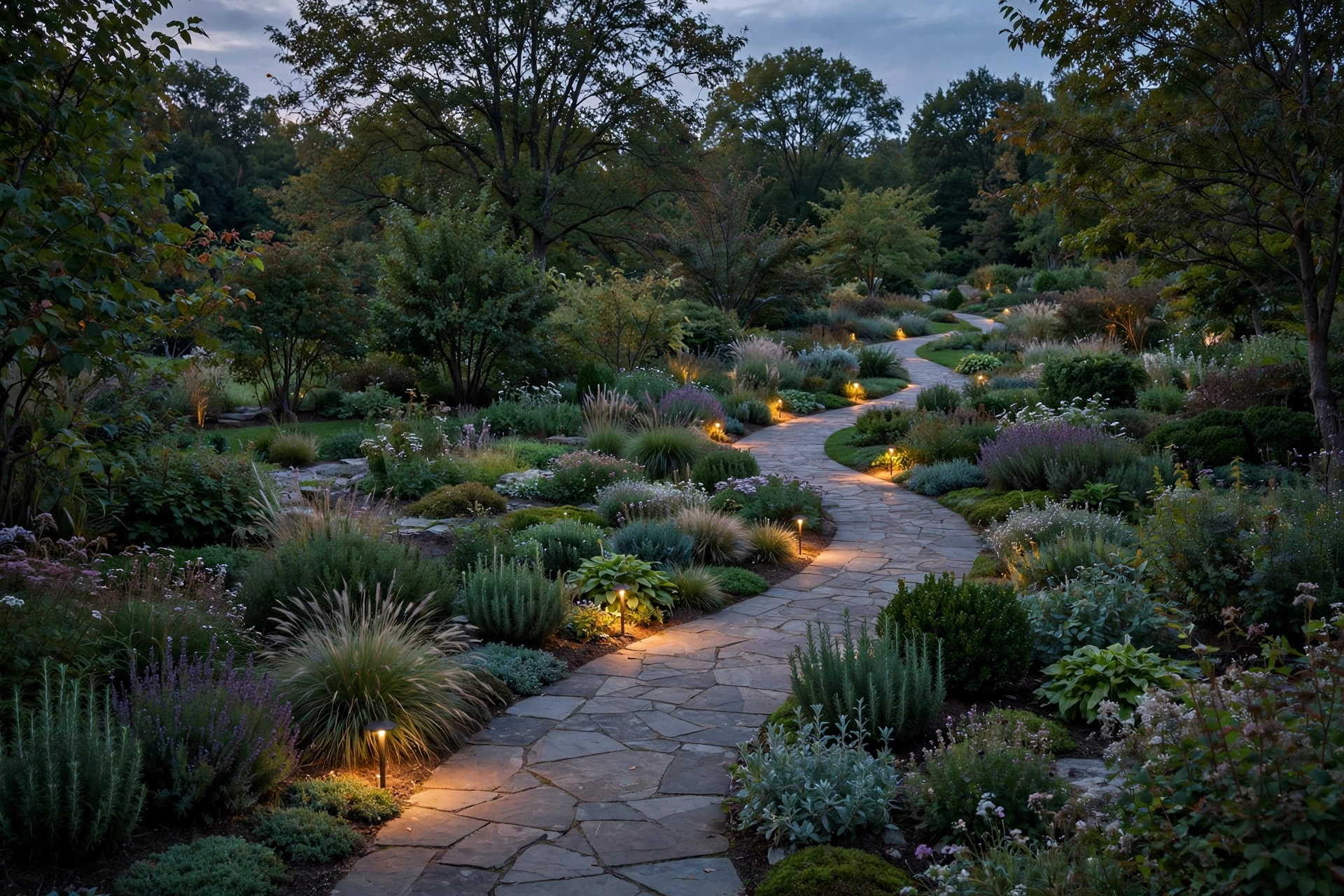
Path lights do one job, and these do it the way the job wants doing: light down, not out. The shade on each fixture keeps the glow on the ground, so you see the step and the edge of the bed without a bulb shining in your eyes. Space them about six to eight feet apart along one side of the path, staggered rather than lined up in a soldier row, and the pools of light overlap just enough that there are no dark gaps. Too close together and the path looks like a runway. Too far apart and dark gaps open up between the pools.
The warm 3000K color is the right call for a garden path. Cool white light on a walkway looks like a parking lot; warm light makes the same stones and plants look like they belong to the evening. Owners rate this set 4.5 out of 5 across 29 reviews, with about one review in ten at one star — a strong score for a fixture that lives outside in every season, with a small share of unhappy buyers, which is exactly what you want to see before you buy twelve of anything. The two things to get right are the ones this review keeps coming back to: check each fixture as it comes out of the box, and settle the transformer question before you order, not after.
Across the whole path-light range, 53 reviews average 4.25 out of 5, which puts this 12-pack a little ahead of its own family. That is a decent sign, not a guarantee — but for a fixture that lives outside in every season, a rating built on real owners is worth more than a spec sheet.
Installation is the pleasant surprise. Push the stake into soft ground, clip the quick connectors onto the cable, and the light is in. The fussy part is the planning: where the transformer sits, how the cable runs, which side of the path gets the lights. Do that part on paper first, with a tape measure, and the physical work takes an afternoon. The most common mistake is lighting the path from both sides at once, which doubles the fixtures and halves the charm. One side, staggered, is almost always enough.
Path, spot, or well: which light does what
A yard lit with only one kind of fixture looks flat, no matter how many lights you buy. Path lights guide feet. Spotlights show off a tree. Well lights disappear into the ground. Here is how they compare, and where this set sits.
| Fixture | Best for | Light | Power each |
|---|---|---|---|
| Vevor path lights, 12-pack | Walks, steps, driveway edges | 210 lumens down at the ground | 3 watts |
| Vevor spotlights, 12-pack | Trees, walls, the front of the house | 450 lumens aimed up at a feature | 6 watts |
| Well lights | Uplighting where no fixture should show | Aimed up, lens flush with the ground | Varies by fixture |
The rule is simple and it never changes: path lights belong on walks, spotlights belong on features, and well lights belong where the fixture itself should disappear. If you are starting from nothing, start with the path, because safety comes first — then add one feature at a time and stop when the yard reads clearly without glare. Our guide to where each light belongs covers the spacing and the mistakes in more detail, and our roundup of the best low-voltage landscape lighting kits is the place to look if you would rather buy the transformer and the fixtures together.
Who should buy them, and who should not
Buy these path lights if you have a walk, a set of steps, or a driveway edge that disappears after dark, if you already own a low-voltage transformer or are happy to buy one, and if you want warm, glare-free light that makes the garden look good instead of just making it visible. Twelve fixtures cover a generous run of path, and at about ten and a half dollars a light, the fixtures themselves are fairly priced for die-cast aluminum with replaceable bulbs.
Do not buy them if you want a light that works straight out of the box with nothing else to buy — a solar path light is the honest answer there, with all the dimmer, shorter-lived trade-offs that come with it. Do not buy them if your path gets no use after dark, either. Twelve lights on a walk nobody walks is decoration, and decoration is a thinner reason to dig a cable trench.
For everyone else, the verdict is simple: buy the lights, buy the transformer, and lay the cable on a Saturday. The first evening you step out and the walk to the door glows back at you, soft and warm and exactly where your feet expect it, you will wonder why you spent so many dark evenings guessing where the path went.
VEVOR Low Voltage Landscape Path Lights, 12-Pack
Twelve warm, glare-free path lights in die-cast aluminum — a 4.5-star owner verdict on 29 reviews, with a transformer to add.