This site contains product affiliate links. We may receive a commission if you make a purchase after clicking on one of these links.
Every yard has one thing worth showing off after dark. A maple with a good shape. A stone wall. The front of the house, which looks plain in daylight and could look wonderful lit from below. At dusk it all goes flat — the tree becomes a dark shape, the wall disappears, and the best part of the yard is the part you cannot see.
Vevor’s low-voltage landscape spotlights are the cheapest honest way to fix that. Twelve aimable fixtures for $66.90 — about five and a half dollars a light — each one throwing 450 lumens of warm 3000K light wherever you point it. Here is the verdict up front: for the price of one dinner out, you can light a whole row of trees, and owners rate this exact 12-pack 4.62 out of 5 across 37 reviews. The one thing to know before you buy is the same one that applies to every low-voltage set: the transformer is a separate purchase, and the real price of the system is the lights plus that box.
Spotlights are the drama in a lighting plan. Used sparingly, they make a yard look intentional after dark. Used everywhere, they make it look like a parking lot. This set gives you twelve chances to get it right, and at this price, you can afford to experiment.
What twelve spotlights actually are
Twelve fixtures, model JS-CDD002, each one about nine inches long and a little over four inches across, weighing 13.67 pounds for the whole set in the box. Each spotlight draws 6 watts and puts out 450 lumens of warm white light at 3000K, with a high color-rendering index that keeps greens green and stone looking like stone instead of washing everything the same dull yellow. The bodies are rust-resistant aluminum with an IP66 waterproof rating, built to sit outside in rain, snow, and summer heat, rated from -13°F to 149°F. Vevor rates the LEDs at 50,000 hours, which is a manufacturer figure, not a promise — but it tells you these are not built as a one-season purchase.
The part that makes them spotlights instead of floodlights is the head. It rotates 270 degrees and tilts 45 degrees, so you can aim the beam up into a canopy, across a wall, or along a fence line, and then lock it there. The kit includes quick connectors and an installation guide, and the fixtures run on 12 to 24 volts AC or DC, so they drop into any standard low-voltage system.
Installation is the pleasant surprise. Each fixture sits on a stake you push into soft ground, and the quick connectors clip onto the low-voltage cable without wire nuts or a junction box. The fussy part is the planning: where the transformer sits, how the cable runs from the house to the farthest light, and which features get a beam. Walk the yard at dusk with a flashlight first and try the angles by hand — ten minutes of pretending will save you an evening of moving stakes. The cable itself buries shallowly under mulch or along a bed edge, and the low voltage means you are not digging a trench or calling an electrician for any of it.
What the box does not hold is a transformer. Power comes from a low-voltage transformer you buy separately, and that box is also where the timer or dusk-to-dawn sensor lives. Twelve lights at 6 watts each draw 72 watts in total, so a modest transformer covers this whole set with room for a few more fixtures later. Our guide to sizing a landscape lighting transformer without overloading it walks through the math: add up your watts, leave headroom, and match the transformer to the run length so the last light on the line is as bright as the first.
Aiming is the whole job
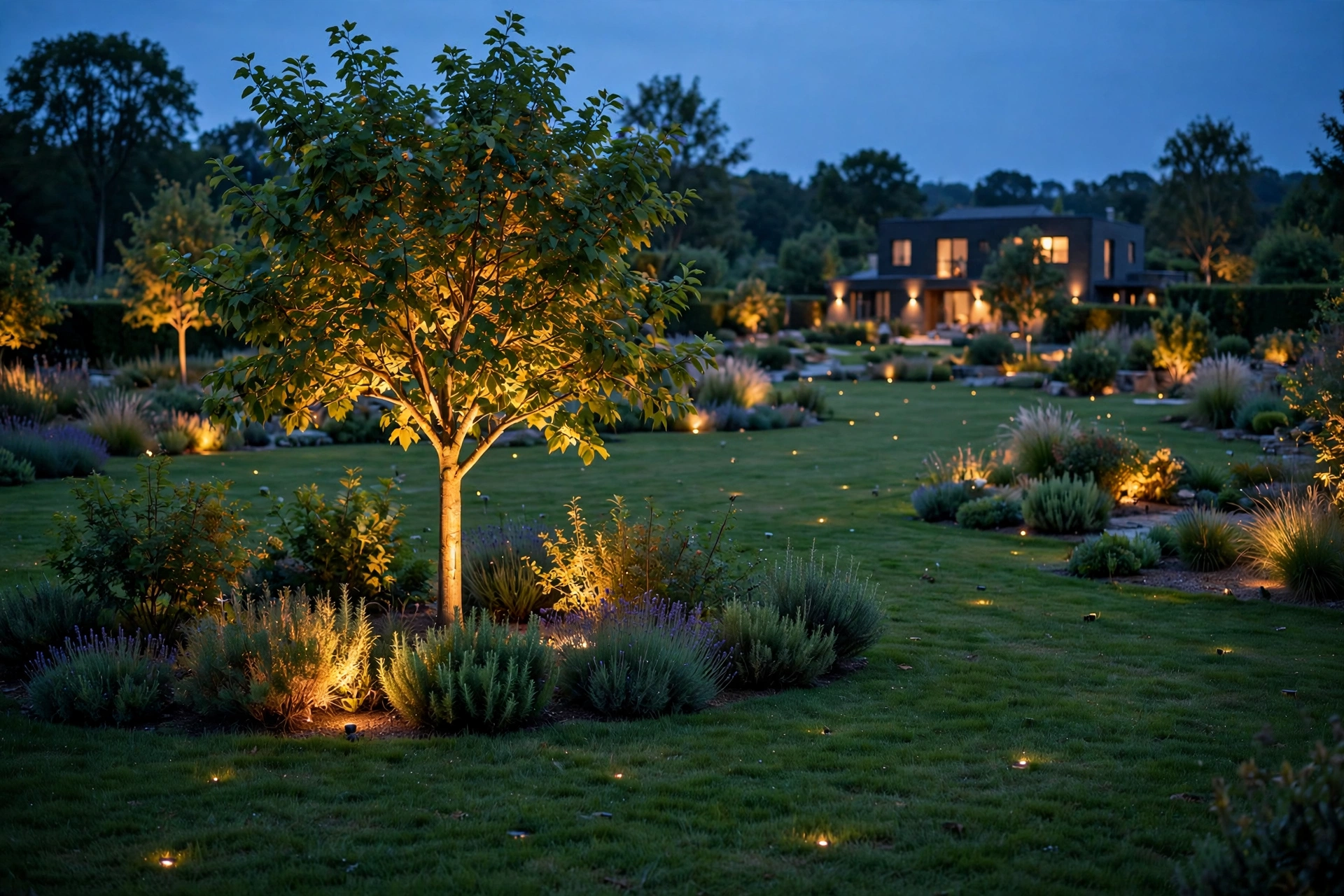
A spotlight is a decision, not a fixture. Put one at the base of a tree and aim it up from a few feet out, not straight at the trunk from directly below, and the canopy catches the light instead of a single bright stripe. Put two on the front of the house, one at each end, and the whole facade reads warm and settled. Put five on the same wall and you have a used-car lot.
The most common mistake with spotlights is lighting everything. A yard where every tree, wall, and bed glows looks lit, not lovely. The unlit areas are what make the lit ones worth looking at. Start with one feature — the tree you love most, or the wall by the door — and step back at night before you add a second. One or two well-aimed spots on a feature beat five lights washing the same surface, and they cost less to run, too.
November is when spotlights earn their keep. The sun is gone by dinner, the garden is bare, and the yard has four dark hours before bedtime that used to belong to summer. A lit tree turns those hours into something worth looking at from the kitchen window, and a lit wall makes the walk from the car feel like coming home instead of stumbling home. Twelve fixtures is enough to cover the front of the house, the big tree, and the bed by the door, with a few spares for the feature you notice next month. That is the real case for a 12-pack: not twelve lights on one tree, but a whole yard lit one good decision at a time.
The other mistake is aiming across a path or toward a seating area, where the beam shines into eyes instead of onto the feature. Light should land on something worth seeing and stop there. If you can see the bulb from the patio chairs, the fixture is pointed the wrong way. Turn it, tilt it, move it a foot to the side — the adjustable head is the whole point of this set, and it takes thirty seconds to fix a bad aim.
Owners rate these spotlights 4.62 out of 5 across 37 reviews — a strong score, and the number to hold onto is the count: 37 owners is a real base, not a handful. The design earns the rest on paper: 450 lumens from 6 watts is genuinely bright for a fixture this size, the adjustable head is the feature you will actually use, and the aluminum body and IP66 seal are built for the weather they will sit in. The honest limit is the one this review keeps coming back to: a spotlight is only as good as its aim, and a set this cheap invites you to light everything. Resist that.
Spot, path, or well: which light does what
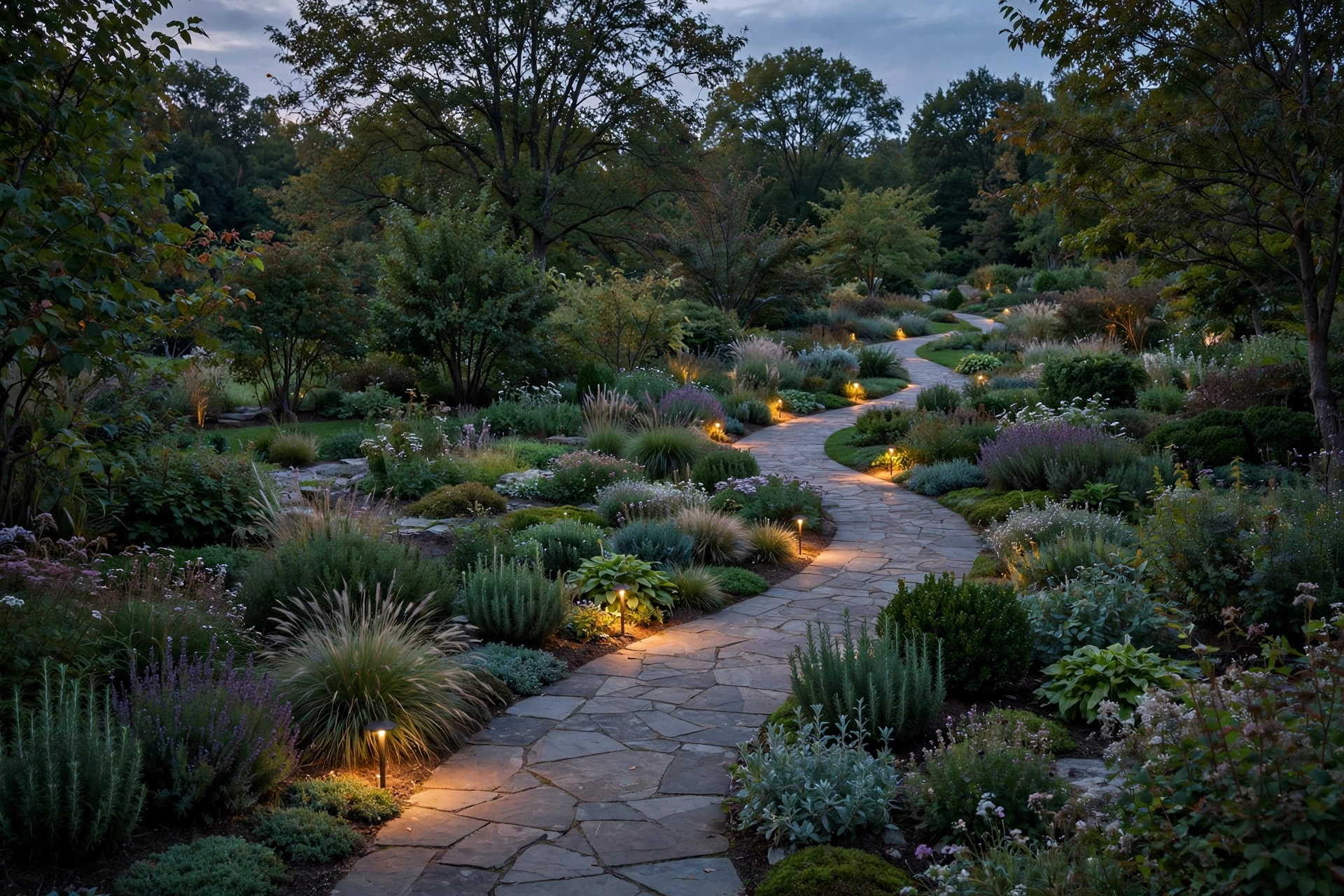
A yard lit with only one kind of fixture looks flat, no matter how many lights you buy. Spotlights show off a feature. Path lights guide feet. Well lights disappear into the ground. Here is how they compare, and where this set sits.
| Fixture | Best for | Light | Power each |
|---|---|---|---|
| Vevor spotlights, 12-pack | Trees, walls, the front of the house | 450 lumens aimed up at a feature | 6 watts |
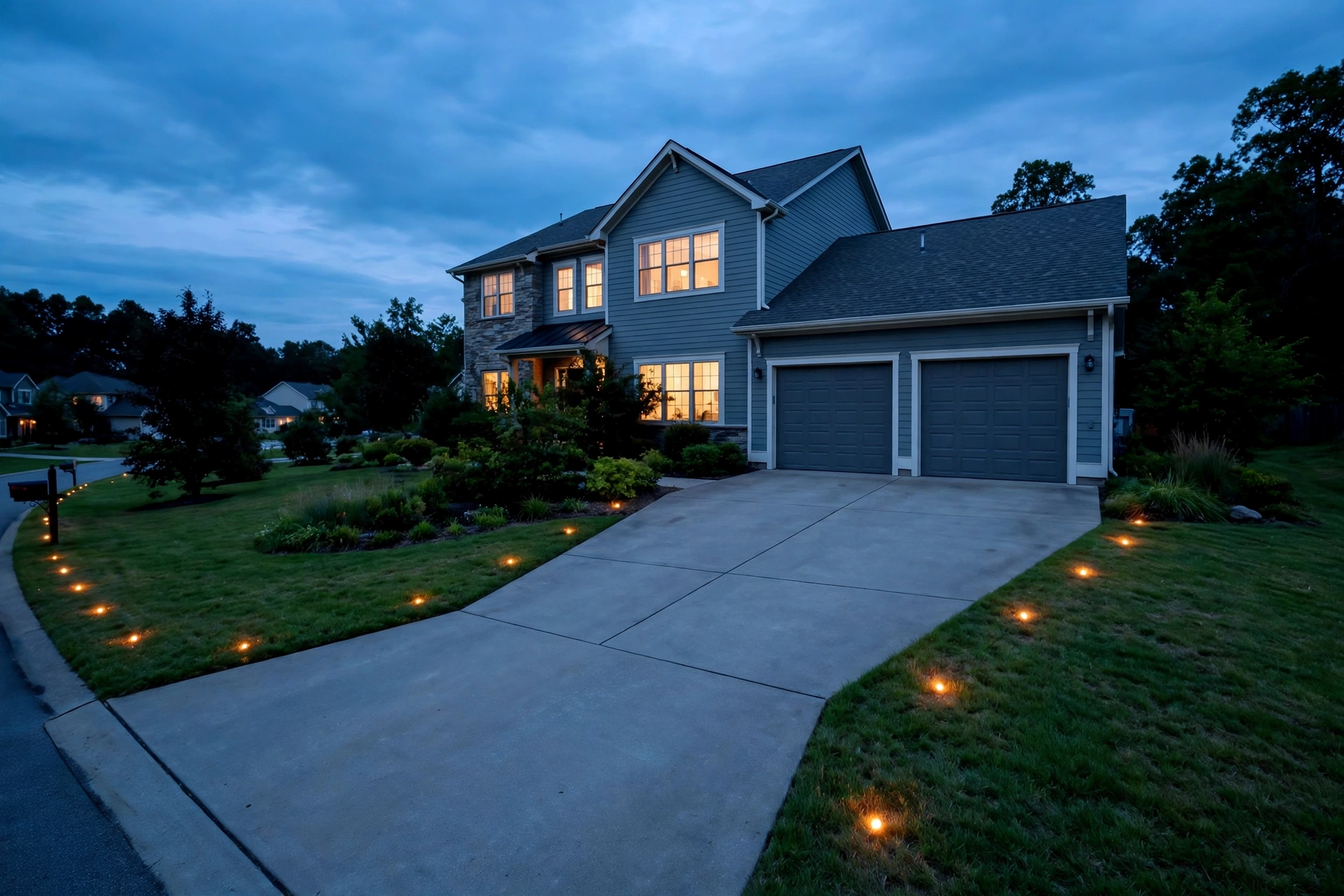
| Vevor path lights, 12-pack | Walks, steps, driveway edges | 210 lumens down at the ground | 3 watts |
| Well lights | Uplighting where no fixture should show | Aimed up, lens flush with the ground | Varies by fixture |
The rule is simple and it never changes: spotlights belong on features, path lights belong on walks, and well lights belong where the fixture itself should disappear. If you already have a lit path, spotlights are the natural next step — one or two trees, the front of the house, and then stop. Our guide to where each light belongs covers the spacing and the mistakes in more detail, and our roundup of the best low-voltage landscape lighting kits is the place to look if you would rather buy the transformer and the fixtures together.
Who should buy them, and who should not
Buy these spotlights if you have a tree, a wall, or a front facade that deserves to be seen after dark, if you already own a low-voltage transformer or are happy to buy one, and if you are willing to aim them, step back, and aim again. Twelve fixtures cover a whole row of features, and at about five and a half dollars a light, experimenting costs almost nothing.
Do not buy them if you want a light that works straight out of the box with nothing else to buy — a solar spot is the honest answer there, with all the dimmer, shorter-lived trade-offs that come with it. Do not buy them if your yard has nothing worth featuring, either. Twelve spotlights aimed at a flat lawn is twelve lights too many, and the money is better spent on path lights for the walk.
For everyone else, the verdict is simple: pick your best tree, set one light at its base, and step back at dusk. The moment the canopy catches the warm light and the rest of the yard goes quiet around it, you will understand why spotlights are the first thing lighting designers reach for — and why twelve of them for $66.90 is a hard price to argue with.
VEVOR Low Voltage LED Landscape Spotlights, 12-Pack
Twelve aimable spotlights with warm 3000K light — a 4.62-star owner verdict on 37 reviews, with a transformer to add.