Landscape & Leisure is reader-supported. When you buy through links on our site, including Botanical Interests seed links, we may earn a commission at no extra cost to you. Prices change, so click through to confirm current pricing.
By the time the soil is warm enough for melons, the rest of the garden is already in — and that is the point. Melons are the last thing you sow for a reason. They are frost sensitive, they sulk in cold soil, and a seed dropped into a 55-degree bed in May will sit there and rot while the packet on the shelf promised you August fruit. Wait for the soil, give the vines room, and the plants do the heavy work.
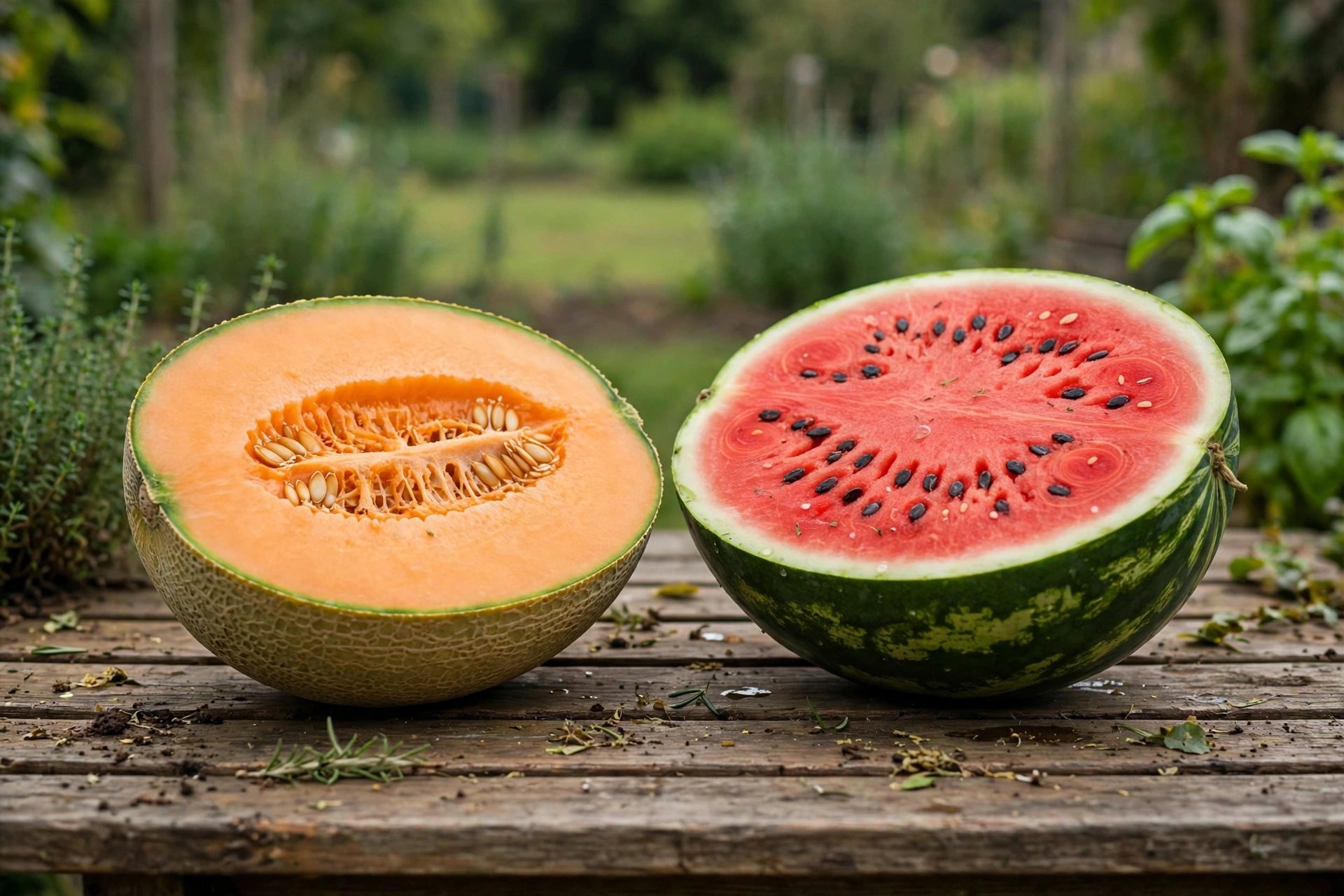
Every melon in our best melon varieties roundup follows the same calendar below, from the 80-day Hearts of Gold to the 90-day Charentais. The cantaloupe-versus-watermelon choice is settled in our cantaloupe vs. watermelon comparison — this guide is the growing itself: when to sow, how far apart, how much water, and how to know when one is ripe.
When to Sow: Wait for Warm Soil
Melons want soil at 70 to 90 degrees, and they want it after the last frost, not before. Direct sowing is the recommended route: one to two weeks after your average last frost date, once the soil has had time to warm. Seeds germinate in 5 to 10 days at those temperatures. In cold soil they germinate slowly or not at all, and a late frost will kill the seedlings outright — melons are frost sensitive.
If your season is short, start indoors 2 to 4 weeks before transplanting, and transplant within two weeks after the last frost. Sow into biodegradable pots you can plant straight into the ground — melon roots are sensitive to disturbance, and a transplant that loses its root ball loses the season. Watermelons are the exception to the indoor start: Botanical Interests recommends starting them indoors only in very short growing seasons, and transplanting only once the soil is at least 60 degrees.
Pros: direct sowing avoids transplant shock entirely; warm soil gives fast, even germination.
Cons: you cannot rush the calendar — a cold May costs you the crop, not just a week.
Spacing: Mounds, Not Rows of Singles
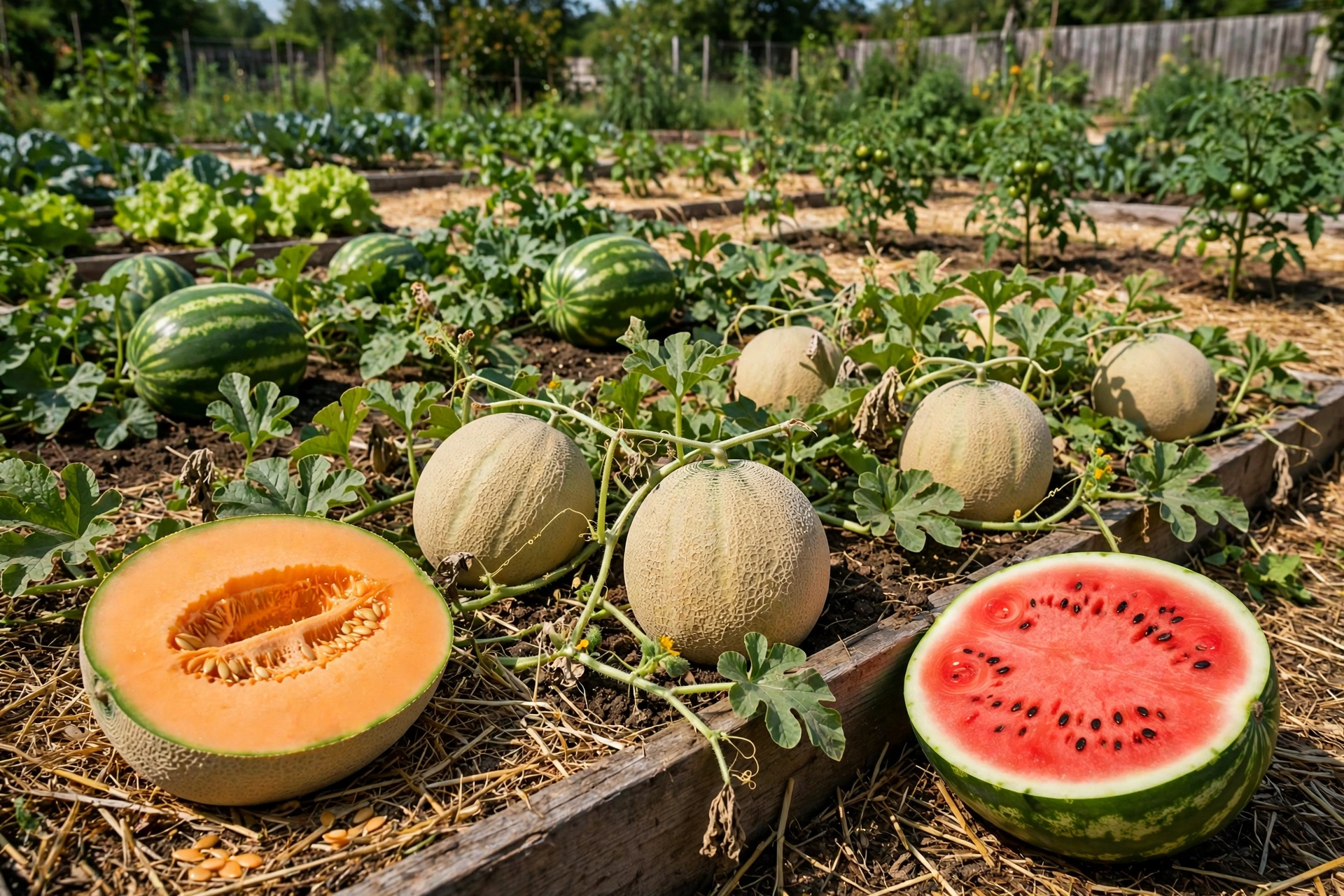
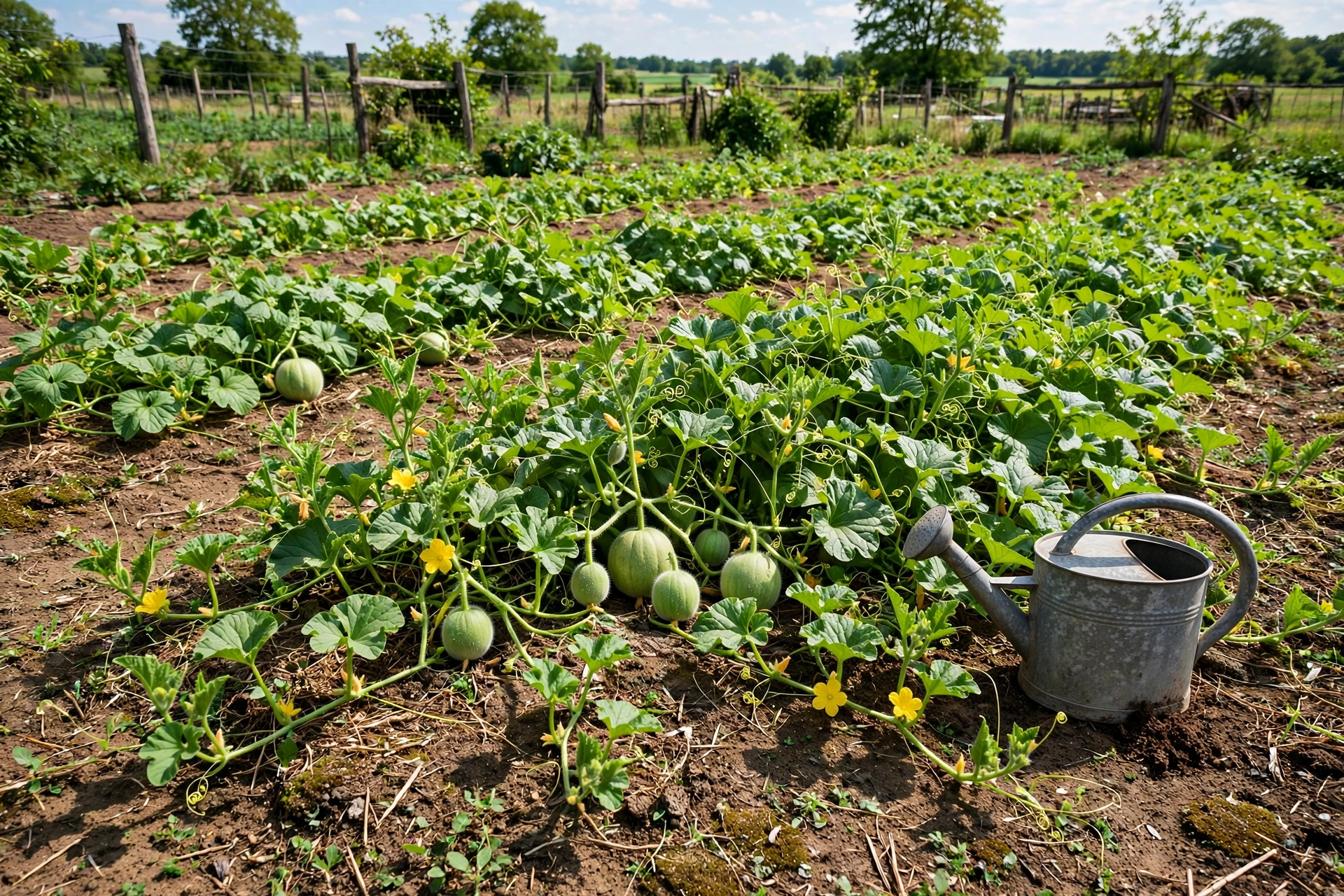
Melons grow on mounds, and the spacing is generous because the vines are. Sow 2 to 3 seeds per mound, a quarter inch deep for cantaloupes and a half inch deep for watermelons, with rows 4 to 6 feet apart. When the seedlings have three leaves, thin to one plant per mound — the strongest one, not the first one. One packet sows 16 to 20 mounds, which is more melon patch than most backyards hold.
The mistake is crowding the mounds to fit one more variety. Vines tangle, fruit hides under leaves, and airflow drops — and a melon patch with no airflow is a melon patch with disease. Give each mound its 4 to 6 feet and let the vines run where they want.
Water: Steady, While the Fruit Is Sizing
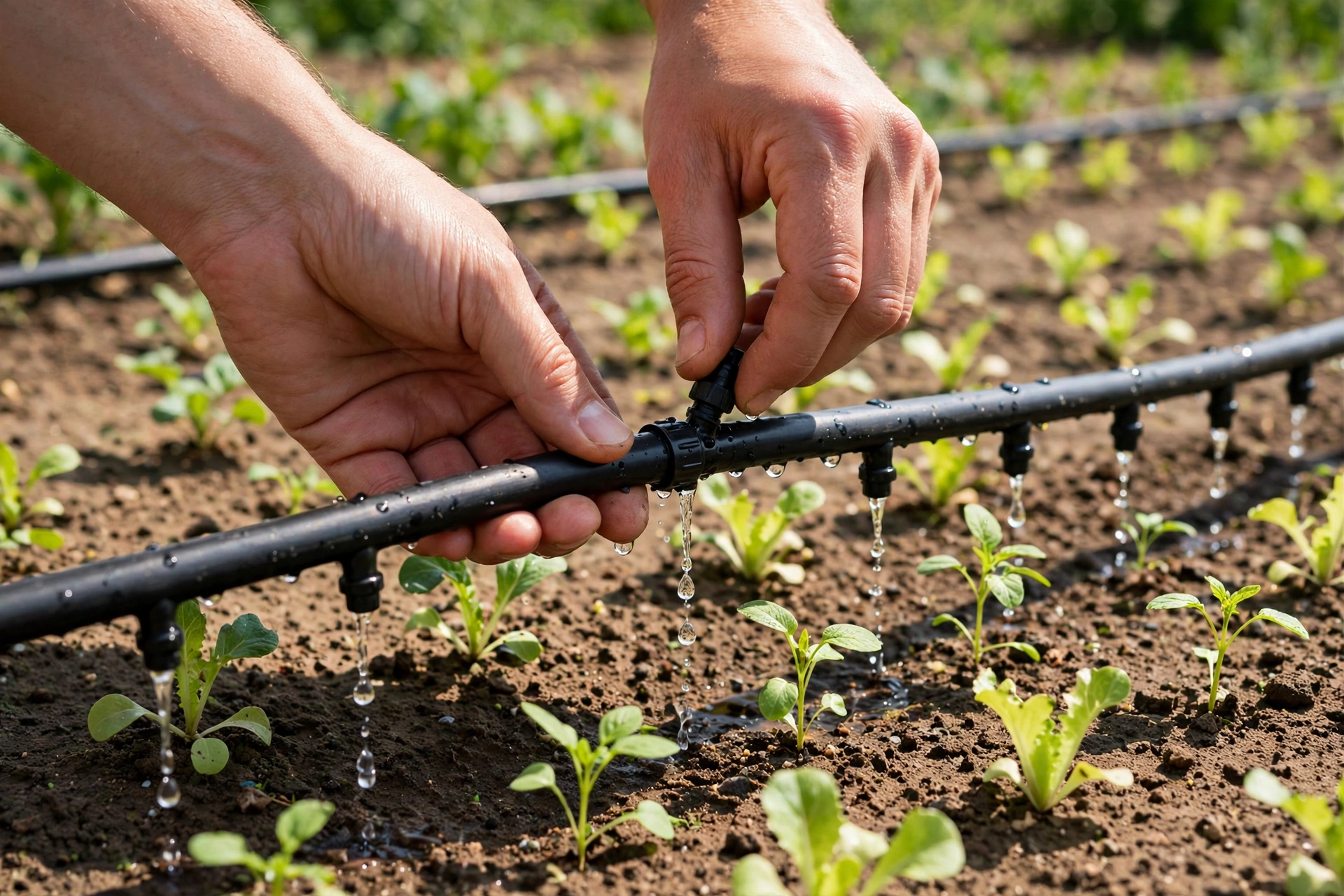
Melons are mostly water, and a dry stretch while the fruit is sizing costs you yield — Hale’s Best Jumbo is more drought tolerant than other melons, but even it loses fruit to a prolonged drought. Keep the soil from drying out while the vines are growing and the fruit is swelling. Full sun all day is non-negotiable — every variety here lists full sun as its light requirement.
One thing not to do: do not move the vines around once fruit has set. Let the fruit lie where it set, and check ripeness without lifting it.
Harvest: Cantaloupes Tell You, Watermelons Make You Guess
A ripe cantaloupe announces itself. The color between the netting turns brown, not green. The blossom end smells sweet and fruity. A crack forms on the stem right where it meets the fruit — the slip stage — and in a few days the melon comes off the vine with a gentle pull. If you have to tug, it is not ready. Charentais plays by slightly different rules: its skin turns from pale green to creamy yellow, and the blossom end yields slightly to gentle pressure. Unlike muskmelons, Charentais does not slip from the vine when ripe, so cut it from the vine instead of pulling.
Watermelons give you four signs, and they do not all arrive at once. The bottom of the melon, where it lies on the soil, turns from light green to yellowish. The surface color turns dull. The skin turns rough and resists your thumbnail. And the little curly tendril on the stem near the fruit turns brown and dry. Check them against the days-to-maturity on the packet — Crimson Sweet at 85 days, Charleston Gray at 85 to 100 — and start checking as the date draws near.
The last few days of ripening on the vine put a lot of sugar into the fruit. A melon picked early will ripen off the vine, but it will never taste like one that finished where it grew.
Which Varieties to Grow
If you are planting for the first time, start with the two that forgive the most. Crimson Sweet is the watermelon — 20 to 25 pounds of brilliant red flesh, resistant to fusarium wilt and anthracnose, and the highest-rated melon in the roundup. Hale’s Best Jumbo is the cantaloupe — 3 to 5 pounds, thick salmon-pink flesh, and the most drought tolerant of the group.
Pros: Crimson Sweet: 85 days, disease resistant, highest gardener rating here. Hale’s Best Jumbo: 3–5 pound fruit, small seed cavity, drought tolerant.
Cons: Crimson Sweet needs a lot of room for one vine. Hale’s Best Jumbo still loses yield in a long dry stretch.
Crimson Sweet Watermelon Seeds
A 20–25 pound watermelon with the highest gardener rating here — the picnic melon, done right.
Hale’s Best Jumbo Cantaloupe/Muskmelon Seeds
The classic cantaloupe — thick, sweet, salmon-pink flesh in a 3–5 pound package.
For the shortest season, Hearts of Gold ripens in 80 days — the fastest melon in the roundup, and the one to plant when the summer is short.
Hearts of Gold Cantaloupe/Muskmelon Seeds
An 1890 heirloom that ripens in 80 days — the cantaloupe for gardens with a short summer.
Melon Timing at a Glance
| Step | When | Detail |
|---|---|---|
| Start indoors | 2–4 weeks before transplanting | Biodegradable pots only; roots are sensitive to disturbance. Watermelons: only in very short seasons. |
| Direct sow | 1–2 weeks after last frost | Soil 70–90°F. Cantaloupe ¼” deep; watermelon ½” deep. Germination 5–10 days. |
| Thin | At 3 leaves | 2–3 seeds per mound, thin to 1 plant per mound. Rows 4–6′ apart. |
| Harvest | 80–100 days from sowing | Cantaloupe: slip stage, brown netting, aroma. Watermelon: yellow belly, dull rind, dry tendril. |
What to Watch Next
The sign the timing worked is a vine that runs hard by midsummer and sets fruit it can finish. The mistake that undoes it is sowing into cold soil — a seed that rots in May is a melon you never get to taste in August. Wait for 70 degrees, give each mound its space, and let the last few days on the vine do the sweetening.