Landscape & Leisure is reader-supported. When you buy through links on our site, including Botanical Interests seed links, we may earn a commission at no extra cost to you. Prices change, so click through to confirm current pricing.
A melon patch is really two decisions in one: which fruit you want on the table in August, and how much garden you are willing to give up to get it. Cantaloupes ask for a mound and some patience. Watermelons ask for a corner of the yard and a whole summer. The five varieties below are the melons Botanical Interests has in stock right now, and they cover the whole range — a French cantaloupe too fragile for grocery stores, a 3-pound heirloom that ripens in 80 days, and watermelons up to 35 pounds with a USDA pedigree.
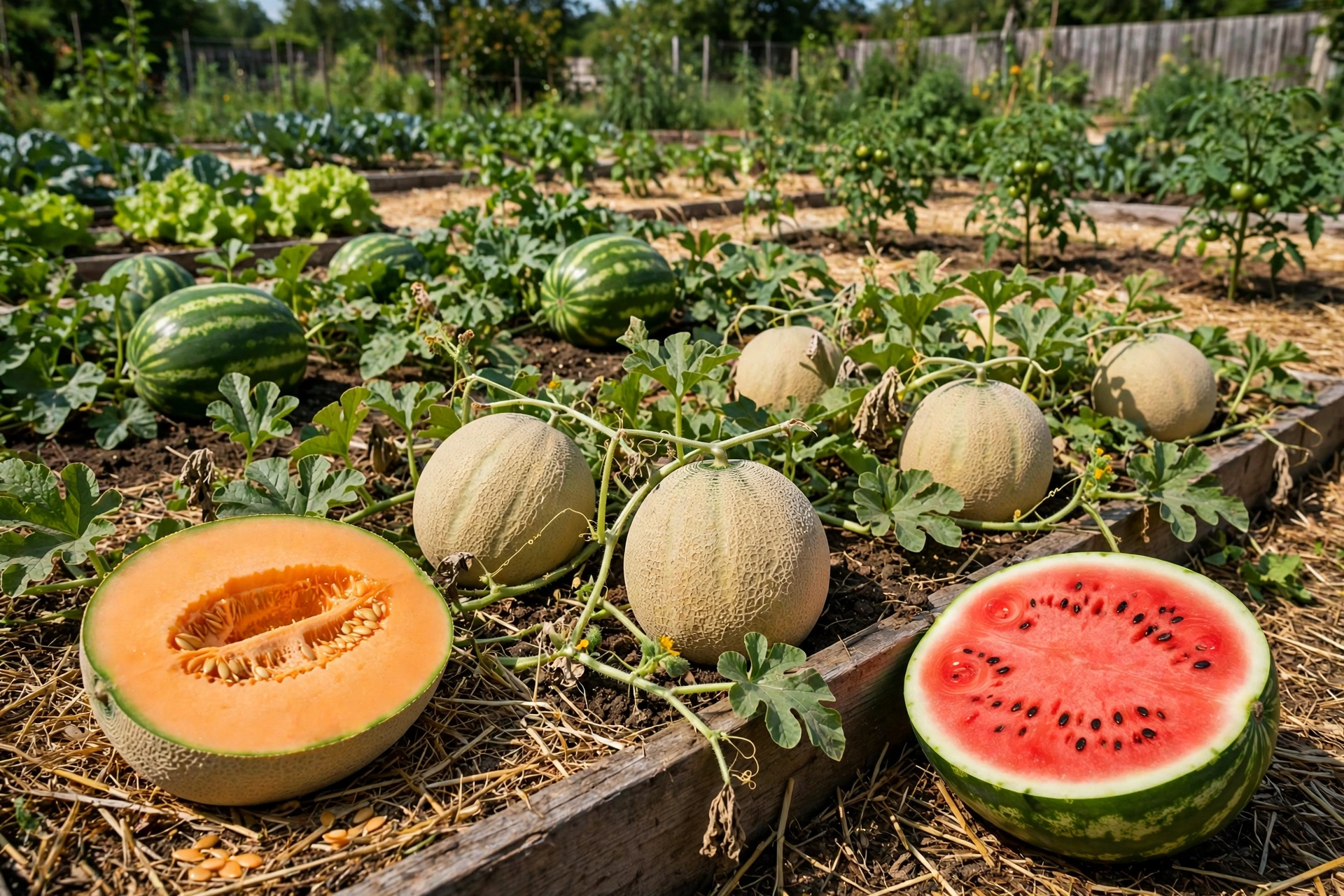
Every melon here wants the same things: full sun, soil at 70 to 90 degrees, and rows 4 to 6 feet apart. What differs is the fruit, the wait, and how you know it is ripe. For the planting itself, see our guide to growing melons. For the bigger question — cantaloupe or watermelon — see our cantaloupe vs. watermelon comparison.
Best Overall: Crimson Sweet Watermelon
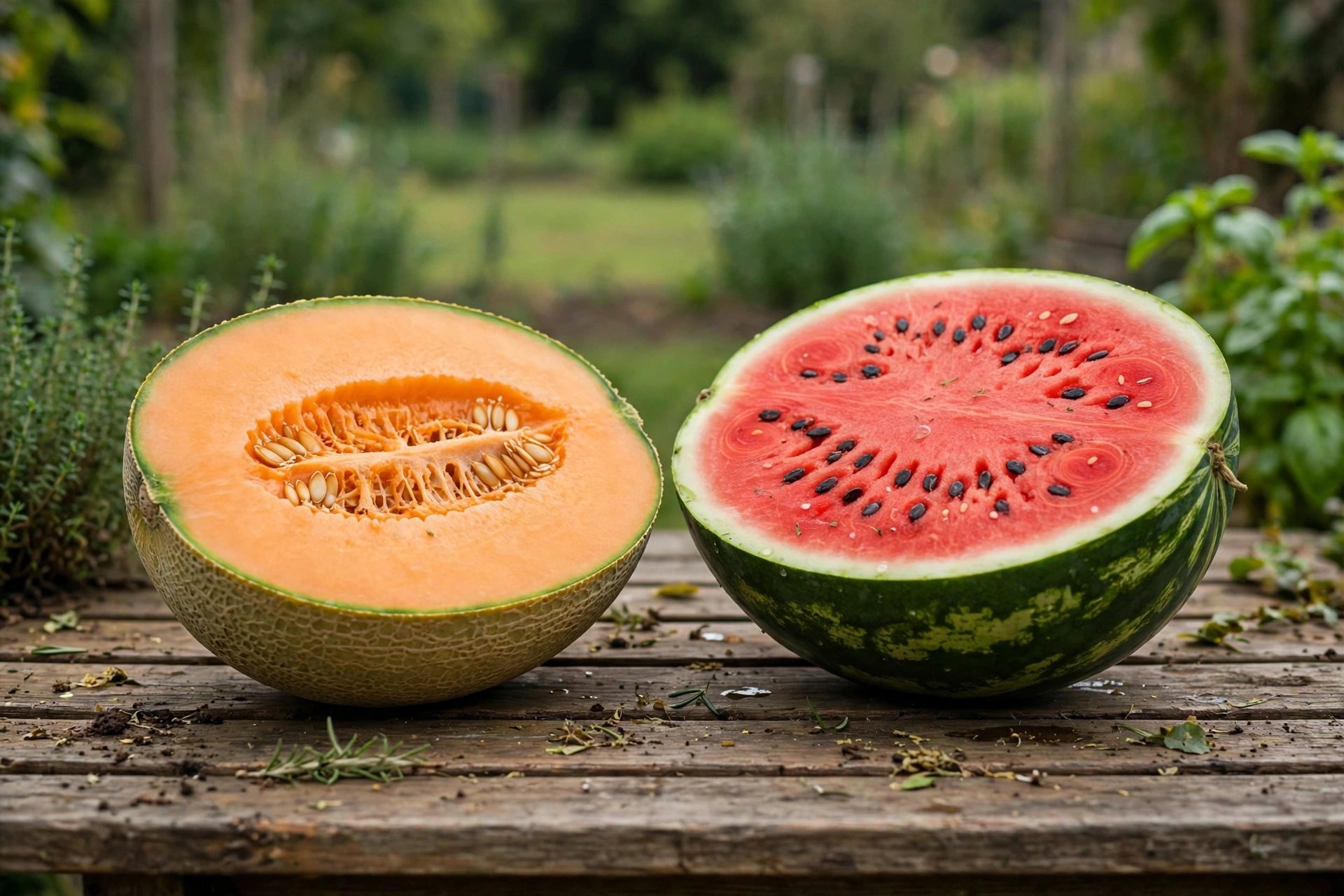
Crimson Sweet is the watermelon to plant when you have the room and you want the picnic melon everybody pictures. The fruit runs 20 to 25 pounds, about 12 inches by 10, with brilliant red, crisp, very sweet flesh under a medium-green rind striped dark green. It matures in 85 days and carries resistance to fusarium wilt and anthracnose, the two diseases that end a watermelon summer early. Gardeners rate it 4.8 from 8 reviews, the highest rating of any melon here, and Botanical Interests notes it grows well even in northern climates.
The trade-off is size, and it is not a small one. A 20-pound fruit needs a vine with room to run and a season long enough to finish it. If your garden is a couple of raised beds, this is the wrong melon — the cantaloupes below give you the same sweetness in a package you can carry with one hand.
Pros: brilliant red, crisp, very sweet flesh; 20–25 pound fruit; resists fusarium wilt and anthracnose; 85 days to maturity; grows well in northern climates.
Cons: fruit this big needs a lot of space; one vine feeds a crowd, not a single household.
Crimson Sweet Watermelon Seeds
A 20–25 pound watermelon with the highest gardener rating here — the picnic melon, done right.
Runner-Up: Hale’s Best Jumbo Cantaloupe
Hale’s Best Jumbo is the cantaloupe for gardeners who want the classic melon and nothing to argue about. The fruit averages 3 to 5 pounds, about 6 inches across, heavily netted, with very sweet, thick, salmon-pink flesh and a small seed cavity — more fruit in every slice. It matures in 85 days, and the plants are more drought tolerant than other melons, which matters in a hot July. Gardeners rate it 4.8 from 11 reviews, the same top score as Crimson Sweet, with more reviews behind it.
The trade-off is that drought tolerance has limits. Melons are mostly water, and a long dry stretch still costs yield even on a tougher plant. Keep the soil from drying out while the fruit is sizing, and Hale’s Best Jumbo does the rest.
Pros: 3–5 pound fruit with thick, sweet flesh; small seed cavity means more to eat; more drought tolerant than other melons; 85 days to maturity.
Cons: a long dry stretch still reduces yields; a standard cantaloupe, not a novelty — no surprises, good or bad.
Hale’s Best Jumbo Cantaloupe/Muskmelon Seeds
The classic cantaloupe — thick, sweet, salmon-pink flesh in a 3–5 pound package.
Best for Short Seasons: Hearts of Gold Cantaloupe
Hearts of Gold is the cantaloupe to plant when the season is the constraint. At 80 days it is the fastest melon here, and Botanical Interests calls it out as a variety that can be grown in short-season climates. The fruit runs about 3 pounds, up to 6 inches across, with deep orange flesh that is firm, juicy, and aromatic, under a ribbed, heavily netted skin. It is an heirloom from 1890, a cross of ‘Osage’ and ‘Nettedgem’, and it carries the most gardener reviews of any melon here — 4.5 from 17.
The trade-off is that a 3-pound melon is a one-sitting melon. A family eats it at lunch and it is gone. That is not a flaw if you plant a few mounds, but do not expect one vine to keep the fridge stocked the way a watermelon does.
Pros: 80 days — the fastest melon here; bred for short-season climates; firm, juicy, aromatic flesh; most-reviewed melon in this roundup.
Cons: 3-pound fruit is gone in one sitting; ribbed skin hides the color change, so check the aroma and the slip.
Hearts of Gold Cantaloupe/Muskmelon Seeds
An 1890 heirloom that ripens in 80 days — the cantaloupe for gardens with a short summer.
Best Flavor: Charentais Cantaloupe
Charentais is the melon you grow because you cannot buy it. It is a true cantaloupe bred in France around 1920, about a pound and a half, the size of a small grapefruit, with smooth light-green skin banded dark green and deep orange flesh that smells spicy and delicate. The fruit is so tender and fragile that shipping it is impractical — which is exactly why it never shows up in grocery stores, and why the home garden is the only place to taste one. It matures in 90 days, the longest wait of the cantaloupes here. Gardeners rate it 4.1 from 15 reviews.
The trade-off is the rating, and it is honest to say so. Charentais has the lowest gardener rating of the four picks here, and a few gardeners report spotty germination — sow a few extra seeds per mound and thin to the strongest plant. The reward is a melon no store can sell you, and the risk is a thin stand if you sow exactly to the packet.
Pros: deep orange flesh with a spicy, delicate aroma; a true French cantaloupe you cannot buy in stores; small fruit, easy to carry and serve.
Cons: lowest gardener rating of the four picks here at 4.1; some gardeners report spotty germination; 90 days — the longest wait of the cantaloupes.
Charentais Cantaloupe Melon Seeds
A true French cantaloupe too fragile to ship — the flavor no grocery store can sell you.
The One to Skip: Charleston Gray Watermelon
Charleston Gray is a fine watermelon with a real pedigree — bred by USDA watermelon breeder Charles Andrus in Charleston, South Carolina, the first variety resistant to both fusarium wilt and anthracnose, with greenish-gray skin that protects the fruit from sunburn. The problem is the size of the commitment. The fruit runs 22 to 26 inches long and 25 to 35 pounds, the plant produces only one or two of them, and it needs 85 to 100 days, the longest season of any melon here. It also carries the lowest gardener rating of the five, 3.5 from 8 reviews. If you have a big garden and a long summer, it is a classic. For most home gardens, Crimson Sweet gives you the same sweet red flesh in a smaller, faster package.
Side-by-Side Comparison
| Variety | Type | Days to maturity | Fruit | Gardener rating |
|---|---|---|---|---|
| Crimson Sweet | Watermelon | 85 | 20–25 lb | 4.8 / 8 |
| Hale’s Best Jumbo | Cantaloupe | 85 | 3–5 lb | 4.8 / 11 |
| Hearts of Gold | Cantaloupe | 80 | 3 lb | 4.5 / 17 |
| Charentais | Cantaloupe | 90 | 1.5 lb | 4.1 / 15 |
Bottom Line
If your garden can spare the room, plant Crimson Sweet — a 20-pound watermelon with the highest gardener rating here, and the one your August table will remember. If space is tight, Hale’s Best Jumbo gives you the same 4.8 rating in a 3-to-5-pound cantaloupe that ripens on the same schedule. And if you want the melon no store can sell you, sow Charentais a few seeds thick and wait the 90 days — the flavor is the reason the variety has lasted a century.