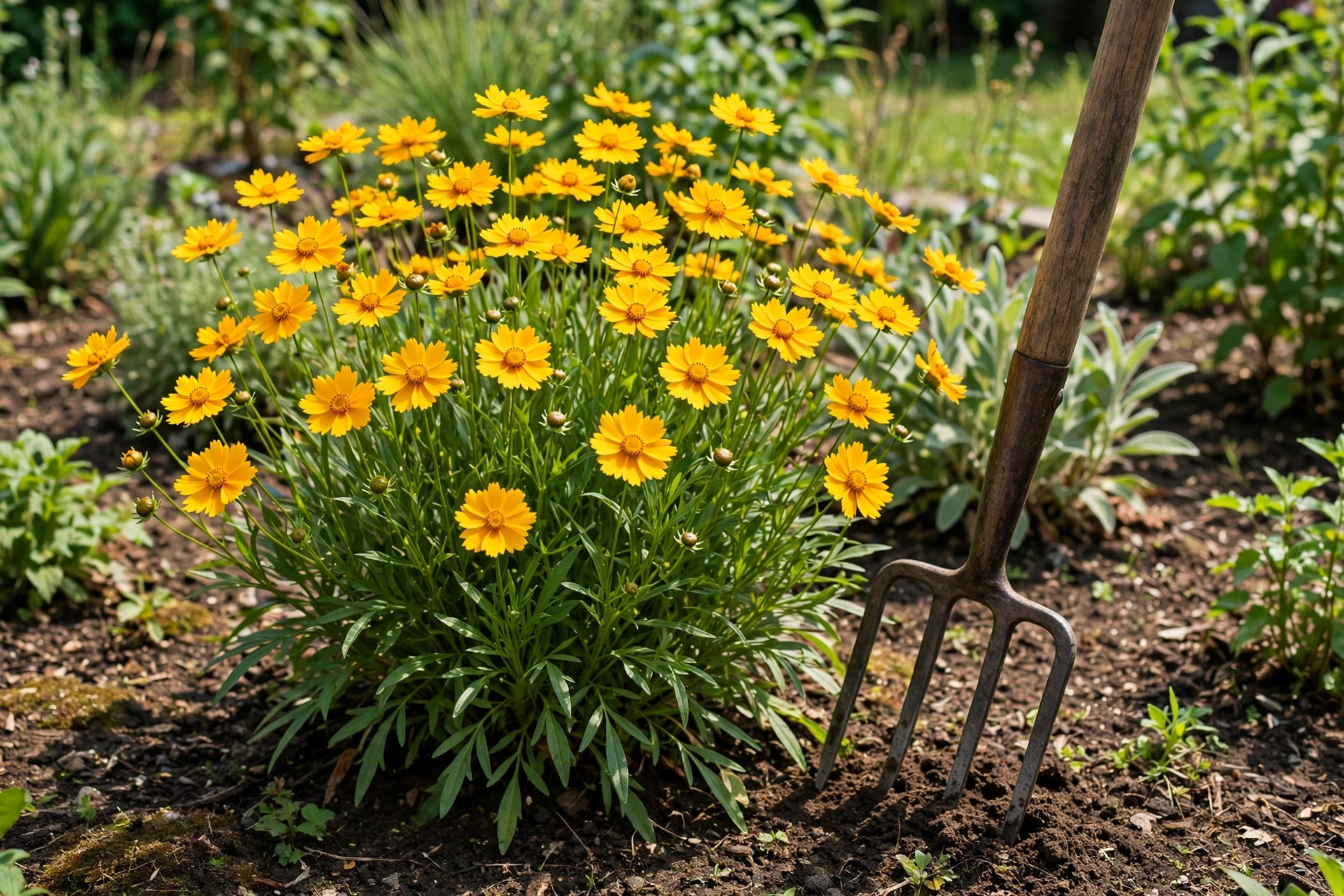
Fall is when coreopsis shows its hand. The clump that flowered wall to wall in June now blooms in a ring, the center has gone thin and woody, and the whole plant looks tired even though the season is not over. The clump has outgrown its own roots, and no amount of extra water fixes that. The fix is division.
Coreopsis — tickseed — is a generous bloomer, flowering from early summer to the first frost in zones 3 to 9. But it is also a fast clumper, and a clump left alone for several years spends its energy maintaining old growth instead of making new flowers. Division resets that balance, and the plant pays you back the next season.
Why Coreopsis Needs Dividing
A coreopsis clump grows outward from its crown, and the oldest growth sits in the middle. After a few years the center goes woody and stops producing shoots, while the outer ring keeps spreading. The result is a doughnut: flowers at the edges, a dead-looking hole in the middle, and fewer blooms overall for the space the plant takes up.
Division solves it by discarding the spent center and replanting the vigorous outer growth. The new pieces root quickly, flower the following season, and the clump stays compact instead of sprawling. Clemson Extension puts the interval at every one to two years to maintain vigor; Cornell’s growing guide for threadleaf coreopsis says every two to three years. In practice, every two to three years suits most gardens — sooner if the center thins early.
Spring or Fall: Which Season to Pick
Both windows work, and the choice comes down to your climate and your calendar.
Spring is the easy default. Divide as new shoots emerge, just as the foliage starts to push. The divisions have the full growing season to establish, and spring-divided plants often bloom a little later than usual that first year — a small delay for a much stronger clump.
Fall works where winters are mild. Divide in late summer or early fall, at least six weeks before the first frost, so roots have time to settle before the ground freezes. In cold climates, fall division is the riskier window: a division that has not rooted before freeze-up may not survive the winter.
If you are dividing this fall, do it soon — once frost is only weeks away, spring is the safer call. When in doubt, wait for spring. Coreopsis is patient, and a clump divided in April will out-perform one divided too late in fall.
How to Divide Coreopsis
1. Water the day before. A well-watered clump lifts cleanly and the roots come out intact. Dry soil crumbles and takes fine roots with it.
2. Lift the whole clump. Dig around the crown with a spading fork and lever the entire root mass out of the ground. Coreopsis roots are fibrous and shallow, so the clump usually comes up in one piece.
3. Throw the center away. This is the step most gardeners skip, and it is the one that matters most. The woody middle will not recover — compost it and keep only the vigorous outer sections, each with several healthy shoots and a good portion of roots.
4. Split into generous pieces. Pull the outer growth apart by hand or cut through it with a sharp knife. Each division should have three or four vigorous shoots at minimum; small, single-shoot pieces are slow to recover.
5. Replant at the same depth, 12 to 24 inches apart. Set each division so the crown sits at the level it grew before, firm the soil, and water it in. Coreopsis wants full sun — at least six hours — and soil that drains freely. Wet ground in winter is harder on it than cold.
Aftercare and the First Season Back
Keep the divisions evenly watered until new growth appears, then let them settle into normal care. Coreopsis is drought-tolerant once established and does not want rich soil or heavy feeding — too much nitrogen grows leaves at the expense of flowers.
Deadhead spent blooms through the season to keep flowers coming, and cut the plant back by about a third in late summer to encourage a fall flush. Leave the spent stems standing over winter in cold climates — they protect the crown — and cut them back in early spring.
A divided clump usually flowers well the following season. If a division sulks, check the site before dividing again: persistent winter wet, heavy shade, or root competition will defeat every new division the same way.
Where the New Pieces Go
Coreopsis divisions are the easiest way to fill a sunny border without buying new plants. Tuck them along a walk, into a spot where a clump went woody, or into a container for a season. The same timing judgment in the fall-division decision guide applies — spring first, fall only with six weeks before frost — and the soil and mulch guidance for divided perennials covers what to put around them. For the bigger picture on which perennials take splitting well, the coneflower dividing guide makes a good companion read — coneflowers and coreopsis age the same way, and divide the same way too.
Split coreopsis in spring, every two to three years, keep the vigorous outer growth, and the clump that was blooming in a ring will flower wall to wall again.