A sedum clump gone woody in the middle, with flowers only around the edges and stems flopping outward by August, is not a sick plant. It is a crowded one, and the fix is division.
Sedum — stonecrop — is one of the most forgiving perennials to split. Its fleshy roots hold water, its stems root easily, and a clump divided well in spring or fall comes back stronger the next season. The trick is knowing which sedums need dividing, when to do it, and how small a piece you can take.
Is Your Sedum Ready to Divide?
Not every sedum needs splitting. Creeping types like Sedum spurium spread by rooting stems and mostly look after themselves. The candidates for division are the upright, clump-forming sedums — ‘Autumn Joy’ and its cousins — that grow into a single dense mound.
Look for these three signs:
- A woody, bare center. The middle of the clump stops producing new shoots while the edges keep growing.
- Fewer flowers for the size of the plant. A clump that used to flower across its whole crown now blooms only at the rim.
- Stems that flop open. Tall stems splay outward and leave a hole in the middle, especially after rain.
One sign is a nudge; two or three together mean the clump has outgrown its space. Divide every three to four years, or when those signs show up — whichever comes first.
When to Divide Sedum
Spring is the safest window in cold climates: divide just as new shoots emerge, before the plant puts on serious growth. The divisions have the whole season to root before winter.
Fall division works too, in milder climates — but give the pieces at least six weeks before the first frost so roots can settle. In zones where the ground freezes hard, spring is the better bet. Never divide in the heat of summer or in frozen soil; both stall recovery.
There is a useful rule of thumb behind the timing. Spring- and summer-blooming perennials are generally divided in fall, and fall bloomers in spring. ‘Autumn Joy’ blooms in late summer and fall, so spring division fits it well — and that is the window most gardeners use.
How to Divide Sedum
1. Water the day before. Moist soil lifts cleanly and the roots come out with less tearing. Dry soil crumbles and takes fine roots with it.
2. Cut tall stems back first. For upright varieties, trim the stems to about 6 inches before you dig. Shorter stems are easier to handle and the plant loses less water while it re-establishes.
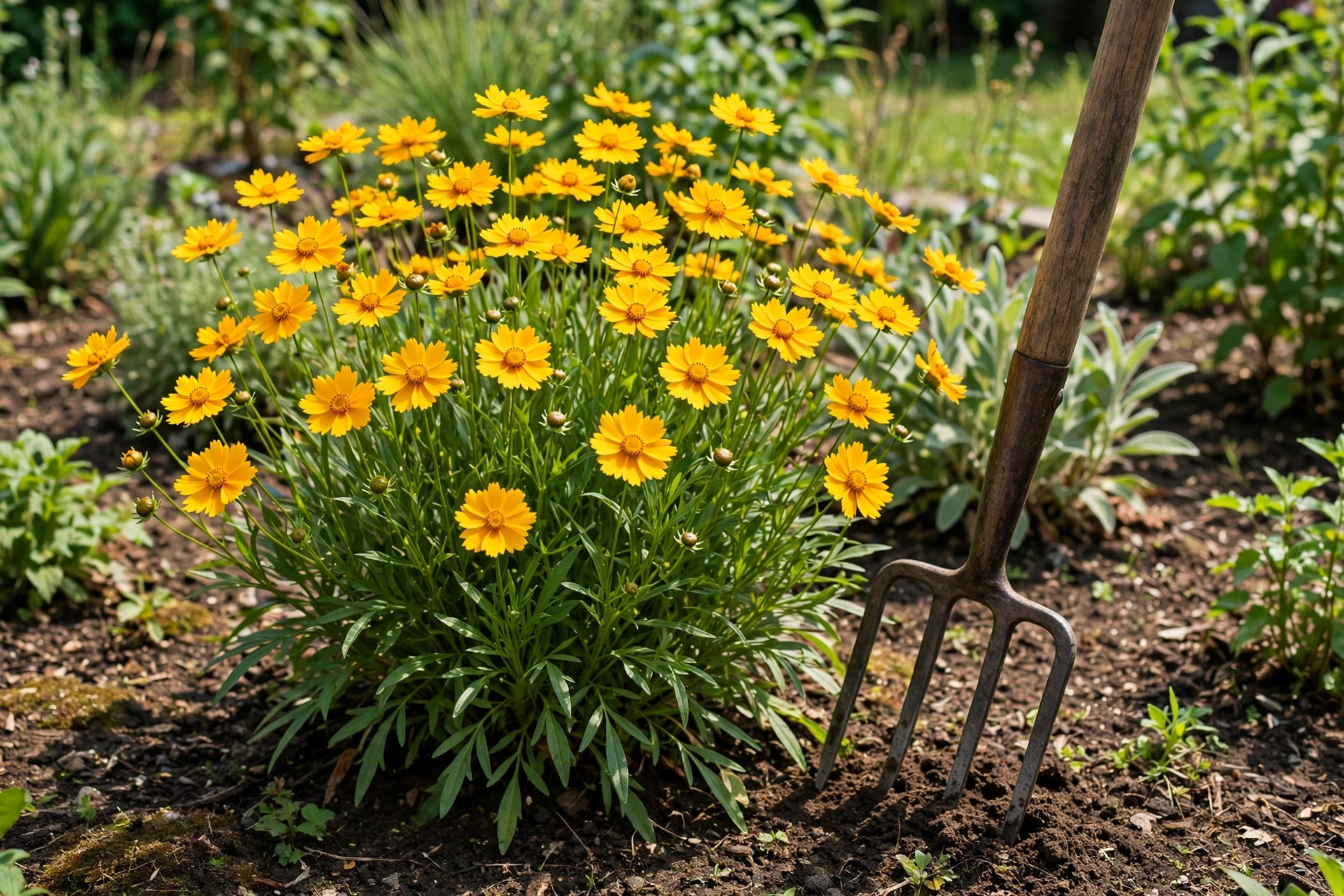
3. Lift the whole clump. Dig several inches out from the crown and work a spading fork underneath, then lever the whole root mass out. Sedum roots are fleshy and shallow, so the clump usually comes up in one piece.
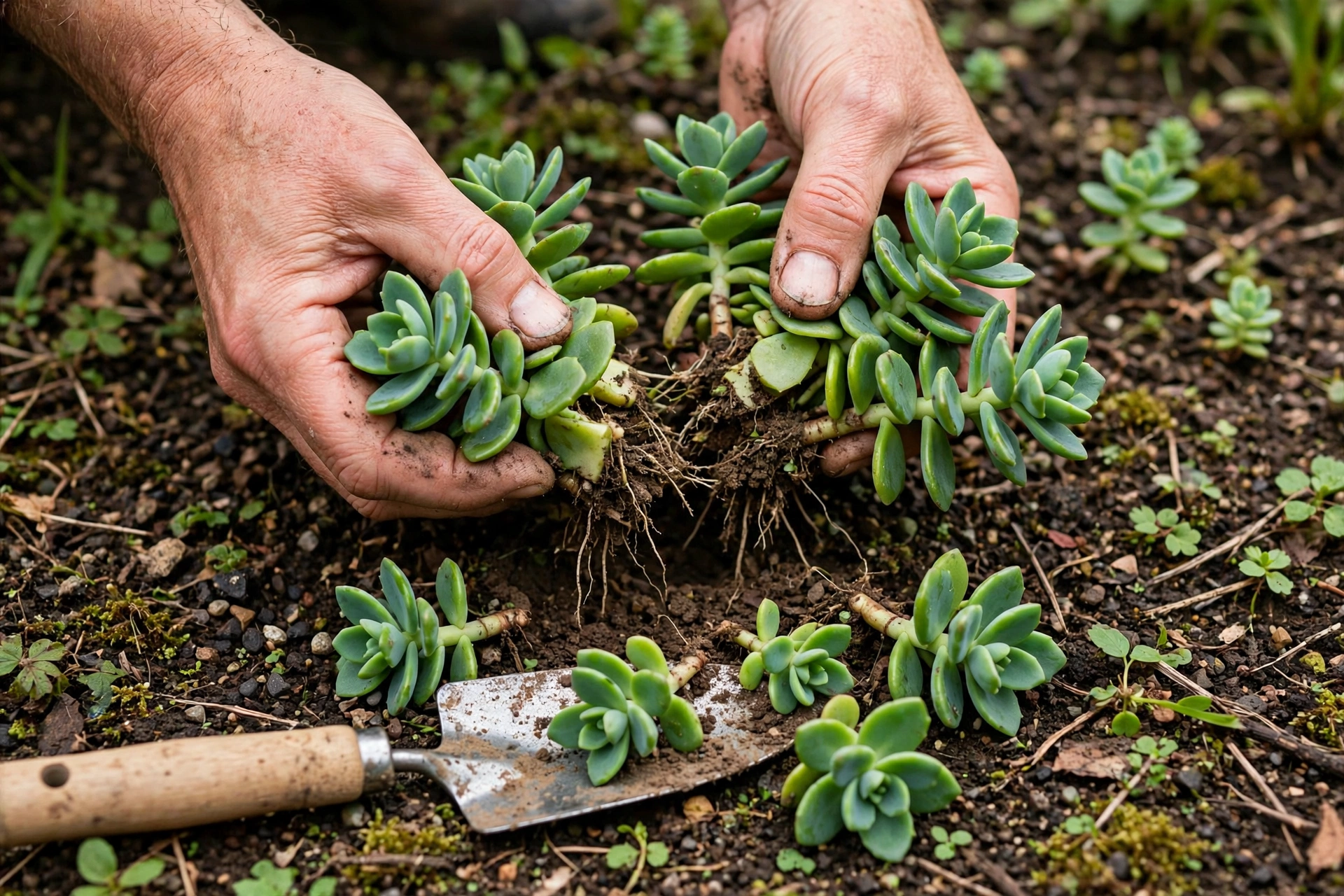
4. Split into 4- to 6-inch sections. Pull the clump apart by hand where it separates naturally, or cut through stubborn sections with a sharp knife. Each division needs several healthy shoots and a good portion of roots — pieces smaller than a fist are slow to recover.
5. Replant at the same depth. Set each division so the crown sits at the same level it grew before, firm the soil around it, and space divisions 12 to 18 inches apart. Sedum wants full sun and soil that drains freely; wet feet rot fleshy roots faster than drought ever will.
6. Water lightly, then leave it alone. One thorough watering at planting is enough. Sedum is a succulent — it stores water in its leaves and stems, and soggy soil after division is the most common way to lose a piece.
If you are splitting a large clump, you will likely end up with more divisions than you have room for. That is the point: the extras fill a bare spot, start a new border, or go to a neighbor. A single ‘Autumn Joy’ clump easily becomes three or four plants.
Aftercare: What to Watch For
New growth usually shows within two to four weeks. The divisions may look quiet at first — sedum puts energy into roots before it pushes top growth — but green shoots at the crown mean it took.
Hold off on fertilizer until the divisions are growing strongly. A light feeding in spring is plenty; rich soil and heavy feeding push soft, floppy growth on a plant that prefers lean conditions.
The one mistake that sets a division back is overwatering. If a piece turns soft and translucent at the base, the soil is staying wet. Let it dry out and, if the spot holds water after rain, move the division to higher ground.
What to Do With the Extra Plants
Sedum divisions are the easiest free plants in the garden. Tuck them into a sunny edge, a rock garden, or a container — they tolerate poor soil and dry spells once established. If you are deciding which perennials to divide in fall, sedum sits on the spring side of that list in cold climates, and the same dividing tools — a spading fork and a sharp knife — do the job. After replanting, the soil and mulch guidance for divided perennials applies here too: lean, well-drained soil, and mulch kept off the crown.
Divide upright sedum in spring, every three to four years, and a clump that was flopping open by August will stand upright and flower across the whole crown again.