Landscape & Leisure is reader-supported. When you buy through links on our site, we may earn a commission at no extra cost to you. Prices change, so click through to confirm current pricing.
Some dumplings come out like pillows and some like wet golf balls. Three small moves decide which kind you get, and none of them is a secret ingredient.
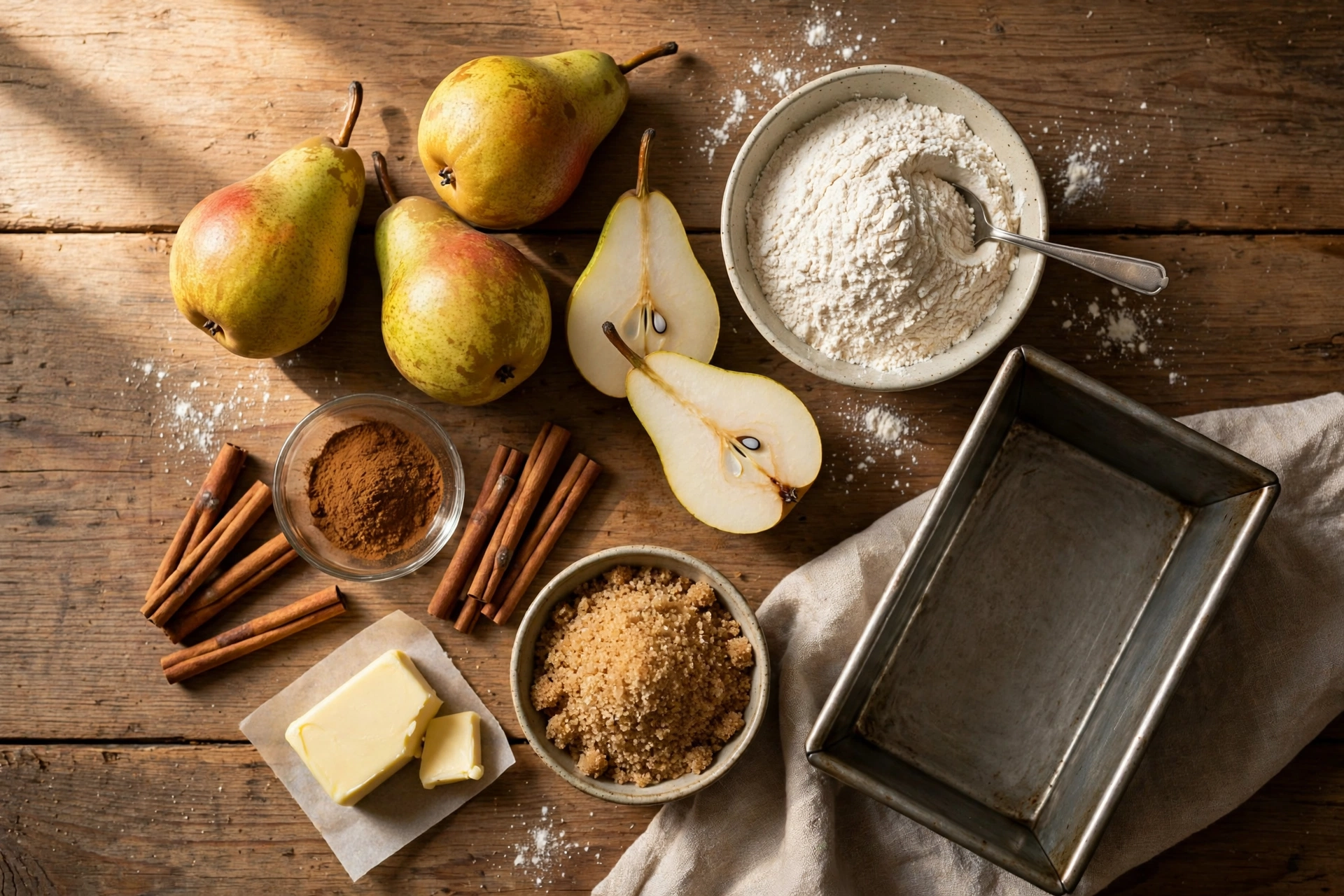
Drop dumplings are the simplest dumpling there is: a soft biscuit dough spooned onto a simmering stew, cooked by steam under a closed lid. The dough itself is nothing fancy — 2 cups of flour, a tablespoon of baking powder, half a teaspoon of salt, 4 tablespoons of cold butter, and three-quarters of a cup of cold milk (buttermilk works too). What decides whether they puff or sink is how you handle that dough and what the pot is doing when it goes in.
Move One: Keep the Butter Cold
Cut the cold butter into the flour until the mixture looks like coarse crumbs with pea-sized bits still visible. Those little pockets of butter are the lift: they melt in the heat and leave steam-filled spaces behind, which is what makes a dumpling fluffy instead of dense.
Warm butter, or butter worked in until the mixture is smooth, gives you no pockets and no lift. If the kitchen is warm, chill the bowl and the butter for ten minutes before you start. It is a small delay for a real difference.
Move Two: Stir Once, Then Stop
Pour in the cold milk and stir just until the dough comes together — a few lumps are fine, and a shaggy dough is exactly right. Overmixing develops gluten, and gluten is what turns a dumpling tough and chewy instead of tender.
This is the move most cooks get wrong, because every instinct says to stir until smooth. Do not. The dough should look barely mixed. It will finish coming together in the steam.
Move Three: Simmer, Don’t Boil — and Keep the Lid On
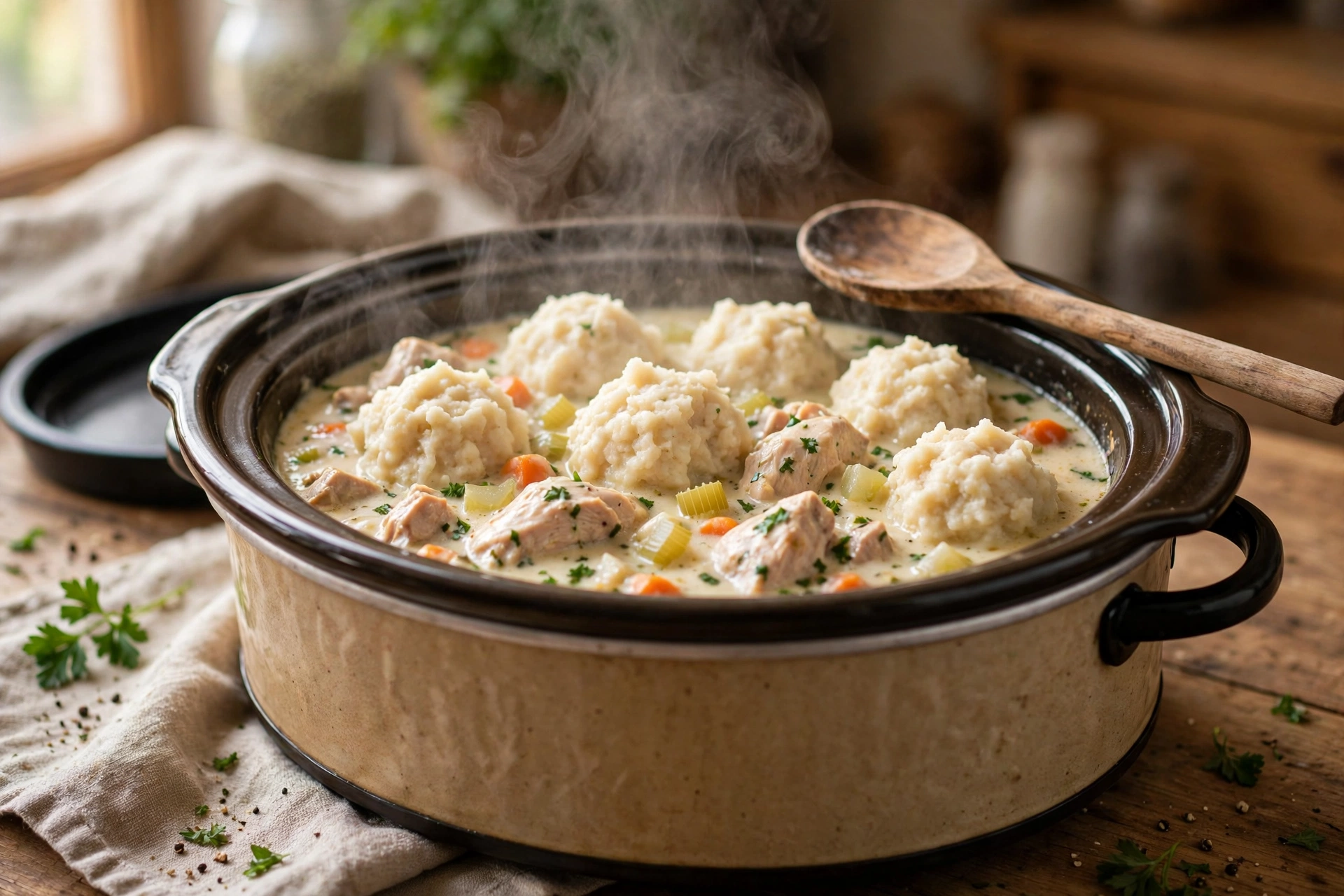
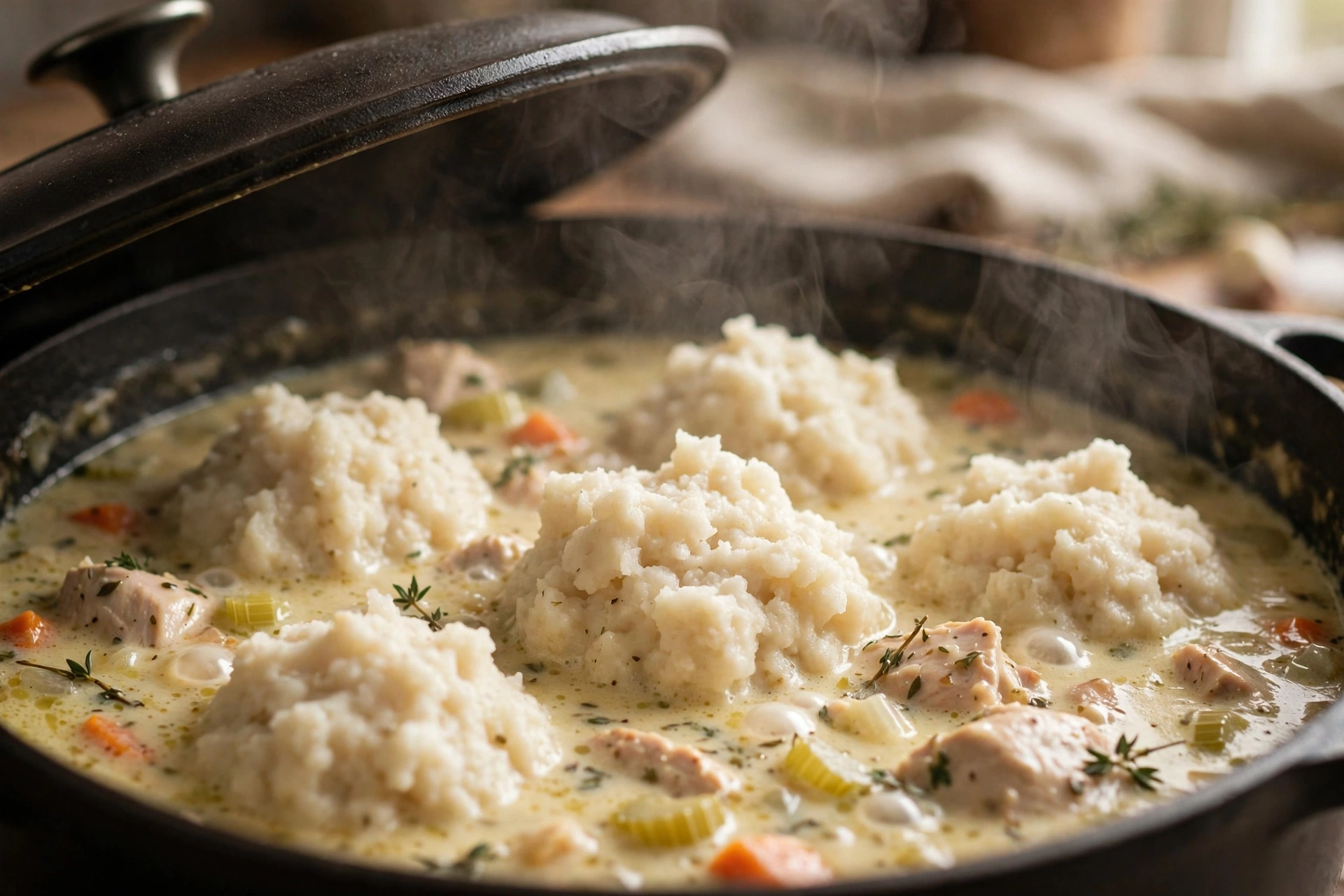
The stew underneath has to be at a steady simmer, with the surface visibly bubbling, before a single dumpling goes in. Drop spoonfuls of dough onto the surface, space them an inch or so apart, and do not stir them in. Then put the lid on and leave it on for 15 minutes.
Two things are happening under that lid. First, the dumplings cook by steam, not by boiling — baking powder is a double-acting leavener, which means it lifts once when it gets wet and again when it gets hot, and the trapped steam is what drives that second lift. Second, a hard boil tears dumplings apart; a simmer lets them set. If the pot is boiling hard, turn it down before the dough goes in.
Do not lift the lid to check. Every peek lets the steam out and drops the temperature, and a dumpling that loses its steam mid-cook will not get it back. After 15 minutes, test one: it should be puffed, dry on top, and a toothpick inserted in the center should come out clean. If it is still wet inside, give it five more minutes with the lid on.
The Mistakes That Sink Dumplings
Dropping dough into a lukewarm pot. The dough sinks, soaks, and turns gummy before the steam ever reaches it. Wait for the simmer.
Stirring the dumplings in. They need to sit on the surface and steam. Stirred in, they break apart and thicken the stew into paste.
Overmixing the dough. A smooth batter makes a tough dumpling. Lumps are fine.
Lifting the lid. Fifteen minutes, no peeking. Set a timer and walk away.
The Pot Matters More Than You Think
A heavy pot holds a steady simmer without hot spots, and a tight lid holds the steam in. A thin pot swings between a boil and a stall, and a loose lid lets the steam escape — both of which are exactly what sinks dumplings. An enameled cast iron Dutch oven is the right tool for the job: it holds heat evenly, the lid seals well, and it goes from stovetop to table without a second dish.
Lodge 6-Quart Enameled Cast Iron Dutch Oven
Heavy, even heat and a tight lid — the pot that holds the steady simmer dumplings need.
Put It to Work
Try the technique on the slow cooker chicken and dumplings — the same three moves apply, with biscuit dough instead of a from-scratch batter. Cold butter, a light hand, a simmering pot, and a lid that stays shut for 15 minutes: that is the whole secret, and it is not a secret at all.