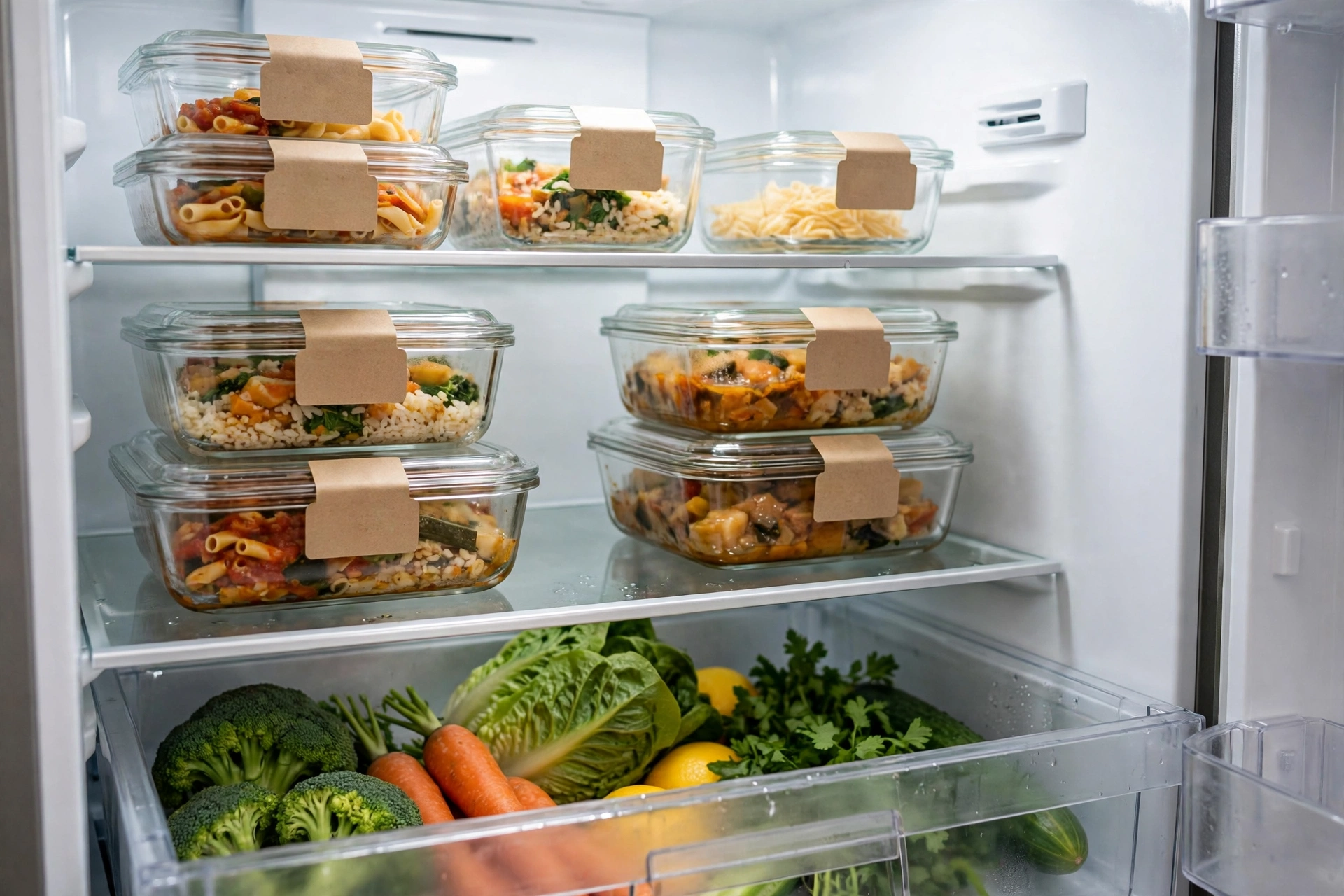
You know the moment: Sunday dinner is done, the table is cleared, and the fridge is full of containers with foil lids and masking-tape labels. Every one of them has a clock on it, and the clock runs shorter than most of us expect.
This table is the whole answer in one place: every refrigerator and freezer time from FoodSafety.gov’s Cold Food Storage Chart, from deli meat to leftover pizza, so you can check the container in your hand instead of guessing.
Two numbers frame the whole chart. Keep the refrigerator at 40°F or below and the freezer at 0°F or below. The freezer times are about quality, not safety — food kept frozen solid stays safe indefinitely, it just loses flavor and texture over time.
Storage times assume the food was cooked safely in the first place. If you need the target temperatures, the safe minimum internal temperatures table has those.
Salads, hot dogs, and luncheon meat
| Food | Refrigerator (40°F or below) | Freezer (0°F or below) |
|---|---|---|
| Salads: egg, chicken, ham, tuna, and macaroni | 3 to 4 days | Does not freeze well |
| Hot dogs, opened package | 1 week | 1 to 2 months |
| Hot dogs, unopened package | 2 weeks | 1 to 2 months |
| Luncheon meat, opened package or deli sliced | 3 to 5 days | 1 to 2 months |
| Luncheon meat, unopened package | 2 weeks | 1 to 2 months |
Bacon and sausage
| Food | Refrigerator (40°F or below) | Freezer (0°F or below) |
|---|---|---|
| Bacon | 1 week | 1 month |
| Sausage, raw, from chicken, turkey, pork, or beef | 1 to 2 days | 1 to 2 months |
| Sausage, fully cooked, from chicken, turkey, pork, or beef | 1 week | 1 to 2 months |
| Sausage, purchased frozen | After cooking, 3 to 4 days | 1 to 2 months from date of purchase |
Ground meat
| Food | Refrigerator (40°F or below) | Freezer (0°F or below) |
|---|---|---|
| Hamburger, ground beef, turkey, chicken, other poultry, veal, pork, lamb, and mixtures of them | 1 to 2 days | 3 to 4 months |
Fresh beef, veal, lamb, and pork
| Food | Refrigerator (40°F or below) | Freezer (0°F or below) |
|---|---|---|
| Steaks | 3 to 5 days | 4 to 12 months |
| Chops | 3 to 5 days | 4 to 12 months |
| Roasts | 3 to 5 days | 4 to 12 months |
Ham
| Food | Refrigerator (40°F or below) | Freezer (0°F or below) |
|---|---|---|
| Fresh, uncured, uncooked | 3 to 5 days | 6 months |
| Fresh, uncured, cooked | 3 to 4 days | 3 to 4 months |
| Cured, cook-before-eating, uncooked | 5 to 7 days or “use by” date | 3 to 4 months |
| Fully-cooked, vacuum-sealed at plant, unopened | 2 weeks or “use by” date | 1 to 2 months |
| Cooked, store-wrapped, whole | 1 week | 1 to 2 months |
| Cooked, store-wrapped, slices, half, or spiral cut | 3 to 5 days | 1 to 2 months |
| Country ham, cooked | 1 week | 1 month |
| Canned, labeled “Keep Refrigerated,” unopened | 6 to 9 months | Do not freeze |
| Canned, shelf-stable, opened | 3 to 4 days | 1 to 2 months |
| Prosciutto, Parma or Serrano ham, dry Italian or Spanish type, cut | 2 to 3 months | 1 month |
One ham note worth keeping: an unopened, shelf-stable, canned ham can be stored at room temperature for 2 years.
Fresh poultry
| Food | Refrigerator (40°F or below) | Freezer (0°F or below) |
|---|---|---|
| Chicken or turkey, whole | 1 to 2 days | 1 year |
| Chicken or turkey, pieces | 1 to 2 days | 9 months |
Fin fish
| Food | Refrigerator (40°F or below) | Freezer (0°F or below) |
|---|---|---|
| Fatty fish (bluefish, catfish, mackerel, mullet, salmon, tuna, etc.) | 1 to 3 days | 2 to 3 months |
| Lean fish (cod, flounder, haddock, halibut, sole, etc.) | — | 6 to 8 months |
| Lean fish (pollock, ocean perch, rockfish, sea trout) | — | 4 to 8 months |
The chart gives freezer times only for lean fish, so no refrigerator time is listed for those two rows.
Shellfish
| Food | Refrigerator (40°F or below) | Freezer (0°F or below) |
|---|---|---|
| Fresh crab meat | 2 to 4 days | 2 to 4 months |
| Fresh lobster | 2 to 4 days | 2 to 4 months |
| Live crab, lobster | 1 day | Not recommended |
| Live clams, mussels, oysters, and scallops | 5 to 10 days | Not recommended |
| Shrimp, crayfish | 3 to 5 days | 6 to 18 months |
| Shucked clams, mussels, oysters, and scallops | 3 to 10 days | 3 to 4 months |
| Squid | 1 to 3 days | 6 to 18 months |
Eggs
| Food | Refrigerator (40°F or below) | Freezer (0°F or below) |
|---|---|---|
| Raw eggs in shell | 3 to 5 weeks | Do not freeze in shell. Beat yolks and whites together, then freeze. |
| Raw egg whites and yolks | 2 to 4 days | 12 months |
| Raw egg accidentally frozen in shell | Use immediately after thawing | Keep frozen, then refrigerate to thaw |
| Hard-cooked eggs | 1 week | Do not freeze |
| Egg substitutes, liquid, unopened | 1 week | Do not freeze |
| Egg substitutes, liquid, opened | 3 days | Do not freeze |
| Egg substitutes, frozen, unopened | After thawing, 1 week or refer to “use by” date | 12 months |
| Egg substitutes, frozen, opened | After thawing, 3 to 4 days or refer to “use by” date | Do not freeze |
| Casseroles with eggs | After baking, 3 to 4 days | After baking, 2 to 3 months |
| Eggnog, commercial | 3 to 5 days | 6 months |
| Eggnog, homemade | 2 to 4 days | Do not freeze |
| Pies: pumpkin or pecan | After baking, 3 to 4 days | After baking, 1 to 2 months |
| Pies: custard and chiffon | After baking, 3 to 4 days | Do not freeze |
| Quiche with filling | After baking, 3 to 5 days | After baking, 2 to 3 months |
Two cautions from the chart: yolks do not freeze well on their own, and any egg that froze in the shell with a broken shell should be tossed.
Soups, stews, and leftovers
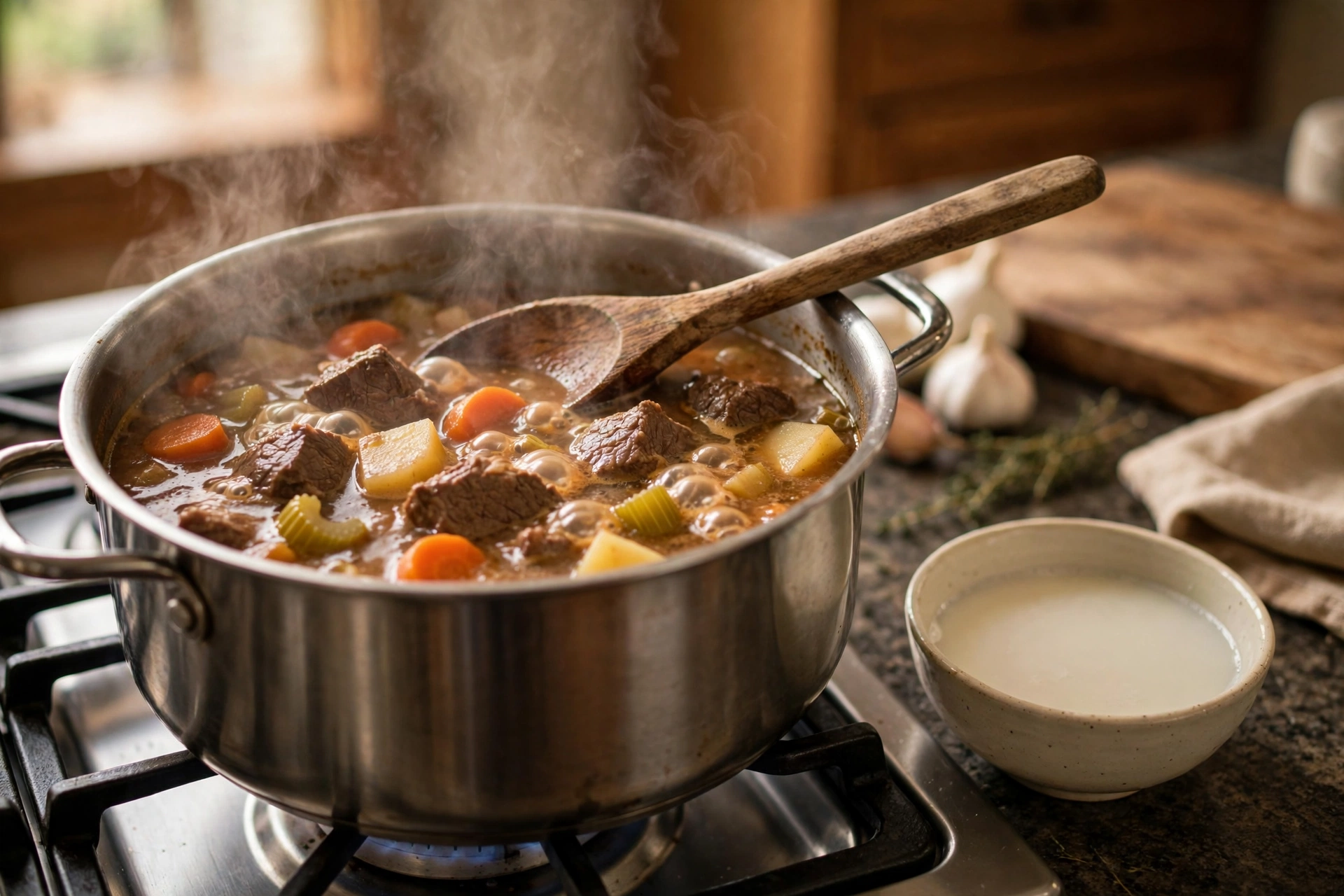
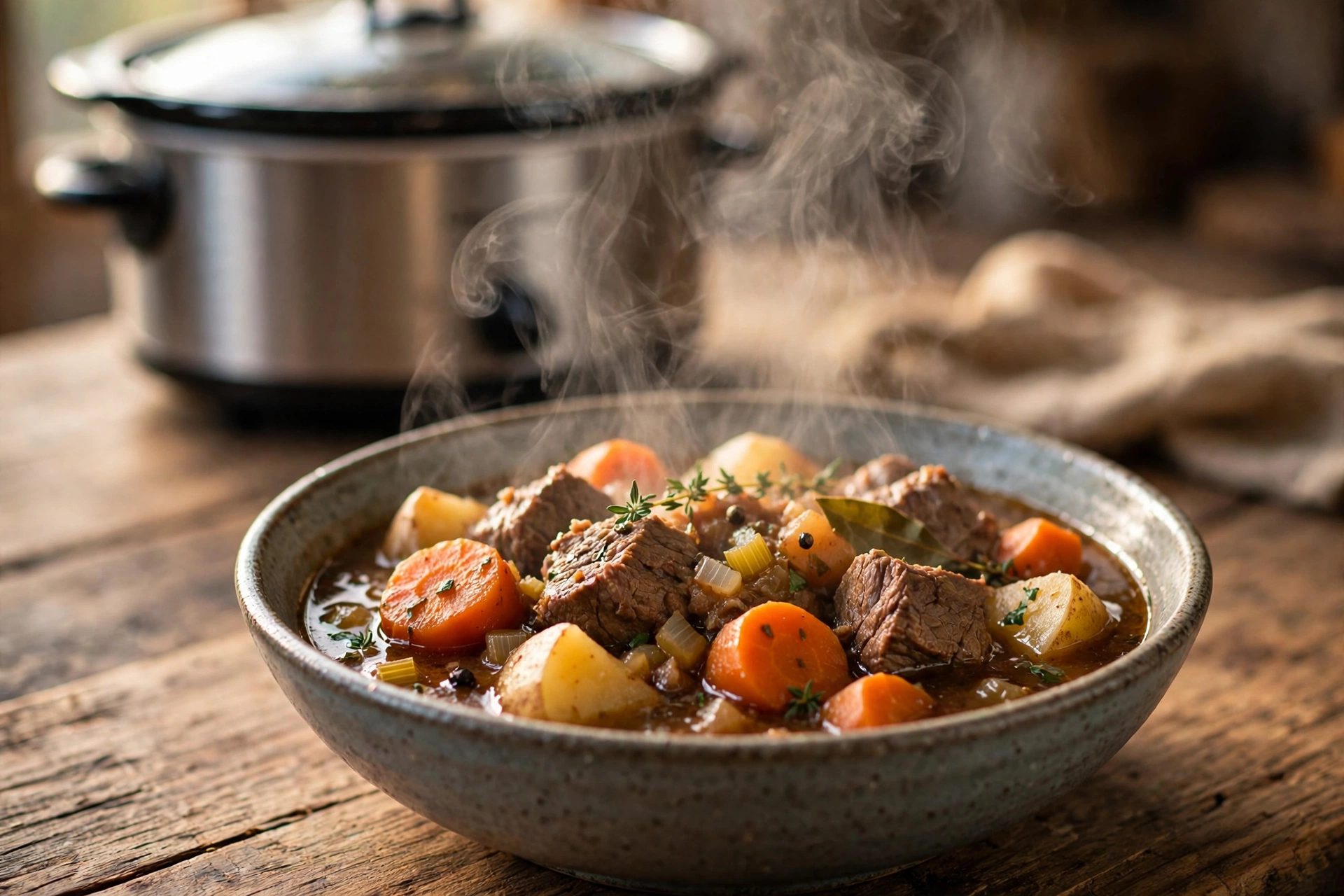
A pot of Slow Cooker Beef and Vegetable Stew follows the leftovers row below — 3 to 4 days in the fridge, 2 to 3 months in the freezer.
| Food | Refrigerator (40°F or below) | Freezer (0°F or below) |
|---|---|---|
| Soups and stews, vegetable or meat added | 3 to 4 days | 2 to 3 months |
| Leftovers: cooked meat or poultry | 3 to 4 days | 2 to 6 months |
| Chicken nuggets or patties | 3 to 4 days | 1 to 3 months |
| Pizza | 3 to 4 days | 1 to 2 months |
A habit that covers most of this table
Put the date on the tape when the food goes in, and move anything you won’t eat within three days to the freezer. That one habit covers most of this table.
Sources
- FoodSafety.gov (U.S. Department of Agriculture, Food Safety and Inspection Service), “Cold Food Storage Chart” — https://www.foodsafety.gov/food-safety-charts/cold-food-storage-charts — Date Last Reviewed September 19, 2023. Fetched November 8, 2026.