This post contains affiliate links. As an Amazon Associate, we earn from qualifying purchases.
A rain barrel is really two purchases in one: the barrel itself, and the spot it will sit against your house for the next decade. Get the barrel right and the spot wrong, and you own a mosquito farm pressed against your foundation. Get both right and the next storm waters your tomatoes for free.
One inch of rain on a 1,000-square-foot roof adds up to about 623 gallons of runoff, using the standard 0.623 conversion factor published by university extension programs. A single barrel holds 50 gallons of that. So the honest job of a rain barrel is not to catch the storm — it is to catch enough of it, cleanly and safely, to water the garden between rains. These three barrels are the ones worth comparing, and one of them is worth skipping.
What a good rain barrel actually needs
Capacity gets the headlines, but four smaller details decide whether a barrel is pleasant to own. A tight-fitting screen on top keeps leaves and mosquitoes out. A spigot set high enough to slide a watering can underneath saves your knees and your patience. An overflow outlet with a hose that leads away from the house keeps a full barrel from dumping water against your foundation. And a flat back lets the barrel sit close to the wall, where it belongs, instead of jutting into the walkway.
A stand matters more than it looks. A barrel sitting on the ground puts its spigot at ankle height, which means filling a can means tipping it sideways. A stand lifts the spigot to a usable height and, just as usefully, gives the barrel a level, stable footing. A full 55-gallon barrel weighs about 459 pounds, so the base it sits on is not a detail to improvise.
The three barrels at a glance
| Barrel | Capacity | Stand | What comes with it | Best for |
|---|---|---|---|---|
| RTS Home Accents ECO | 50 gallons | Included | Brass spigot, flat-back body, 100% recycled plastic | One barrel, bought once |
| FCMP Raincatcher 4000 | 50 gallons | Not included | Debris screen, garden hose, overflow hose, linking kit | A two-barrel setup |
| FreeGarden RAIN | 55 gallons | Not included | Stainless-steel screen, elevated spigot, overflow hose | Out of sight, behind the shed |
Best overall: RTS Home Accents 50-Gallon ECO Rain Barrel
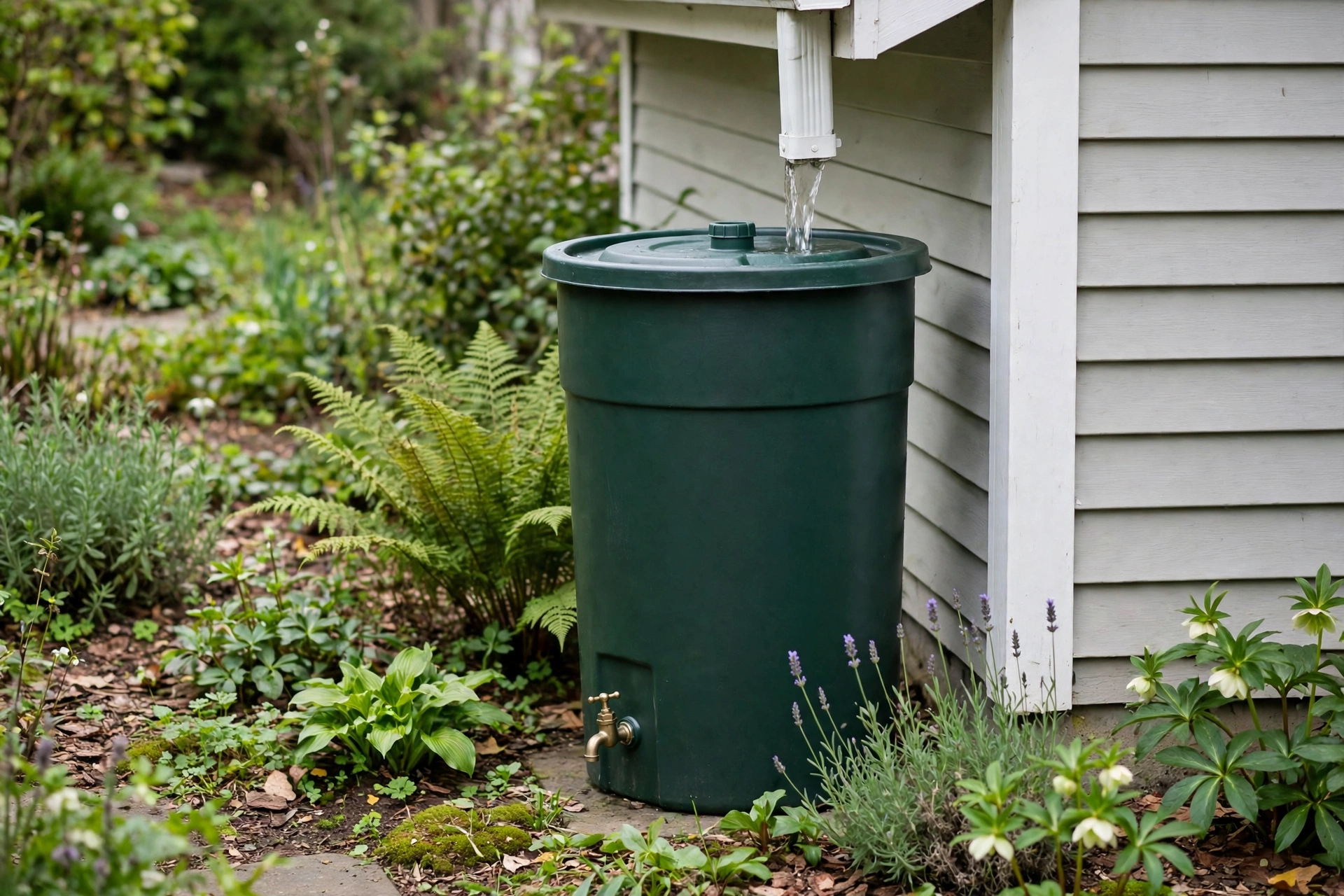
The RTS ECO is the barrel to buy if you are buying one barrel and want the decision over with. It holds 50 gallons, its flat back sits tight against the house, and the stand comes in the box, which lifts the brass spigot high enough to fill a watering can without a wrestling match. The body is UV-resistant polyethylene made from 100% recycled plastic, and its narrow body fits the strip between the downspout and the walkway where most barrels have to live.
What it does best is remove the extras from your shopping list. No separate stand to order, no second trip for a spigot that clears a can. Amazon sells it directly, which keeps the listing straightforward. The trade-off is plain: it is still only 50 gallons, so in a real storm it fills in the first minutes and the rest goes out the overflow. A bigger garden needs a second barrel, and the RTS is the better single barrel rather than the better first half of a pair.
Pros: Stand included; flat back hugs the wall; brass spigot; recycled plastic body; sold by Amazon.
Cons: 50 gallons fills fast in a real storm; no linking kit in the box.
RTS Home Accents 50-Gallon ECO Rain Barrel with Stand
The complete package — stand, brass spigot, and flat-back body in one box.
Runner-up: FCMP Outdoor Raincatcher 4000
The FCMP Raincatcher 4000 is the most complete kit of the three. The box holds the barrel, a debris screen, a garden hose, an overflow hose, and the linking hardware to join a second barrel — which is the whole point of this one. It is made from recycled, UV-inhibited, BPA-free polyethylene, it has been in production for close to 30 years, and the maker says more than 375,000 have sold across North America. At 24 by 24 by 32 inches and 25 pounds empty, it is a round-footprint barrel, so it takes more depth from the wall than the flat-back RTS.
Buy the FCMP when the plan is two barrels. Linked together they hold 100 gallons against the house, and the first barrel fills the second instead of sending the excess down the foundation. Buy it on its own and you are paying for a linking kit you will not use. One honest caveat: its price on Amazon moves around more than the RTS, and it often shows up from third-party sellers rather than Amazon itself, so check the listing before counting on it.
Pros: Full kit in the box, including linking hardware; BPA-free recycled plastic; one-year limited warranty; proper overflow port.
Cons: Round footprint needs more depth from the wall; no stand included; Amazon price and seller vary.
FCMP Outdoor Raincatcher 4000 Rain Barrel, 50 Gallon
The best first half of a pair — the linking kit turns one barrel into a hundred gallons.
The one to skip: FreeGarden RAIN 55-Gallon
The FreeGarden RAIN looks like the value pick on paper. It holds 55 gallons, five more than either barrel above, its spigot sits higher than most, so a watering can slides underneath without a stand, and the stainless-steel insect screen is a genuinely good piece of hardware. It is also the plainest barrel here by a long way: a square, utilitarian body that reads as a storage bin, and a lid held down with child-lock screws that turn a quick clean-out into a small project.
Skip it unless the barrel will live out of sight, behind a shed or around the back of the garage. Anywhere visible — by the front door, beside the patio — the RTS or the FCMP looks like garden equipment and the FreeGarden looks like something you meant to put away. It is easy to find at home centers rather than Amazon, so there is no shortage of it; there is just a better-looking barrel for the same job.
How much water will one barrel really catch?
Less than the roof delivers, and that is fine. A 1,000-square-foot roof sheds about 623 gallons in a one-inch storm, and a 50-gallon barrel catches its 50 gallons early in that storm, then sends the rest out the overflow. What matters is where the overflow goes: a hose that leads downhill, away from the house, into a bed that can take the water. A barrel with no overflow plan is a foundation problem wearing a green badge.
Used well, one full barrel covers a few days of hand-watering for a vegetable garden. Stretch it further by pairing the barrel with a drip irrigation setup, which puts the stored water at the roots instead of on the leaves, and check how fast your sprinklers actually put water down with our sprinkler catch-can calculator so you know what a barrel of water is really worth in minutes of watering.
Mosquitoes, and the one rule that is not negotiable
A barrel with a screen on top and a spigot that closes tight is not a mosquito problem. A barrel with the lid off, or a screen with a tear in it, is. Keep the screen seated, keep the lid closed, and drop in a mosquito dunk — the Bti kind made for standing water — if the barrel sits more than a few days between uses.
Barrel water is for the garden, never for drinking, cooking, or filling a pet bowl. It runs off a roof, through gutters, and into a plastic tank; screens and diverters do not make it potable. The CDC treats collected rainwater as a health concern for exactly that reason, and no barrel on the market changes it.
Frequently asked questions
Do I need a permit for a rain barrel?
A few cities and homeowners associations have rules about rain barrels, so a five-minute check of your city or HOA rules before you cut a downspout is cheaper than putting one back.
Will a rain barrel freeze and crack in winter?
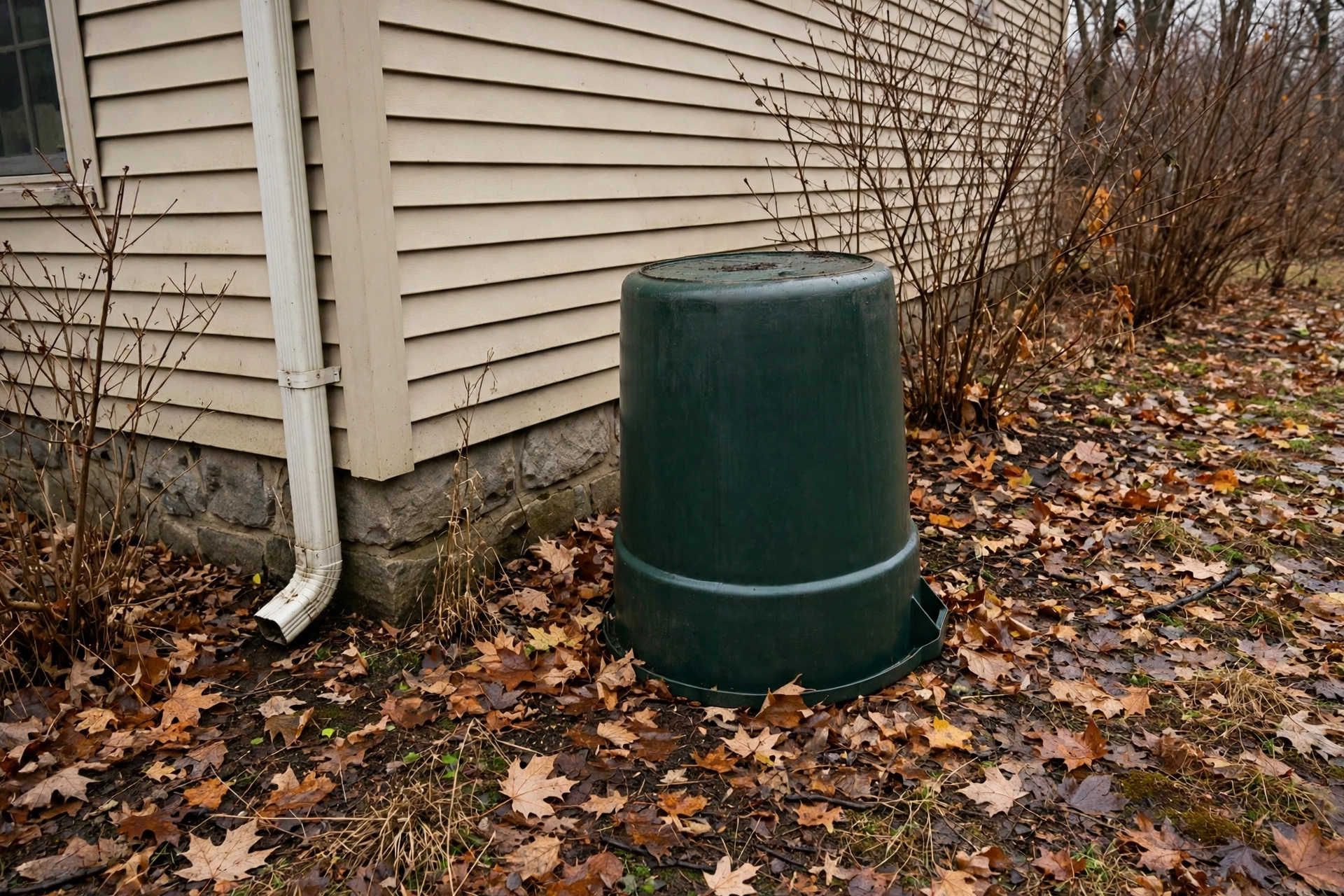
Yes, if it is left full. Water expands by about 9 percent as it freezes, and that is enough force to split a plastic barrel. Drain it, disconnect it from the downspout, and store it upside down or indoors before the first hard freeze. Our guide to how to winterize a rain barrel walks through the whole job in about twenty minutes.
How hard is it to install?
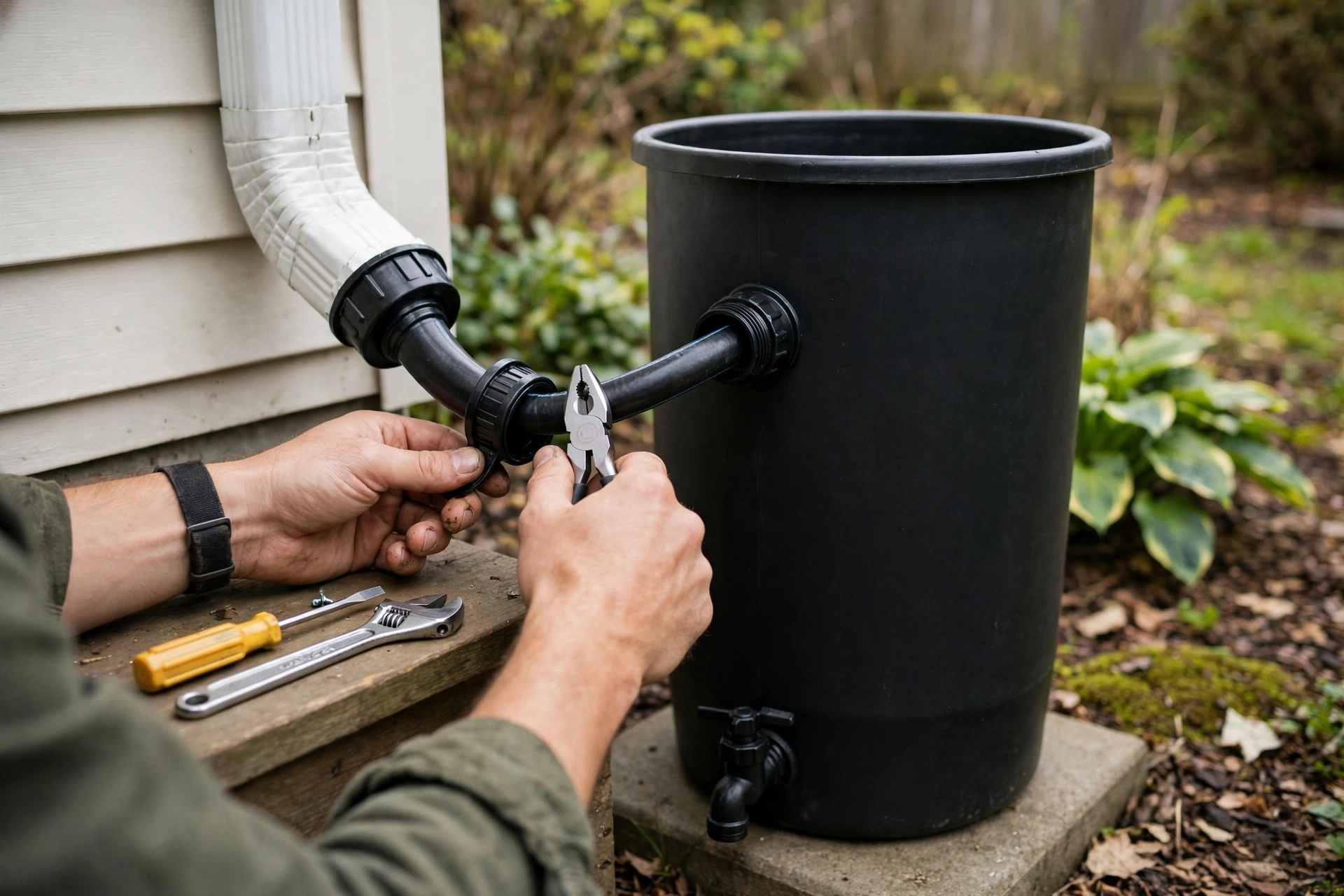
An afternoon, with a level base and a downspout diverter doing most of the work. Our guide to how to install a rain barrel on a downspout covers the base, the cut, the diverter, and the overflow.
Bottom line
Buy the RTS ECO if you want one barrel, bought once, with the stand already in the box. Buy the FCMP Raincatcher 4000 if the plan grows to two linked barrels — it is the only one here built for that from the start. Skip the FreeGarden unless the barrel will live where nobody sees it. And whichever you buy, put it on a level base with the overflow pointed away from the house before the next storm, not after it.