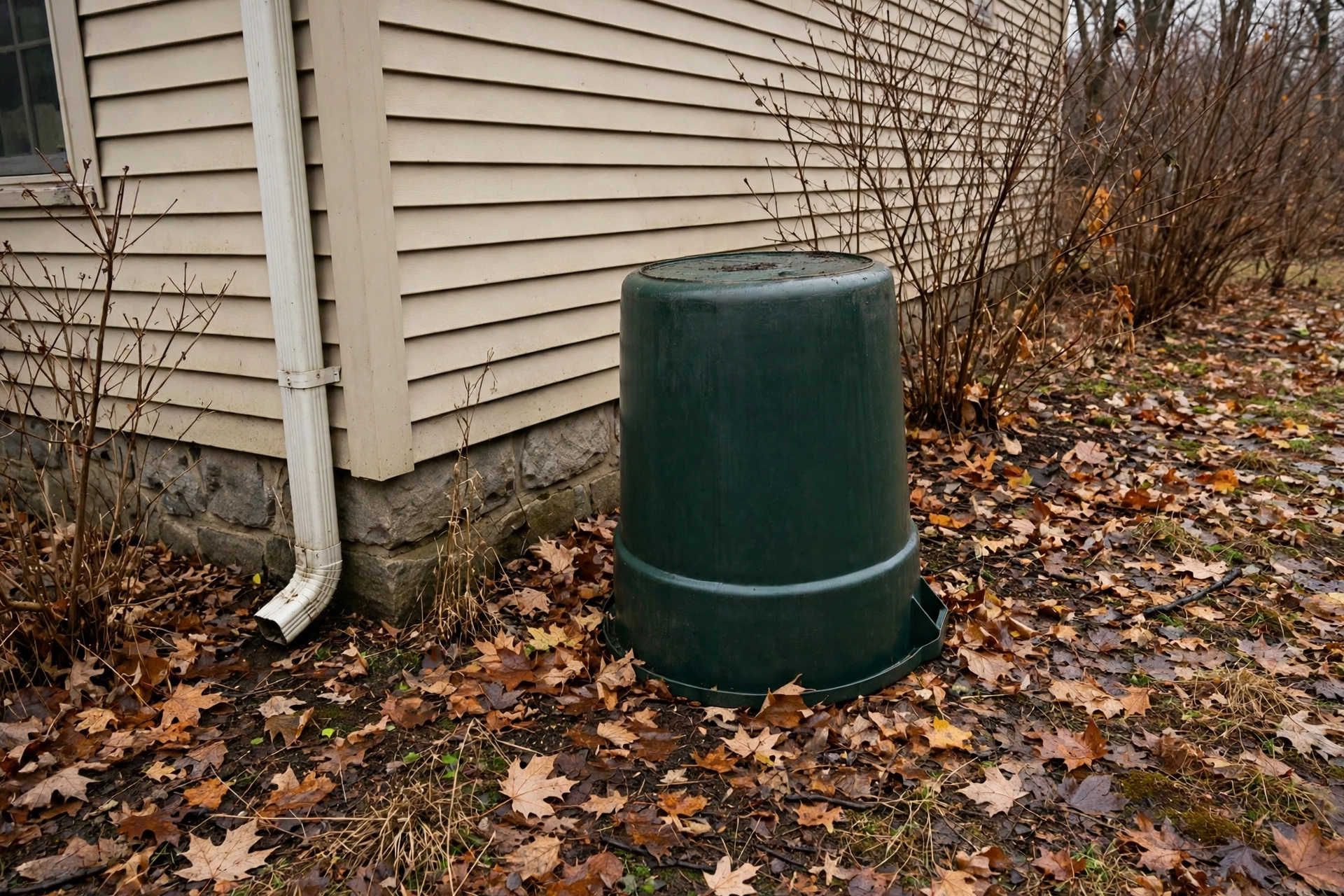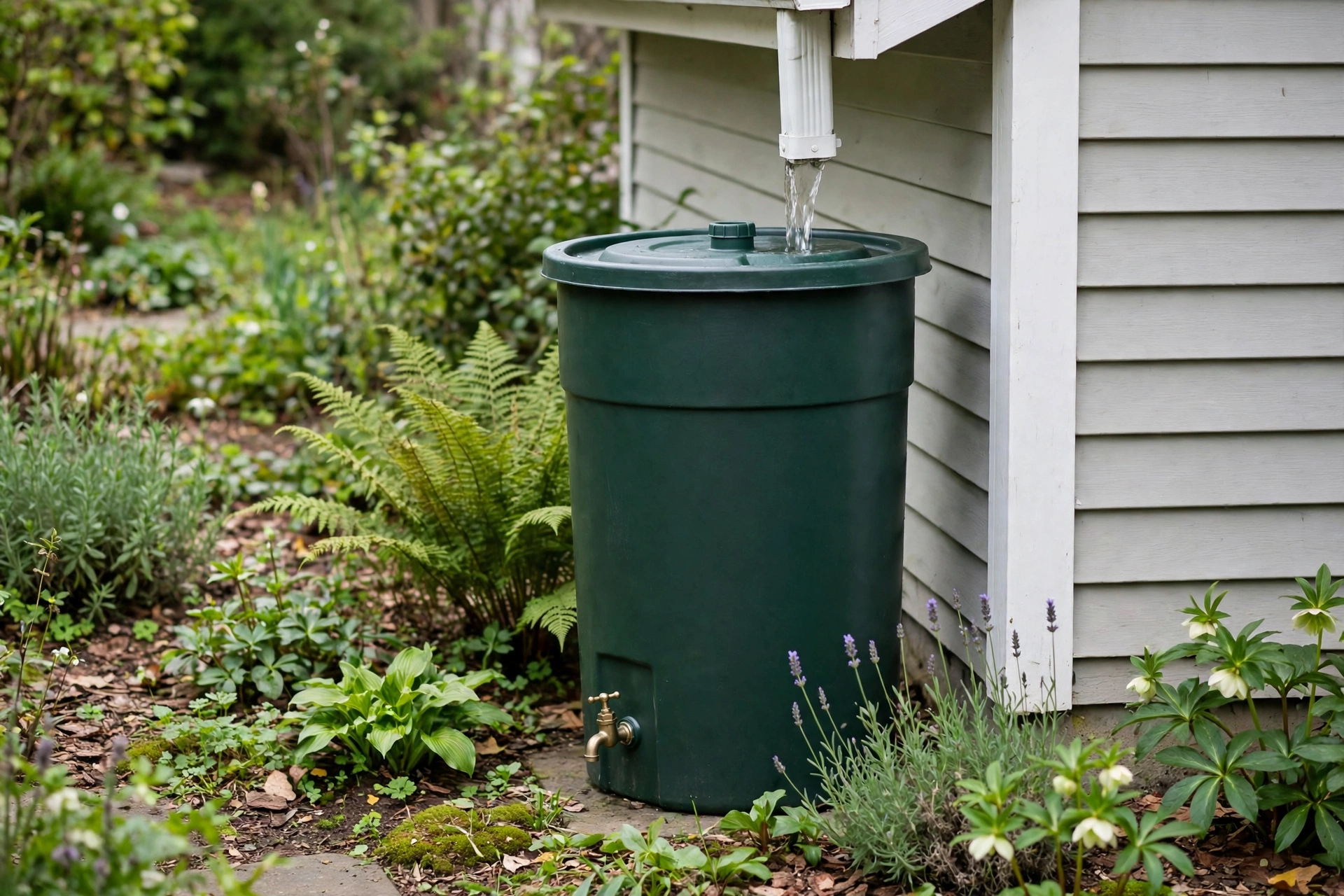
By November the garden has stopped asking for water, but the gutters have not stopped catching it. That is the season to get a rain barrel in place: the ground is still workable, the downspouts are still running, and a barrel set now is ready the first week the garden wants a drink in spring.
Installing one is an afternoon job, and most of that afternoon is the base. A barrel full of water is heavy, a tilted barrel is a tipped barrel, and a downspout cut in the wrong place is a downspout you get to fix in the rain. Do it in this order and none of that happens.
What you will need
The barrel. Any food-grade barrel with a lid, a spigot, and an overflow outlet. If you have not picked one yet, our roundup of the best rain barrels for gardens compares the three worth buying and the one to skip.
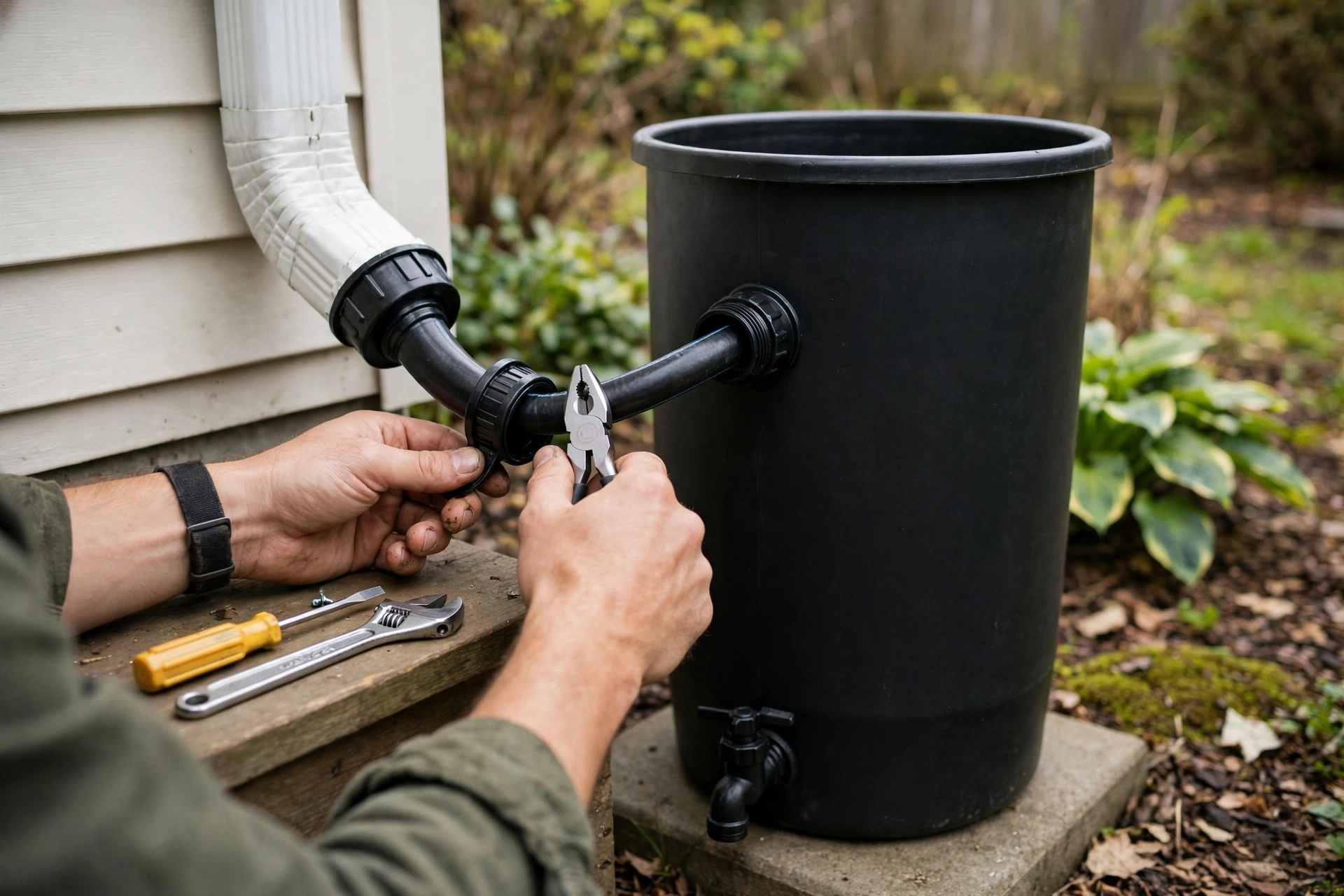
A downspout diverter kit. This is the piece that does the clever work: it cuts into the downspout and sends water sideways into the barrel until the barrel is full, then lets the rest run down the spout as before. Buy the kit that matches your downspout — rectangular and round spouts take different fittings, and a kit made for the wrong shape will leak at the joint all season.
A level base. Concrete pavers, cinder blocks, or a purpose-made stand, stacked to lift the spigot high enough to slide a watering can underneath. A full 55-gallon barrel weighs about 459 pounds, so the base carries real weight and has to sit on firm, level ground.
The small stuff. A hacksaw or tin snips for the downspout, a level, a drill, a length of garden hose for the overflow, and a fine mesh screen for the barrel top if the barrel did not come with one. A tube of exterior sealant is worth having on hand for the diverter joint.
Step 1: Pick the right downspout
Choose the downspout closest to the beds you water most, and the barrel will get used every week. Check that the ground beside that downspout is firm and level, or level-able with a few pavers, and that the spot drains away from the house rather than toward it.
Look up before you commit. The barrel needs clear space above it for the lid and the screen, and the downspout needs a straight run of at least a foot where the diverter will go in. A downspout that elbows right above the barrel is the wrong downspout.
Step 2: Build a level base
Set the pavers or blocks on the ground and check them with a level in both directions. A barrel that leans puts all 459 pounds on one edge, and a barrel that leans toward the house puts its overflow against the foundation. The base should be wide enough that the whole barrel footprint sits on it, with a little room to spare, and high enough that a watering can fits under the spigot with the lid on.
Set the empty barrel on the base and check the level again. If it rocks, shim the low corner now, while it is still light enough to lift.
Step 3: Cut the downspout and fit the diverter
Measure the diverter’s inlet height against the barrel’s inlet, and mark the downspout a few inches above the barrel top. Cut the downspout at the mark with a hacksaw, and file the cut edge smooth so it does not chew up the diverter’s seal. Fit the diverter body into the cut, following the kit’s instructions, and run the short hose from the diverter to the barrel’s inlet.
Keep the hose run short and sloping gently down toward the barrel — a sag holds standing water, and that is the first place mosquitoes find. Seal the joint where the diverter meets the downspout.
Step 4: Screen the top and fit the overflow
Seat the mesh screen over the barrel’s top opening and make sure the lid closes tight over it. The screen is what keeps leaves out of the barrel and mosquitoes out of the water, and a screen that gaps at one edge is barely a screen at all. If your barrel came with a first-flush diverter — a small chamber that catches the first dirty wash off the roof — fit it on the inlet hose now, before the barrel sees its first storm.
Fit the overflow hose to the barrel’s overflow outlet and run it downhill, away from the house, to a bed or a patch of lawn that can take the water. This is the step people skip, and it is the one that matters most: a 50-gallon barrel fills in the first minutes of a real storm, and everything after that comes out the overflow. Point it at the foundation and you have built a very expensive way to water your basement wall.
Step 5: Test it before the next storm
Pour a bucket of water into the top of the barrel. It should sit level, the spigot should run clean into a can, and nothing should weep from the diverter joint. Then run a hose into the downspout from above and watch the diverter fill the barrel while the overflow carries the rest away from the house.
Fix leaks now, while the barrel is empty and the weather is dry. A drip at the diverter joint is a five-minute sealant job today and a rotted fascia board by spring.
The November timing note
A barrel installed in November does not earn its keep this year. The garden is done drinking, and the first hard freeze — sustained temperatures below 28°F — will crack a full barrel. So treat a November install as a spring setup: put the barrel in place, test it, and then drain it and disconnect it from the downspout before the first hard freeze. Our guide to how to winterize a rain barrel covers the whole job in about twenty minutes, and the barrel will be sitting there ready, on a level base with the diverter already fitted, when the first spring storm arrives.
What to watch next
After the first real rain, check three things: the barrel should be full, the ground around the base should be dry, and the screen should be holding leaves on top of the barrel, not in it. Lift the lid and look.
A barrel on a drip line stretches furthest: our guide to the best drip irrigation systems for vegetable gardens shows how to put stored water at the roots, and our sprinkler catch-can calculator tells you how fast your sprinklers put water down, so you know what a barrel of stored rain is really worth in minutes of watering.