Leave a barrel full through a hard freeze and the water inside makes the decision for you. It expands as it turns to ice, the plastic has nowhere to give, and by spring you own a barrel with a split seam and a garden that gets no rainwater until you buy another one.
Winterizing takes about twenty minutes, and it is the cheapest twenty minutes in the garden calendar. Drain it, disconnect it, store it so it cannot refill, and the same barrel is ready the first week the garden wants water again.
Why a full barrel cracks
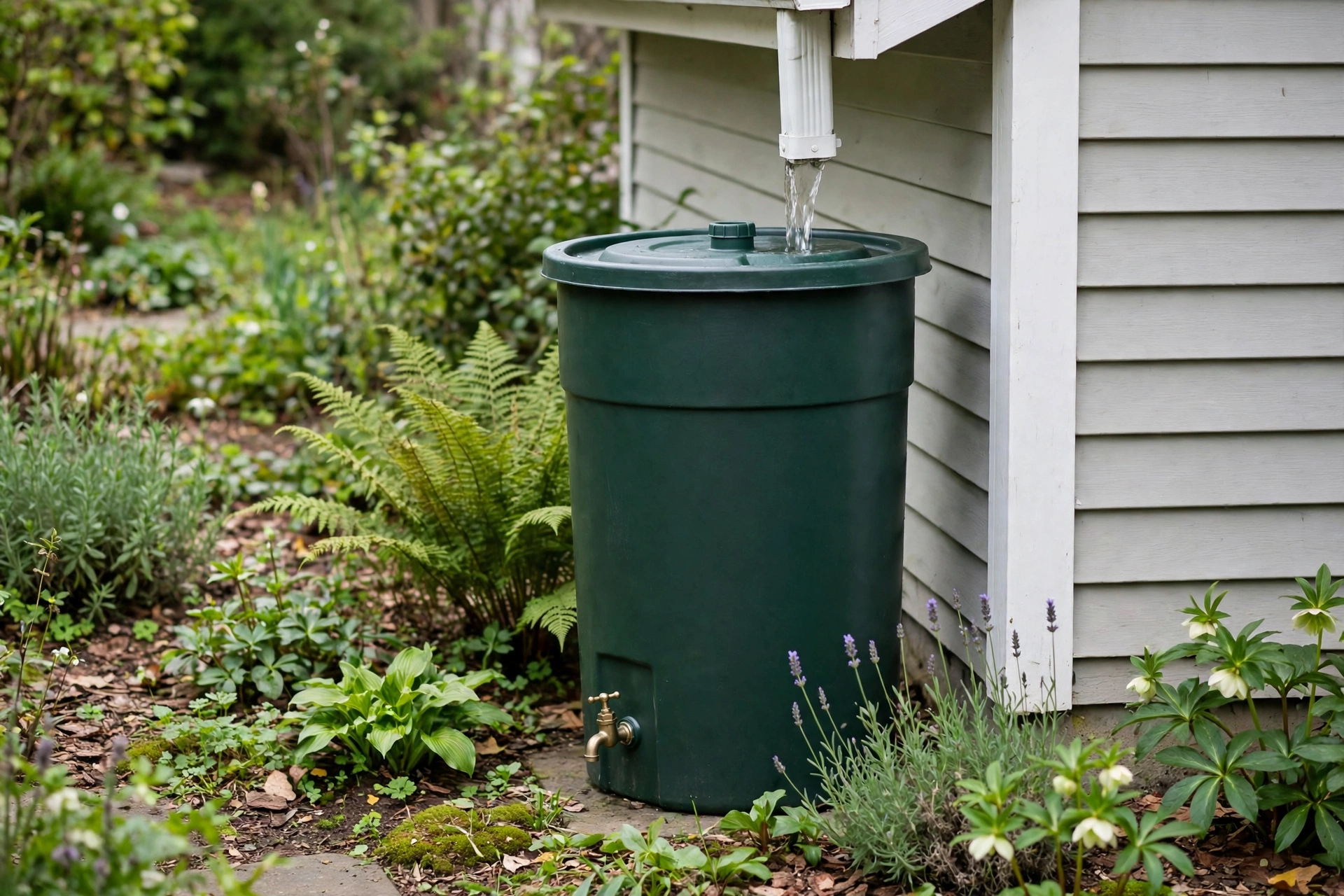
Water grows by about 9 percent in volume as it freezes, and ice pushes with enough force to crack a plastic barrel — Penn State Extension is blunt about this, and it notes that wooden barrels crack too. The risk is worst when the barrel is full or nearly full, because there is no air space left to take up the expansion. Even a barrel a quarter full holds enough water to do damage, and repeated freezing and thawing through the winter weakens the plastic at the seams until one cold night finishes the job.
A hard freeze means temperatures below 28°F for several hours — cold enough to turn a barrel of standing water into ice, not just a skim on top. A light frost will not do it. The first hard freeze is the deadline, and the date moves with your local weather, so watch the forecast rather than the calendar.
When to do it
Disconnect before your area’s normal first hard freeze, and leave the barrel off the downspout until the median last hard freeze date in spring has passed. Your local National Weather Service forecast office publishes both dates, and they are a better guide than any month on a calendar. In the upper Midwest that usually means October or November for the disconnect, and April before you hook it back up.
If you are installing a barrel this November, the same rule applies: set it up, test it, then winterize it right away. A barrel installed in November is a spring setup, not a fall water source, and our guide to how to install a rain barrel on a downspout says the same.
Step 1: Drain it completely
Open the spigot all the way and let the water run out into a garden bed or the lawn — use the last of the season’s water rather than dumping it. A full 55-gallon barrel weighs over 450 pounds, so do not try to tip it until most of the water is gone.
The spigot sits a few inches above the bottom of the barrel, so the spigot alone will not empty it. Once the flow slows to a trickle, tip the barrel gently on its side to pour out the last few inches. That low ring of water is the part that freezes first and splits the base seam, so getting it out matters more than getting the top half out.
Step 2: Disconnect the diverter and restore the downspout
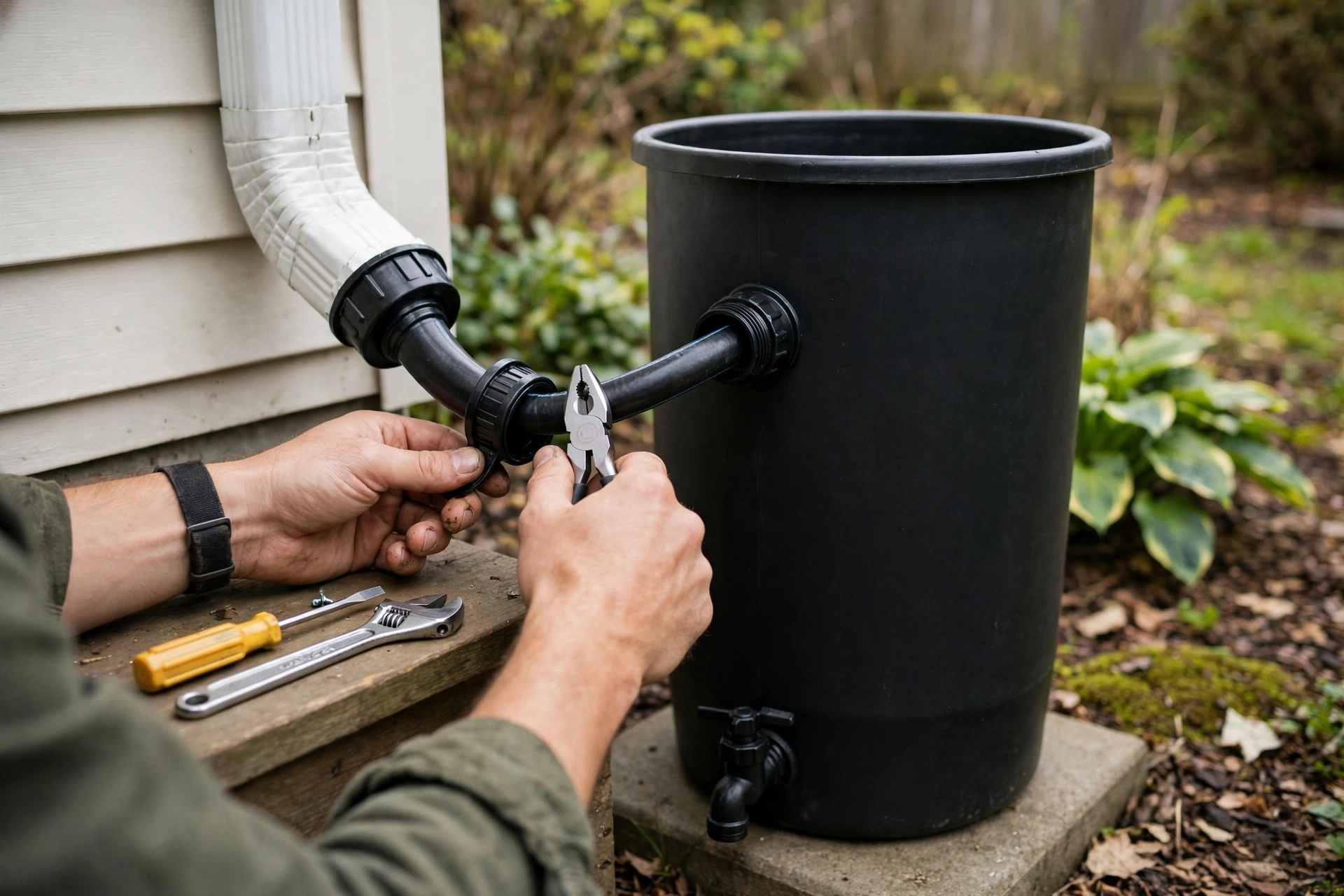
Pull the diverter or the flexible feed hose off the downspout and reconnect a straight section, or the original elbow, so winter rain and snowmelt run down the downspout and away from the foundation the way the gutter system was designed to. Leaving the diverter connected with nowhere for the water to go backs standing water up into the fitting itself, and a frozen diverter cracks just as surely as a frozen barrel.
Fit a temporary downspout extension while the barrel is off, so meltwater discharges away from the house rather than at the foundation. This is the step people skip, and it is the one that shows up as a damp basement wall in March.
Step 3: Clean it out while it is empty
Rinse the inside with a hose and a brush, and wash out the sediment before it dries into a crust or freezes in place. Check the screen for tears and the spigot for wear, and replace anything tired now instead of in April, when every garden job is competing for the same weekend. If your barrel has a first-flush chamber, drain that too — it holds water the same way the barrel does, and it cracks the same way.
Leave the spigot open when you finish. An open spigot gives any rain that sneaks in a way out, instead of a place to sit and freeze.
Step 4: Store it so it cannot refill
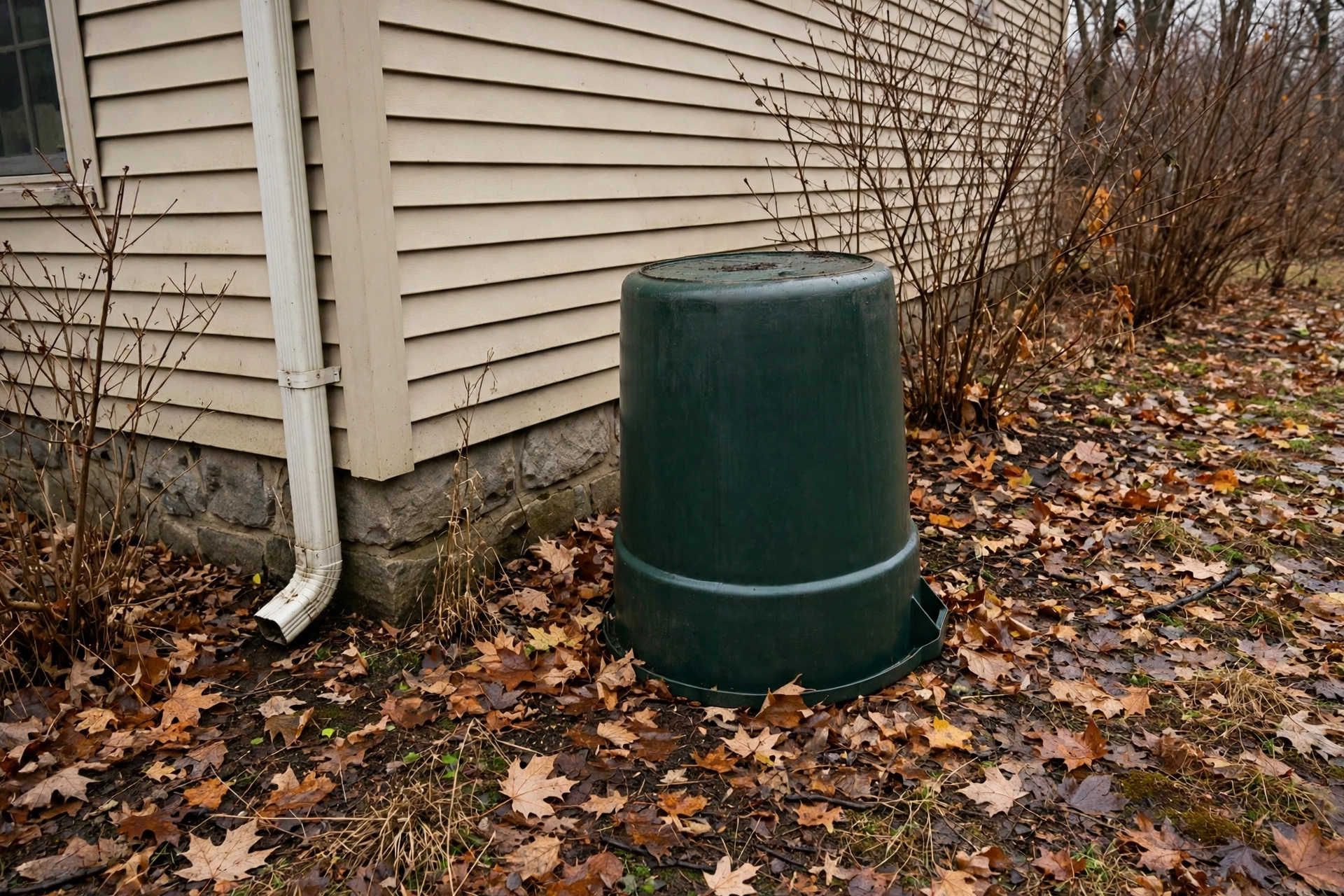
A garage or shed is the safest winter home for an empty barrel. If indoor storage is not possible, flip the barrel upside down and leave it outdoors on level ground. Upside down, rain and snow cannot collect inside it — and an upright barrel with an open top will collect both, freeze, and crack anyway. If the barrel has a screened top opening, flipping it is what keeps it from filling.
An empty plastic barrel weighs only about 20 pounds, so a strong winter wind can push it across the yard. Tie it to a fence post, or set a few bricks on top to hold it steady. Store the hose and the screen in the garage or shed with it.
What happens if you forget
A barrel that freezes full usually splits along a seam or at the base, and that barrel has done its last season. The spigot is often the first part to go, since water trapped inside a small fitting has nowhere to expand, and a cracked diverter is a cheaper fix than a cracked barrel but the same failure for the same reason. If you find a crack in spring, plan on a replacement, and check the diverter and the overflow hose for the same damage before you hook anything back up.
Reconnecting in spring
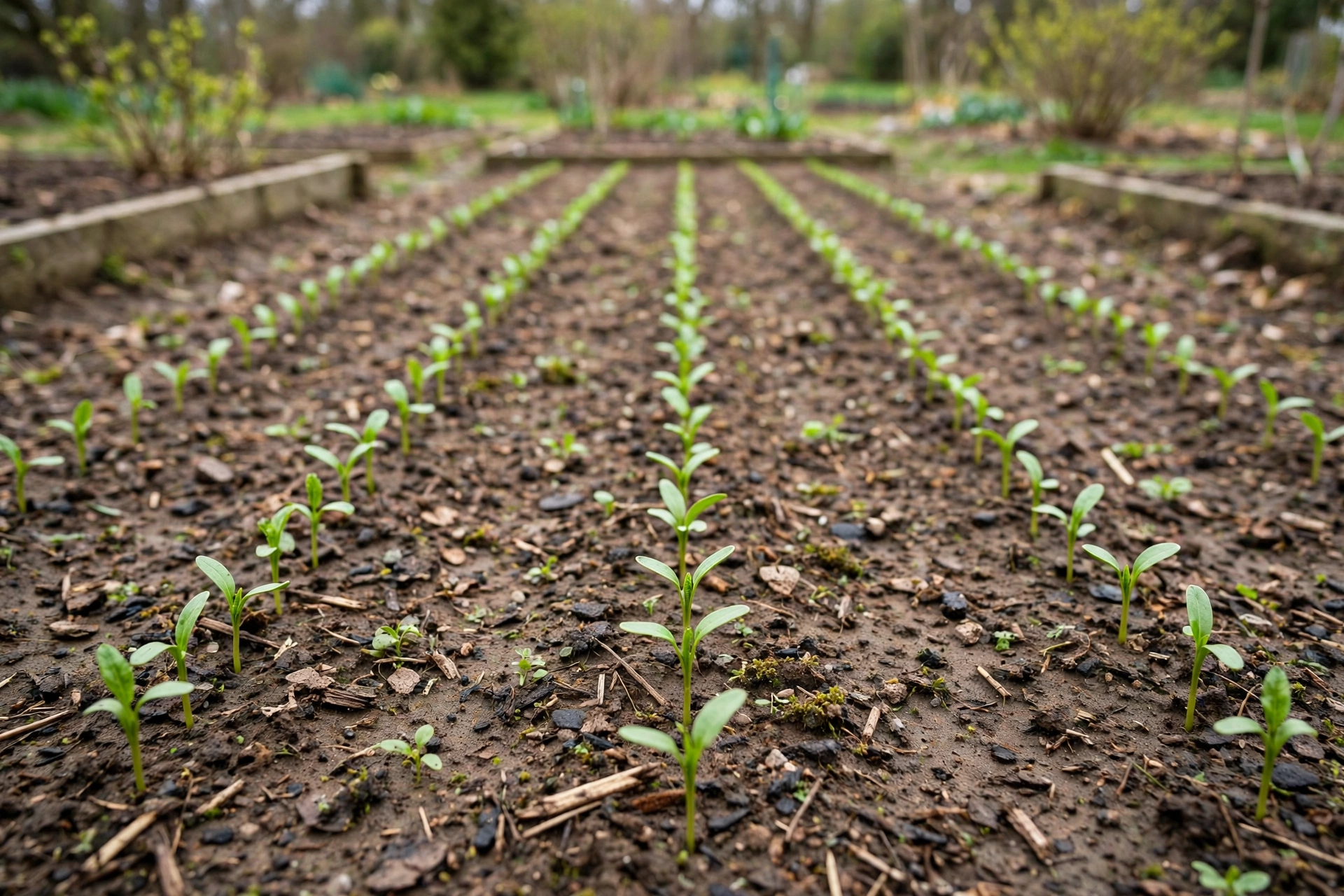
Wait until the median last hard freeze date for your area has passed, then reverse the job: set the barrel back on its base, reconnect the diverter, seat the screen, and run the overflow hose downhill away from the house. The first spring storm will fill it, and the garden will have stored rainwater before the first watering can comes out. If you are still choosing a barrel, our roundup of the best rain barrels for gardens compares the three worth buying — and if you want to stretch a barrel further, a drip irrigation setup puts the water at the roots, and our sprinkler catch-can calculator shows how fast your sprinklers put water down.