The motor hums, the hopper is full, and nothing is coming out the bottom. That is a clogged mulcher, and it almost always comes down to three causes: too much fed too fast, leaves too wet to shred, or a cutting line worn down to a nub. All three are fixable, and the fix starts with figuring out which one you are looking at.
What You Are Seeing
A clog announces itself in stages. First the sound changes, because the motor note drops and the shredding turns ragged. Then whole leaves start coming out the bottom instead of fine shreds. Then nothing comes out at all, and the hopper fills while the motor strains. If you catch it at the sound change, you can usually fix it by stopping the feed and letting the machine clear itself. If you keep feeding, you will be clearing it by hand.
The three causes below are ranked by how often they show up. The most common is feeding too fast: wet leaves mat together, and a big handful packs the chamber before the line can cut it. Next is water itself, because soaked leaves clump and stick, and no machine shreds a dripping pile the way it shreds a dry one. Last is a worn cutting line — the most common reason a mulcher that worked fine last year seems to struggle this year, since frayed line tears instead of cutting and lets material pack around it.
Tell them apart by looking at what comes out. Whole leaves mixed with fine shreds point to feeding speed. A wet, heavy mass that will not move points to water. Fine dust with unshredded stems, plus a line that looks frayed or short, points to the line itself. When two causes overlap — and they often do on a rainy October weekend — fix the feed first, then the water, then the line.
Clear the Clog Safely
Work through these steps in order, and do not skip the first one.
- Stop and unplug. Switch the machine off and pull the plug before you touch anything near the chamber. A mulcher that restarts while your hand is inside is the one injury this job can cause, and it is entirely avoidable.
- Empty the hopper. Scoop the unshredded leaves out by hand and set them aside. Do not push them down, because packed material is what you are trying to remove.
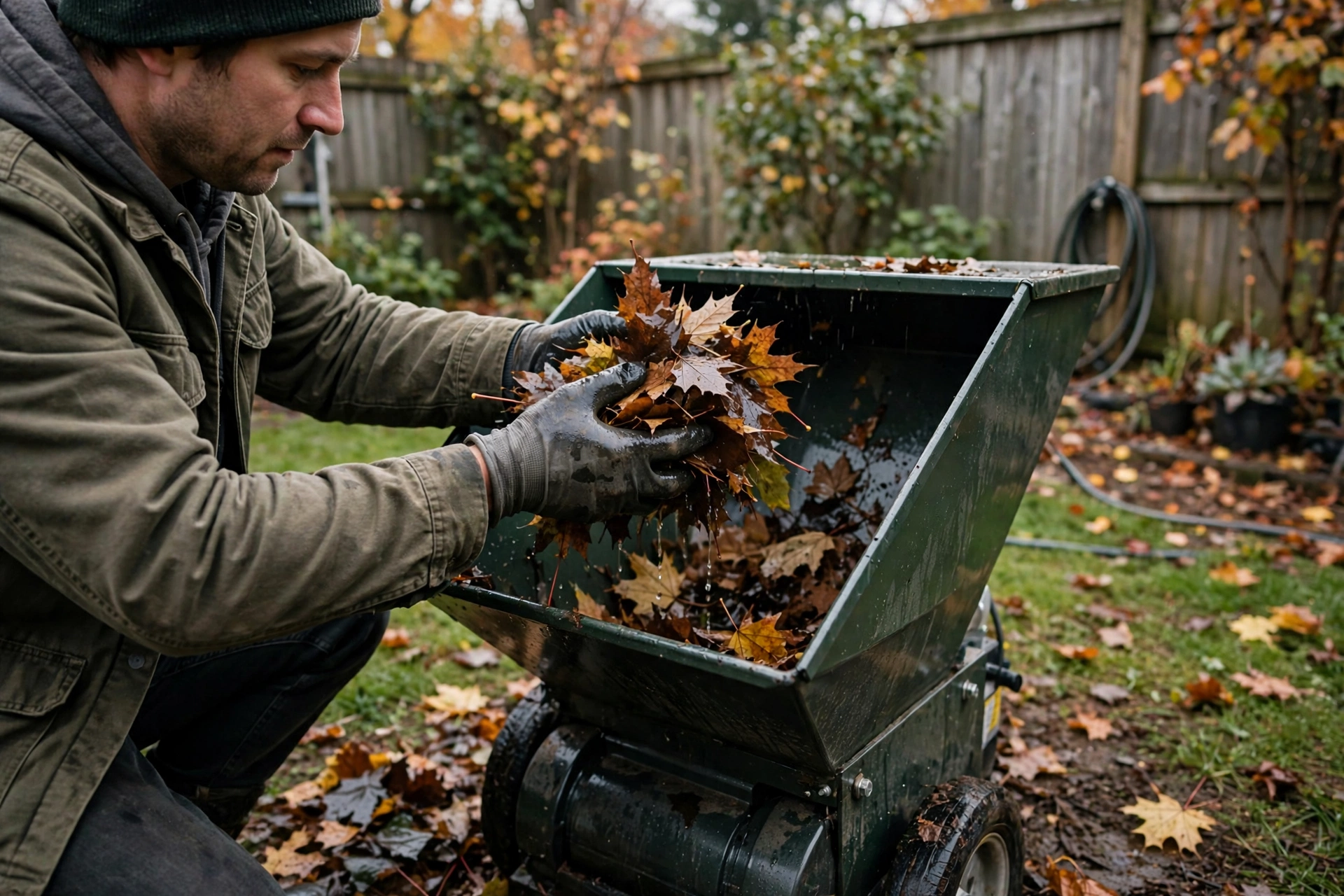
- Clear the chamber and chute. Reach in from the top with a gloved hand or a stick and pull the packed mass out in pieces. Check the discharge chute too, since wet shreds settle and block it from below.
- Check the cutting line. Look at the line for fraying, shortening, or missing pieces. If it is worn, replace it before you run the machine again. A fresh line is the cheapest fix in this whole job, and a worn one will clog again within minutes.
- Run a dry test handful. Feed a small handful of dry leaves and listen. If the sound is steady and the shreds are fine, the machine is ready. If it strains again, the line or the chamber still needs attention.
Feed Wet Leaves Without Clogging
The goal is not to dry every leaf, because that would take all weekend. The goal is to feed wet material in a way the machine can handle.
- Let them drain first. Spread the pile on the lawn or a tarp for an hour, or run a blower over it to knock the surface water off. Leaves that have drained shred far better than leaves dripping straight off the pile.
- Feed small handfuls, slowly. Drop in a handful, wait for the sound to steady, then feed the next one. The moment the motor note drops, stop feeding and let it catch up. That pause is the whole technique.
- Mix pine needles with leaves. A pure handful of needles tangles and wraps, while needles mixed into leaves pass through cleanly. Alternate scoops if the pile is mostly needles. Our pine needle cleanup guide has the full sequence for needle-heavy yards.
- Use the wet setting if your machine has one. The Sun Joe SDJ616 has a control dial with wet and dry settings, and the Flowtron LE-900 adjusts from coarse (8:1) to fine (30:1). Set it coarse for wet material so the shreds have somewhere to go. Dry leaves want the fine setting, while wet leaves want room.
- Keep the line fresh. Replace cutting line at the first sign of fraying, not when it snaps. A fresh line cuts wet leaves instead of mashing them, and it is the single cheapest upgrade to a struggling machine.
If the leaves are soaked through after days of rain, wait a day. A mulcher can handle damp, but it cannot handle dripping, and no feeding technique fixes a pile that is more water than leaf.
What Success Looks Like
A mulcher running well on wet leaves sounds steady, with the motor note rising and falling gently as each handful goes through. The shreds coming out the bottom are fine and even, closer to confetti than to leaves, and the hopper empties as fast as you fill it. If you have to stop and wait every third handful, slow down. The machine is telling you its pace, and matching it is faster than clearing a clog.
After the job, run a few dry handfuls through to clear the chamber, then tip the machine and brush out any packed shreds before they dry into a crust. Store it with the line intact and the chamber clean, and it will start next fall the way it ran this one.
If you are still choosing a machine, our guide to choosing a leaf mulcher explains capacity and wet-leaf handling, and our roundup of the best leaf mulchers and shredders for pine needles and wet leaves names the best pick for damp piles. If the pile includes branches thicker than a pencil, that is a chipper’s job, not a mulcher’s — our comparison of leaf mulchers vs wood chippers sorts out which machine your yard actually needs.
Bottom Line
Wet leaves are not a reason to skip the mulcher. They are a reason to feed it properly. Small handfuls, a pause when the sound changes, needles mixed with leaves, and a fresh cutting line will get a damp pile through any decent electric mulcher. Do that, and the pile that would have filled bag after bag becomes a single bag of mulch for the beds, which is the whole point of owning the machine.