Your pile of leaves looks manageable until you start bagging it. Then it turns into twelve bags, a sore back, and a curb full of yard waste that could have been mulch. A leaf mulcher fixes the volume problem, but only if the machine matches the pile you actually have.
The symptom to diagnose first is not the machine. It is the leaf load: how much falls, how wet it arrives, and whether pine needles are mixed in. Answer those three questions and the right mulcher mostly picks itself.
Start With the Leaf Load, Not the Ratio
Reduction ratio is the headline number on every box, and it is the least useful number for choosing. An 11:1 ratio means eleven bags become one. A 16:1 ratio means sixteen become one. A 30:1 ratio, on the Flowtron’s fine setting, means thirty become one. All three sound impressive, and all three are real, under the manufacturer’s test conditions.
What the ratio does not tell you is how fast the machine gets there, or how it behaves when the leaves are wet. Throughput matters more in practice. The Worx WG430 moves up to 53 gallons of leaves a minute, and the Sun Joe SDJ616 moves up to 55 gallons a minute. Those figures describe a fed machine working steadily, not a machine being force-fed a soaking pile.
Ask instead: how many trees, how big, and how many weekends? A yard with one maple and a small oak is a different job from a yard with three oaks, a pine, and a neighbor’s leaves blowing over the fence. The first yard can use any machine here. The second yard wants the widest hopper and the highest throughput it can get, because the pile will be back next weekend.
Capacity: Hopper, Bag, and the Cord
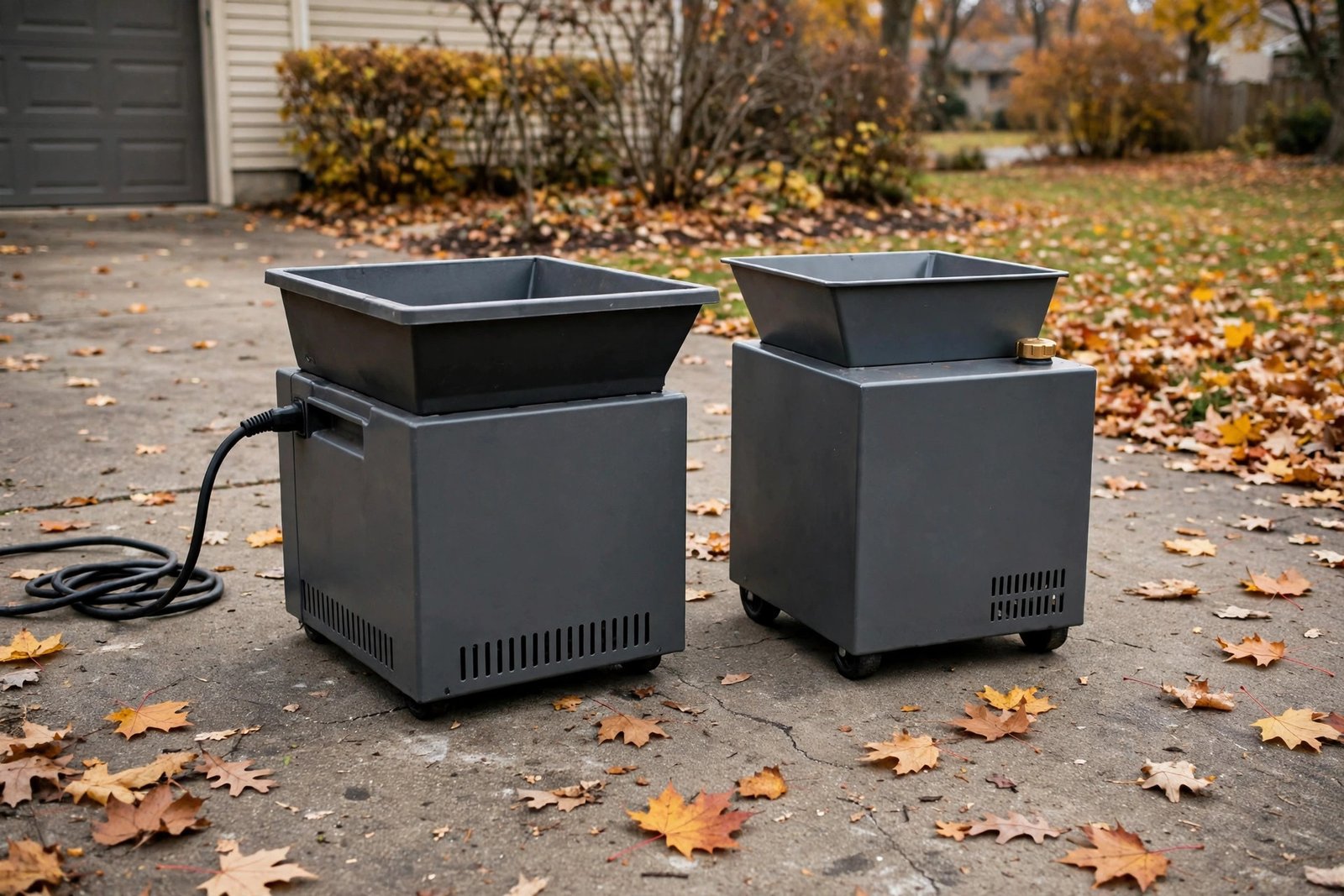
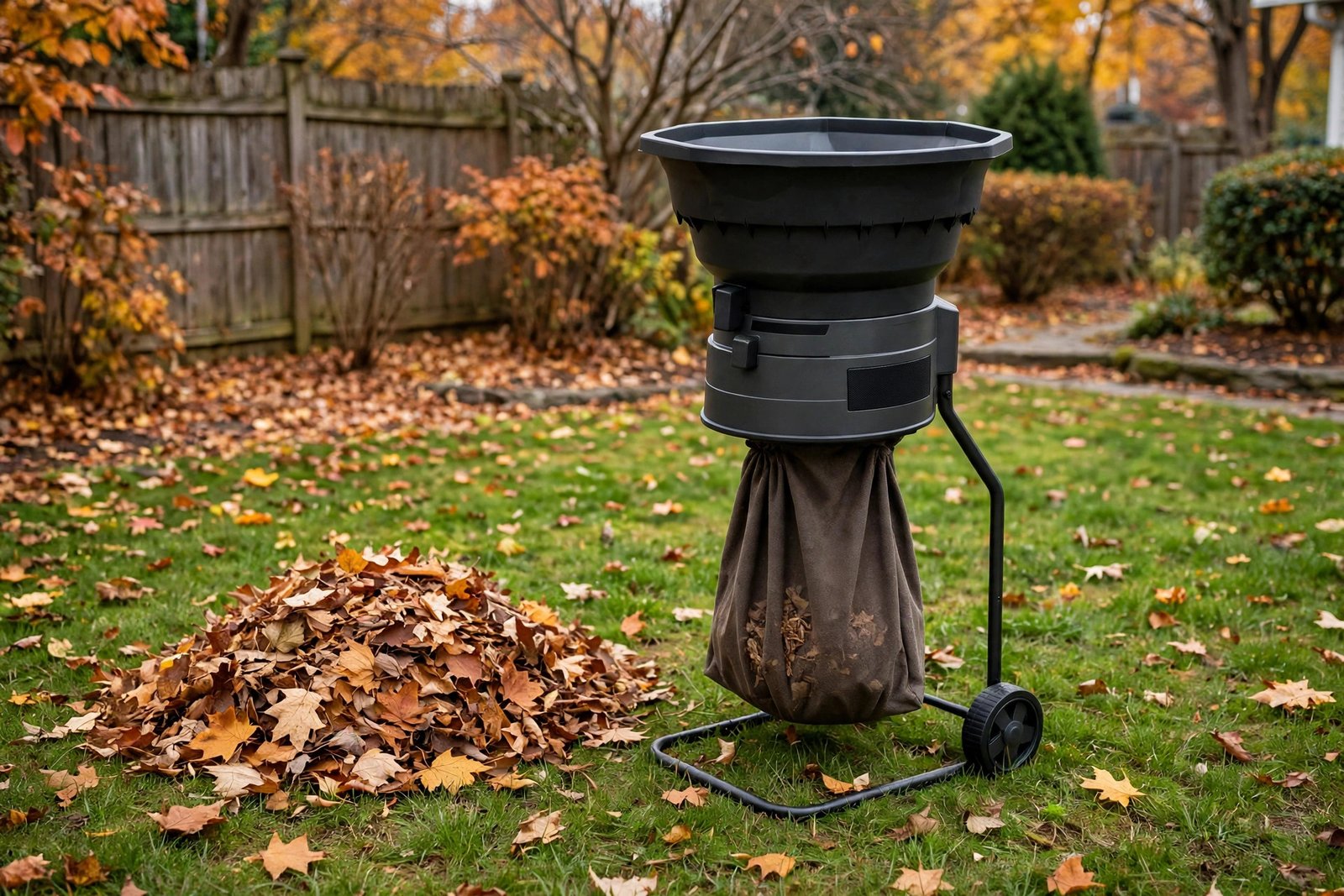
Capacity shows up in three places. The hopper is how much you can dump at once: the Sun Joe’s 19-inch hopper and the Flowtron’s 21-inch funnel both take a generous scoop, while a narrow hopper turns every load into careful feeding. The output is where the shreds land: under the machine into a bag you supply, or on top of a trash container, as with the Flowtron.
The third capacity limit is the one people forget: the extension cord. A 13-amp mulcher needs a cord rated for the load and kept as short as the job allows. A long, thin cord drops voltage, the motor runs hot, and the machine shreds slower. Before you buy, walk the route from the nearest outlet to where the pile will sit, and measure it honestly.
Wet Leaves: The Problem That Decides the Pick
Wet leaves are the diagnostic clue that separates a good purchase from a frustrating one. Dry leaves shred in almost anything. Wet leaves clump, mat, and stall a machine that has no way to adjust. If your leaves usually arrive damp, or you only get to them after rain, look for two things.
First, an adjustable setting for wet material. The Sun Joe SDJ616 has a control dial with wet and dry settings, which is why it is the runner-up pick in our leaf mulcher roundup for damp piles. Second, patience in the feeding. No adjustment replaces slow feeding in small handfuls, with a pause when the sound changes.
Pine needles need the same patience. They tangle, and a pure handful of needles will wrap where a mixed handful of leaves and needles will not. Mix the needles in with leaves, feed slowly, and keep the machine’s lines fresh. Worn cutting line is the most common reason a mulcher that worked fine last year seems to struggle this year.
What to Check Before You Order
Run through this checklist in order, and the decision gets simple:
- Leaf volume: one or two trees, or a full canopy? Full canopy means the widest hopper and highest throughput.
- Wet or dry: usually damp or under pines? Choose a machine with a wet setting and plan to feed slowly.
- End use: curb bags, or compost and beds? Compost wants the finest grind you can get, which points to adjustable coarseness.
- Branches: any sticks thicker than a pencil? If yes, that is a chipper’s job, not a leaf mulcher’s. See our electric vs gas comparison before buying either.
- Storage: crowded garage? A machine that nests or breaks down without tools earns its keep all winter.
- Outlet distance: measure the cord run, and buy a cord rated for a 13-amp tool if you do not own one.
After the Shredding: Use What You Made
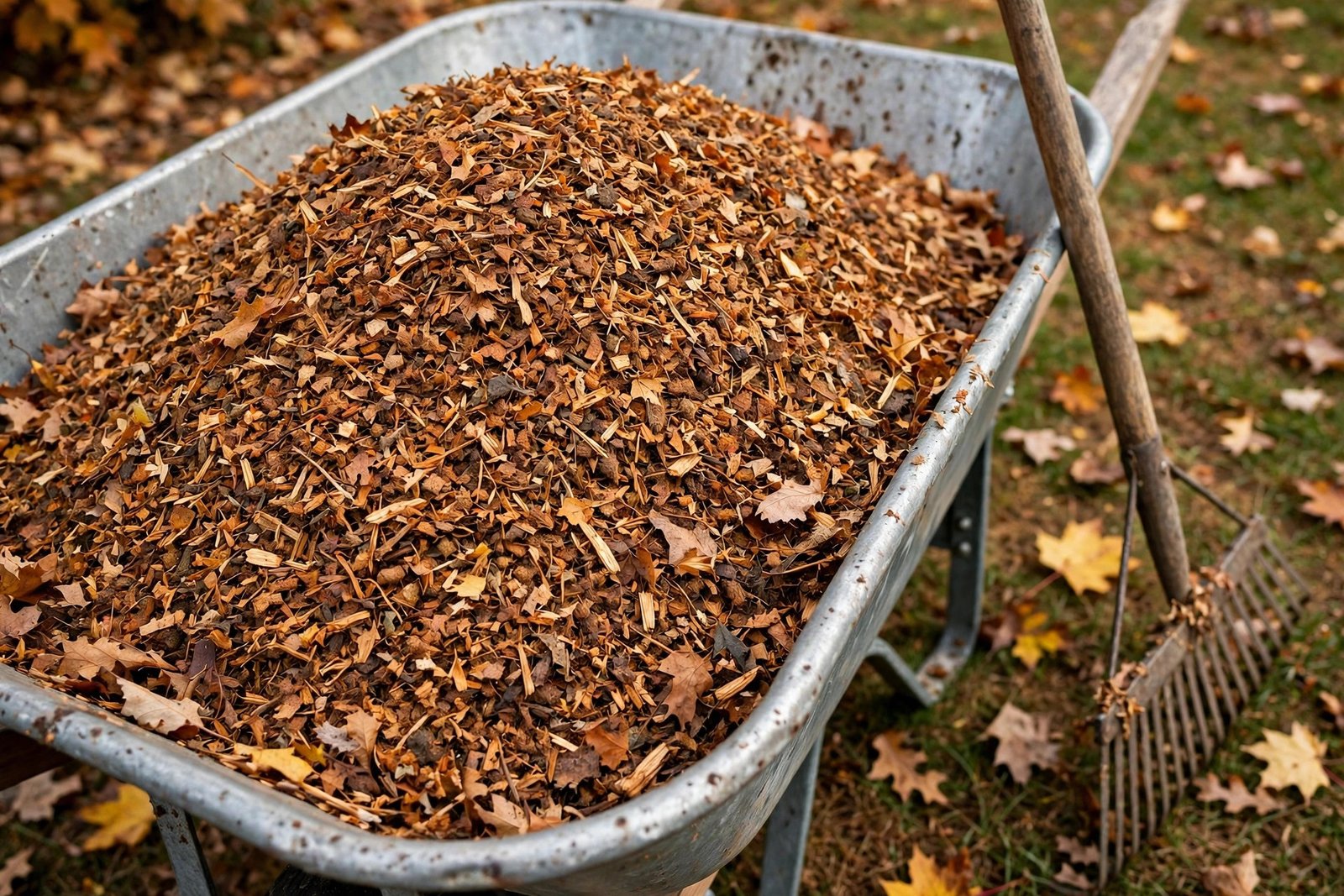
Shredded leaves are not waste. Fine shreds break down faster in compost, which our pine needle composting guide explains, and shredded leaf mulch belongs on beds, as our pine needle mulch vs bark mulch comparison shows. If needles are still dropping while you work, the gutter guide keeps the roofline clear.
One last diagnostic check: if the machine slows, stops, or starts throwing unshredded material, stop and look before feeding more. The usual causes, in order, are a handful fed too fast, wet material packed into the chamber, and worn cutting line. Clear it with the power disconnected, replace the line if it is frayed, and feed slower next time. That sequence fixes most mulcher trouble without a repair shop.
Bottom Line
Match the machine to the pile: volume first, wet handling second, end use third, and the headline ratio last. A mulcher that fits those three answers will feel like it was made for your yard, because in the practical sense, it was. The wrong one will feel like a chore with a cord attached.