Landscape & Leisure is reader-supported. When you buy through links on our site, we may earn a commission at no extra cost to you. Prices change, so click through to confirm current pricing.
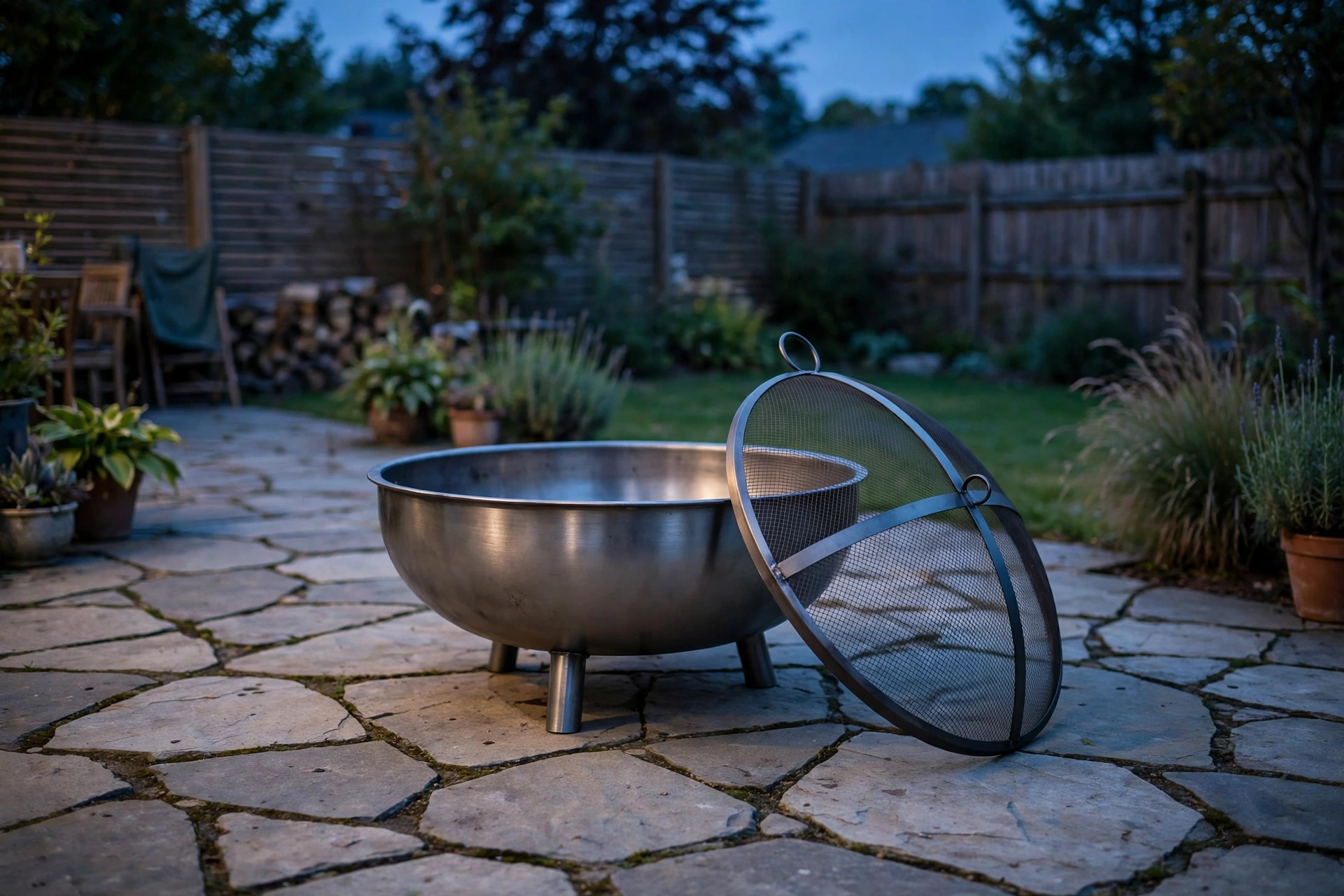
A fire pit left uncovered through one wet winter comes back orange. The bowl rusts from the inside out, the legs go next, and the pit you paid good money for becomes a planter you never wanted.
A cover is the cheapest insurance against that ending. It costs less than a replacement bowl, takes seconds to put on, and keeps the worst of the weather out of the steel. The catch is that a cover only works when it fits and when it goes on a cool pit — get either one wrong and it does nothing at all.
What a Cover Actually Protects
Rain is the main enemy, and it does its damage in combination with what is already sitting in the bowl. Ash left in a fire pit turns to lye when it gets wet, and that alkaline slurry eats through steel far faster than rain alone. A cover keeps both the rain and the ash dry, which is the whole point.
Leaves and debris are the second problem. A bowl full of wet leaves holds moisture against the metal for weeks, and it gives insects and mice a dry place to nest over winter. A cover keeps the bowl empty and dry, so spring cleanup is a five-minute job instead of a shoveling session.
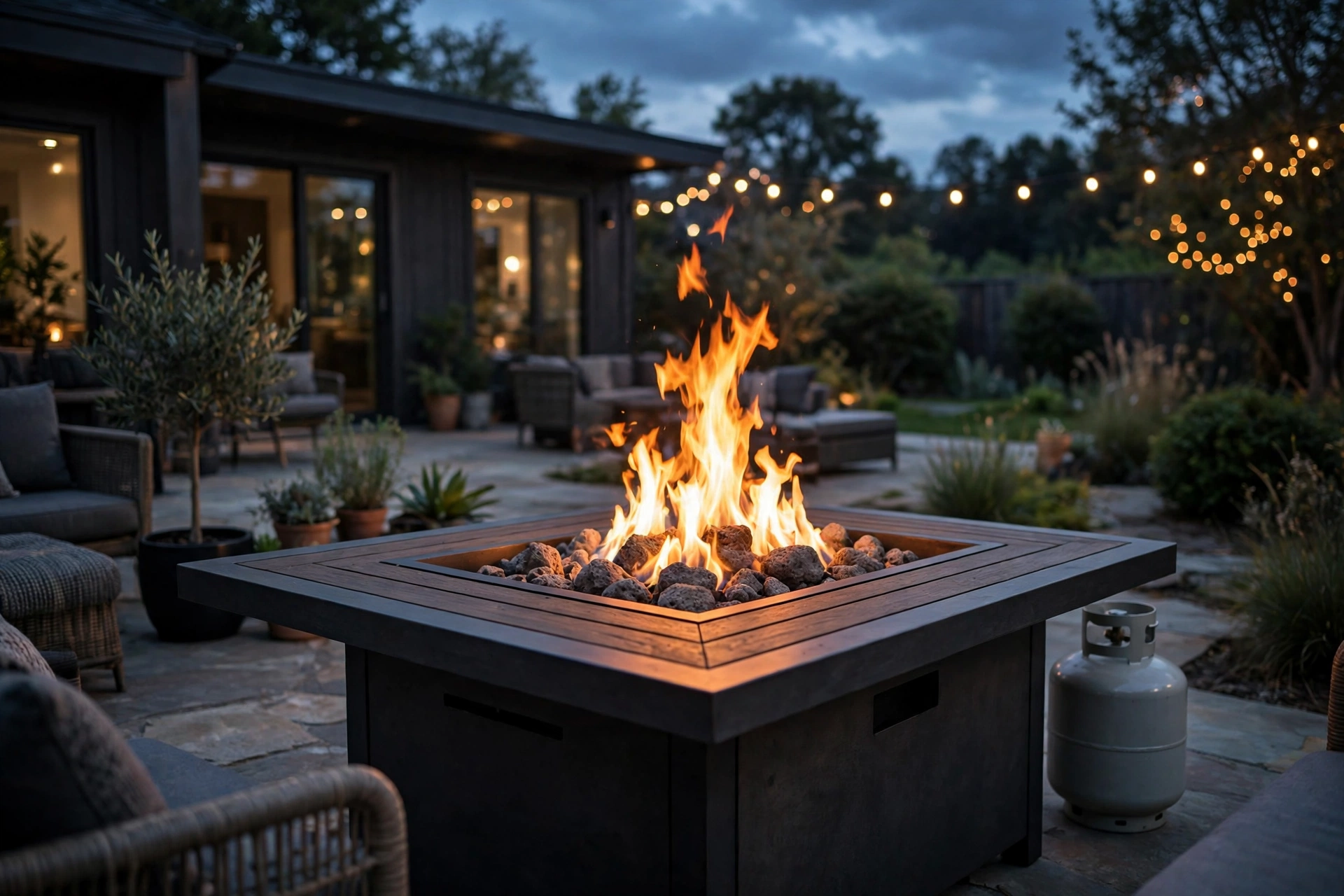
Sun does its own slow damage too, fading powder-coated finishes and drying out the seals on gas fire tables. A cover blocks the UV that chalks a finish, which matters most for a pit that sits in full sun all summer.
The Cover Worth Buying
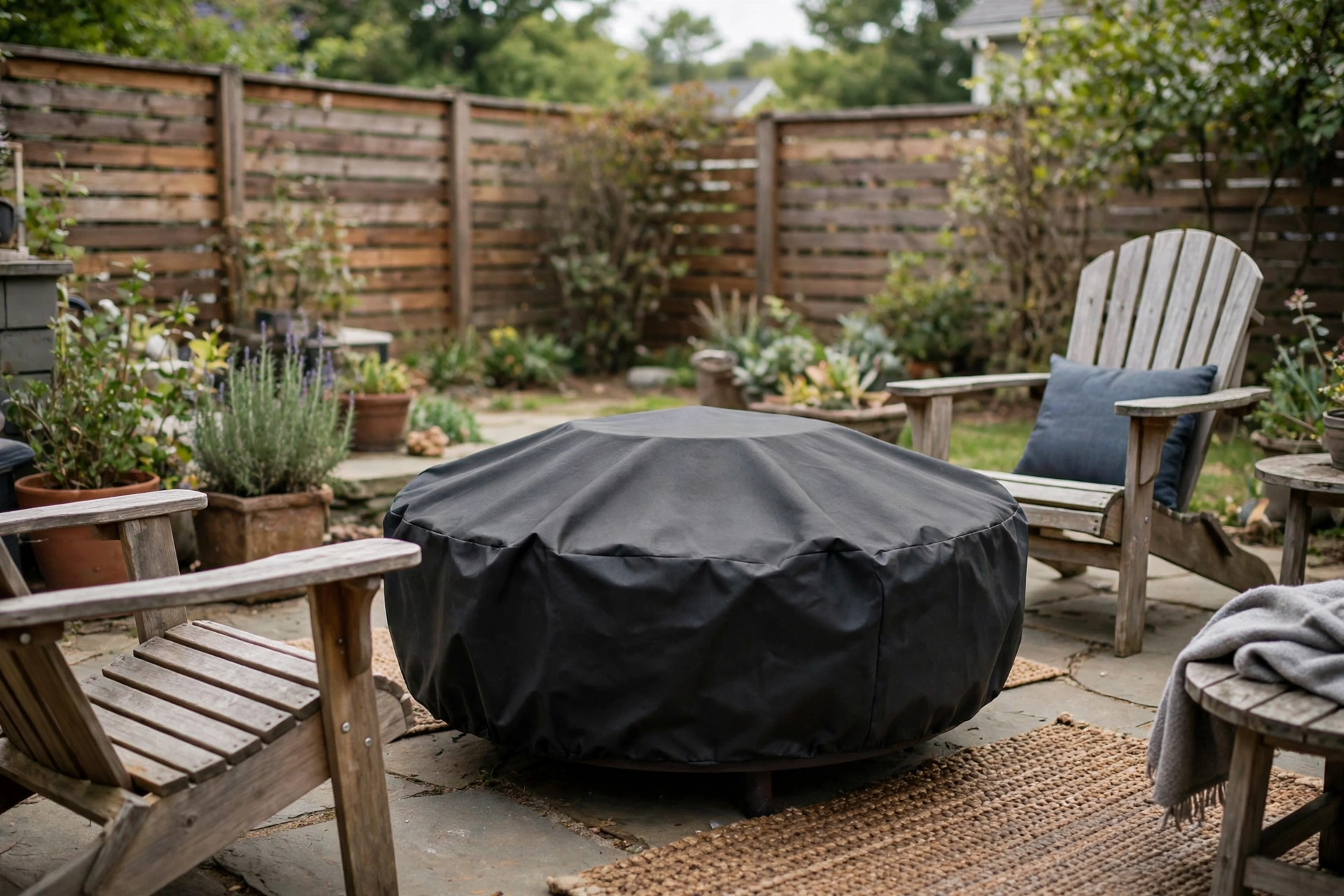
Most round fire pits in backyards are 36 inches across, and the cover that fits them is a straightforward one: heavy fabric, a drawstring that actually cinches, and vents so trapped moisture can escape. The NEVERLAND 36-inch round cover checks those boxes at 600D Oxford fabric with a PVC backing, air vents, and reflective strips that make it visible at night.
NEVERLAND 36-Inch Round Fire Pit Cover
600D Oxford fabric with vents and reflective strips, sized 36 inches across by 24 inches high for standard round fire pits.
The trade-off is fit, not quality: this is a round cover for a round pit, 36 inches across and 24 inches high. It will not fit a square fire table or a 42-inch bowl, and a cover that is too small leaves the rim exposed while a cover that is too big pools water on top. Measure the pit before you buy, and add an inch or two to the diameter so the cover drops on easily.
When a Cover Does Not Help
A cover cannot rescue a pit that is already rusted through. If the bowl has holes or the legs are flaking apart, the cover only hides the damage while it gets worse underneath. Replace the rusted part first, then protect the new one.
A cover also does nothing on a hot pit. Draping fabric over embers is a fire risk and a fast way to melt the PVC backing onto the steel, so let the pit cool completely — cold to the touch, not just no longer glowing — before the cover goes on.
Wind is the third limit. A cover with no drawstring or tie-down will end up in the neighbor’s yard after the first storm, and a cover flapping loose lets rain in at the edges anyway. Cinch the drawstring, and if the pit lives in a windy spot, weigh the cover’s hem down or store the pit against a wall.
Fit Is the Whole Purchase
Measure twice: the diameter across the widest point, and the height from the ground to the top of the rim or the spark screen, whichever is taller. A cover should be at least an inch wider than the pit and tall enough to reach the ground, so rain runs off the fabric instead of pooling on the rim.
Round pits take round covers, square tables take square covers, and a rectangular fire table needs a rectangular cover measured on both sides. The shape matters more than the brand — a well-made cover in the wrong shape protects nothing.
Vents matter too. A fully sealed cover traps condensation underneath, which is moisture doing the same damage as rain, just slower. Vents let the air move, and a cover with a slightly domed top sheds water instead of collecting it in a puddle.
The Verdict: Yes, a Cover Is Worth It
A cover is worth it for any fire pit that lives outside, which is nearly all of them. The price of a decent cover is a fraction of a replacement bowl, and it turns a pit that rusts out in a few seasons into one that holds its finish for years.
Buy the size that fits your pit, let the fire go fully cold before you cover it, and cinch the drawstring. Do those three things and the cover does its job. For the running costs of the fire itself, see our breakdown of how much it costs to run a propane fire pit.