The mistake is buying one tank for a fire-pit evening and learning, three hours in, that the flame is sputtering out. The tank was full when you started. The problem is not the tank. The problem is that nobody did the math before the guests arrived, and a 20-pound tank holds less fire than it looks like it should.
Here is the math, so it does not happen to you twice. A propane fire pit is not expensive to run — about two dollars an hour at full blast, less at half flame — but a single tank is one long evening, not a season. Buy the spare tank, and the math stops mattering.
The Math: How Long One Tank Lasts
Propane carries about 91,500 BTU per gallon, according to the US Energy Information Administration. A standard 20-pound tank holds about 4.7 gallons when filled properly, which works out to roughly 430,000 BTU in the tank. Divide that by your fire pit’s BTU rating and you get the hours.
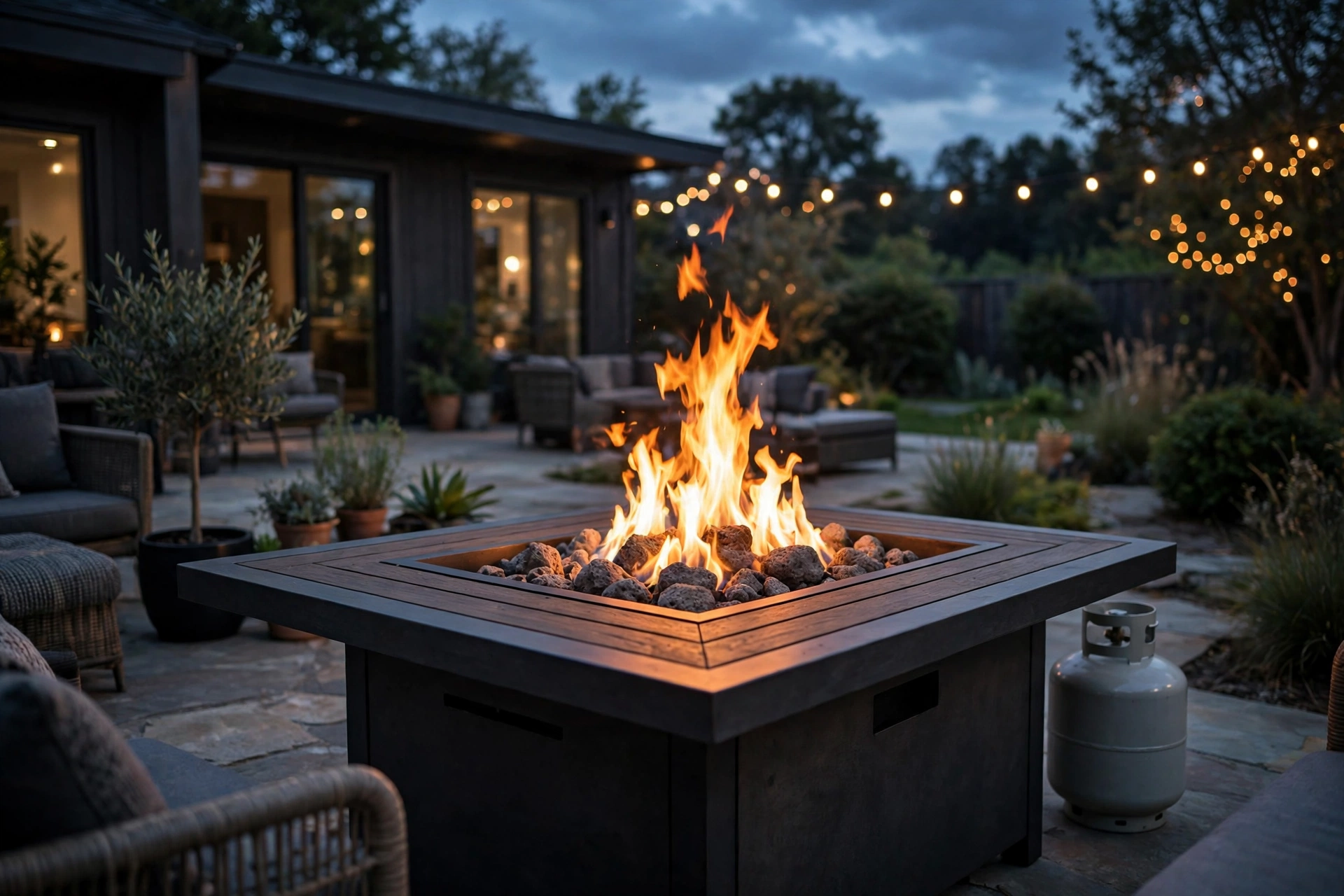
Most propane fire pit tables run between 40,000 and 60,000 BTU at full output. Here is what that means for a full tank, at full flame:
| Burner output | Hours on a full 20-lb tank | Propane per hour | Cost per hour* |
|---|---|---|---|
| 30,000 BTU | About 14 hours | 0.33 gal | About $1.15 |
| 40,000 BTU | About 11 hours | 0.44 gal | About $1.53 |
| 50,000 BTU | About 8.6 hours | 0.55 gal | About $1.91 |
| 60,000 BTU | About 7.2 hours | 0.66 gal | About $2.30 |
*Cost per hour uses an example refill price of $3.50 per gallon. Propane prices vary by region and season, so treat the dollars as a planning figure, not a quote — the hours are the part that holds steady.
Two things stretch those hours. First, almost nobody runs a fire pit at full blast all evening. Turn the flame to half and the tank lasts roughly twice as long — a 50,000 BTU pit at half output runs about 17 hours on one tank. Second, wind eats propane. A burner fighting a stiff breeze burns more fuel for the same flame, so a sheltered spot costs less than an exposed one.
The Exchange-Tank Catch
Here is the mistake that costs people an evening: not all 20-pound tanks hold 20 pounds. The exchange cages outside grocery and hardware stores — the ones where you swap an empty tank for a full one — fill their tanks with only 15 pounds of propane. A tank refilled at a filling station holds the full 20.
That missing quarter matters. At 50,000 BTU, an exchange tank runs about 6.5 hours instead of 8.6. If your fire-pit evenings run four hours, an exchange tank gives you one evening and a sputtering second one. A refilled tank gives you two full evenings. The exchange is convenient; the refill is cheaper per hour and lasts longer. If you run a fire pit regularly, find a refill station and keep the exchange cage for emergencies.
Weigh the tank if you are unsure what you have. A full 20-pound tank weighs about 37 pounds total — 20 pounds of propane plus about 17 pounds of steel tank. An exchange tank weighs about 32 pounds. The difference is the missing five pounds of fuel.
What It Costs, All In
At the $3.50-per-gallon example price, a full refill runs about $16.45 for 4.7 gallons. That buys roughly 8.6 hours at 50,000 BTU, or about $1.91 an hour at full flame and about $0.96 an hour at half. A four-hour evening at a comfortable half flame costs under four dollars in propane.
That is the honest comparison against the alternatives. A wood fire pit costs whatever firewood costs in your area — often nothing if you have a woodpile, and a real chore if you do not. An electric patio heater costs about 23 cents an hour to run at 1,500 watts, but 1,500 watts is only about 5,100 BTU of heat, a tenth of what a 50,000 BTU propane burner puts out. Electric is cheaper per hour because it heats a tenth as much. Our electric vs propane patio heater comparison runs the full numbers, including the running-cost math.
What Size Pit Fits Your Evenings
The BTU rating decides the fuel bill, and the rating mostly follows the size of the pit. A 30,000 to 40,000 BTU pit suits a small patio and two or three chairs; a 50,000 to 60,000 BTU table warms a full conversation set. Buying more BTU than your patio needs is buying a bigger fuel bill — and buying less than you need is buying a flame you run at full blast all night, which costs just as much. Our propane fire pit table roundup and the fire pit table sizing guide cover both decisions, and the covered-patio heater guide covers where a gas burner can and cannot go.
Bottom Line
A 20-pound tank of propane is one long evening at full blast on a 50,000 BTU fire pit — about 8.6 hours, about $1.91 an hour at a $3.50-per-gallon refill price — and about two evenings at half flame. Exchange tanks hold 15 pounds, not 20, so they quit a quarter sooner. Keep a spare tank full, run the flame at half once the chill is off, and the fuel bill for a fire-pit evening lands under four dollars. That is cheap for the best seat in the yard.