You lift the cover off your fire pit in spring and find orange flakes where the black finish used to be. The bowl still holds a fire fine, but the rust is spreading, the finish is flaking into the ash, and the pit that looked sharp last fall looks tired now.
Rust on a fire pit is not a defect. It is what steel does when bare metal meets water and air, and a fire pit gives rust everything it wants: heat that burns off the factory finish, ash that holds moisture against the metal, and months of rain and dew between fires. The fix is not a better fire pit. It is a short routine, done at the right time, that keeps water off bare steel.
Why Fire Pits Rust
Rust needs three things: iron, oxygen, and water. A steel fire pit supplies the first, the air supplies the second, and everything else in your yard supplies the third. Rain falls in, dew condenses on the bowl overnight, and the ash left after a fire absorbs moisture and holds it against the metal for days. The factory paint protects the steel until the heat of repeated fires breaks it down — and once the paint cracks or flakes, the rust starts at the bare spot and spreads under the paint around it.
That is why rust shows up first in the same places on almost every pit: the bottom of the bowl where ash and water pool, the rim where hands and pokers chip the finish, and any spot where the paint bubbled from heat. It is also why a fire pit left uncovered through a wet winter looks worse in spring than one that was covered and emptied in fall.
The Routine That Stops It
Three habits, none of them taking more than a few minutes, do most of the work:
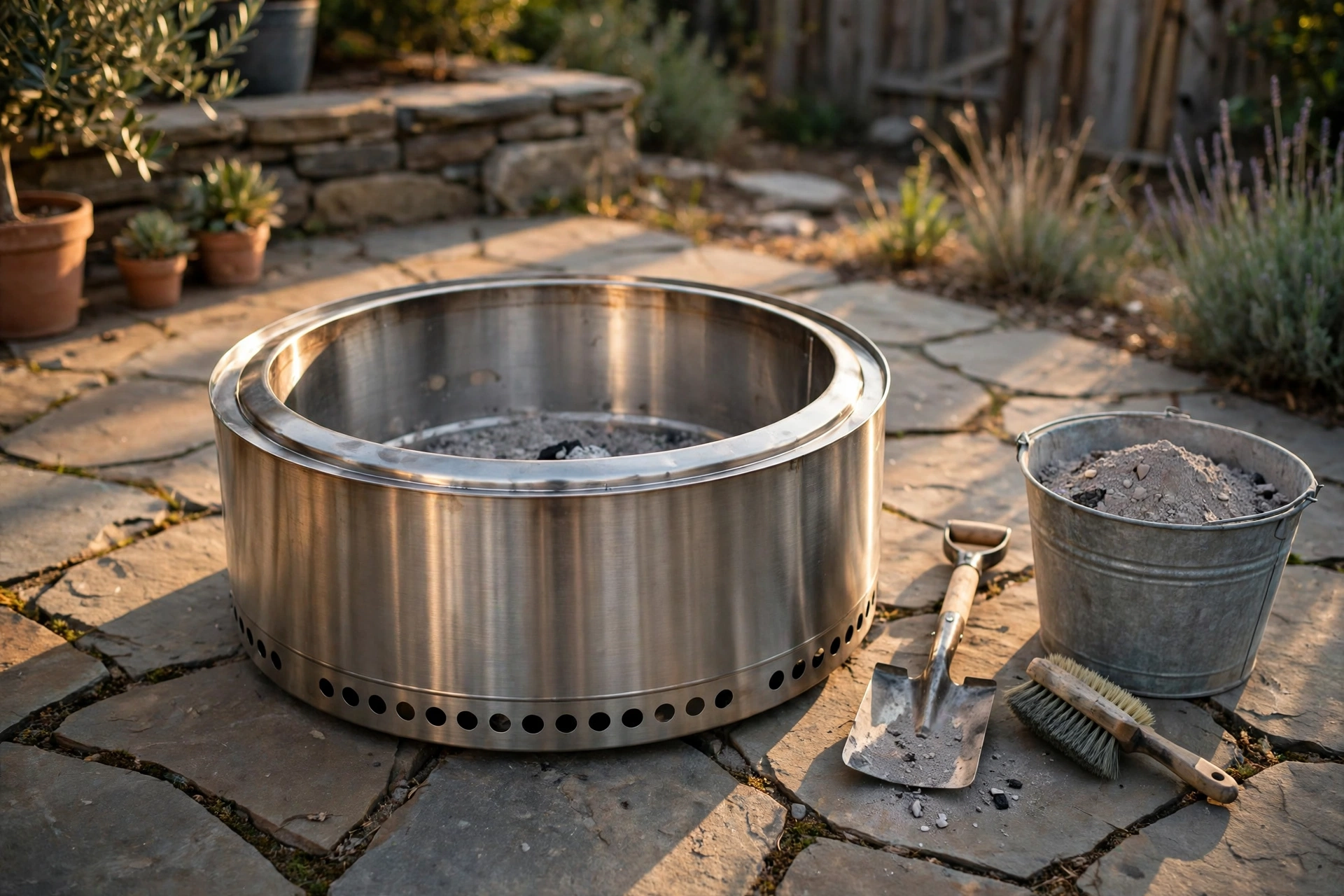
- Empty the ash once the pit is fully cool, after every fire. Ash is the quiet culprit. It soaks up rain and dew and keeps the bowl damp long after the rain stops, and the alkaline salts in wood ash are corrosive to bare steel on their own. Scoop it out, and the bowl dries in hours instead of days.
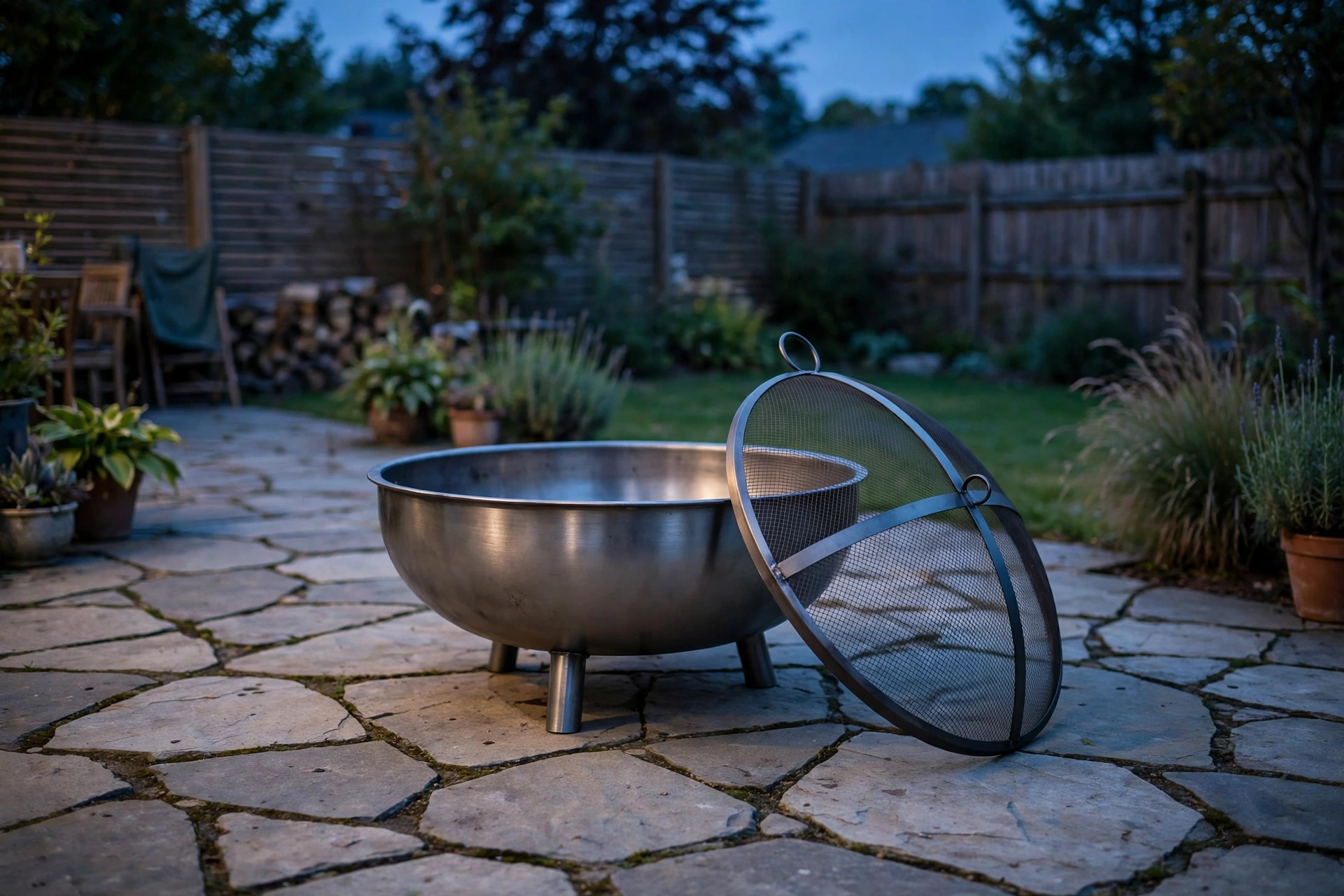
- Cover the pit when it is cool and dry, every time. A fitted cover keeps rain out of the bowl, which is where rust starts. Put the cover on a dry pit — covering a wet pit traps the moisture underneath, which is worse than leaving it open. If the pit is damp, let it air-dry first.
- Keep it off standing water. A pit sitting in a low spot, on bare soil that stays wet, or under a dripping gutter rusts from the bottom up. A paver base, a few inches of gravel, or simply moving the pit to higher ground keeps the legs and the bowl bottom dry. Our winter storage guide covers the full off-season routine, including the one rule that matters most for propane pits.
Do those three things and a steel fire pit lasts years longer than a neglected one. Skip them and no paint or coating will save it, because rust works from underneath whatever you put on top.
Fixing Rust That Is Already There
Surface rust is fixable. Deep rust — metal that flakes away in layers, or a bowl bottom you can push a screwdriver through — is not. Check first: if the metal is still solid under the orange, you can bring it back in an afternoon.
- Scrub it back to bare metal. A wire brush takes off the loose rust and flaking paint. Work until the surface feels solid and the orange dust stops coming off in clouds. Wipe the dust away with a dry rag, then a rag barely dampened with water, and let the metal dry completely.
- Paint with high-heat paint, rated to 1200°F. Ordinary spray paint burns off on the first fire. High-heat paint — Rust-Oleum High Heat is the common one, rated to 1200°F — is made for exactly this. Spray thin, even coats on the outside of the bowl only, letting each coat dry before the next.
- Heat-cure the paint. The paint needs heat to fully cure: Rust-Oleum’s own instructions call for heating the painted surface to 450°F for one hour. A small fire in the pit does it — build a modest fire, let it burn, and let the pit cool before the next full fire.
- Know where paint does not belong. High-heat paint goes on the outside of the bowl, never on surfaces that touch open flame, and never on any surface that touches food, like a grill grate. The inside of a wood-burning bowl will burn paint off no matter what the can promises — that surface is protected by ash removal and a cover, not by paint.
Expect to touch the paint up every two or three seasons. That is normal. The paint is a sacrificial layer: it rusts and flakes so the steel underneath does not.
Buying Your Way Out of Rust
If you are shopping for a new pit and rust is the thing you want to stop worrying about, the material matters more than the brand. Stainless steel resists rust because the chromium in the steel forms a thin oxide layer that seals the surface — scratch it, and the layer reforms on its own. It costs more than plain steel, and it is the reason smokeless stainless pits hold their looks longer than painted steel ones.
Cast iron sits at the other end: it rusts eagerly, and it is kept sound by seasoning — a thin coat of oil heated onto the surface after cleaning, the same care a cast iron skillet gets. A cast iron pit that is oiled and covered will outlast a painted steel one, but it asks for the routine every season.
Copper and corten steel are the exceptions that prove the rule. Copper develops a green patina instead of rust, and corten is designed to form a stable rust layer that seals itself. Both cost far more than a standard steel pit, which is why most backyards end up with steel — and with the cover-and-ash routine that keeps steel alive.
Bottom Line
A fire pit rusts because water sits on bare steel. Scoop the ash after every fire, cover the pit when it is cool and dry, and touch up the outside with 1200°F paint when the finish starts to go. That routine is the whole job — and a pit that gets it holds its finish through winter after winter.