The mistake is buying the shoes, walking the lawn once, and calling it aerated — then wondering in August why the same bare patches are back, thinner than before. The shoes are cheap and the rental is not, so the choice feels obvious, but the two tools do different jobs, and only one of them actually relieves compaction.
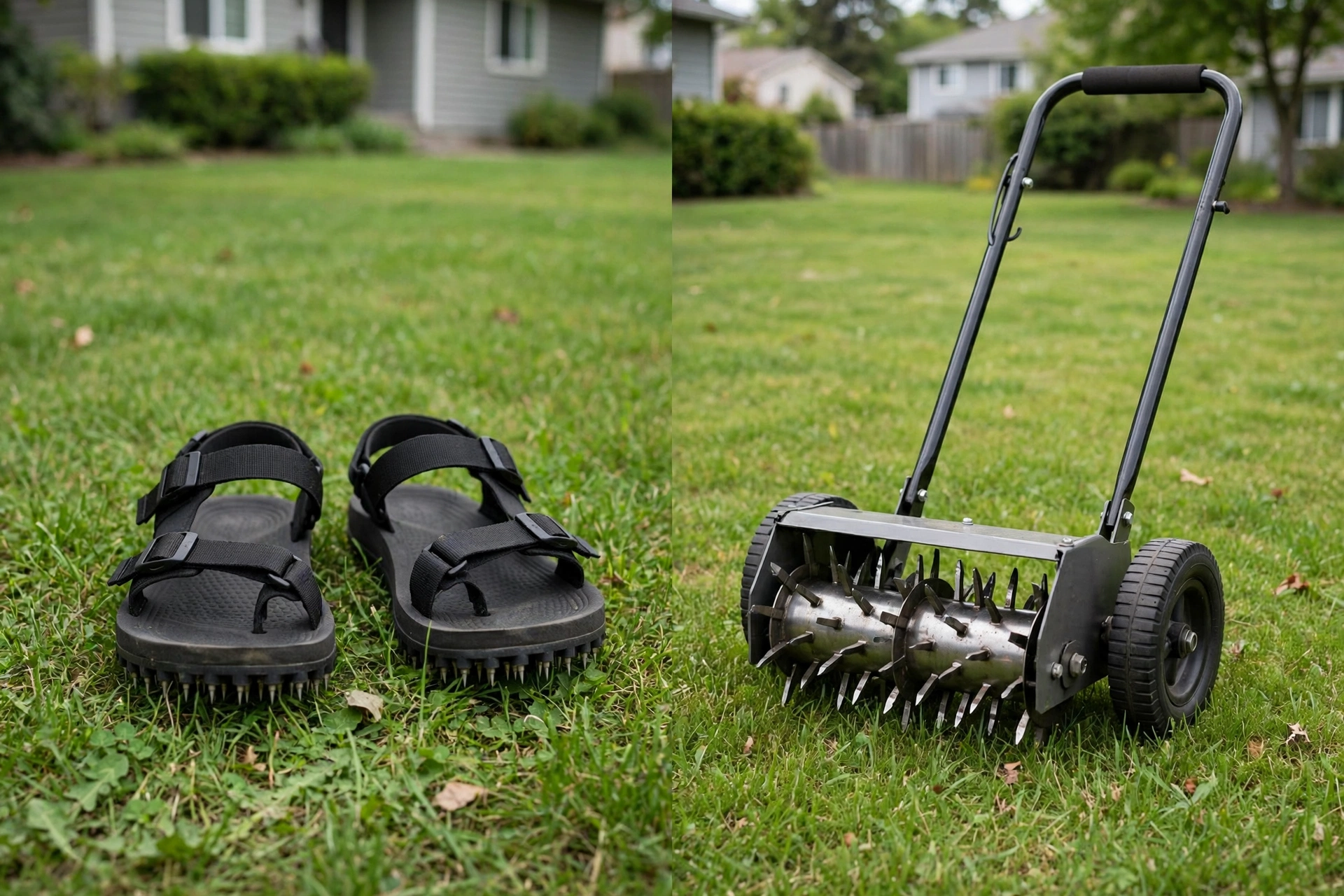
Here is the verdict up front: a core aerator wins for any lawn that is genuinely compacted, because it removes soil. Aerator shoes win only on price and convenience, and only for spot work on a small, soft lawn. Everything below is the evidence for that split.
What each tool actually does
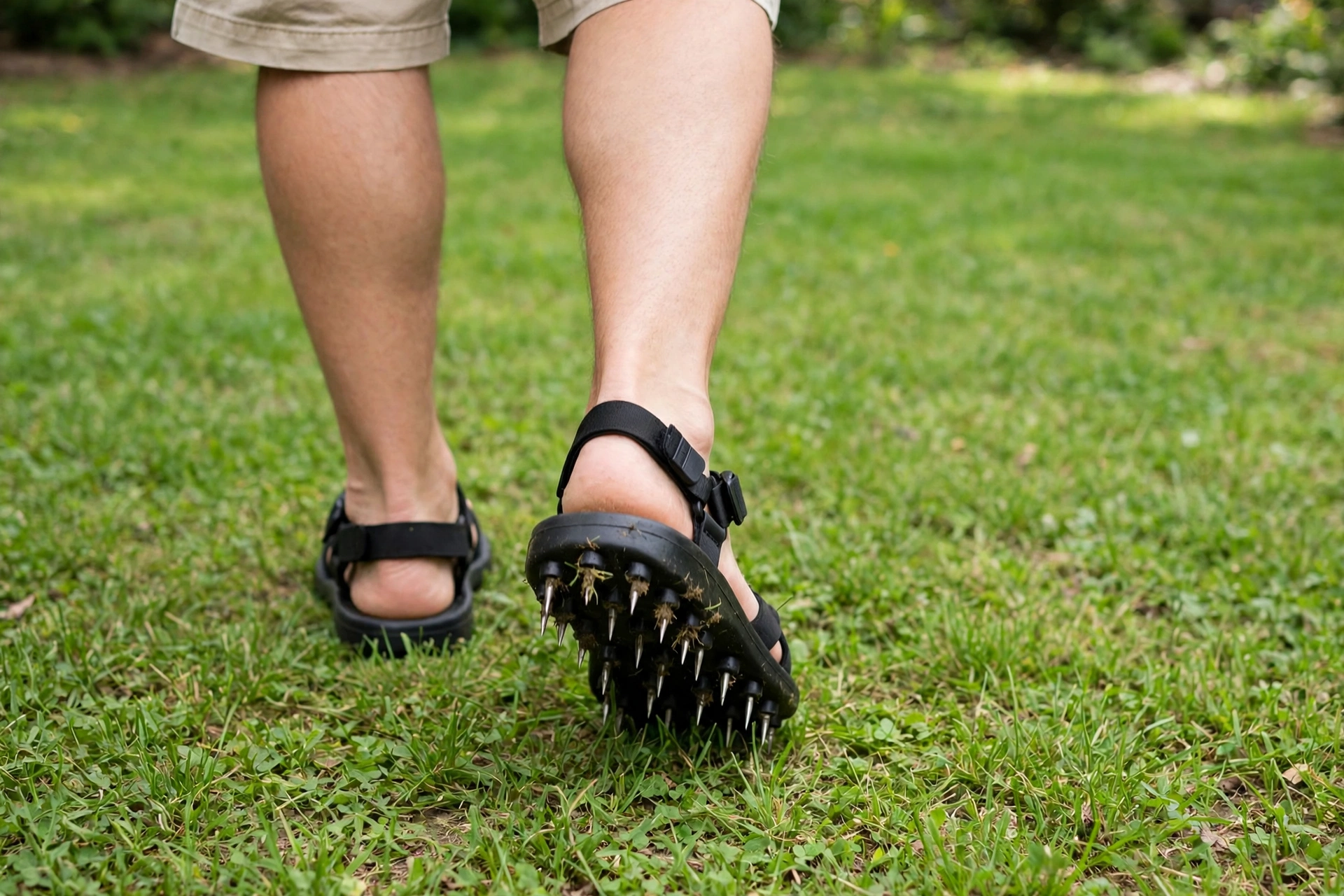
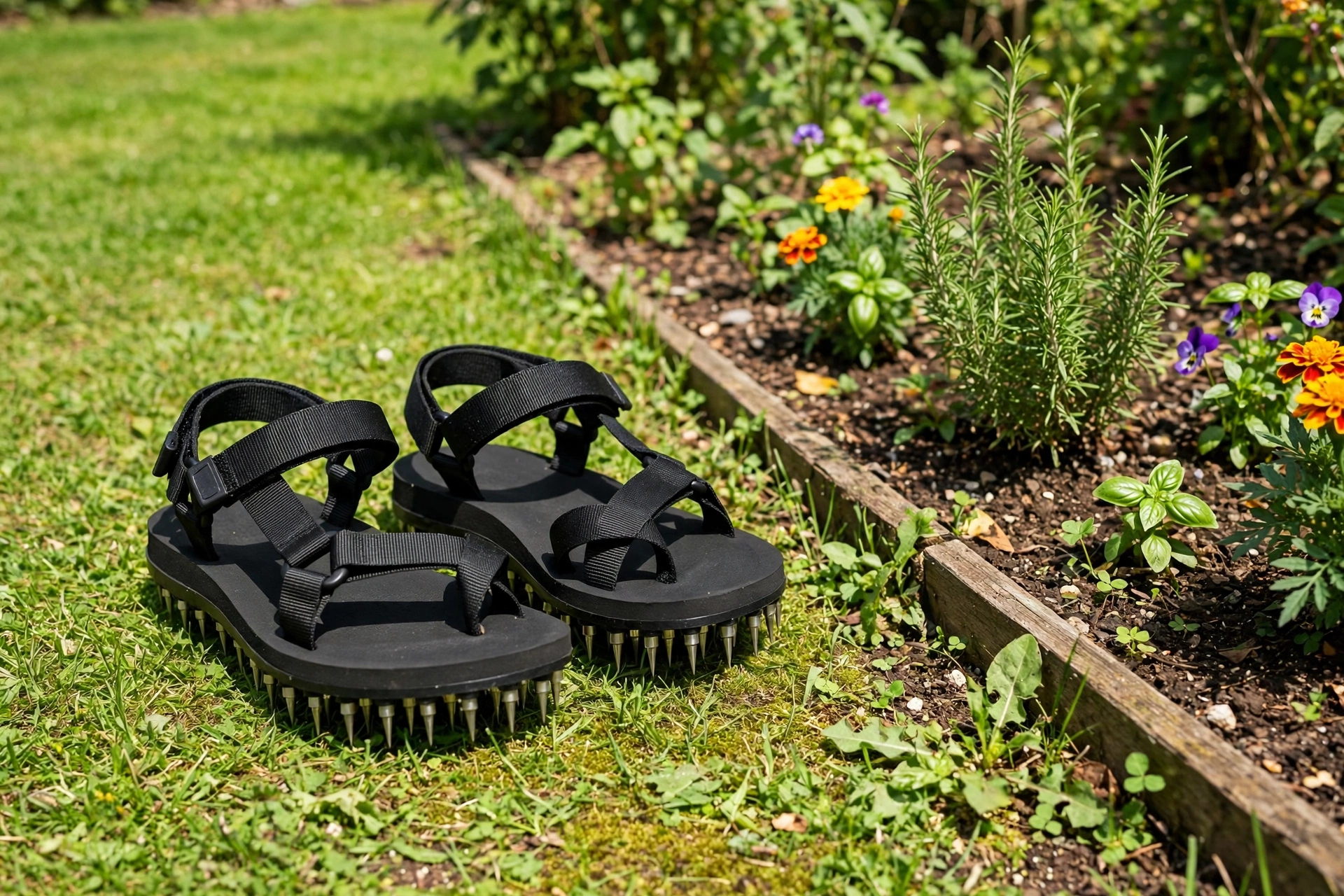
Aerator shoes are spike aeration worn on your feet. Solid steel spikes punch into the soil and pull back out without removing any material, which pushes soil sideways around each hole. On soft ground that loosens the top inch or two; on hard clay it can press the soil around the hole tighter, which works against the goal.
A core aerator does the opposite. Hollow tines pull plugs of soil out of the ground and drop them on the surface, leaving real channels that air, water, and roots can use. The plugs break down over a week or two and return to the lawn on their own. That removal is the whole difference: a hole with the soil taken out stays open, while a hole with the soil pushed aside closes up fast. Our spike vs. plug comparison explains the mechanism in full, and our aerators explained guide covers when each type fits which lawn.
Shoes vs. core aerator, side by side
| Factor | Aerator shoes | Core aerator |
|---|---|---|
| Mechanism | Solid spikes punch holes, soil pushed aside | Hollow tines pull plugs of soil out |
| Soil removed | None | Yes, plugs left on the surface |
| Coverage per pass | About 0.04% of a 10-by-10-foot patch | Even pattern across the whole lawn |
| Best for | Small soft patches, overseeding prep | Real compaction relief, whole lawns |
| Cost | Around $19 to $34 to own | Rental or purchase, more per use |
| Effort | Walking, slow and awkward on slopes | Pushing a machine, faster per square foot |
The coverage gap, in numbers
A turf specialist’s calculation, reported by Family Handyman, put a real number on the gap: walking normally in aerator shoes — roughly 40 steps across a 10-by-10-foot patch — punctures only about 0.04% of that patch, while turf professionals generally recommend around 5% surface coverage to meaningfully reduce compaction. Closing the gap by walking alone would take about 125 crossings of the same small patch. A core aerator, by contrast, lays down an even pattern of holes in a single pass, because the machine spaces the tines instead of leaving it to your stride. Our honest verdict on whether aerator shoes work walks through the same numbers from the symptom side.
What the shoes cost you — and what the rental costs
The shoes win the price argument without a contest. The pairs in our best lawn aerator shoes roundup run around $19 to $34 to own, and the best overall — the Ohuhu, with 2-inch steel spikes — sits at about $34. A core aerator costs more whether you rent it for a day or buy one outright, and that is the honest reason most people reach for the shoes first.
But a cheap tool that does not fix the problem costs twice: the shoes first, then the rental that follows anyway. If the lawn needs compaction relief and the shoes do not deliver it, the shoes become money spent before the money that mattered. Our rent vs. buy guide works through the arithmetic for your yard size, so you can see where renting once beats buying twice. For a small lawn, the middle ground is a manual core aerator — our best manual aerators for small lawns covers the hand tools that pull real cores, including the Yard Butler manual coring aerator.
When shoes win anyway
Shoes are the right call in exactly the narrow cases where coverage does not matter. A small bare patch before overseeding needs seed-to-soil contact, not deep compaction relief, and a scattering of shallow holes does that job. A soft lawn that is already in decent shape benefits from a light pass while you are out doing other yard work. And if you have never aerated and want to learn what the work feels like for the price of lunch, the shoes are a low-stakes way in.
None of that changes the verdict for a compacted lawn. If the ground is hard underfoot and water pools after rain, the shoes are a way to feel busy while the problem stays put. Our guide to using aerator shoes without wrecking your lawn covers the walk for the cases where they do make sense — slow steps, overlapping passes, and the soil to avoid.
Bottom line
For real compaction, buy or rent a core aerator — it removes soil, lays down an even pattern, and covers in one pass what shoes would take about 125 crossings to match. Keep the shoes only for the small jobs: a soft patch, a seeding bed, a light pass while you are already out there. Spend the $34 on the Ohuhu for that work, and spend the rental money on the lawn that actually needs aerating.