This site contains product affiliate links. We may receive a commission if you make a purchase after clicking on one of these links.
Most people buy the cheapest aerator on the shelf, step on it a few times, and call the lawn aerated. The holes close up within days, the soil is no looser than before, and the only thing that changed is the money spent — because a spike aerator does not aerate at all, it just rearranges the compaction. A manual aerator earns its keep only when it pulls soil out of the ground, and for a small lawn the right hand tool does exactly that, one step at a time.
Core or spike: the difference that decides everything
A core aerator uses hollow tines that cut cylinders of soil out of the lawn and leave them on the surface as plugs. A spike aerator uses solid tines that push soil aside, which packs the ground tighter around each hole instead of loosening it. Iowa State Extension puts the target for a real core at about three-quarters of an inch wide and three inches long, at 20 to 40 holes per square foot — and it specifically warns against spike-type devices for exactly that reason.
That is the whole test for this roundup. If the tool does not remove a plug, it does not make the list as a recommendation, no matter how cheap or how well reviewed it is.
The picks at a glance
| Tool | Tines | Handle / weight | Best for |
|---|---|---|---|
| Yard Butler ID-6C | 2 hollow | 37-in handle, under 4 lb | Small lawns and worn patches |
| Landzie AeroCore | 7 hollow | Rolling drum, just under 39 lb | Small-to-mid lawns, faster coverage |
| AMES steel spike aerator | 4 solid spikes | 36-in handle, 6 lb | Skip — spikes compact soil |
Best overall: Yard Butler ID-6C
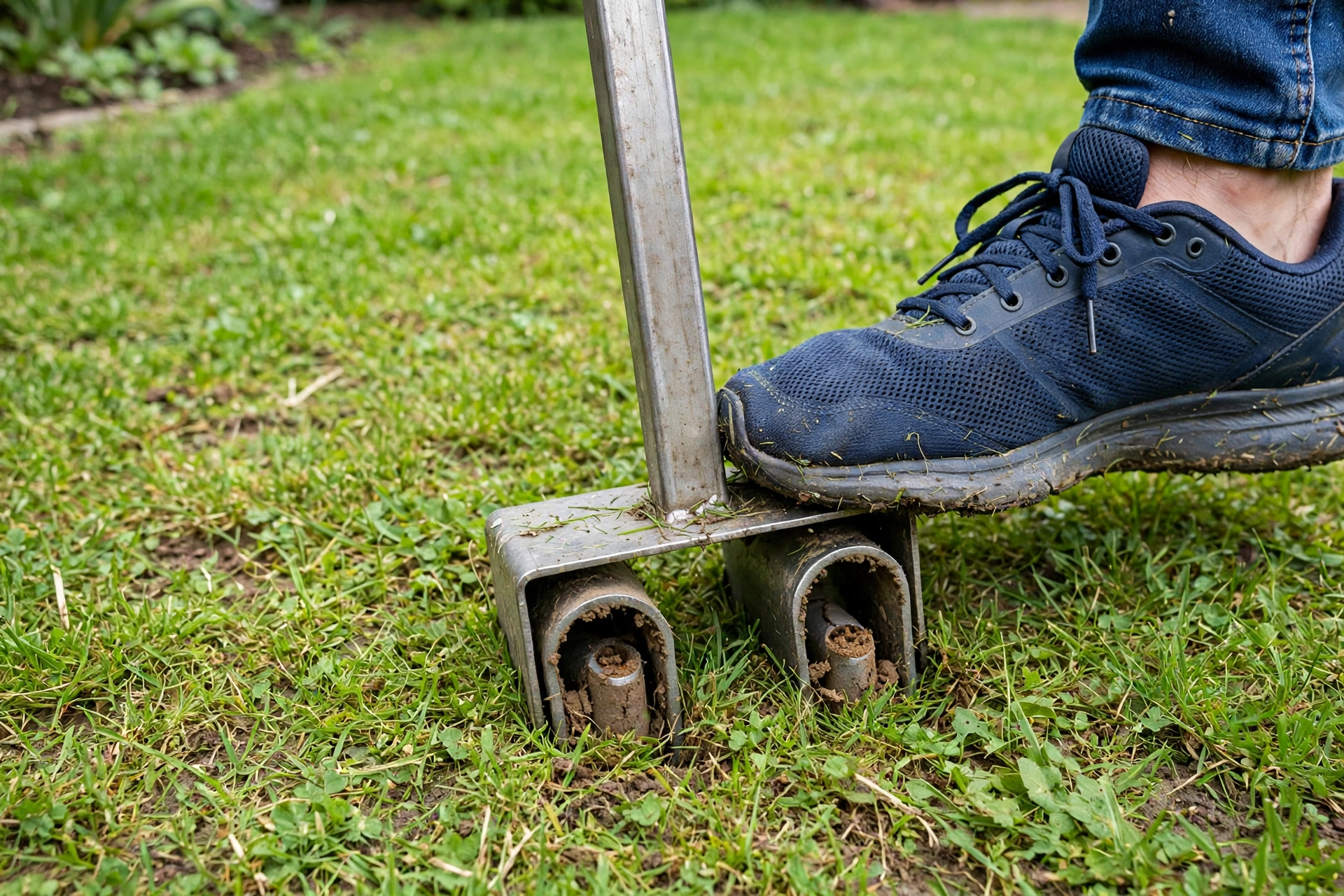
The Yard Butler ID-6C is a long-handled step-on tool with two hollow tines and a foot bar. You step on the bar, the tubes cut two soil plugs about three inches long, and the next press pushes the old plugs out the top. The tines are 3.5 inches long on a 37-inch handle, the whole tool weighs 3.72 pounds, and it is the hand tool that actually hits the Extension depth target — which is why our guide to aerating a small lawn by hand names it as the only hand tool worth owning.
Owners consistently praise the same thing the specs promise: real plugs coming out of the ground, and a tool light enough to carry to the far corner of the yard without thinking about it. The recurring complaint is clogging — weld bumps inside the tubes can pack with soil and stop the plugs ejecting, so you end up poking the tines clear. Yard Butler backs the tool with a lifetime guarantee, which takes some of the sting out of that flaw.
The honest trade-off is speed. At the low end of the Extension target, 20 holes per square foot means 20,000 holes for a 1,000-square-foot lawn, and a two-tine tool turns that into 10,000 presses. A 200-square-foot patch is a single steady session of stepping; a whole lawn takes an afternoon and a pair of tired calves. This is a precision tool for patches, paths, and worn strips, not a machine replacement.
Yard Butler ID-6C Manual Lawn Coring Aerator
Two hollow tines pull real 3.5-inch cores on a 37-inch handle, and it is the only hand tool that hits the Extension depth target for the price.
Runner-up: Landzie AeroCore
The Landzie AeroCore takes the same hollow-tine idea and puts it on a rolling drum: seven replaceable stainless steel tines with beveled tips, a working path 12 inches wide per pass, and just under 39 pounds of weight doing the pushing for you. You walk it across the lawn instead of stepping, which covers ground far faster than a fork-style tool — the right shape for a small-to-mid-size lawn that needs more than spot work.
The trade-off is the weight and the width. Thirty-nine pounds is light for a machine and heavy for a hand tool, and a 12-inch path means a lot of passes on anything bigger than a modest yard, with a second pass at right angles doubling it again. On clay it has the same moisture window as every manual corer: bone dry and the tines skate, soaking wet and they clog and smear. Our test of the AeroCore on clay soil walks through that window in detail, and the verdict holds — on moist clay it does the job it was built for, and on dry clay it struggles like everything else in this class.
Landzie AeroCore Rolling Lawn Aerator
Seven hollow tines on a rolling drum cover ground far faster than stepping, at the cost of 39 pounds to push.
Not recommended: AMES steel spike aerator
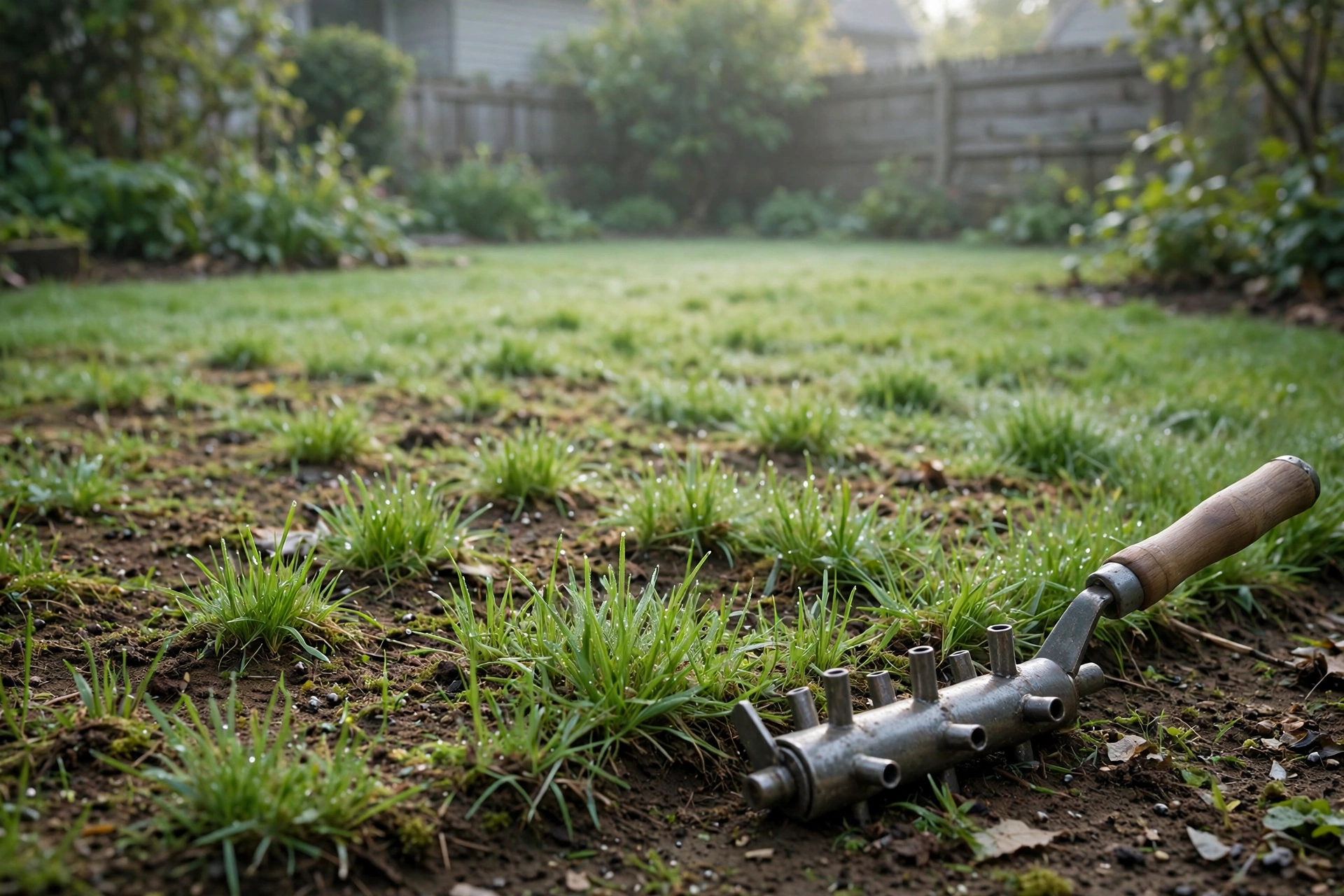
The AMES steel spike aerator looks like a bargain and reads like one, too: a single piece of welded steel, four solid 3-inch tines, six pounds, 36 inches tall, under $30, with a lifetime warranty and a 4.3-star rating across more than 300 reviews. It is light, it stores in a corner, and it does nothing useful for compaction. Solid tines push soil aside instead of removing it, which is the mechanism Iowa State warns against — the holes it makes are surrounded by ground pressed tighter than before. A cheap tool that does the opposite of the job is not a deal, it is a second purchase waiting to happen, because you will still need a corer afterward.
Getting a real core out of a hand tool
Whichever corer you buy, the soil decides whether it works. Water a day or two ahead so the ground is moist, not muddy — dry, compacted soil may let the tines in less than an inch, and wet soil smears and clogs them. Mow a notch lower than usual first so the tines reach soil instead of fighting through long blades, then work in a grid, stepping every two or three inches along a row and making a second pass at a right angle on the worst spots. Leave the plugs on the surface; they break down in a week or two and return the nutrients to the lawn. The full method, including the squeeze test for soil readiness, is in our hand-aerating guide.
Bottom line
Buy the Yard Butler ID-6C if your lawn is small or the problem is a patch, a path, or a worn strip — it pulls real cores at the right depth, it weighs almost nothing, and it is the cheapest tool here that actually does the job. Step up to the Landzie AeroCore if you have a small-to-mid-size lawn and want to cover it walking instead of stepping, and accept the 39 pounds as the price of that speed. Skip the spike tools entirely, whatever they cost, because a tool that compacts the soil it was bought to loosen is money spent on the problem, not the fix.