The first warm stretch of the season brings soft new growth on every potted plant, and aphids arrive with it. They do not show up all at once — a few settle on a new shoot, and then a few more, until one morning the undersides of the leaves are crowded. The good news is that aphids are the easiest pest to stay ahead of, because the habits that prevent them are the same habits that keep a potted plant healthy in the first place.
Why aphids love potted plants
Aphids feed on soft, fast-growing tissue, and a potted plant in warm weather produces exactly that: tender new shoots, unfurling leaves, and stems full of sap. Indoors, the problem compounds, because there are no ladybugs or lacewings patrolling the leaves the way there are outside, and a colony can grow undisturbed for weeks. Add a heavy dose of fertilizer, which pushes out even softer growth, and the plant becomes the easiest meal in the room.
The speed of it catches people off guard. Aphids reproduce without mating, and a new generation can appear every 3 to 5 days in warm weather, so a handful of aphids on Monday can be a visible colony by the weekend. That is why prevention is a weekly habit, not a one-time spray, and why the check matters more than any product.
The weekly check that catches them early
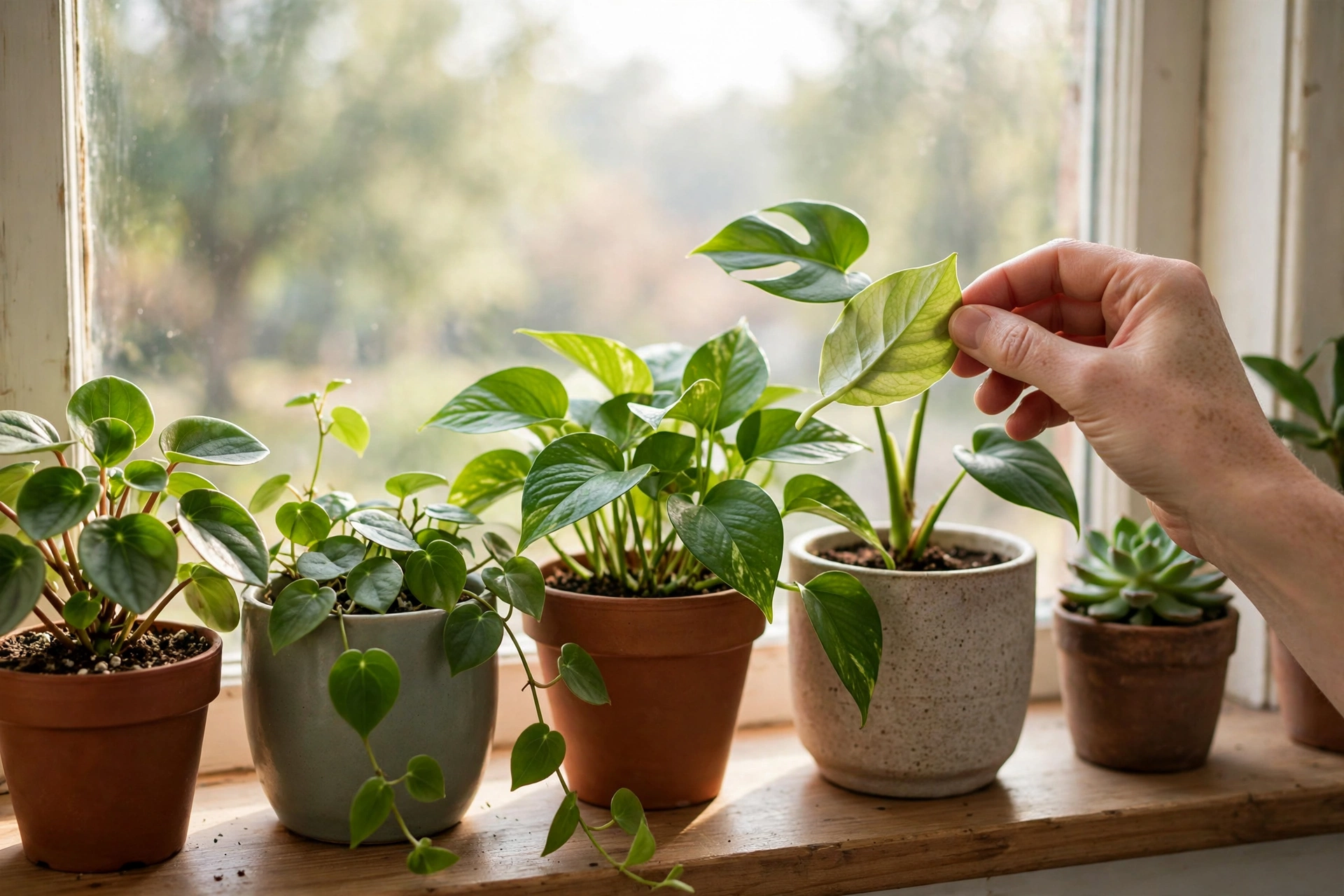
Pick one day a week — watering day works well — and spend two minutes per plant looking in the places aphids actually settle. The check is quick once it becomes a habit, and it catches colonies while they are still a few insects on one leaf.
Flip the leaves. Hold a few leaves up and look at the undersides, where aphids cluster out of sight. New growth tips and the joints where leaves meet the stem are the next places to check.
Feel the stems. A sticky film on the stems or leaves is honeydew, the sugary waste aphids leave behind, and it shows up before the colony is big enough to see clearly. If the stems feel tacky, look closer.
Watch for ants. Ants farm aphids for their honeydew, so a line of ants marching up a pot is often the first visible sign of a colony hiding under the leaves. Follow the ants to find the aphids.
Look at the new growth. Leaves that curl, pucker, or open smaller than the ones below them are a plant telling you something has been feeding on the shoot. Catch it at this stage and the fix takes minutes.
Feed and water for strong growth, not soft growth
A plant that grows steadily is harder for aphids to colonize than one that flushes out a burst of soft tissue after a heavy feeding. Feed at the rate on the label, on the schedule on the label, and resist the urge to double up when a plant looks hungry — the extra nitrogen mostly grows the soft shoots aphids prefer. A plant fed lightly and regularly puts out firmer growth, and firmer growth is harder for aphids to feed on.
Water the same way: steady and even, letting the top inch of soil dry between waterings, rather than swinging between soaked and bone dry. A drought-stressed plant is more vulnerable to aphids, and a plant sitting in soggy soil grows weak roots that show up as soft, pale growth. Good drainage and a pot with a hole in the bottom are prevention too, not just housekeeping.
Quarantine every new plant
Aphid outbreaks on a shelf of healthy plants often start with a new arrival. A plant from the nursery or the grocery store can carry a few aphids that are easy to miss at the shop, and once it joins the shelf, the colony spreads to its neighbors within days.
Keep every new plant in a separate spot for a week or two before it joins the rest, and run the weekly check on it twice during that window. Look under the leaves, feel the stems, and watch for ants. If aphids show up, treat the one plant in isolation — a strong blast of water or a spray on the single pot — and the rest of the collection never has to know.
When a few aphids show up anyway
Prevention keeps most colonies from starting, but it does not make a plant aphid-proof. When the weekly check turns up a small cluster, act the same day, while the colony is still on one leaf or one shoot.
Blast them off with water. A strong stream from a spray bottle or a kitchen sink knocks aphids off the plant, and most of them cannot climb back. Hold the leaf steady and spray from below, so the stream hits the undersides where the aphids are.
Prune the worst shoot. If one stem is heavily coated and the rest of the plant is clean, snip that stem off and drop it in the trash, not the compost. Removing a single bad shoot beats spraying a whole plant.
Reach for a spray when the colony is past water. If aphids cover several leaves or keep returning after a blast, a soap or neem oil spray finishes the job. Our comparison of neem oil vs insecticidal soap for aphids explains which one fits the moment, and our roundup of the best aphid sprays for potted plants names the bottles to buy. If you would rather let insects do the work, beneficial insects for aphids covers ladybugs and lacewings, and getting rid of aphids without killing beneficial insects shows how to treat a plant without wiping out the helpers.
What to watch next
The habit is the whole method: one weekly check, steady feeding and watering, and a quarantine for every new plant. A colony caught while it is still a few insects on one leaf is a quick fix with a spray bottle, while the same colony left alone for a month becomes a three-spray project. Keep the check on watering day, and the pots will stay ahead of the aphids all season.