This site contains product affiliate links. We may receive a commission if you make a purchase after clicking on one of these links.
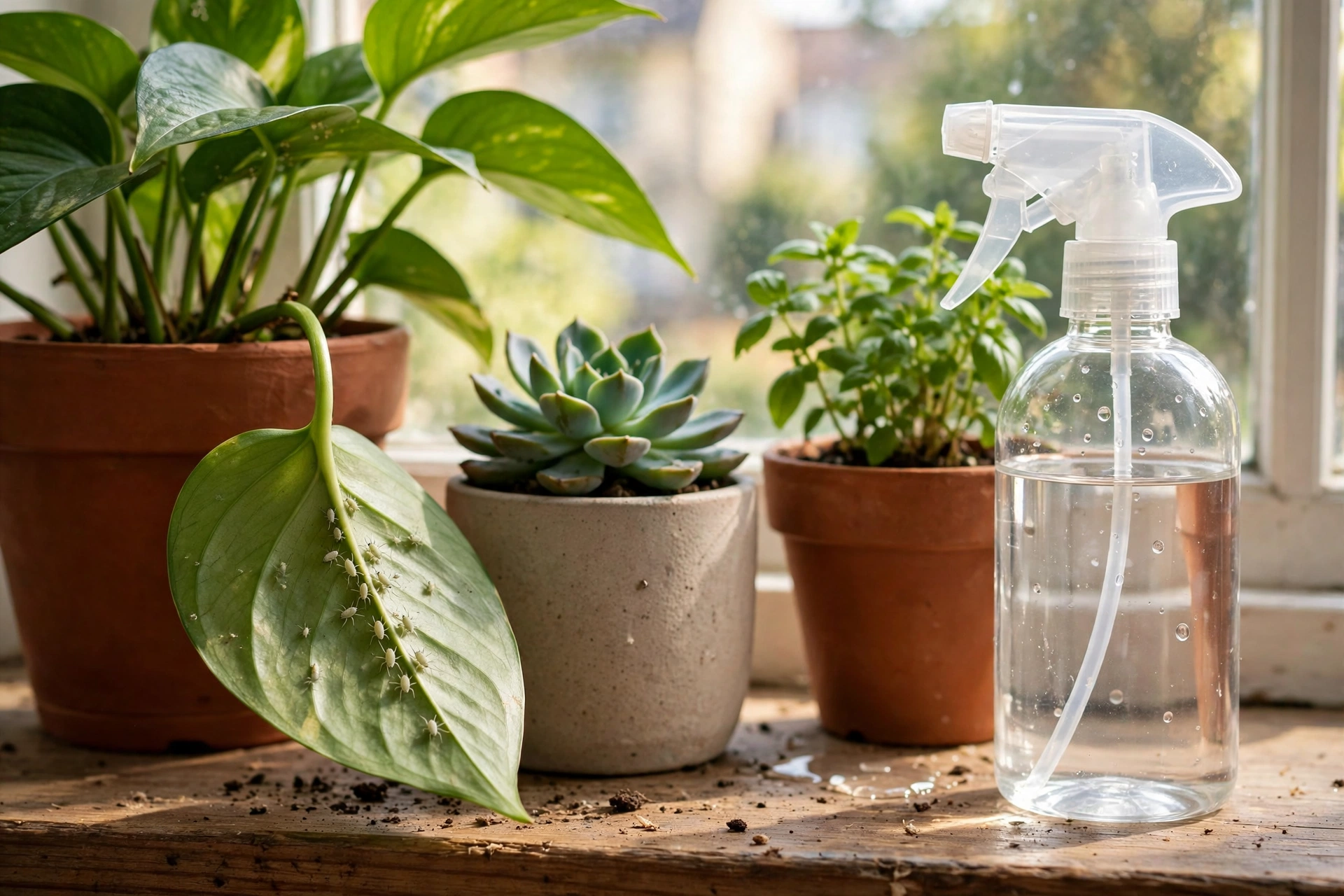
Lift a leaf on a potted plant that looked fine yesterday, and the underside is suddenly crowded with tiny green aphids. The decision in front of you is which bottle to reach for, because a spray that knocks aphids down today and a spray that keeps them from coming back are not the same purchase.
The short version: Bonide Insecticidal Soap is the best overall pick for potted plants, since it kills aphids on contact and you can use it right up to the day you harvest. Captain Jack’s Neem Oil in the 32-ounce bottle is the runner-up, because it also handles powdery mildew and keeps working after the spray dries. The gallon jug of the same neem oil is the value buy if you have a lot of pots. One bottle does not make the cut, and the reason is that it brings more firepower than an aphid problem needs.
The four sprays, side by side
| Spray | Active ingredient | Also handles | Best for |
|---|---|---|---|
| Bonide Insecticidal Soap, 32 oz | Potassium salts of fatty acids | Spider mites, whiteflies, mealybugs | Best overall |
| Captain Jack’s Neem Oil, 32 oz | Clarified hydrophobic extract of neem oil | Powdery mildew, mites, all insect stages | Runner-up |
| Captain Jack’s Neem Oil, 128 oz | Clarified hydrophobic extract of neem oil | Powdery mildew, mites, all insect stages | Best value for many pots |
| Captain Jack’s Insecticidal Super Soap, 32 oz | Potassium salts of fatty acids plus spinosad | 30+ insects and mites, powdery mildew | Not recommended |
Best overall: Bonide Insecticidal Soap
The Bonide soap wins because it does the one job a potted-plant owner needs first, and it does it immediately. Its active ingredient is potassium salts of fatty acids, which breaks down the soft body of an aphid on contact, and it is approved for organic gardening and safe to use up to the day of harvest on vegetables and herbs. The 32-ounce bottle arrives ready to use, with a spray nozzle, so there is nothing to mix and nothing to measure before the first spray.
What keeps the soap honest is that it has no staying power: it only kills the aphids the spray actually touches, and once it dries it is done. Plan to reapply every 4 to 7 days until the aphids are gone, and expect two or three rounds on a real infestation. That is a fair trade for a spray that works the same afternoon you use it.
Pros: kills aphids on contact, with no waiting; ready to use straight from the bottle; approved for organic gardening and usable up to the day of harvest; safe for vegetables, herbs, flowers, and houseplants.
Cons: no residual effect, so missed aphids survive; needs repeat sprays every 4 to 7 days; can burn leaves if sprayed in hot sun or above 85 degrees.
Bonide Insecticidal Soap, 32 oz Ready-to-Use
Kills aphids on contact, ready to spray, and safe to use up to the day of harvest.
Runner-up: Captain Jack’s Neem Oil, 32 oz
The neem oil earns second place by doing more than the soap, more slowly. Its active ingredient is clarified hydrophobic extract of neem oil, which smothers aphids and disrupts how they feed, molt, and lay eggs, and the same bottle is a fungicide and miticide, so it also treats powdery mildew on the same plant. It kills all stages of insects, including eggs, larvae, and adults, which is something a contact soap cannot claim.
The trade-off is patience: neem oil is not a knockdown spray, so aphids will not drop the moment you use it, and the active compound breaks down quickly in sunlight, with a half-life of about 1 to 2.5 days on leaves. Reapply every 7 to 14 days, or every 4 to 7 days while an infestation is active. If your pots also fight mildew, or the aphids keep returning after the soap has done its work, this is the bottle to switch to.
Pros: kills all insect stages, including eggs; also controls powdery mildew and mites; disrupts feeding and egg-laying, so pressure falls over time; approved for organic gardening.
Cons: slower than soap, with no instant knockdown; breaks down fast in sunlight and needs repeat sprays; can burn leaves in heat or direct sun.
Bonide Captain Jack’s Neem Oil, 32 oz Ready-to-Use
Kills every insect stage and also treats powdery mildew, for pots that need more than a knockdown.
Best value for a lot of pots: Captain Jack’s Neem Oil, 128 oz
The gallon jug is the same Captain Jack’s Neem Oil as the runner-up, in four times the bottle. If you are treating a shelf of houseplants, a patio full of containers, or a vegetable garden in pots, one jug covers the whole collection for a season, with no mixing station and no measuring. The formula is identical, so everything about how it works and how often to reapply carries over from the 32-ounce bottle.
The only reason it is not the runner-up is the size itself: a gallon of ready-to-use spray is a lot of bottle for two or three pots, and it takes up real shelf space. For a small collection, buy the 32-ounce bottle and spend the difference elsewhere.
Pros: same formula as the runner-up, in a larger bottle; ready to use, no mixing; a gallon covers a large container collection for a season.
Cons: more bottle than a small collection needs; heavy to carry and store; same slow action and sun sensitivity as the smaller bottle.
Bonide Captain Jack’s Neem Oil, 128 oz Ready-to-Use
The same neem oil in a gallon jug, for a patio or shelf full of pots.
Not recommended: Captain Jack’s Insecticidal Super Soap
Super Soap pairs the same potassium salts as the Bonide soap with spinosad, a second active ingredient, and the combination kills more than 30 insects and mites, plus powdery mildew. That sounds like a better bottle, and for a stubborn mealybug or scale problem it might be. For aphids on potted plants, it is the wrong tool.
Aphids are soft-bodied and die on contact with plain soap, so the spinosad adds nothing the job needs, while it does add risk to the ladybugs and other beneficial insects that eat aphids for a living. The plain Bonide soap clears the same aphids, and it leaves the helpers alone. Buy the stronger bottle only when the pest is one plain soap cannot kill.
How to spray so it actually works
Every spray here fails the same way, so the technique matters more than the brand. Coat the undersides of the leaves first, since that is where aphids cluster, then cover the stems and new growth. Spray in the early morning or late evening, when the plant is out of direct sun and the temperature is below 85 degrees, because soap and oil both burn leaves in heat and strong light. Test one leaf and wait a day before treating the whole plant, and skip any plant that is drought-stressed or freshly repotted until it recovers.
Repeat on schedule, not on hope. Soap needs a second pass every 4 to 7 days, neem oil every 7 to 14 days, and either one needs another round after heavy rain or watering washes it off. Two or three rounds is normal for a real infestation, and the spray that fails is usually the one that was used once and put away.
What if the aphids keep coming back?
A spray clears the aphids you have, but it does not change why they arrived. If the same pots get hit again and again, the fix is in the routine: a weekly check under the leaves, steady watering, and no heavy feeding that pushes out the soft new growth aphids love. Our guide to preventing aphids on potted plants covers that routine in full.
It also helps to know which spray fits which moment, since soap and neem oil work in different ways. The comparison in neem oil vs insecticidal soap for aphids walks through speed, repeat schedules, and when to switch from one to the other. And before you spray anything, check that the pest is actually an aphid: our guide to aphids vs scale vs mealybugs on houseplants shows how to tell them apart. If you would rather let insects do the work, beneficial insects for aphids covers ladybugs and lacewings, and getting rid of aphids without killing beneficial insects shows how to spray without wiping out the helpers.
Bottom line
Start with the Bonide Insecticidal Soap. It is the fastest way to clear aphids off a potted plant, and it is the easiest bottle to use well. Keep the Captain Jack’s Neem Oil on the shelf for the pots that need a second round or a mildew treatment too, and skip the Super Soap until the pest is one plain soap cannot kill.