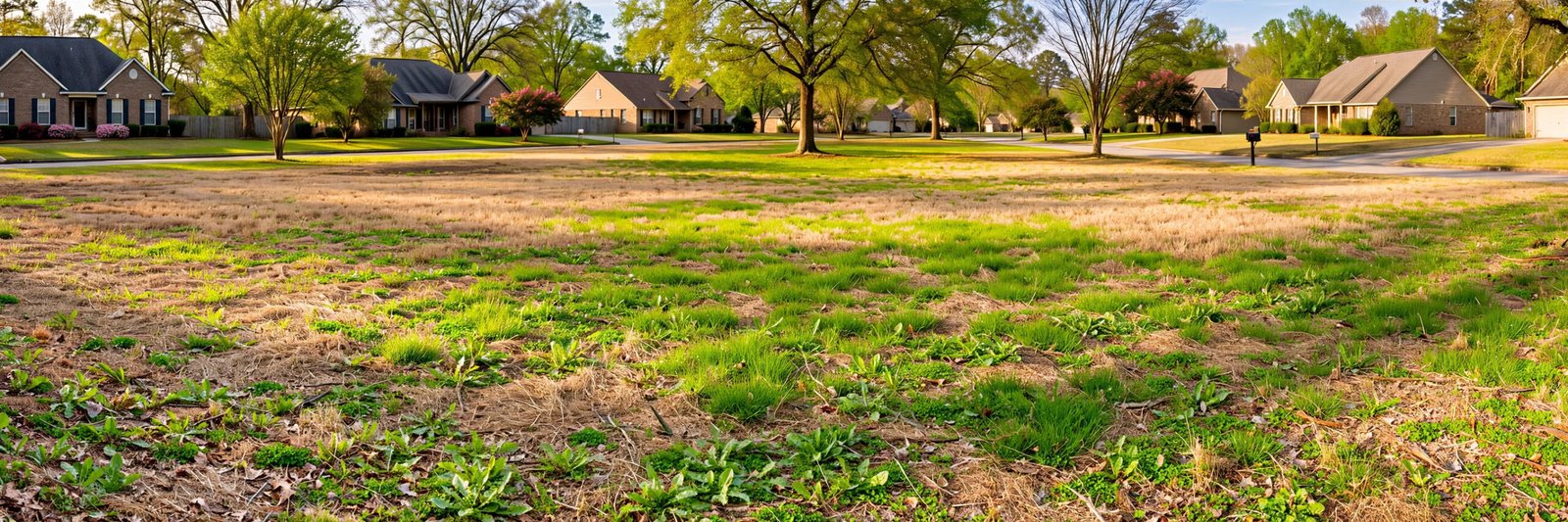
A warm-season lawn in spring does not wake up all at once. It comes back in pieces — green creeping in along the driveway and the south-facing fence where the soil warms first, while the middle of the yard stays brown and apparently lifeless — and every instinct you have says to do something about it, preferably with a bag of fertilizer. Resist the bag for a few more weeks. Green-up runs on soil temperature and root reserves, and the lawns that wake up best are the ones nobody tried to rush.
What green-up actually is
Bermuda, zoysia, St. Augustine, and centipede never truly die back to the roots in a normal winter. The top growth browns and goes dormant, but the rhizomes and stolons under the surface are alive and holding stored energy, and when soil temperatures climb to around 65 degrees and hold there, that stored energy pushes new green shoots. The patchiness that worries you is simply the map of your soil warming unevenly — thin soil over rock and warm edges green first, low shaded ground last.
This is why the spring lawn care calendar keys warm-season work to the 65-degree mark rather than to any date, and why the spring lawn care hub gives warm-season lawns their own step instead of folding them into the cool-season schedule.
The feeding mistake that starts the season wrong
Fertilizing a warm-season lawn before it has greened up is the most common spring error with these grasses, and extension services across the South repeat the warning every year for a reason. Dormant roots cannot take up the nitrogen, so the feeding goes to the winter weeds — the henbit, chickweed, and annual bluegrass that are already awake and delighted to have it. Worse, nitrogen pushed into a half-awake lawn can force tender growth that a late cold snap then burns.
The rule is simple enough to say in one breath: no fertilizer until the lawn is fully green and growing, which for most warm-season lawns means the soil has been at or above 65 degrees for a while and you have mowed real growth more than once. When the time comes, rates and timing by grass type are in the fertilizing reference table.
Bermuda: the one grass you can push a little
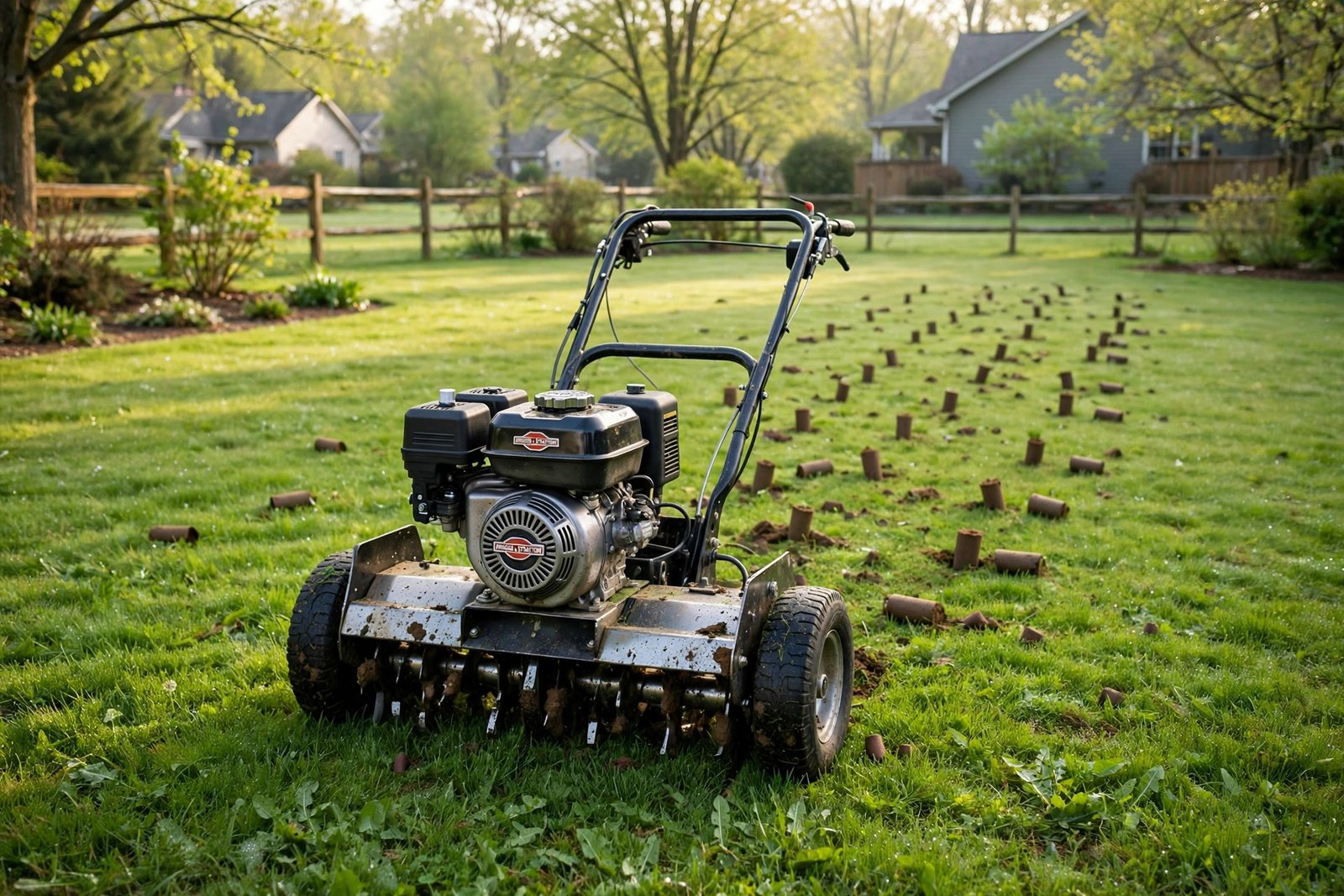
Bermuda is the aggressive exception. Once green shoots are clearly spreading, bermuda lawns benefit from a scalp — a first mow one notch lower than the summer height, bagging the dead top growth so sunlight reaches the soil and warms it faster. From there, bermuda rewards the season’s full program: regular mowing at its low summer height, feeding once it is fully green, and aeration in late spring once it is growing hard enough to heal the holes in days. Bermuda’s vigor forgives a lot; the mistake is treating the other three grasses as if they share it.
Zoysia: the patience test
Zoysia greens up slowly, thins its brown thatch reluctantly, and punishes every attempt to hurry it. Heavy spring dethatching before green-up tears into a lawn that is not yet growing fast enough to repair itself, and early fertilizer produces the same weed-feeding problem with a slower payoff. Let zoysia wake at its own pace, mow at its normal height once growth is steady, and save dethatching for late spring when the lawn is fully green and running. A zoysia lawn that looks a week behind the neighbors in early spring usually looks better than theirs by midsummer, because zoysia spends its energy on density instead of speed.
St. Augustine and centipede: the gentle two
St. Augustine wakes up tender. It is the warm-season grass most easily set back by a late cold snap, and it dislikes being scalped, so bring its mowing height down gradually rather than in one low pass. Its spring feeding waits for full green-up like the others, and its runners need the season’s first weeks undisturbed.
Centipede asks for the least and suffers most from generosity. It is a low-nitrogen grass by nature — about a pound of nitrogen per 1,000 square feet for the whole year suits most centipede lawns, because heavier feeding drives the decline and thatch problems owners then blame on the grass. If your centipede looks pale, test the soil before you feed it; centipede’s yellowing is as often a pH or iron story as a nitrogen one, and iron greens it without pushing growth it does not want.
Water and the restart
Warm-season lawns coming out of dormancy do not need daily water; they need the irrigation system checked and then used sparingly until growth is full. Run each zone, replace the heads winter cracked, and then water deeply only when the grass shows it is thirsty — footprints that stay pressed down, blades folding in the heat. Deep and infrequent from the start builds the root system that carries these grasses through summer, which is the entire point of the season. The first mow of the year guide covers the blade and height fundamentals that apply once you are mowing real growth.
Frequently asked questions
My bermuda is half green and half brown. Is it dead? Almost certainly not — that is normal green-up following the soil temperature map of your yard. Judge it when the whole lawn’s soil is warm; patches still bare then, with no green at the crown, are the ones to investigate.
Can I put pre-emergent on a dormant warm-season lawn? Yes — pre-emergent goes down before crabgrass germinates, which is before green-up finishes, and it does not harm dormant warm-season grass when the label allows it for your grass type. Timing runs through the Crabgrass Pre-Emergent Timing Checker.
When do I dethatch a warm-season lawn? Late spring, after full green-up, when the grass is growing fast enough to close the gaps. Dethatching a half-dormant lawn is damage without the recovery.
Let the soil reach 65 degrees, let the green spread on its own schedule, and spend the waiting weeks on the mower and the irrigation instead of the fertilizer bag. Warm-season lawns do not need to be woken up. They need to not be bothered while they wake themselves.