Spring hands you a dozen lawn jobs at once, and the one decision that decides how the season goes is not how hard you work — it is the order you work in. Every spring task has a window, a few of those windows close early, and the jobs done out of sequence quietly cancel each other out: seed spread over fresh pre-emergent never comes up, fertilizer pushed onto dormant grass feeds the weeds instead of the lawn. Get the order right and the rest of the season is mostly maintenance.
This guide is the order. Each step links to the full guide for that job, so you can work the season one weekend at a time.
Step 0: Read the lawn before you touch it
Walk the whole lawn slowly before you buy anything. You are looking for four things: bare or thin patches that will need seed, matted areas where leaves and debris sat all winter, spots where water puddles after rain, and any turf that lifts or feels spongy underfoot. Thin patches point you toward seeding, puddles point toward compaction, and a lawn that came through winter thick and even mostly needs feeding and weed prevention, not rescue.
That ten-minute walk decides which of the steps below are real jobs for your yard and which ones you can skip with a clear conscience. Skipping a step your lawn does not need is not laziness — it is how you avoid spending money to make a healthy lawn worse.
Step 1: Clean up and get the mower ready
Rake out matted grass and leftover leaves so sunlight and air reach the soil surface, and pick up the sticks and stones winter left behind before the first mower pass finds them the hard way. Then give the mower its spring service while you still have the patience for it: a sharp blade, fresh oil, a clean air filter. The full rundown on heights, blade sharpness, and the one-third rule is in our guide to the first mow of the year, and it matters more than any product you will buy this season, because torn grass blades are an open door for disease all summer.
Step 2: Pre-emergent — the window that closes first
If you do only one spring job on schedule, make it this one. Pre-emergent herbicide stops crabgrass and other annual weeds at germination, and it only works if the barrier is in the soil before weed seeds sprout. Crabgrass germinates as soil temperatures approach 55 degrees, which is why timing runs on a soil thermometer rather than a date — our Crabgrass Pre-Emergent Timing Checker turns your soil temperature and grass type into a go or wait answer, and the pre-emergent timing table lays out the window for every major lawn grass in one place.
Choosing the product is its own decision — prodiamine for the longest barrier, dithiopyr if you are running late, mesotrione if you also need to seed — and our roundup of the best pre-emergent herbicides walks through the verified options. One warning that shapes the whole season: pre-emergent cannot tell a weed seed from a grass seed, so if seeding thin spots matters more to you this spring, read can you seed after pre-emergent before you spread either bag.
Step 3: Feed the lawn — after it is actually growing
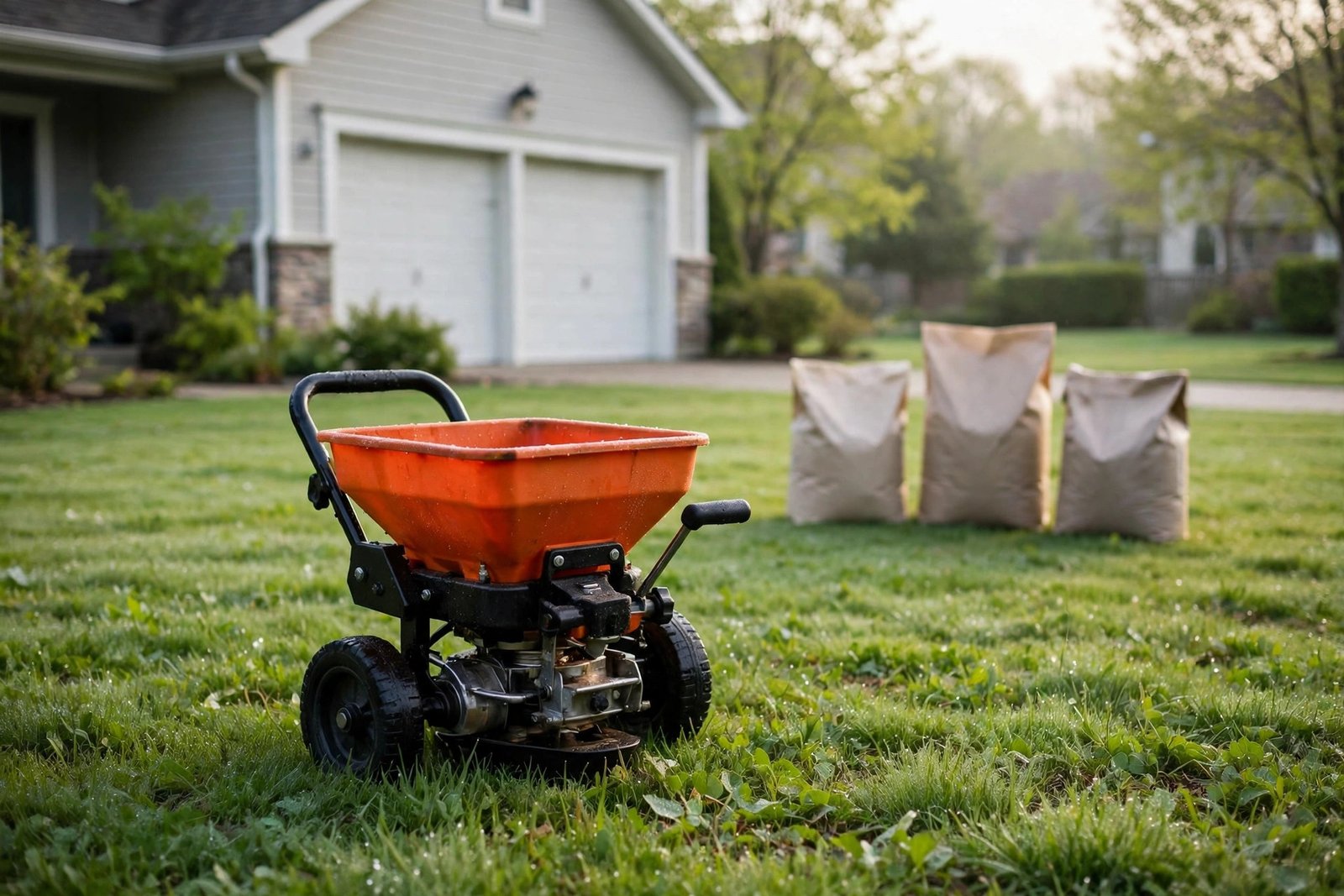
Fertilizer applied to a lawn that is still dormant does not wait politely in the soil; much of it feeds winter weeds or washes away before the grass can use it. Cool-season lawns want their spring feeding once they are growing steadily, and warm-season lawns should not be fed until they have fully greened up. Our guide to when to fertilize a cool-season lawn in spring covers rates and timing for bluegrass, fescue, and ryegrass, and the reference table for fertilizing cool-season vs. warm-season lawns puts both grass families side by side so you can see why one schedule cannot serve both.
Step 4: Seed the thin spots — with honest expectations
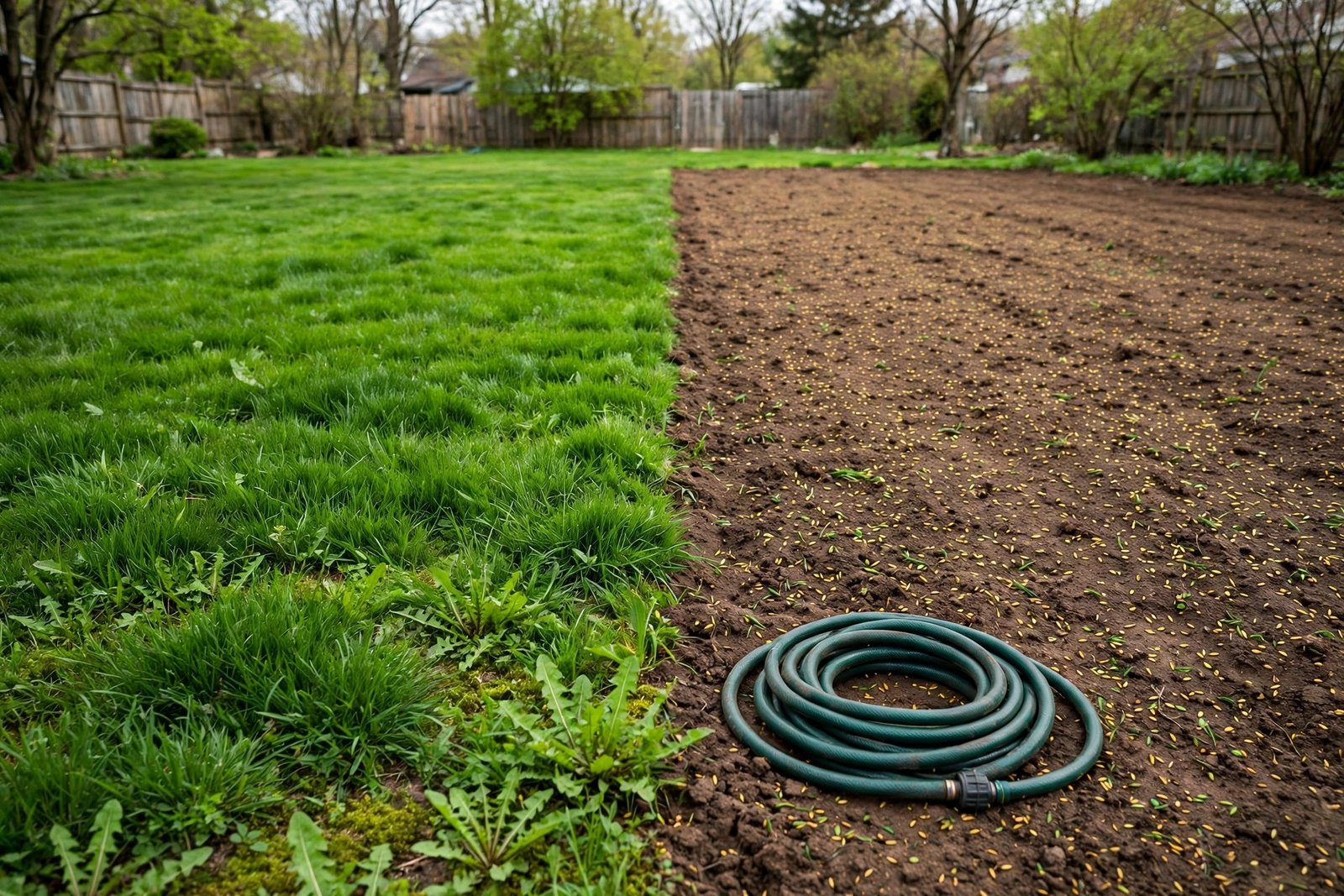
Fall is the best seeding season for cool-season lawns, and spring seeding is a repair job, not a renovation. Done with that understanding, it works well: soil temperatures between 50 and 65 degrees germinate fescue and ryegrass reliably, and the full timing and technique walkthrough is in when to overseed in spring. If you are working out how much seed to buy, the tall fescue seeding rate calculator does the math by lawn size and condition.
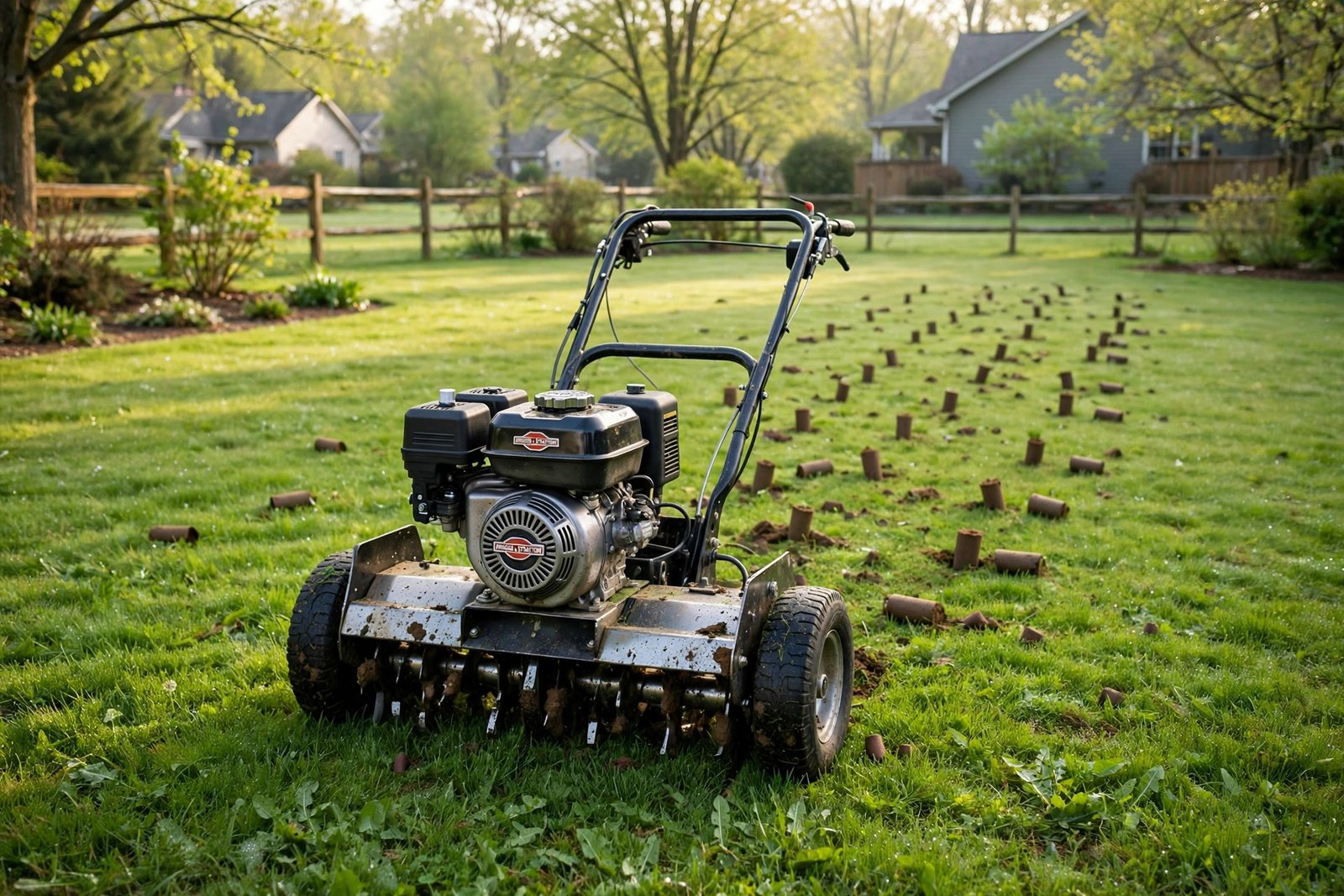
Where compaction caused the thin spots, seed alone will disappoint you. Pulling cores before you seed gives the seed soil contact and the roots somewhere to go — when to aerate in spring covers which lawns benefit and which should wait, and aerate before or after overseeding settles the order question.
Step 5: Warm-season lawns wake up on a different schedule
Bermuda, zoysia, St. Augustine, and centipede do not follow the cool-season calendar at all. They green up from the roots outward as the soil warms toward 65 degrees, they should not be fertilized until that green-up is well underway, and rushing them with early nitrogen mostly feeds the winter weeds that are already awake. The complete walkthrough — scalping, dethatching, feeding, and the patience zoysia demands — is in our warm-season lawn green-up guide. Southern lawns running winter ryegrass overseed have their own transition math, and the winter overseeding rate calculator covers the rates.
Step 6: Stay ahead of grubs and weeds you can prevent
Grub damage is a late-summer problem with a spring solution. Preventive grub control has to be in the soil before eggs hatch in summer, which makes spring the application season — when to apply grub preventer explains the two product families and their different windows. Lawns with no history of grub damage can skip this step; lawns that peeled up like carpet last year cannot.
Step 7: Mulch the beds while you are out there
Spring lawn care ends at the bed edge, and the beds want attention in the same weeks: old mulch raked and leveled, edges re-cut, and a fresh layer down once the soil has started to warm. Depth and timing both matter more than the mulch itself — our spring mulching guide covers the 3-inch rule and the trunk mistakes that damage trees, and the mulch volume calculator tells you how much to order so you do not pay for a second delivery.
The season on one page
If you want the whole sequence laid out week by week — keyed to soil temperature rather than dates, so it works in any region — that is exactly what the spring lawn care calendar and the spring calendar table are for. Regional readers can see the same approach applied month by month in the Minnesota lawn care calendar, and if you would rather learn from other people’s sequencing errors, the most common spring lawn mistakes is a genuinely useful cautionary read.
Frequently asked questions
What is the very first spring lawn job? Cleanup and assessment. Rake out matted areas, walk the lawn, and decide which jobs it actually needs before any product comes out of the garage.
What order do pre-emergent and seeding go in? They mostly do not go together at all. Standard pre-emergent blocks grass seed for months, so choose the one your lawn needs more this spring — the seeding-after-pre-emergent guide above lays out the exceptions.
When should I fertilize in spring? Cool-season lawns: once growth is steady. Warm-season lawns: not until green-up is well underway and the soil is warm. Feeding dormant grass feeds weeds instead.
Is spring or fall better for aerating and seeding? Fall, for cool-season lawns — less weed pressure and warm soil. Spring versions of both jobs are repairs, and they work when you go in knowing that.
Work the windows in order — pre-emergent before the soil hits 55 degrees, feeding after real growth starts, seed where the lawn is thin and nowhere it is not — and spring stops being a scramble. The lawn does not need everything. It needs the right things in the right sequence.