The most expensive first move of the mowing season is also the most popular one: dropping the deck low and cutting the lawn short to wake it up. It feels productive. What it actually does is scalp a lawn that is living on stored root reserves, strip away the leaf area it needs to rebuild those reserves, and open the soil surface to every weed seed waiting for light — which means the short cut you gave it in spring is still costing you in July, long after you have forgotten making it. The first mow is a mechanical job with mechanical rules, and they are not complicated.
When: let the grass tell you
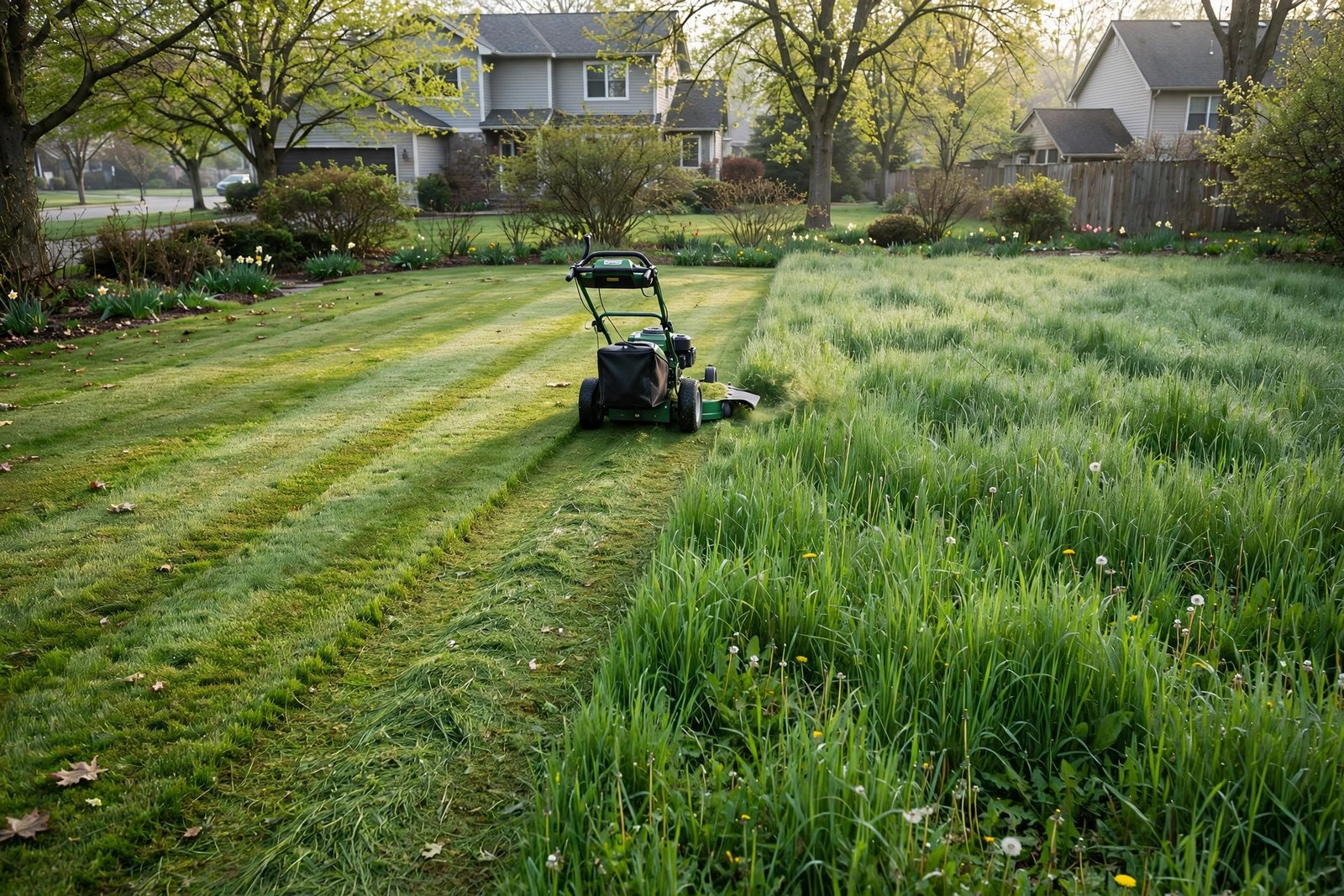
There is no date for the first mow, because the grass sets it. Mow when the lawn is actively growing and has reached roughly a third taller than the height you intend to keep it. For a cool-season lawn you plan to hold at 3.5 inches, that means the first cut happens when growth reaches about 4.5 to 5 inches — shaggy, yes, and that is fine. Mowing dormant or barely-awake grass accomplishes nothing except compacting wet soil with the mower’s weight, and mowing a warm-season lawn before green-up is a different job entirely, covered in the warm-season green-up guide.
One firm exception to the patience rule: if winter left the lawn matted under fallen leaves and debris, get that material off early, mower or rake, because grass smothered under a wet mat in spring is grass you will be reseeding later.
Height: set the deck higher than your instinct says
For cool-season lawns — bluegrass, fescue, ryegrass — set the deck at 3.5 inches for spring and leave it there. That height is not an aesthetic choice. Taller grass shades the soil, which keeps crabgrass seed from getting the light and warmth it needs to germinate, and it supports deeper roots, which is the lawn’s drought insurance for summer. Every notch below 3 inches spends some of that insurance.
Warm-season lawns run lower and vary by grass: bermuda can start the season at 2 inches and step down as it fills in, while St. Augustine stays up at 3.5 to 4 inches even in spring because scalping it sets it back hard. When in doubt for any grass, err one notch high on the first cuts. You can always lower a deck next week; you cannot un-cut a scalp.
The one-third rule, and why it runs the whole season
Never remove more than one-third of the grass blade in a single mowing. A lawn at 4.5 inches cut to 3 inches has lost a third of its leaf — acceptable. That same lawn cut to 2 inches has lost more than half, and the plant responds by stalling root growth to rebuild leaf, which is exactly backwards from what spring should accomplish. The rule is also the honest answer to the overgrown-lawn problem: if the grass got away from you, take it down in two passes a few days apart rather than one heroic scalping. It costs you twenty extra minutes and saves the lawn a month of recovery.
The blade: the cheapest fix in all of lawn care
Before the first mow, look at the blade — not the mower, the blade. A blade that spent last season hitting roots, rocks, and edging comes out of winter with a rounded, nicked edge, and a dull blade does not cut grass, it tears it. Torn blade tips shred, turn white and ragged within a day or two of mowing, and leave the plant open to disease entry all season. If your lawn looks like it was mowed with a weed eater, this is why, and it is the single most common cause of the “why does my lawn look white after I mow” complaint.
Sharpening is a fifteen-minute job: disconnect the spark plug first, always, then remove the blade and file or grind the cutting edge back to its original angle, keeping the bevel even, and check the balance by hanging the blade on a nail through its center hole — the heavy side dips, and you take a little more metal off that side until it hangs level. A blade with a cracked body, a bent profile, or an edge worn thin and wavy gets replaced, not sharpened. A fresh blade costs less than a single bag of the fungicide people buy to treat the disease a dull blade invited in. The rest of the spring service is in the same spirit — fresh oil, a clean or new air filter, a new spark plug if last year’s looks fouled, and fresh fuel, because gasoline that sat all winter in the can is a starting problem disguised as a mower problem. This job sits early in the spring lawn care calendar for a reason: everything after it assumes the mower is right.
Clippings: leave them, with one condition
Return clippings to the lawn. They break down fast, give back a meaningful share of the nitrogen the grass used to grow them, and do not cause thatch — thatch is roots and stems, not clippings. The condition is clumping: if the first mow of an overgrown lawn drops heavy wet clumps, rake those out or mow over them a second time to scatter them, because a clump left sitting smothers the grass beneath it within days. Bagging the first cut of the year is reasonable if the lawn came through winter carrying a lot of debris and disease-killed material; from the second cut on, the clippings belong to the lawn.
Frequently asked questions
How short can I cut it just this once to even it up? That is the scalp this whole guide is arguing against. Take it down in stages a few days apart, a third at a time, and it evens up without the recovery bill.
My lawn looks white at the tips after mowing. What is that? Shredded blade tips from a dull mower blade, nine times out of ten. Sharpen the blade and the next cut grows out clean — see the most common spring lawn mistakes for the other regular offenders.
Should the first mow be bagged or mulched? Mulched, unless the lawn is overgrown or carrying heavy winter debris. The clippings are fertilizer you already paid for.
Sharpen the blade, set the deck at 3.5 inches, and wait until the grass has actually grown before you cut it. Do those three unglamorous things and the first mow stops being the season’s first mistake — which, in the full spring lawn care sequence, is the cheapest win on the list.