Landscape & Leisure is reader-supported. When you buy through links on our site, including Botanical Interests seed links, we may earn a commission at no extra cost to you. Prices change, so click through to confirm current pricing.
When the garden is frozen and the seed catalogs are in the mail, a jar of sprouts on the counter is already halfway to lunch. Sprouting is the winter gardener’s shortest season: soak tonight, rinse while the coffee brews, and harvest before the week is out — the timing below is the whole skill.
This guide uses the three seeds from our sprouts roundup — alfalfa, China Rose radish, and broccoli — because their schedules differ just enough to teach you the rhythm. Once the rhythm is yours, our sprouts vs. microgreens comparison shows where jar growing ends and tray growing begins.
Why a Jar Works
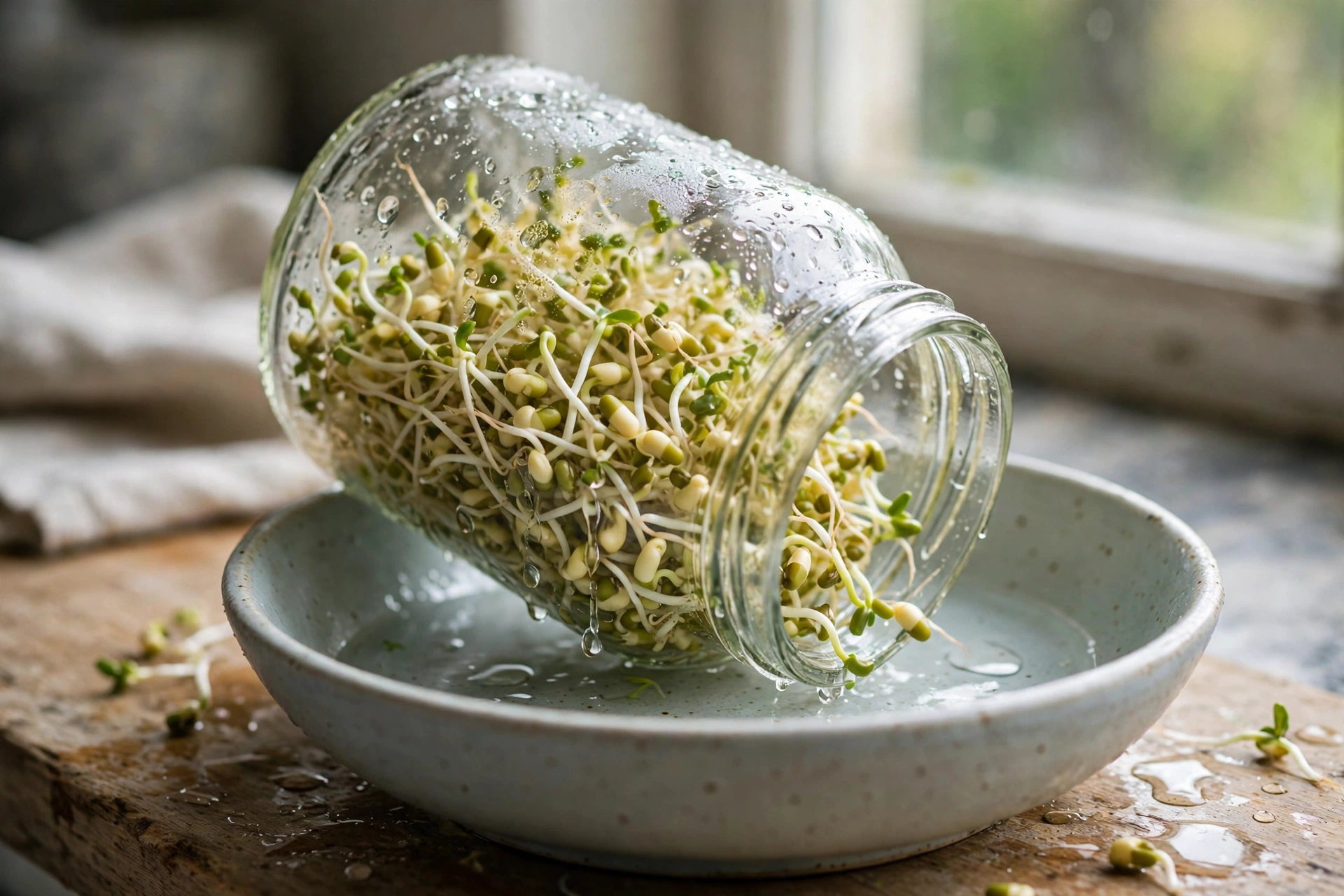
A sprout is a seed spending its own stored food, which is why it needs no soil and no fertilizer. What it does need is moisture without drowning, and air without drying out. A wide-mouth jar tipped at an angle threads that needle: water drains away after every rinse, while the seeds stay damp and the jar keeps breathing. Nearly every sprout failure traces back to one side of that balance — seeds left sitting in water, or a jar sealed up tight and warm.
What You Need
A clean wide-mouth canning jar, a square of cheesecloth or a sprouting lid to cover it, a bowl or rack the jar can rest in at an angle, and cool water. That is the full equipment list. Wash the jar well before each batch, because a jar that starts clean is the simplest food-safety step you will take all week.
The Jar Method, Step by Step
Step 1 — Measure and soak. Put a small spoonful of seed in the jar — sprouts expand dramatically as they grow, and an overcrowded jar is the beginner’s classic mistake. Cover the seed with cool water and let it soak overnight.
Step 2 — Drain and tip. In the morning, pour the soak water off through the cloth or lid, rinse once with fresh water, drain again, and set the jar mouth-down at an angle in its bowl so the last of the water can escape.

Step 3 — Rinse twice a day. Morning and evening, fill the jar with cool water, swirl gently, drain completely, and tip it back into its bowl. Thirty seconds, twice a day, is the entire labor of this crop, and it is worth setting the jar somewhere you will see it — beside the coffee maker beats inside a cupboard, because out of sight is how batches get forgotten.
Step 4 — Give the finished sprouts light. Sprouts grow happily in ordinary room light, and a day near a window at the end greens the small leaves — that greening is when alfalfa develops chlorophyll, and it is your visual cue that harvest is close.
Step 5 — Harvest, de-hull, and dry. Harvest when the small leaves have greened: 4 to 6 days for alfalfa and China Rose radish, 6 to 9 days for broccoli. Tip the sprouts into a big bowl of cool water and work them gently with your fingers; loosened hulls float to the top, where you can skim or pour them off, and unsprouted seeds can be picked out at the same time. Rinse once more and drain until the sprouts are dry to the touch, because excess moisture is what shortens their life in the refrigerator.
Timing by Seed
| Seed | Days to harvest | Harvest cue | Watch for |
|---|---|---|---|
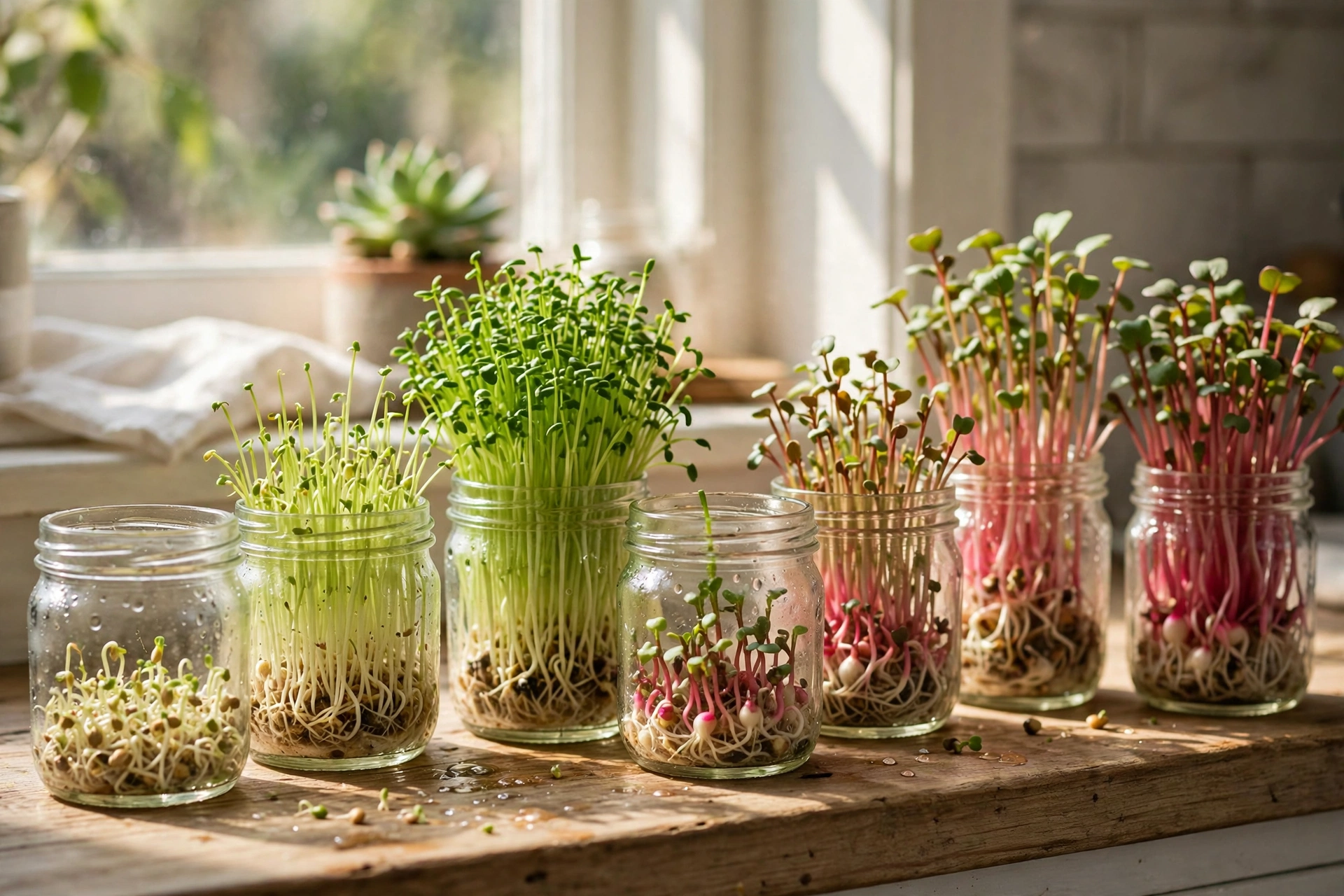
| Alfalfa | 4–6 days | Small leaves turn green | Hulls — float them off at harvest |
| China Rose Radish | 4–6 days | Small green leaves, rose stems | Flavor peaks young — do not let it linger |
| Broccoli | 6–9 days | Small green leaves | Naturally erratic germination; keep air moving |
Broccoli deserves its own note. Its germination is naturally uneven — Botanical Interests says so on the seed’s own page — so a jar where some seeds sprout late is not a failed jar. Good air circulation around it matters more than for the other two, and if you use a fan, aim it at a wall or the ceiling so the moving air reaches the jar indirectly rather than drying the sprouts out.
Alfalfa Sprouts Seeds
The forgiving first batch — mild sprouts in 4–6 days while you learn the rinse-and-drain rhythm.
China Rose Radish Sprouts Seeds
The same 4–6 day schedule with a spicy radish kick — the second jar most people start.
Broccoli Sprouts Seeds
Six to nine days and an uneven start, in exchange for tangy sprouts unlike anything else on this page.
Storing the Harvest
Store finished sprouts in the refrigerator in a container lined with a dry cloth or paper towel, and eat them within a few days while they are crisp. If a batch smells off or feels slimy at any point, compost it and start fresh — seed is cheap, and a new jar is four days from lunch. Start the next batch the day you harvest the last one, and the counter never really goes out of season.