Landscape & Leisure is reader-supported. When you buy through links on our site, including Botanical Interests seed links, we may earn a commission at no extra cost to you. Prices change, so click through to confirm current pricing.
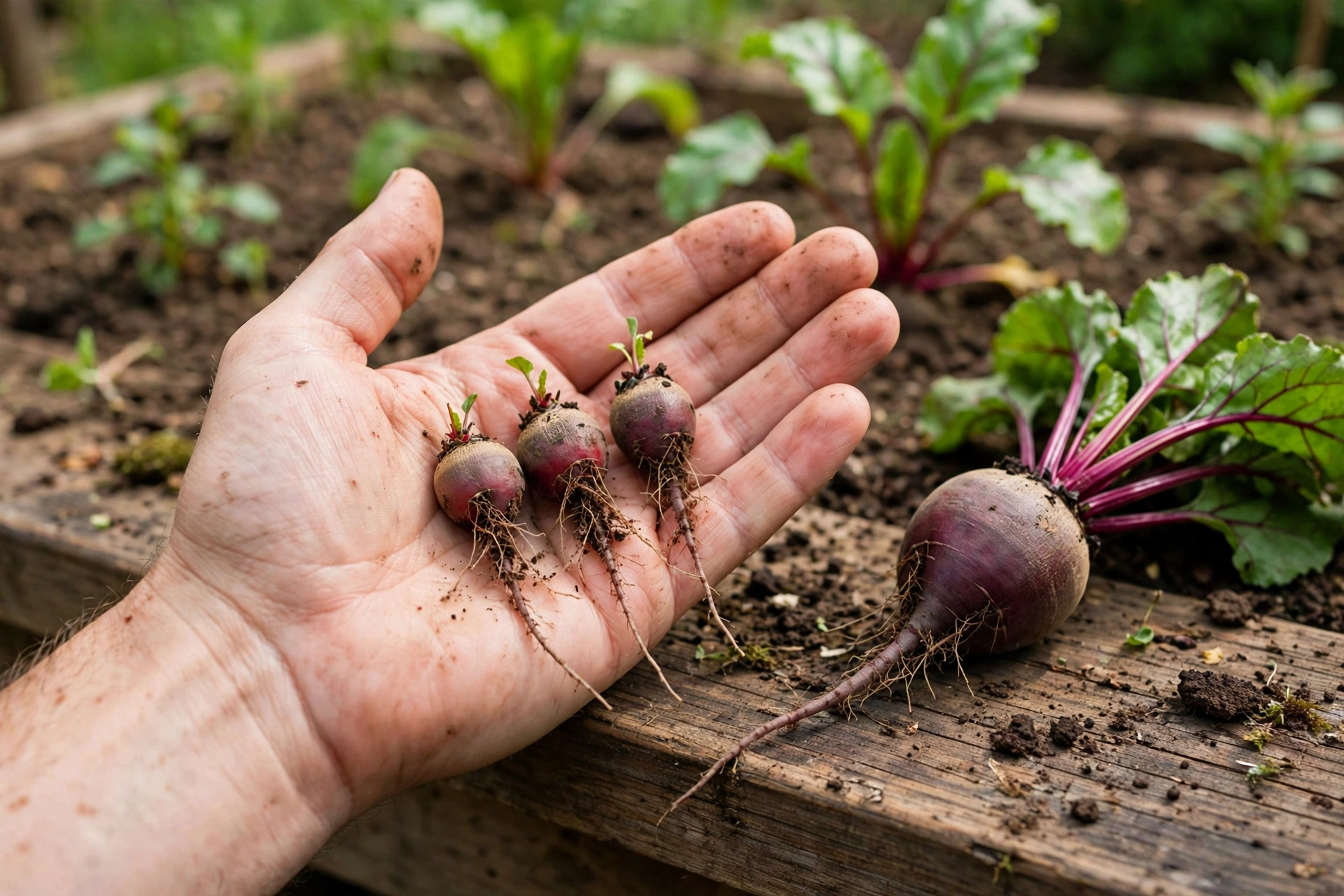
Tops lush, roots like marbles — if your beets will not size up, the cause is usually hiding in plain sight in the row. The tops tell you the plant is healthy, which narrows the problem fast: something is stopping the root from swelling, and in a beet row that something is almost always crowding, dry soil, heat, or ground too hard for a root to push through. Work through the causes below in order, because the first one is the answer most of the time.
Our beet variety roundup lists the varieties by days to harvest, and our growing guide covers the sowing, thinning, and harvest step by step. If you grow other roots, our carrot, beet, and radish roundup puts beets alongside their row-mates.
First, Check the Calendar
Before diagnosing anything, check how long the beets have actually been growing. Detroit Dark Red needs 60 days, Gourmet Blend 65, and Touchstone Gold 85 to 90 — so a Touchstone row pulled at eight weeks is not failing, it is just not finished. Early Wonder is the fast one at 48 days, and Robin runs 45 to 60. If the roots are small but the tops are still growing, the likeliest diagnosis is impatience, and the fix is to wait another two weeks and check again.
Cause 1: The Row Was Never Thinned
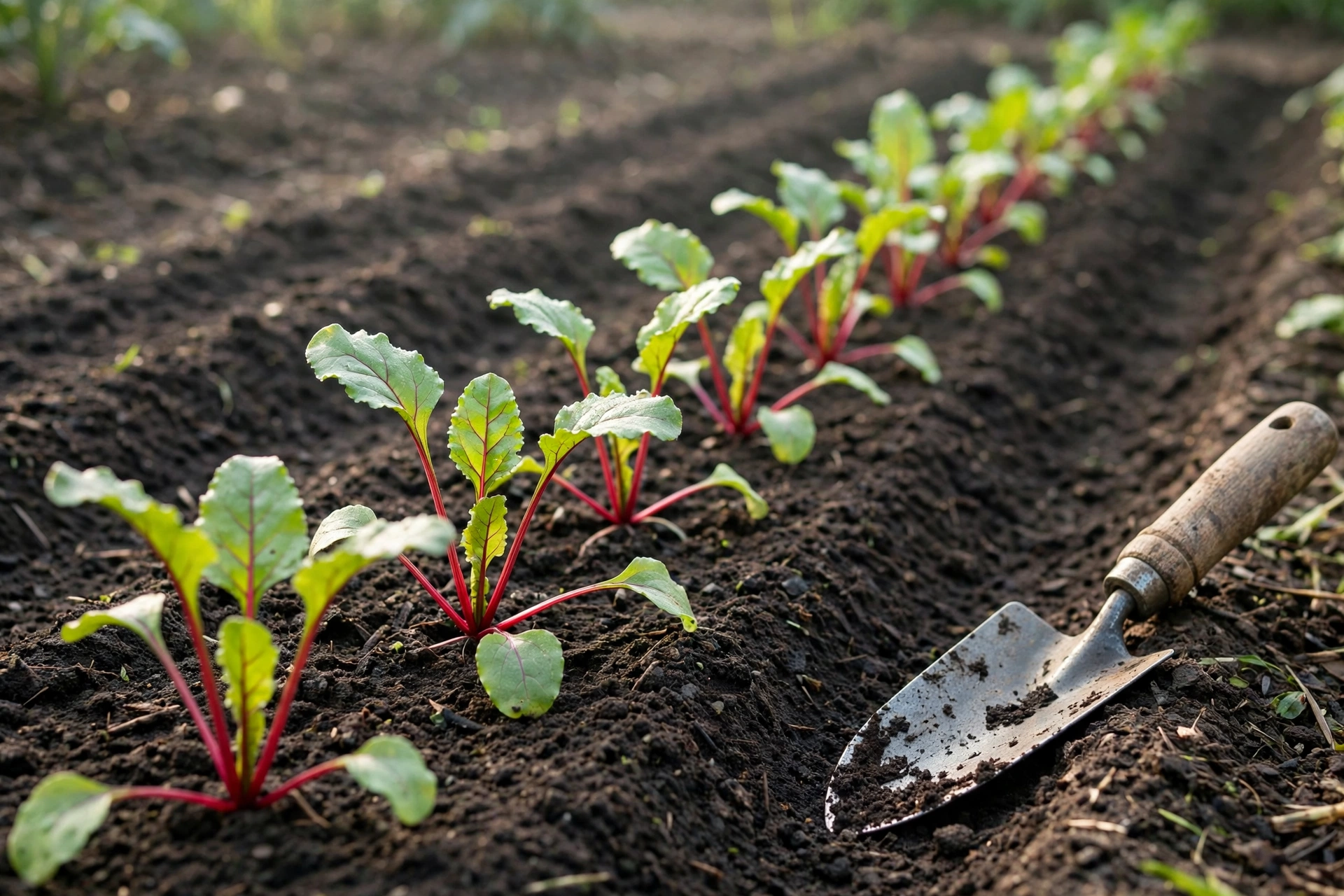
This is the cause behind most small beets, and it is the easiest to confirm: look at the row and count how many plants share each spot. Beet seed is a dried fruit holding one to five seeds, so every cluster you sowed came up as a clump, and a clump left alone grows into a tangle of thin roots instead of one fat one. If the seedlings are still shoulder to shoulder, that is your answer.
The fix is to thin now, even if it feels late: when the seedlings are two inches tall, thin to one plant every four inches, snipping the extras at soil level so you do not disturb the roots of the plant you keep. The thinnings are edible, so the work pays for itself in salad greens. Next sowing, thin on schedule — it is the single step that decides whether you pull beets or marbles, and no amount of water or fertilizer makes up for skipping it.
Cause 2: Dry Spells and Uneven Water
Beets want steady moisture, and they punish a row that swings between soaked and dry. The first two weeks after sowing are the thirstiest — University of Minnesota Extension notes that beets are finicky about constant moisture right after planting, and a dry spell then can stall germination outright — but uneven water later in the season slows the roots too, and it is the usual suspect when the tops look fine and the roots stall halfway.
Check by pushing a finger into the soil beside the row: if the top inch is dry, the row needs water now, and if it dries out again within a day or two, the soil is not holding moisture. The fix is to water at the base, keep the soil evenly moist, and mulch between the rows so the moisture stays put. A strip of row cover or burlap over a fresh sowing holds moisture near the soil while the seeds get going.
Cause 3: Summer Heat Arrived First
Beets are a cool-season crop, and a spring sowing left into summer heat slows down and can turn woody. Botanical Interests prints the same warning on every beet packet: harvest spring sowings before the summer heat, and harvest fall sowings before the first heavy freeze. If your beets went in late, or the season turned hot early, the roots may have simply run out of cool weather.
The distinguishing check is the calendar against the packet: sowings go in two to four weeks before the last frost, when the soil is at least 45°F and ideally 60° to 85°F, and the fall crop goes in six to eight weeks before the first fall frost. If the sowing missed that window, the fix this season is to pull what is there and eat it small — small beets are tender, and a marble-sized beet roasted whole is still a good beet. Next season, sow earlier, and pick a fast variety like Early Wonder at 48 days for the spring row.
Cause 4: Soil Too Hard or Crusty for Roots to Swell
A beet root has to push soil aside to grow, and in compacted or crusty ground it cannot. The sign is a root that looks pinched or forked rather than round, or a row where the shoulders never rise out of the soil. University of Minnesota Extension points out that keeping the soil moist prevents crusting on the surface, and their researchers found higher marketable yields from raised beds than flat ground in Waseca trials — loose soil is the difference.
The fix for this season is limited: loosen the soil gently between the rows with a hand fork, keep watering so the surface does not crust, and pull the roots small. For the next sowing, fork the bed loose before planting, work in compost, and consider a raised bed if your ground compacts every year. Beets size up in loose soil and stall in hard ground, and no variety overcomes that.
Cause 5: The Wrong Variety for the Season
Not every beet fits every window. Touchstone Gold needs 85 to 90 days, so a late-spring sowing runs straight into summer heat before it finishes, while Golden Boy’s germination draws complaints in its reviews — one reviewer reported less than 20% of the seeds sprouting — so a thin stand can look like a sizing problem when the real problem is that half the row never came up. And Chioggia, the lowest-rated beet here at 3.8 from 8 reviews, is simply not the strongest grower in the set.
The fix is to match the variety to the window: Early Wonder at 48 days for a late spring sowing, Detroit Dark Red at 60 days for the main crop, and Touchstone Gold only when it gets the full season from an early sowing. If germination was the problem, Touchstone Gold is the golden beet with improved germination over other golden varieties, and our beet variety roundup compares all seven side by side.
Beet Varieties for a Better Next Row
Three packets cover the fixes in this guide: Detroit Dark Red for the main crop, Early Wonder for a fast spring row, and Gourmet Blend for a mixed row that hedges the variety question.
Detroit Dark Red Beet Seeds
The standard since 1892 — tender 2½–3-inch roots that stay tender when large, and greens worth eating.
Early Wonder Beet Seeds
Ready in 48 days with 18-inch greens — the beet to sow first, for the earliest roots of the season.
Gourmet Blend Beet Seeds
Three varieties in one packet — red, gold, and candy-striped roots from a single row.
Symptom, Cause, and Fix at a Glance
| What you see | Likely cause | How to tell | Fix |
|---|---|---|---|
| Many thin roots in each spot | Never thinned | Seedlings shoulder to shoulder; each cluster holds 1–5 seeds | Thin to 1 plant every 4 inches; snip, do not pull |
| Tops fine, roots stalled halfway | Uneven water | Top inch of soil dries out between waterings | Water at the base; mulch between rows; keep moisture steady |
| Roots small and woody by midsummer | Summer heat | Spring sowing left past the cool season | Pull small and eat them; sow earlier next season; try Early Wonder at 48 days |
| Roots pinched or forked, shoulders never rise | Hard or crusty soil | Soil compacts and crusts after rain | Loosen between rows; water so the surface stays soft; raise the bed next year |
| Thin stand, gaps in the row | Weak germination or wrong variety | Half the row never came up; slow variety in a short window | Match variety to window; Touchstone Gold for reliable golden germination |
What Success Looks Like
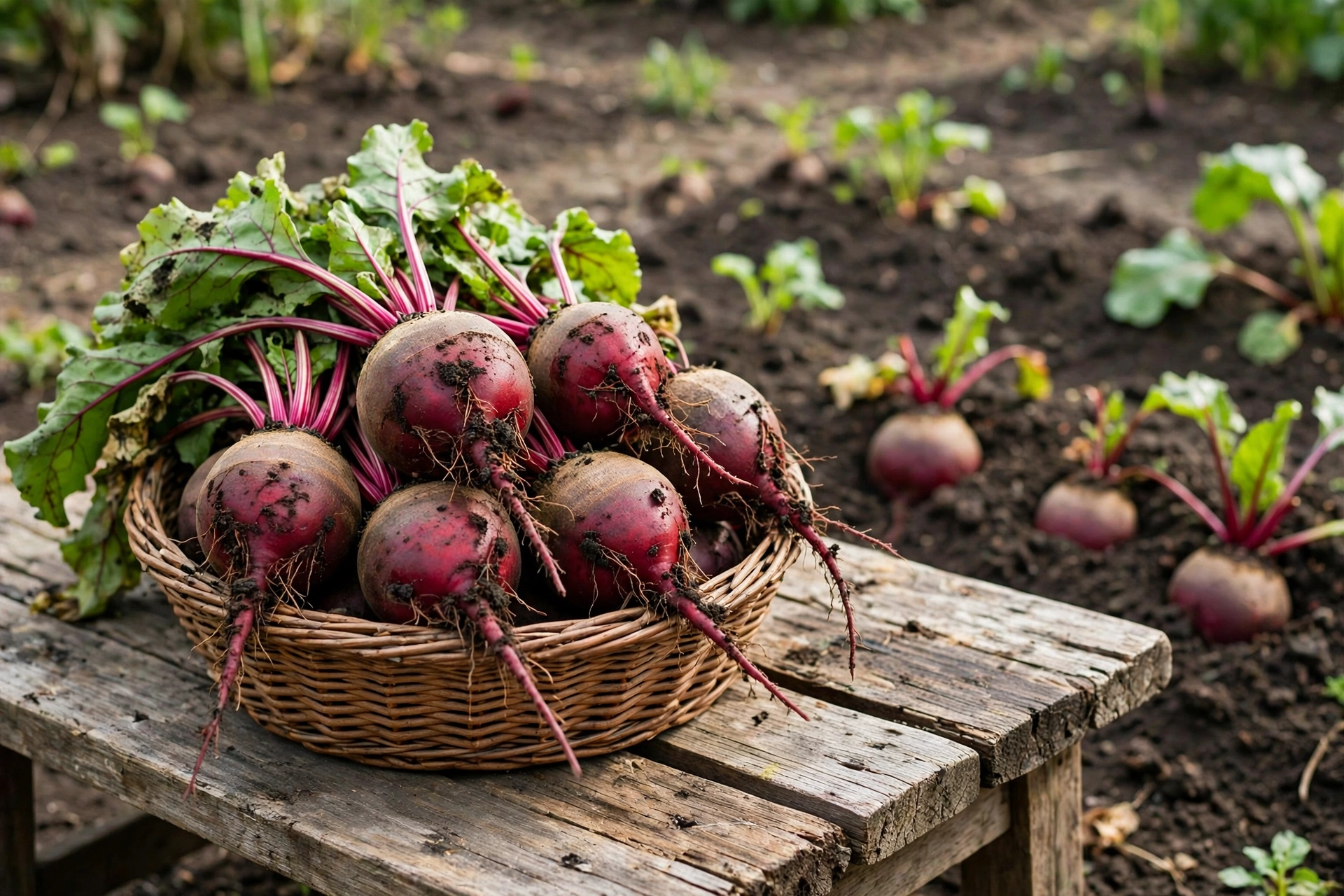
A fixed row shows it fast: thinned plants put on top growth within a week, and the shoulders start pushing out of the soil at the right size — 1 to 3 inches across, firm and round. Pull a test beet at the small end of the range; if it is tender and sweet, the row is on track, and the rest can keep growing. The one mistake that sets it back is thinning by pulling instead of snipping, which disturbs the roots of the plant you meant to keep. Snip, water, and wait — and if the row still will not size up after thinning and steady water, the soil itself is the answer, and the next sowing belongs in a looser bed.