Landscape & Leisure is reader-supported. When you buy through links on our site, including Botanical Interests seed links, we may earn a commission at no extra cost to you. Prices change, so click through to confirm current pricing.
Your kitchen counter can grow a salad in under a week, and it does not ask for soil, a grow light, or a free windowsill to do it. A jar, some water, and the right sprouting seed are the whole setup, which makes sprouts the one fresh crop that keeps producing straight through the darkest stretch of winter.
Botanical Interests carries a short sprout list, and three of its packets earn a place here: a mild all-rounder, a spicy one with real bite, and a slower, tangier one worth knowing about before you buy it. Our jar-growing guide walks through the soaking, rinsing, and draining day by day, and our sprouts vs. microgreens comparison settles which indoor crop actually fits your counter. If trays are more your speed, our guide to growing microgreens indoors covers that route instead.
Three Sprouts, Three Personalities

Flavor is the real decision here, because the growing could hardly be simpler. Alfalfa is the gentle one, the sprout that disappears into a sandwich and adds crunch without arguing. China Rose radish sprouts bring the radish bite in miniature, with rose-colored stems that look as good as they taste. Broccoli sprouts are the tangy outlier — slower, a little fussier, and the one people seek out on purpose.
Best Overall: Alfalfa Sprouts
Alfalfa is where nearly everyone should start. The sprouts are ready in 4 to 6 days, when the small leaves turn green, and the flavor stays mild and fresh — lively texture for salads and sandwiches without any heat to plan around. Botanical Interests notes the seed is high in protein and essential amino acids, and gardeners rate it 4.9 out of 5 from 18 reviews, the strongest rating on this page by a wide margin.
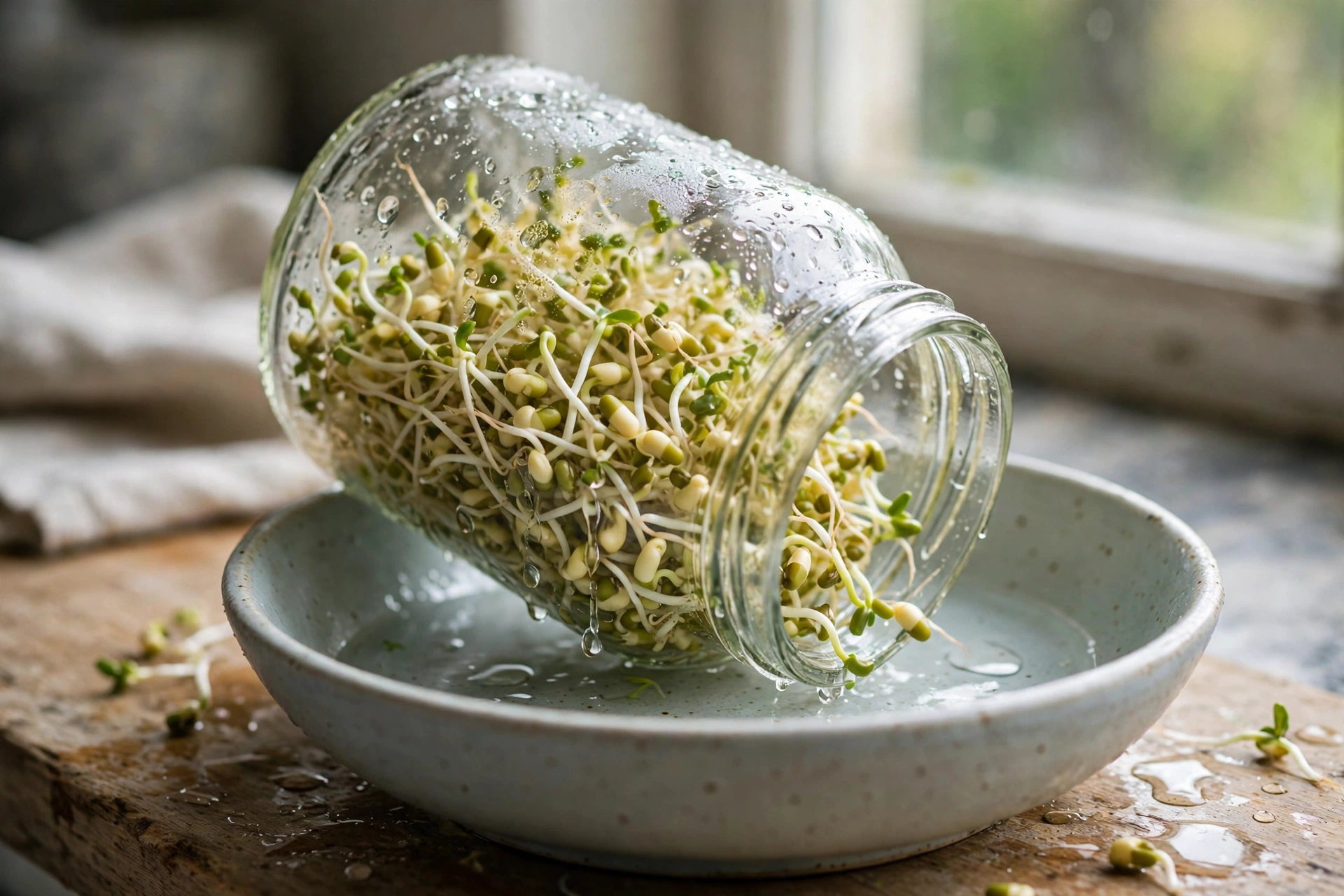
One honest wrinkle: alfalfa seed carries hulls, the papery outer coverings that loosen as you soak and rinse. They are edible, but floating them off in a bowl of water before the final rinse gives you cleaner flavor and less trapped moisture in the jar. It takes two minutes, and it is the only real chore this variety asks of you.
Pros: ready in 4–6 days; mild flavor that suits everything; 4.9 out of 5 from 18 reviews; the forgiving first sprout to learn on.
Cons: hulls need floating off for the cleanest result; the mildness that makes it versatile also makes it plain on its own.
Alfalfa Sprouts Seeds
Mild, crunchy sprouts ready in 4–6 days — the easy first jar, and the one most kitchens keep in rotation.
Best for Bite: China Rose Radish Sprouts
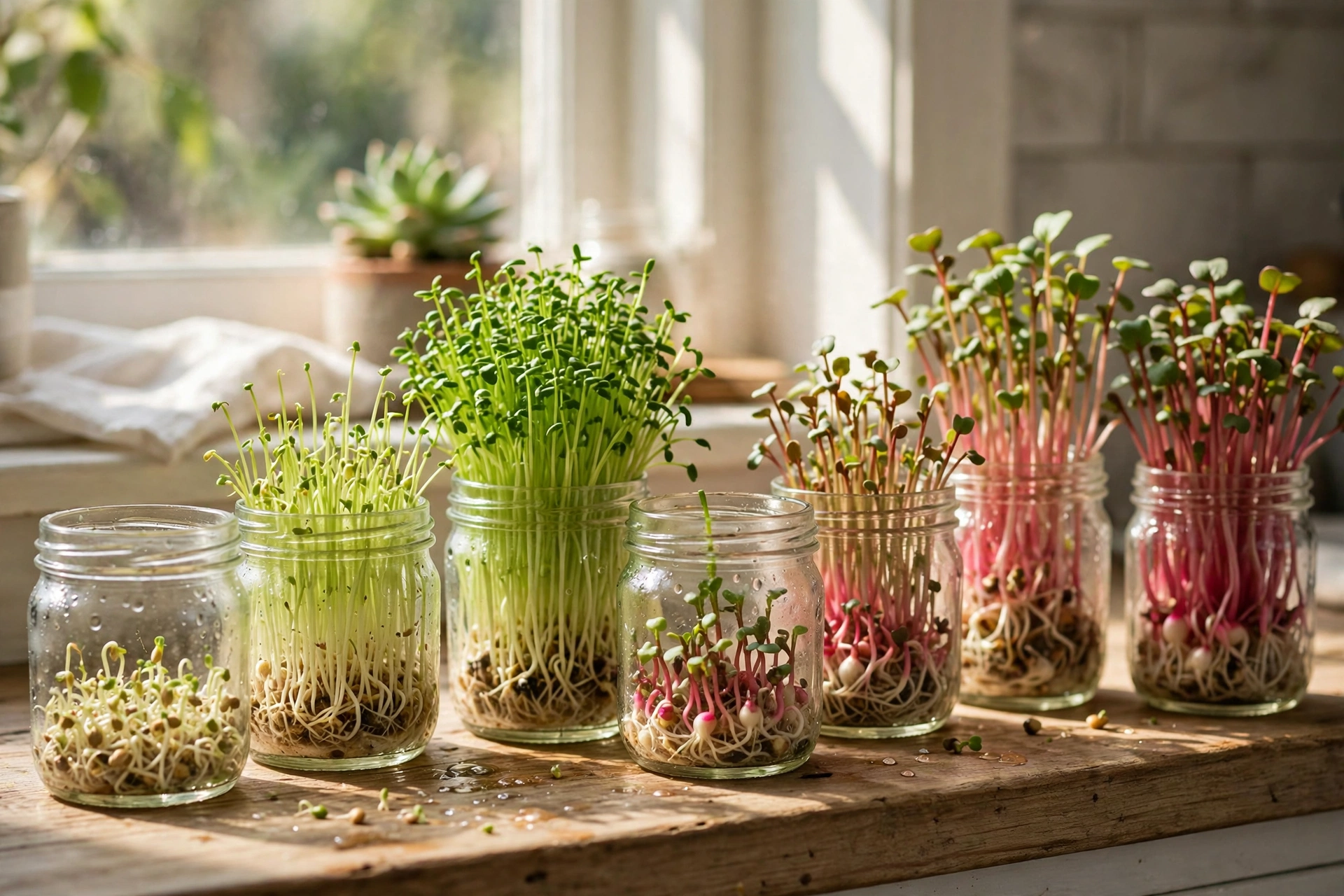
If alfalfa is the background singer, China Rose is the solo. These sprouts carry a genuine radish bite, and they arrive wearing it — rose-colored stems under small green leaves, ready in the same quick 4 to 6 days. Radish sprouts are a staple of Chinese and Japanese cooking, eaten raw, simmered in soup, and tucked into sushi, and that range tells you how well the sharpness plays with other flavors.
Gardeners rate China Rose 4.7 out of 5 from 15 reviews, and at $5.99 it costs the same as the alfalfa. The trade-off is simply intensity: a handful of these will season a whole sandwich, so if your household splits between spice lovers and everyone else, grow this one in its own jar rather than mixing it into a mild batch.
Pros: real radish bite; beautiful rose-colored stems; ready in 4–6 days; 4.7 out of 5 from 15 reviews.
Cons: too assertive to use by the handful; best kept in its own jar so mild batches stay mild.
China Rose Radish Sprouts Seeds
Rose-stemmed sprouts with a true radish bite, ready in 4–6 days for sandwiches, soups, and sushi.
The Deliberate Pick: Broccoli Sprouts
Broccoli sprouts are the ones people grow on purpose, and Botanical Interests says why plainly: the sprouts contain higher levels of the phytochemical sulforaphane glucosinolate than mature heads of broccoli, along with vitamins A, C, and E, calcium, and fiber. The flavor is tangy, and it perks up fresh and cooked dishes alike.
Now the honest part, because this variety earns a warning label. It takes 6 to 9 days — the slowest here — and the seed’s own product page states that broccoli germination is naturally erratic, so some seeds in your jar will still be sitting there while their neighbors are ready to eat. Gardeners rate it 3.6 out of 5 from 15 reviews, the lowest rating in this roundup, and that uneven germination is the reason. Grow it because you want what it offers, keep the jar’s air moving while it grows, and do not judge sprouting itself by this one packet.
Pros: higher sulforaphane glucosinolate levels than mature broccoli heads; tangy flavor that suits cooked dishes too; a packet grown with intent.
Cons: slowest here at 6–9 days; germination is naturally erratic; 3.6 out of 5 from 15 reviews is the weakest rating on this page.
Broccoli Sprouts Seeds
Tangy sprouts with more sulforaphane glucosinolate than mature broccoli — slower and uneven, and worth it if that is your goal.
The One to Skip for Now: Sandwich Mix
Botanical Interests also blends a Sandwich Mix — mild alfalfa and red clover with just enough spicy radish — and on paper it is the easiest recommendation of all. Right now it is sold out, so it gets no card and no link here. If it returns, it is the packet to hand a first-timer who cannot decide; until then, a jar of alfalfa and a jar of China Rose give you the same sandwich, mixed at the table instead of in the packet.
Sprouts Side by Side
| Sprout | Days to harvest | Flavor | Rating | Packet price |
|---|---|---|---|---|
| Alfalfa | 4–6 days | Mild, fresh, crunchy | 4.9 / 5 (18) | $5.99 |
| China Rose Radish | 4–6 days | Spicy radish bite, rose stems | 4.7 / 5 (15) | $5.99 |
| Broccoli | 6–9 days | Tangy | 3.6 / 5 (15) | $6.49 |
Bottom Line
Start with alfalfa. It is ready inside a week, it forgives a beginner’s rinsing schedule, and it is the sprout your sandwiches will actually ask for again. Add China Rose when you want a jar with opinions, and grow broccoli when the nutrition is the point and you are willing to wait out its uneven start. Three jars, one counter, and the salad bowl stops waiting on the garden.