Landscape & Leisure is reader-supported. When you buy through links on our site, including Botanical Interests seed links, we may earn a commission at no extra cost to you. Prices change, so click through to confirm current pricing.
The most common indoor-growing mistake is buying both setups in the same order — a sprouting jar for the counter and a microgreens tray for the windowsill — and then treating them like the same crop with different containers. They are not. One grows in water and near-darkness and is eaten whole, root and all; the other grows in a shallow layer of mix under light and is cut with scissors. Pick the wrong routine for the seed in front of you and both jars disappoint.
Our sprouts roundup picks the three jar seeds worth growing, and our jar-growing guide covers the rinse-and-drain routine in full. For the tray side of the story, our guide to growing microgreens indoors walks through sowing on mix and harvesting by the cut.
The Difference That Decides Everything
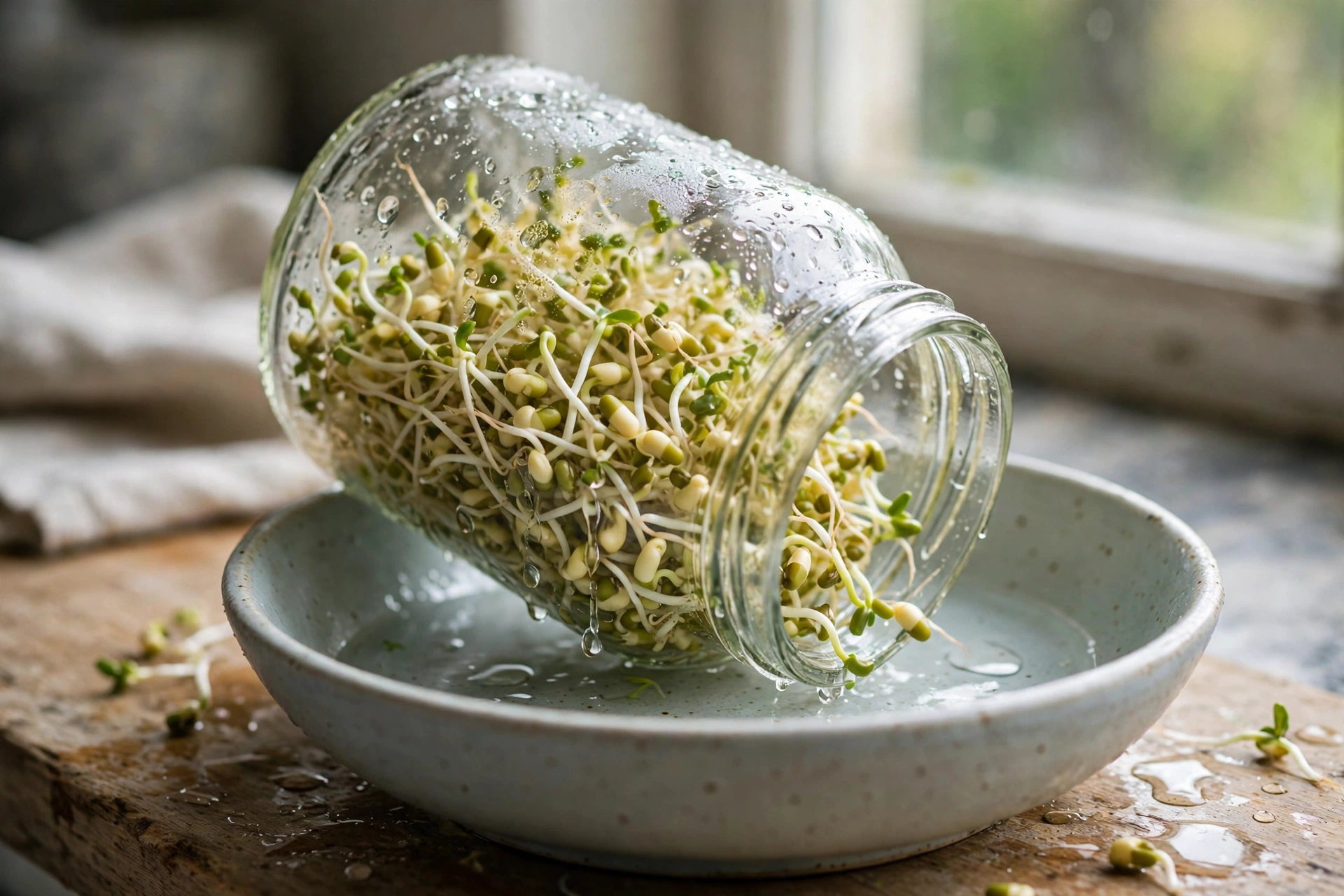
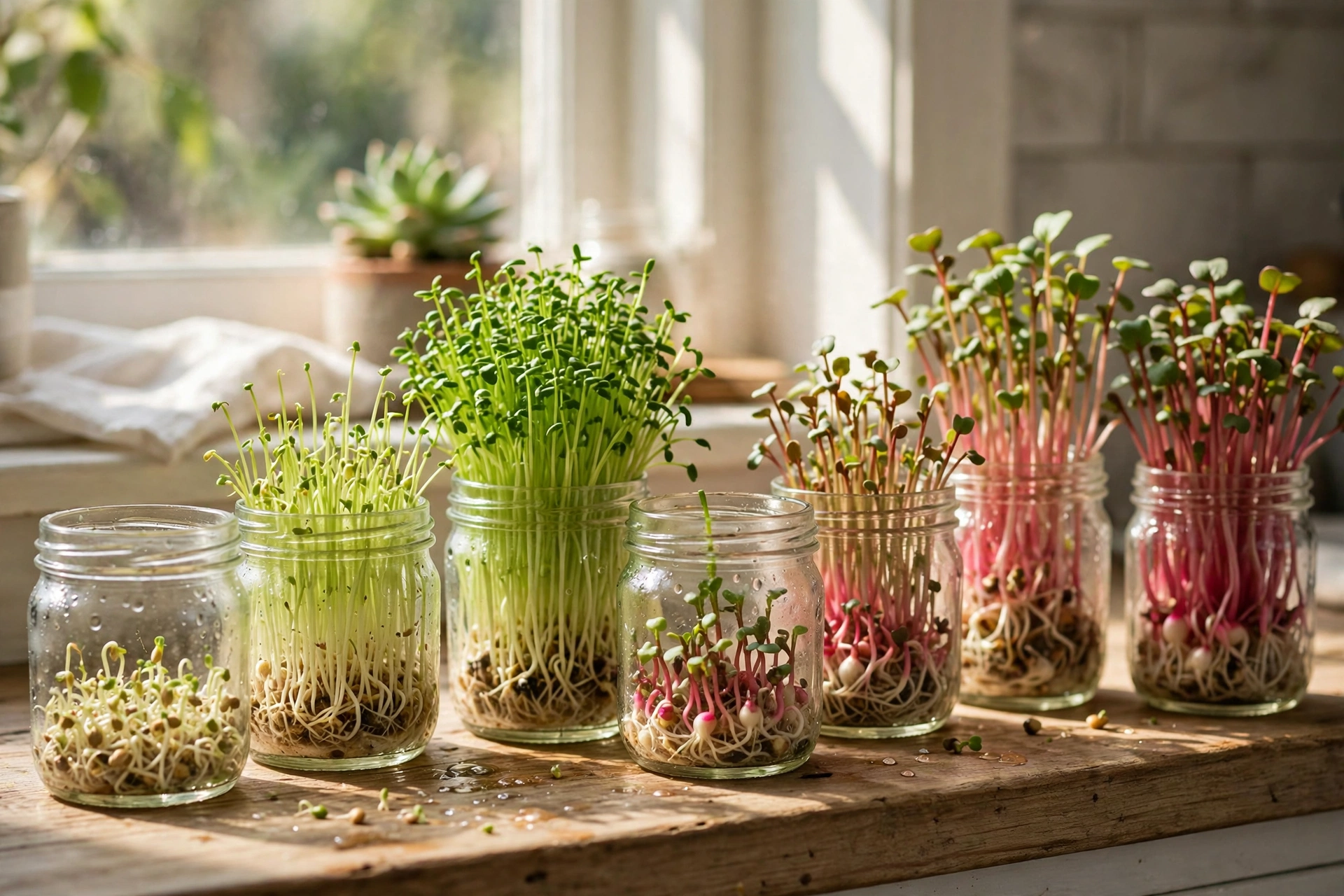
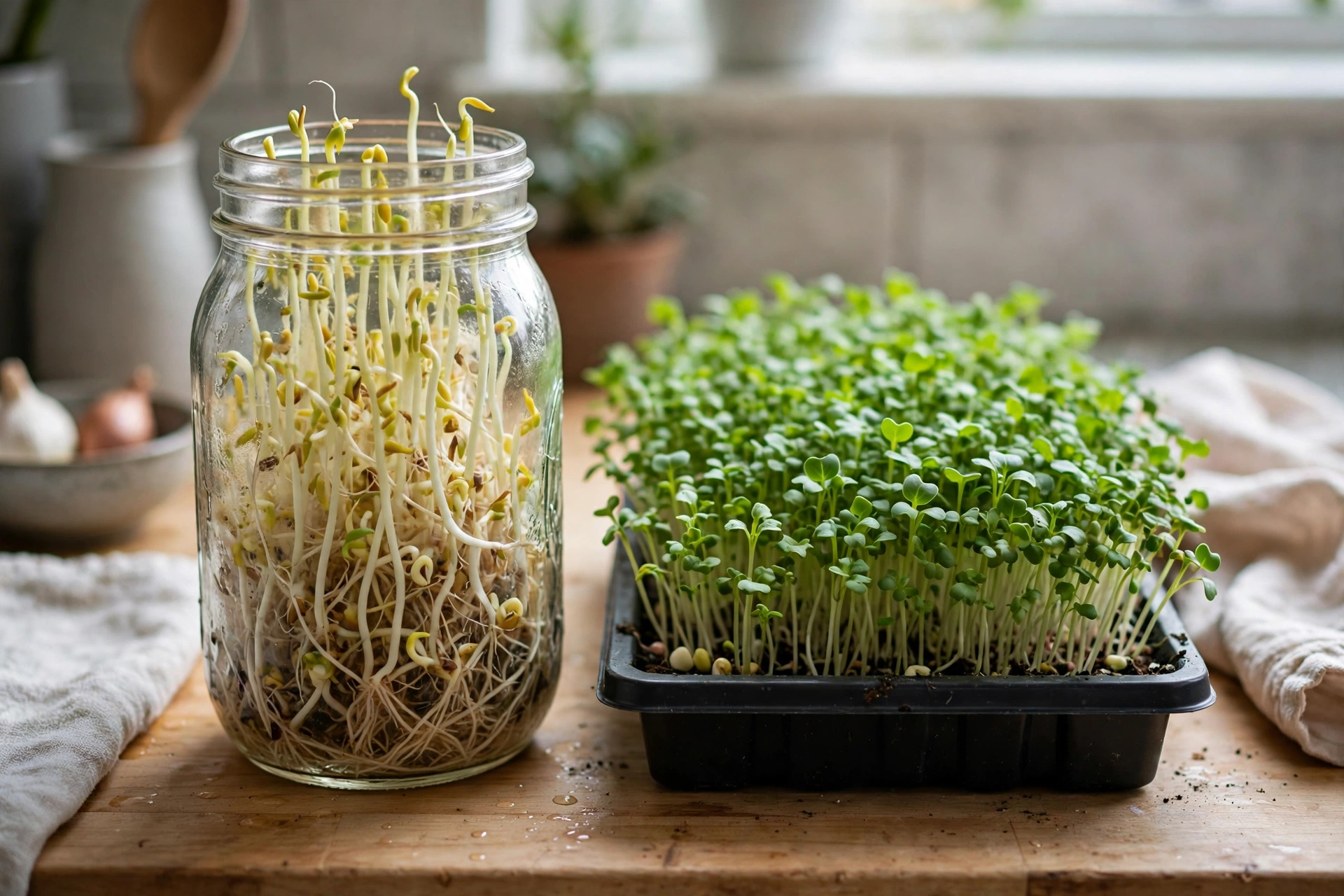
A sprout is eaten at the seed’s first stretch — stem, root, and seed coat together — after 4 to 9 days of soaking and rinsing in a jar. A microgreen is the same kind of seed allowed to grow past that point: sown on a thin layer of growing mix in a tray, put under light, and harvested by cutting the stems above the mix once the first leaves open. Everything else in this comparison — cost, effort, flavor range — follows from that one fork in the road.
Side by Side
| Question | Sprouts | Microgreens |
|---|---|---|
| Grown in | A jar with water — no soil, no mix | A shallow tray on growing mix |
| Light | Ordinary room light; a bright finish greens the leaves | Real light — a sunny sill or a grow light |
| Time | 4–6 days for alfalfa and radish; 6–9 for broccoli | Longer — sown, germinated, then grown on to first true leaves |
| Daily work | Rinse and drain twice a day | Keep the mix evenly moist; watch for mold |
| Harvest | The whole sprout, root and all | Cut above the mix with scissors or a knife |
| Best at | Sandwich crunch, salads, the fastest fresh food indoors | Garnishes, concentrated flavor, chef-style variety |
Where Sprouts Win
Speed and simplicity, and it is not close. A jar of alfalfa is ready in 4 to 6 days with nothing but water and two thirty-second rinses a day, and China Rose radish sprouts keep the same schedule while adding a spicy bite and rose-colored stems. There is no mix to buy, no tray to wash soil out of, and no light bill. If your goal is fresh crunch in a sandwich this week, the jar is the tool.
Alfalfa Sprouts Seeds
The jar crop at its easiest — mild, crunchy sprouts in 4–6 days with water alone.
China Rose Radish Sprouts Seeds
Radish heat in sprout form, ready in 4–6 days — the jar for people who find alfalfa too quiet.
Where Microgreens Win
Range and presentation. A tray lets you grow crops a jar handles badly — sunflower shoots, pea tendrils, and blends blended for color as much as flavor — and the cut harvest looks like something a restaurant plated. Botanical Interests’ Mild Mix is the gentle entry point, a blend built for salads and sandwiches at $6.49 a packet. The costs are real, though: mix and trays to buy, counter space under actual light, and a longer wait between sowing and eating.
Mild Mix Microgreens Seeds
A mild, salad-ready microgreens blend — the tray crop to start with when you want the cut-and-plate style.
The Seed That Proves the Rule: Broccoli
Broccoli sits on both sides of this fence — it is sold as a sprouting seed and as a microgreen — and its sprout jar is the honest test of your patience. Botanical Interests states on the product page that broccoli germination is naturally erratic, and the jar takes 6 to 9 days, the slowest sprout in our roundup. Grow it as a sprout when the tangy flavor and the nutrition are the point; grow it as a microgreen when you would rather cut a tidy tray than coax a jar. Either way, it is the one seed here that rewards a deliberate choice instead of a default.
Broccoli Sprouts Seeds
Tangy and slow at 6–9 days in the jar — the seed that makes you choose your method on purpose.
Bottom Line
Grow sprouts first. The jar asks for water, a counter corner, and four to six days, and it pays you back in the freshest food your kitchen can produce in winter. Move to microgreens when you want the wider menu and the prettier plate, and you are willing to trade counter light and a longer wait for them. The mistake is never the crop — it is running a tray seed on a jar routine, or a jar seed under lights it never asked for.