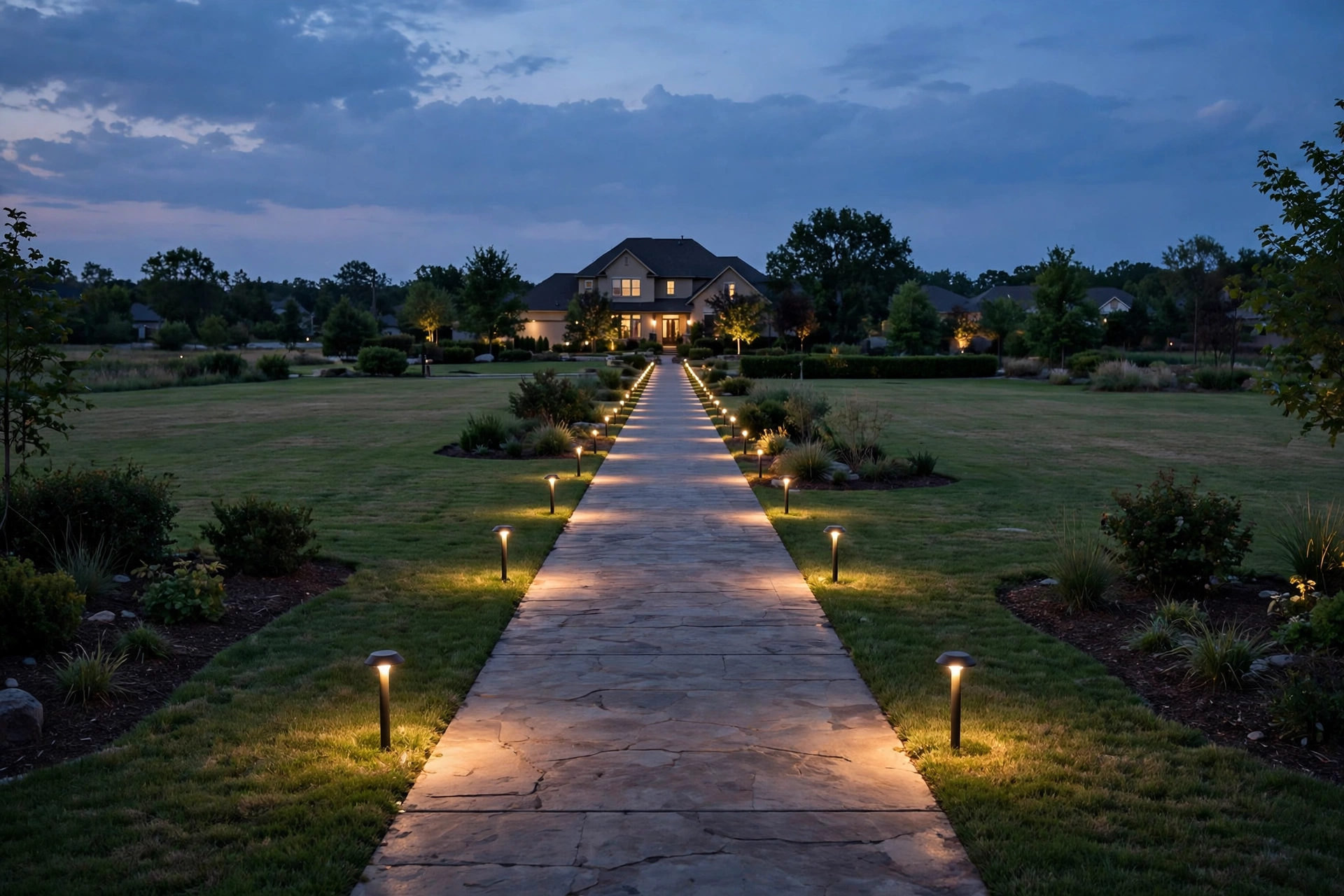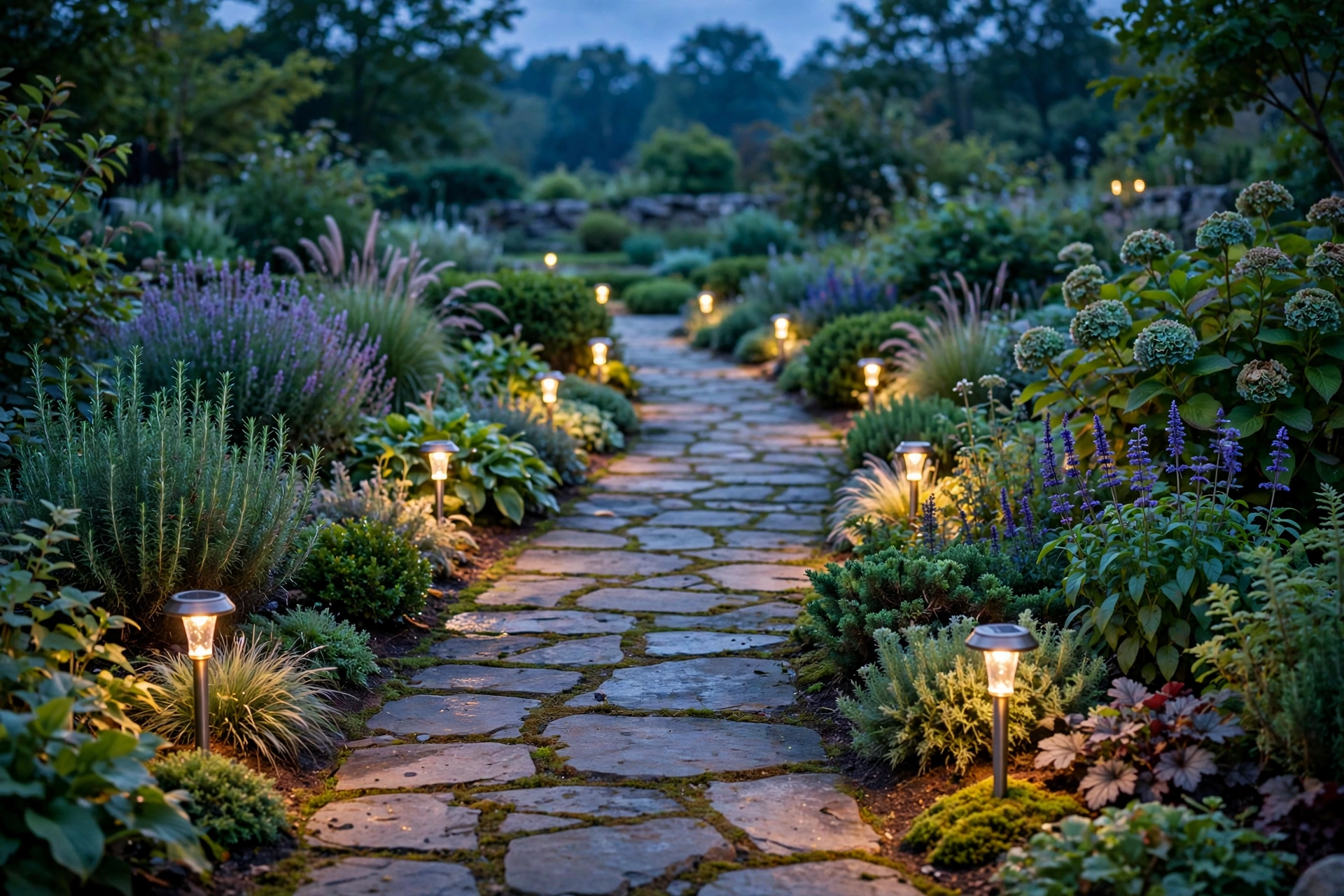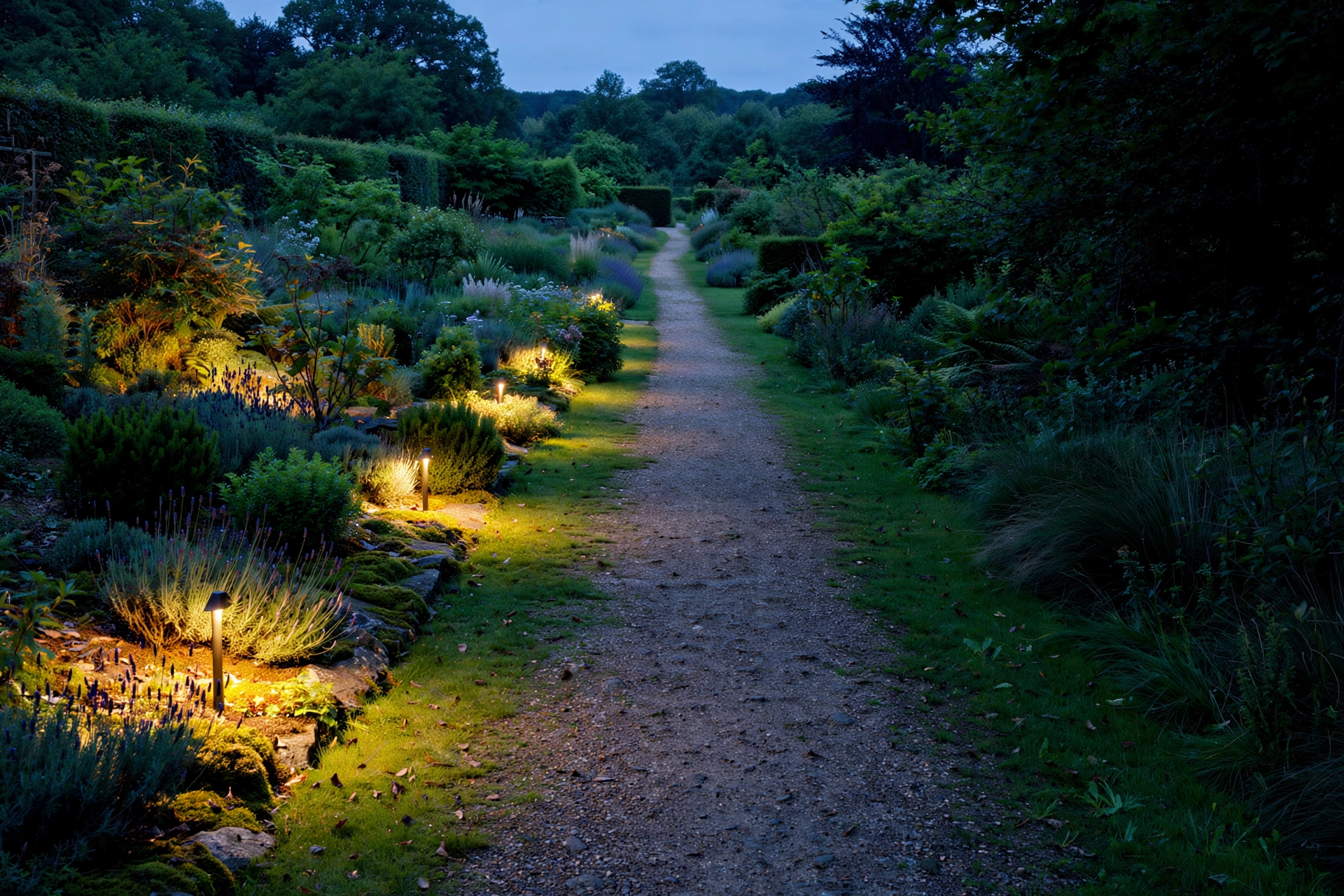
The mistake is buying solar lights to do a wired light’s job, then standing in the yard at night wondering why the walk still feels dark. Solar path lights are not dim versions of wired lights — they are a different tool that happens to sit in the same hole in the ground.
So the honest question is not which is better. It is which job you actually have: marking a route with a warm glow, or lighting a walk well enough to read footing, faces, and steps. The two systems split cleanly along that line.
The brightness gap, in numbers
A typical solar path light puts out about 10 lumens. A modest low-voltage wired path light commonly puts out 100 lumens or more, and brighter bollard-style fixtures go well beyond that. Ten times the light is not a rounding difference — it is the difference between seeing that the path is there and seeing the path itself, including the uneven paver, the hose, and the last step down.
Solar output also varies with the day that fed it. A light that charged under eight hours of June sun will outshine itself in December, when the panel got five weak hours and the night asks for fourteen. Wired output is the same on the darkest Tuesday of the year as on the brightest Saturday, because it never depends on yesterday’s weather.
Side by side
| Question | Solar | Wired (low-voltage) |
|---|---|---|
| Brightness per light | About 10 lumens — a marker glow | Commonly 100+ lumens — real path light |
| Installation | Push the stake in; done in minutes | Transformer, cable run, and connectors — a weekend job |
| Running cost | None beyond replacement batteries | Small but real electricity use, every night |
| Consistency | Fades on cloudy stretches and short winter days | Identical every night of the year |
| Moving them later | Pull the stake and restake it | Re-run cable; plan it before you plant |
Where solar genuinely wins
Solar wins the long, easy route: a front walk in full sun, a garden border, a path where the job is guidance rather than illumination. There is no trench, no transformer, no cable for a spade to find in April, and if the landscaping changes, the lights move in minutes. For a sunny yard that wants a welcoming line of light by Friday, the sets in our best solar path lights for walkways roundup are the whole project — an evening’s work, most of it spent deciding spacing, which the spacing guide settles quickly.
There is a particular pleasure in that first evening, it should be said: the stakes you pushed in at four o’clock come on by themselves at dusk, one after another down the walk, and the yard looks finished in a way it did not at breakfast. That effect is real, and for a lot of yards it is the entire requirement.
Where wired wins, and it is not close
Wired wins wherever light has a safety job: steps, level changes, a shaded north-side walk where solar panels starve, a driveway edge guests navigate with luggage, or anywhere you want light you can schedule and dim rather than negotiate with the weather. It also wins in winter at northern latitudes, where solar’s shortest charge meets its longest night and the gap shows by nine o’clock.
The cost of that win is the installation weekend and the permanence. Cable wants a plan — where the transformer mounts, where runs cross beds you will dig later — and a poorly planned run is a nuisance for years.
Bottom line
If the walk is sunny and the job is showing guests where the path goes, buy solar and be done by dinner. If the job is seeing the steps, or the path sits in shade, wire it — brightness is the one thing solar cannot be talked into. Most yards that ask honestly end up with solar on the garden paths and wired light at the steps, and that split is not a compromise; it is each tool doing the job it is actually built for.