The fire is lit, someone looks at the yard waste pile, the broken chair, and the stack of good logs, and asks which of it can go in. That question deserves a clear answer before anything else goes on the flames.
In a backyard fire pit you can burn seasoned firewood, dry kindling, and a small amount of natural starters such as fatwood or pine cones. Everything else needs a check, and some common yard and household items should never go in at all. Our fire starter guide covers the easiest way to get a clean fire going.
Burn these: the short, safe list
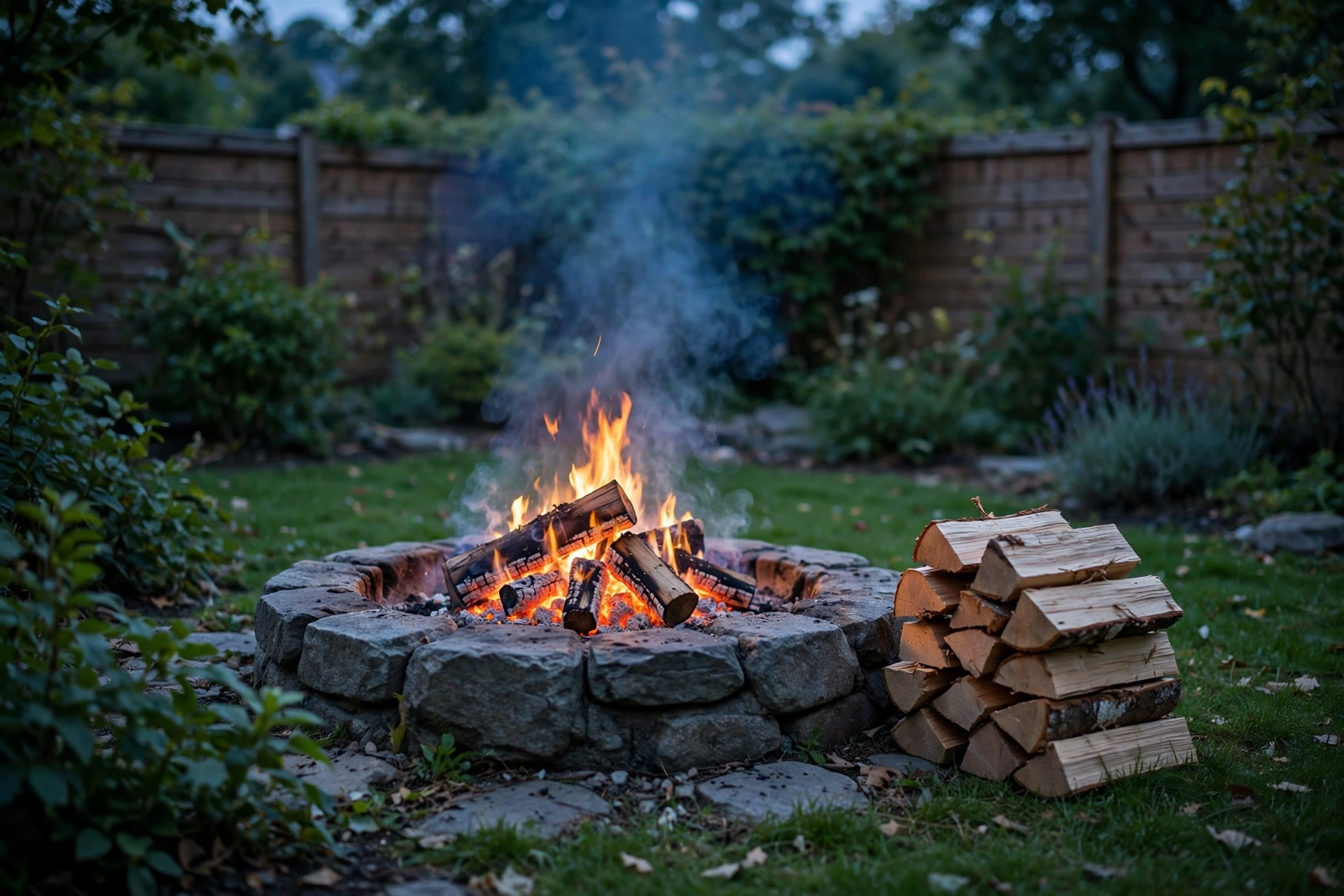
Seasoned firewood. Wood that has dried for months burns hotter and cleaner than green wood, with less smoke. Hardwoods burn longer; softwoods light easier and burn faster.
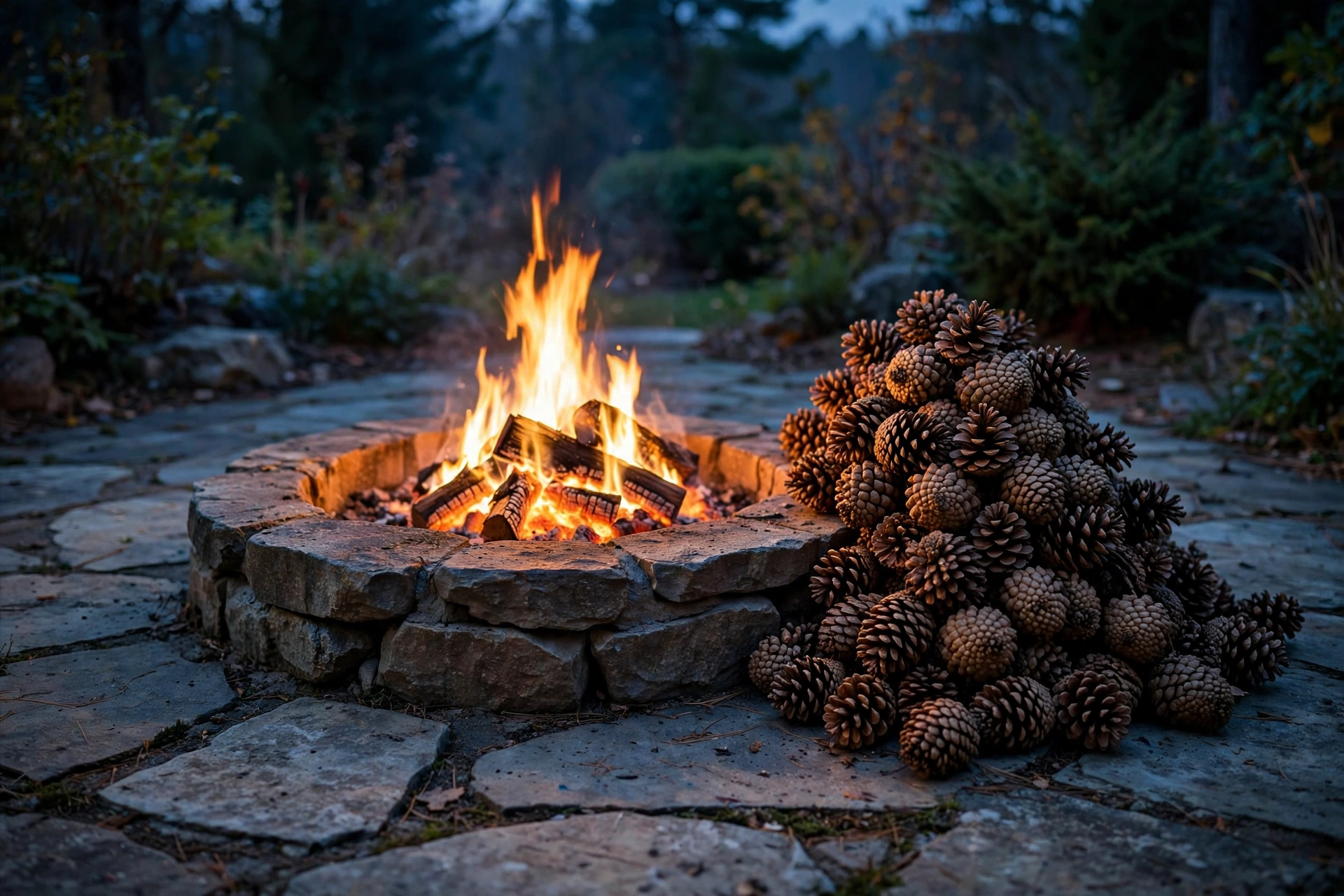
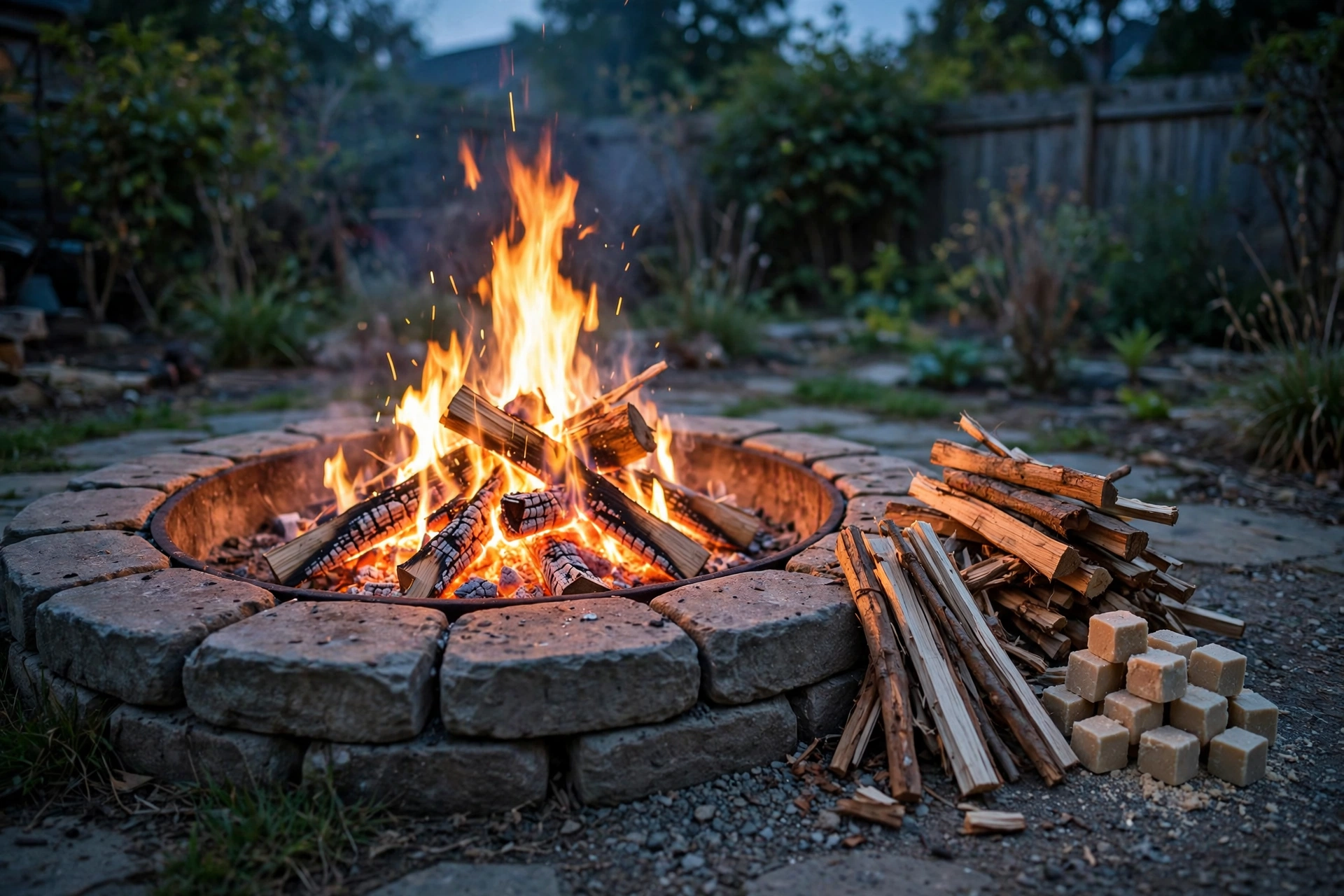
Dry kindling and natural starters. Small dry sticks, fatwood, and a handful of dry pine cones help a fire start without chemicals.
Untreated, unpainted scrap wood, in small amounts. Only when you are certain it has never been treated, painted, stained, or glued. If you are not certain, leave it out.
Never burn these
Pressure-treated, painted, or stained wood. Treatments and coatings can release harmful fumes when burned.
Plywood, particleboard, and MDF. These are held together with glues and resins that do not belong in a backyard fire.
Trash, plastic, rubber, and packaging. If it is not plain wood or paper made for starting, keep it out.
Leaves and pine needles by the armful. A small handful of pine needles can work as kindling, as we explain in can you burn pine needles in a fire pit, but piles of leaves smoke heavily and send embers up.
Green or wet wood. It smoulders, smokes out the seating area, and leaves more residue behind.
What about cardboard and paper?
A little plain cardboard or newspaper to start a fire is common practice, but it burns fast, creates floating ash, and should never become the main fuel. A proper starter does the same job with less mess.
Rules that matter more than the fuel list
Check local burn rules before you light anything, keep water or an extinguisher within reach, and never leave a fire unattended. Keep the pit on a non-combustible surface, away from structures and overhanging branches, and let ash cool completely before disposal.
Bottom line
Keep the menu simple: seasoned firewood, dry kindling, and a natural starter. When an item needs a long explanation to justify burning it, that item does not belong in your fire pit.
A quick check before anything goes in
Ask three questions about any item. Do you know exactly what it is made of? Is it plain, untreated wood or a natural starter? Would you be comfortable breathing near it while it burns? If any answer is no, or even a shrug, the item goes in the trash or the brush pile instead. That three-question check settles most borderline cases — driftwood with unknown treatment, old fence boards, and painted garden stakes included — without needing a rule for every object in the garage.