By the time the sun drops behind the neighbor’s roof, the front walk has gone from welcoming to guesswork — and the fix is not more light so much as light in the right count, in the right places, which is a smaller purchase than most people fear.
Path lights work as a route, not a flood. Your eye hops from one pool of light to the next, so what matters is the spacing between pools and whether the hazard spots — steps, gates, the turn at the drive — get a light of their own. Count those first, then fill the run between them.
Why spacing decides the count
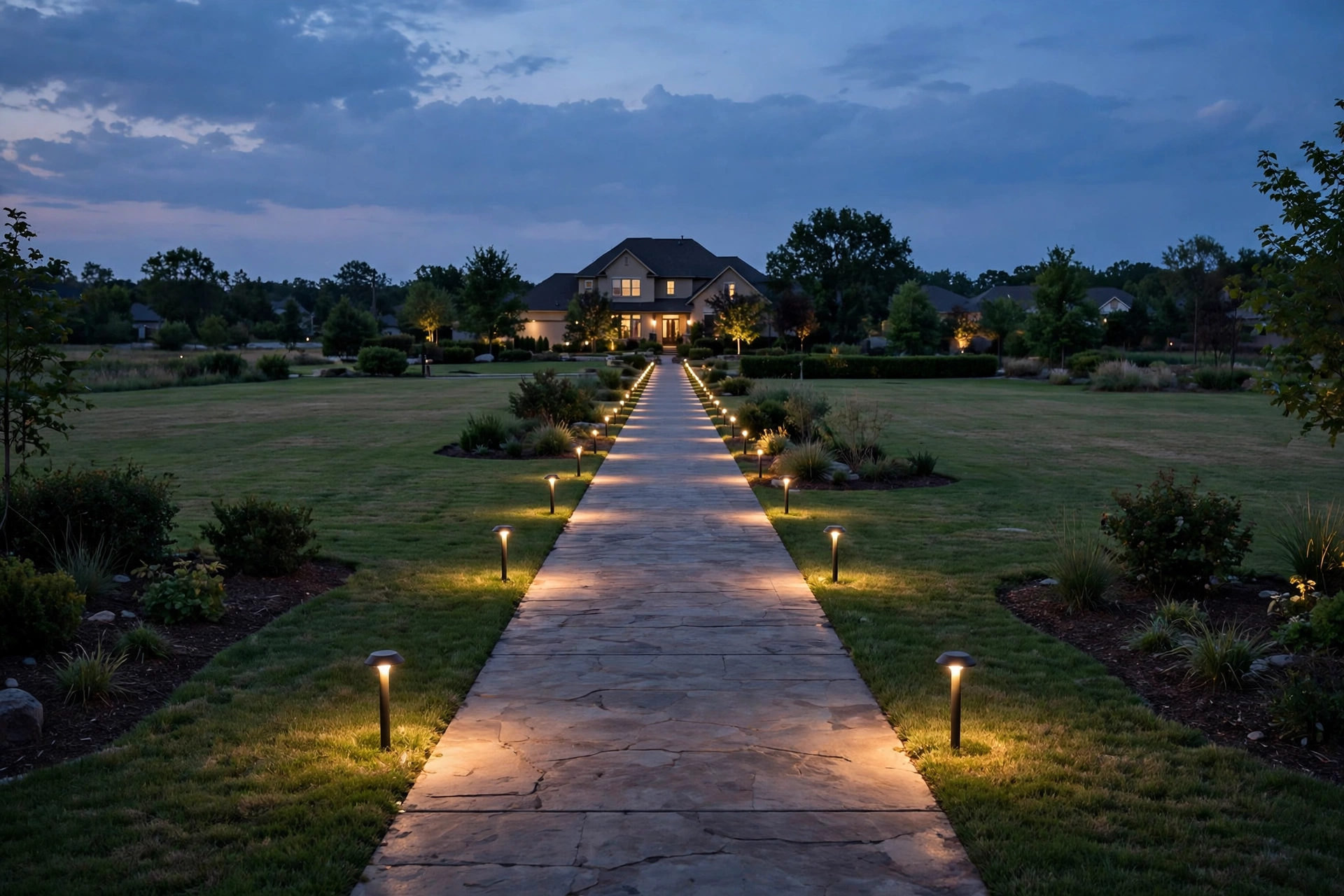
A solar path light throws a useful pool roughly three to four feet across. Space the lights six to eight feet apart and the pools nearly touch, which reads as a continuous route; stretch them to twelve feet and the walk becomes dots in the dark, with the gaps exactly where a guest’s foot lands. Closer than about five feet, the line turns into a runway — bright, busy, and oddly harder to read, because everything is lit and nothing stands out.
Alternating sides buys you wider spacing without the gaps. A light on the left, then one on the right six feet later, zigzags the pools across the whole width of the walk, so a 40-foot walk reads as lit with seven lights instead of eleven in a straight single-side line.
The count, by the length of your walk
A short walk, 10 to 20 feet. Three to four lights, alternating sides, plus one at the steps if you have them. This is a single small pack and an evening’s work.
A standard front walk, 25 to 40 feet. Five to seven lights alternating at six-to-eight-foot spacing. Put the first light where the walk meets the drive — that junction is where guests actually hesitate — and the last at the door or the porch step.
A long walk or a full border, 50 feet and up. Eight to twelve lights, and this is where a large value pack earns its price; the picks are compared in our best solar path lights for walkways roundup. Long runs also benefit from one brighter pair at any steps or grade change along the way.
Walk the route before you stake it
Set the lights out unlit, on top of the ground, and look at the walk from the street at dusk before anything goes in. From the street you will see what a guest sees: whether the line reads as a route, whether the turn is marked, whether one light glares while another hides behind a shrub that grew more than you remembered. Move two lights now and you save the slow disappointment of noticing it all winter from the car.
Then check the sun, because a path light is only as good as its panel’s day. Any light that will sit in shade by mid-afternoon will fade hours before its neighbors, so shift those a foot or two into the sun line even if the spacing goes slightly uneven — an uneven line that stays lit beats a perfect line that quits at nine.
What to do next
Buy for the hazards first and the run second: steps, the drive junction, and the door get a light each, and the count between them follows the six-to-eight-foot rule. If the numbers come out brighter than a glow can honestly deliver — a long shaded walk, a flight of steps — that is the wired system’s job, and solar vs wired path lights draws that line in lumens. For the sunny walk most houses actually have, seven well-placed lights will do what fourteen scattered ones never quite manage.