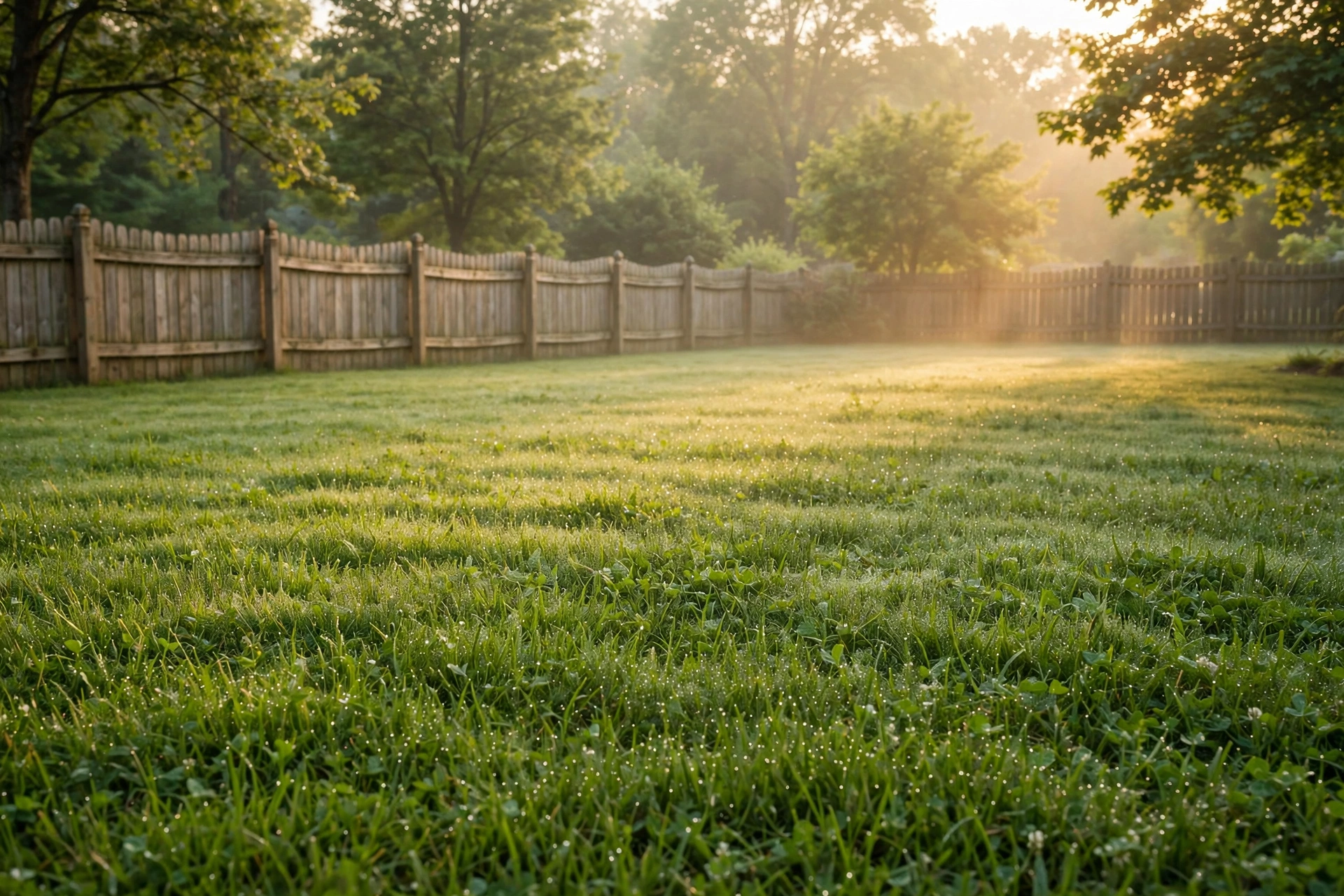
The lawn is thin in the middle, puddles after a rain that used to soak straight in, and feels oddly hard under your shoes — three complaints that point at the soil, not the grass, and the test that sorts them out takes a screwdriver and about two minutes.
Aerating is the fix for compacted soil: it pulls small plugs of earth out so air, water, and roots can move again. But it is rented equipment and a real afternoon, so it should be prescribed the way any fix should be — by diagnosis, not by the calendar. Here is how to tell whether your lawn is actually asking for it.
The symptoms, ranked
Water that sits instead of soaking. Puddles that linger after ordinary rain, or irrigation that runs off onto the drive, mean the surface has sealed. Healthy soil drinks; compacted soil sheds.
Thin, worn turf in the traffic lanes. The path the kids, the dog, and the mower all share is where compaction starts, and grass there thins even when you feed and water it the same as the rest of the yard. Feeding cannot fix a root that has nowhere to go.
A hard feel underfoot. A lawn on compacted soil feels like a parking surface with grass on it — firm, unyielding, almost springless — compared with the slight give of a healthy lawn.
The two tests that settle it
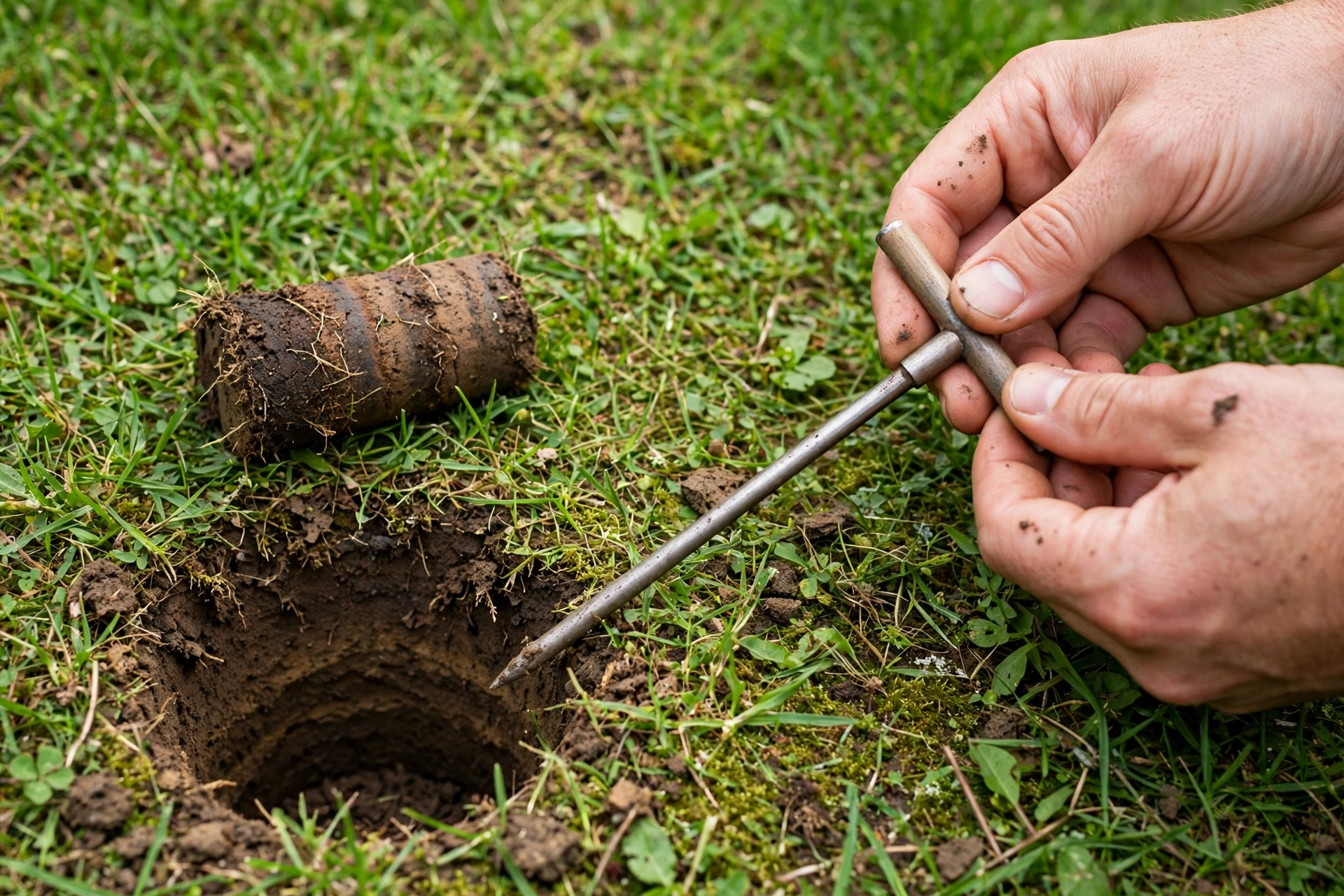
The screwdriver test. Push a long screwdriver into moist soil — not bone dry, not soaked. On a healthy lawn it slides in several inches with steady hand pressure. If you have to lean your weight on it or it stops at an inch or two, the soil is compacted and aerating will help. Test the traffic lanes and a quiet corner separately; compaction is usually local, and the comparison tells you where the problem actually lives.
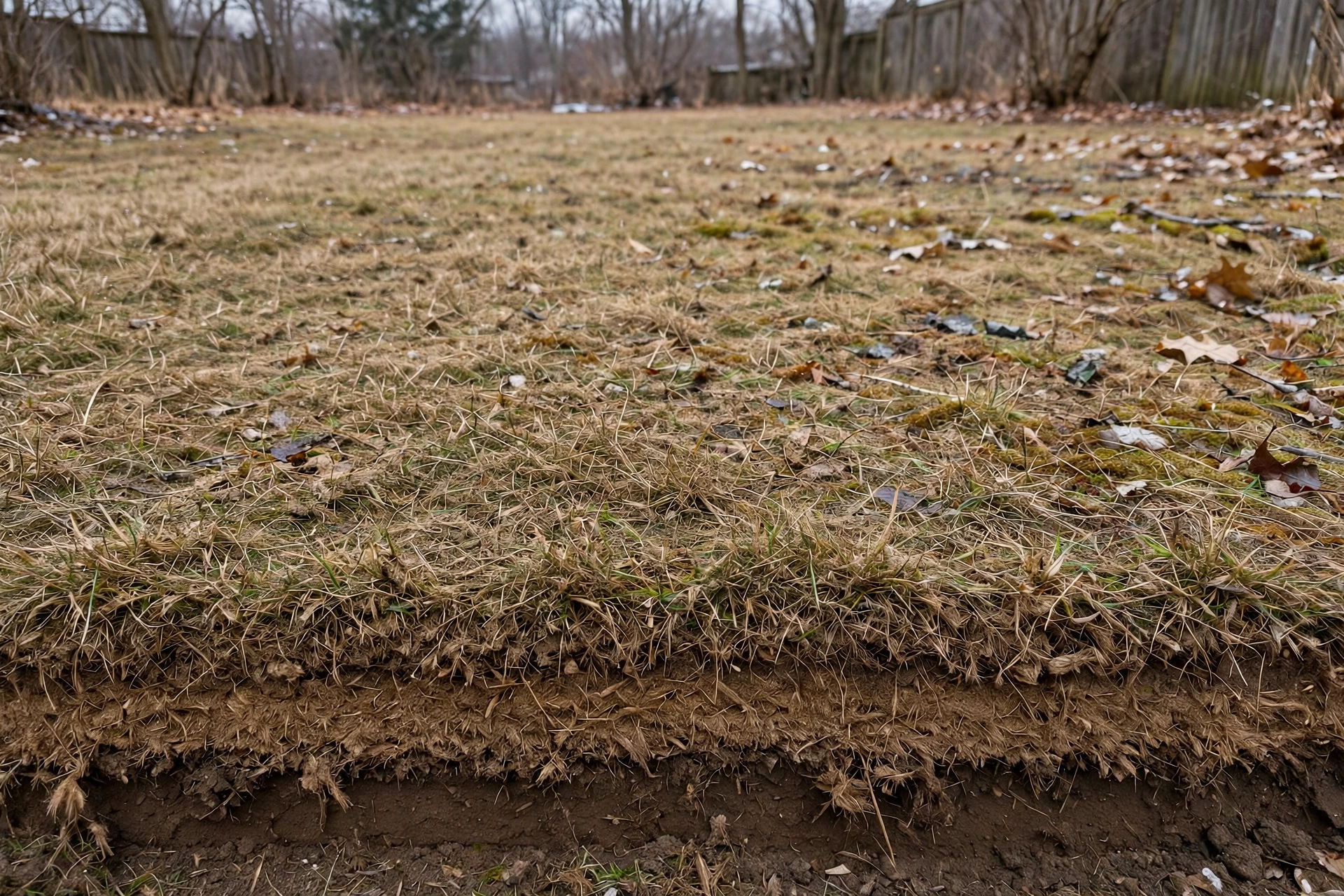
The spade test. Cut a small square of turf a few inches deep and fold it back like a flap. Two things to read: the thatch layer — the brown, spongy mat between the green blades and the soil — and the roots. Thatch thicker than about half an inch is a dethatching question, a different fix; roots that stop short in hard, dense soil are the aeration answer. Fold the flap back, water it in, and it will never know it was tested. If the spade says both problems at once, dethatching, aerating, or both sorts out the order of operations.
Kneel down before you rent anything
Do the spade test on your knees, close up, because the detail is in the slice: good soil crumbles dark and smells faintly sweet, with roots threading down through it, while compacted soil comes up in a pale, solid slab that breaks like a cracker and shows roots running sideways along the top, hunting for a way down. That sideways root growth, once you have seen it, is unmistakable — the plant has been telling you the diagnosis all season.
When the tests say yes, time it right
Aerate when the grass is growing actively enough to recover into the holes: early fall is the prime window for cool-season lawns, with spring as the second choice, and late spring into early summer suits warm-season grasses. Water the lawn a day or two before so plugs pull cleanly — the timing around the job is covered in whether to water before or after aerating, and care after aerating covers the weeks that follow.
Bottom line
Run the screwdriver test in the traffic lane and the spade test beside it. If the driver will not sink and the roots run sideways, rent the aerator with a clear conscience — your lawn has made its case. If both tests pass, save the rental and look elsewhere for the thin spot’s cause, because aerating healthy soil is exercise, not medicine.