Landscape & Leisure is reader-supported. When you buy through links on our site, including Botanical Interests seed links, we may earn a commission at no extra cost to you. Prices change, so click through to confirm current pricing.
The first cool weeks of spring are radish weather, and the trick is not one big sowing but a short row every week or two. A whole packet planted at once matures at once, which means three days of radishes and then a row of roots going woody while you work through them. Small, frequent sowings turn that glut into a steady supply.
This guide walks through the timing, spacing, and harvest rhythm for spring radishes, then covers the separate late-summer sowing that winter radishes need. The varieties named here are compared in our radish varieties roundup, and if a row has already gone wrong on you, our bolting and woody radish guide sorts out the cause. The same direct-sow discipline applies across the root bed, as our guide to direct-sowing root vegetables shows.
Why Succession Sowing Suits Radishes
Radishes germinate in 5 to 10 days and the fastest spring types are ready in about three to four weeks, so the gap between sowing and eating is short enough that a weekly rhythm actually works. Sow a two-foot row this Saturday, another next Saturday, and by the time the first row is on the table the second is sizing up behind it.
The other reason is quality. Spring radishes are at their best small and young, and a root that waits a week past its moment trades crunch for heat and a spongy center. Succession sowing means you are always harvesting the row that is ready today, never rescuing the row that was ready last week.
When to Sow, Spring and Fall

For spring radishes, direct sow outdoors 4 to 6 weeks before your average last frost date, once the soil is above 40°F and ideally in the 65°F to 85°F range. Keep sowing a short row every 1 to 2 weeks until late spring, then pause for summer heat.
Start again in late summer and continue until about 4 weeks before your average first fall frost. That fall window is also when the winter radishes go in: daikon and watermelon types need shortening days and cool temperatures to form roots, so sow them after mid-summer rather than in spring.
| Sowing | When | Varieties | Rhythm |
|---|---|---|---|
| Spring | 4–6 weeks before last frost | French Breakfast, Easter Egg, Cherry Belle | Every 1–2 weeks until late spring |
| Late summer / fall | Until 4 weeks before first frost | Spring types again | Every 1–2 weeks |
| Winter radishes | After mid-summer into fall | Miyashige daikon, Mantanghong | One sowing, room to grow |
Sowing and Thinning, Step by Step
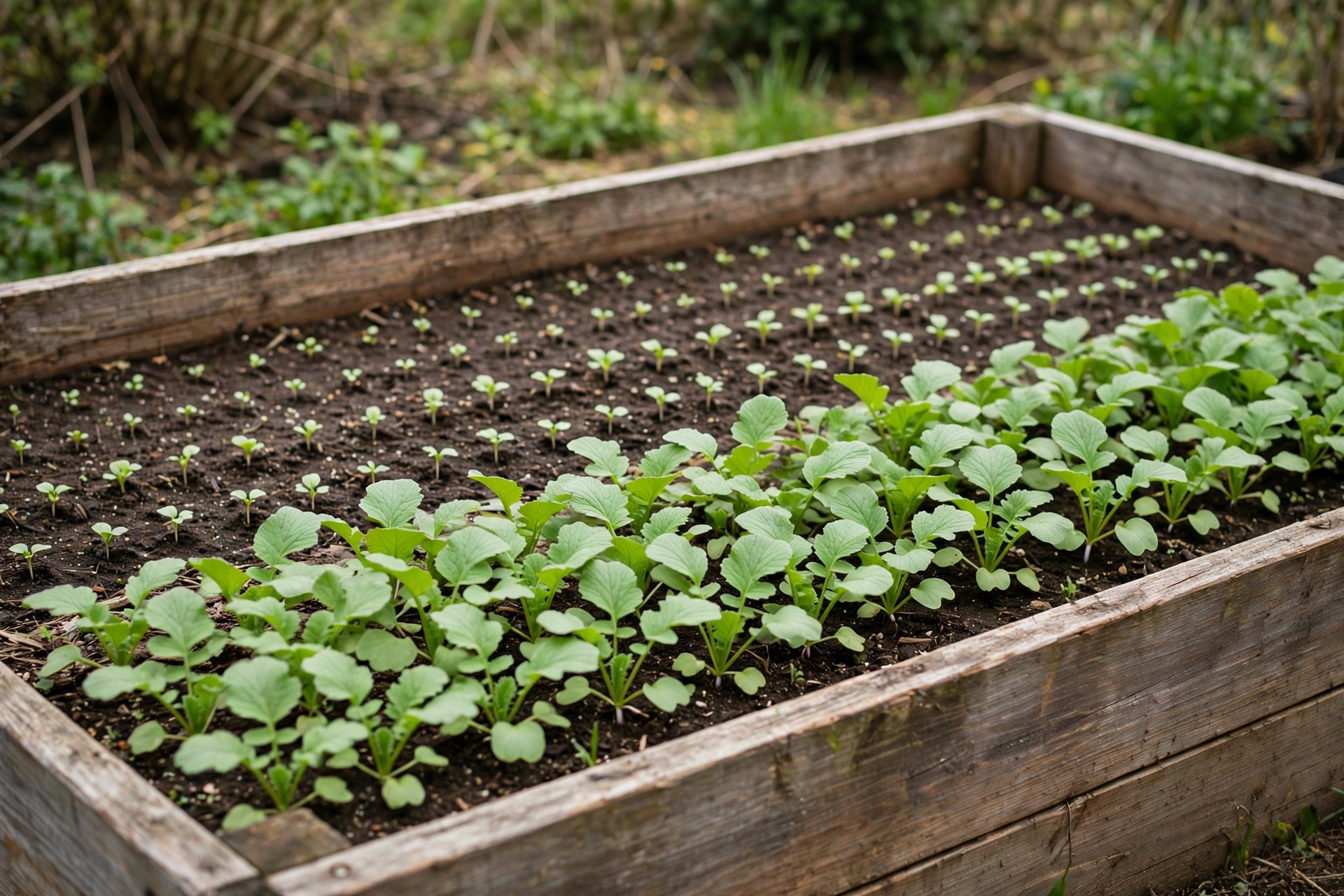
1. Sow shallow. Plant seed ½ inch deep, about 1 inch apart, in rows 12 inches apart. Radish roots are sensitive to disturbance, so direct sowing is the method — skip the seed trays for this crop entirely.
2. Keep the row evenly moist. Seedlings emerge in 5 to 10 days in decent soil temperatures, and steady moisture from the start is what keeps young roots swelling evenly instead of stalling and turning sharp.
3. Thin without mercy. When seedlings are 1 inch tall, thin them to 2 inches apart. Crowded radishes grow leaves and threadlike roots, because the swelling root needs that elbow room; the thinnings are tender and good in a salad, so the chore pays for itself.
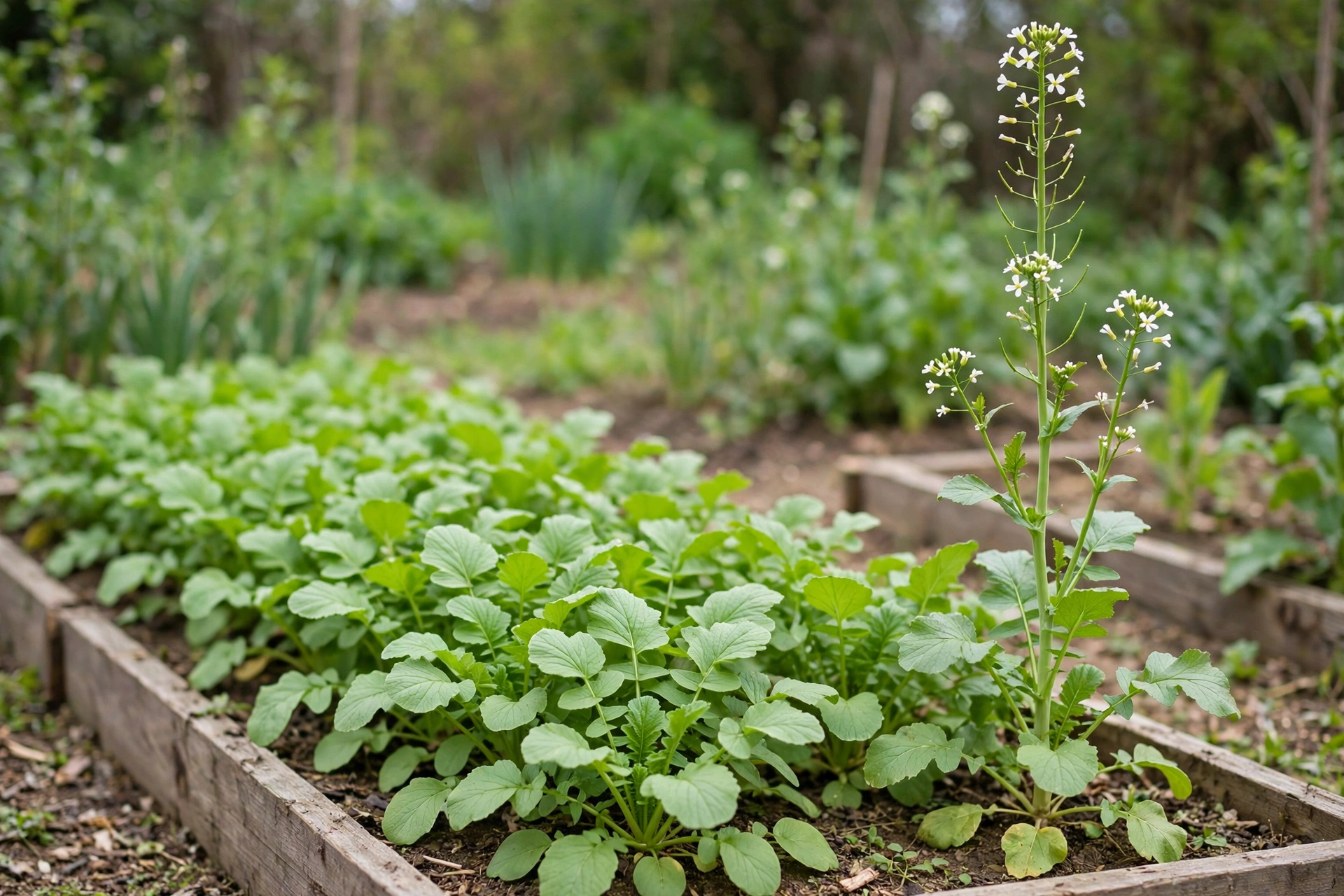
There is a particular pleasure in that thinning pass on a cool morning, the row suddenly looking tidy and intentional, each small plant with space to become something. It takes five minutes, and it is the difference between a harvest and a tangle.
Harvest: Pull Young, Pull Often
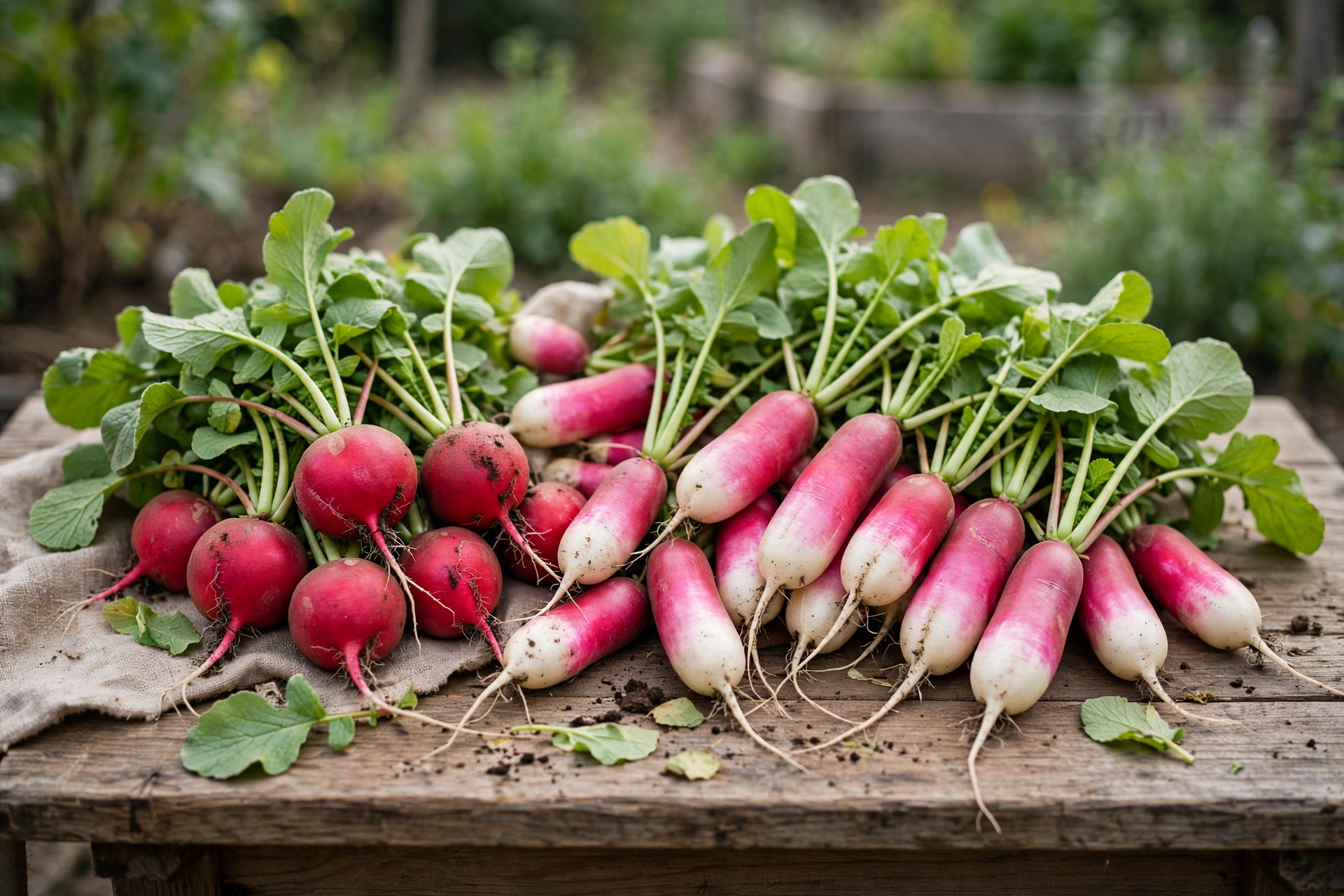
Harvest spring radishes when the root is no larger than 1½ inches across. Cherry Belle is ready in 24 days and Easter Egg Blend in 30, and both turn pithy and hot if you let them grow past their size, so check the row every day or two once shoulders start showing at the soil line.
Winter radishes run slower and store better. Miyashige White daikon and Mantanghong watermelon radish size up over a longer fall, and both keep well after harvest, which is the point of growing them: a fall sowing that feeds you in small handfuls for weeks rather than all in one weekend.
French Breakfast Radish Seeds
Delicate, elongated spring radishes gardeners rate 4.9 out of 5 — the one packet to start with.
Easter Egg Blend Radish Seeds
Red, white, pink, purple, and bi-color roots in 30 days — one packet, a whole platter of color.
Miyashige White Daikon Radish Seeds
A fall daikon that loosens clay as it grows and stores well after harvest.
What to Watch Next
Mark the next sowing date when you plant, not when you harvest, so the rhythm survives a busy week. If a row bolts or turns woody despite the schedule, the cause is usually heat, crowding, or a harvest that came a few days late — sow the next short row in cooler weather, thin it on time, and pull it young.