Landscape & Leisure is reader-supported. When you buy through links on our site, including Botanical Interests seed links, we may earn a commission at no extra cost to you. Prices change, so click through to confirm current pricing.
You pull the first radish barely a month after sowing, still cool from the soil, and suddenly the whole row feels like a promise kept. Radishes are the fastest honest crop in the garden, which is exactly why the variety matters: pick the wrong type for the season and that same row turns hot, pithy, or all leaves.
Botanical Interests carries spring radishes for quick spring and fall sowings and winter radishes that need short days and patience, and the five packets below cover both jobs. Our succession sowing and harvest guide shows how to keep a short row coming every week or two, and our guide to bolted and woody radishes explains what to change when a harvest disappoints. For radishes alongside their root-crop cousins, see our earlier roundup of the best carrot, beet, and radish varieties.
Two Kinds of Radish, Two Different Seasons

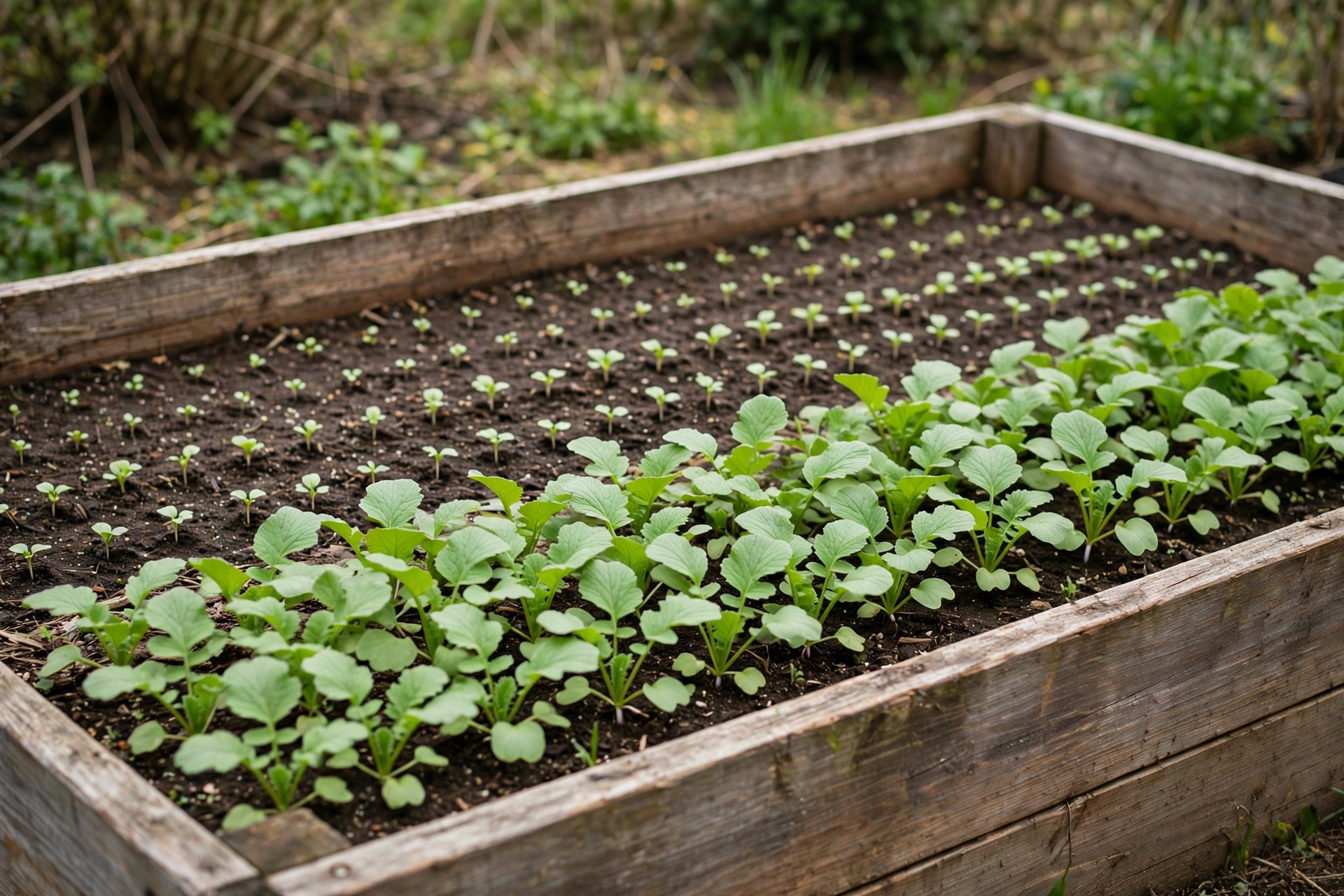
Spring radishes are the sprinters. They size up in cool spring and fall weather, most in about a month, and they want pulling young, before heat makes them sharp and hollow-hearted.
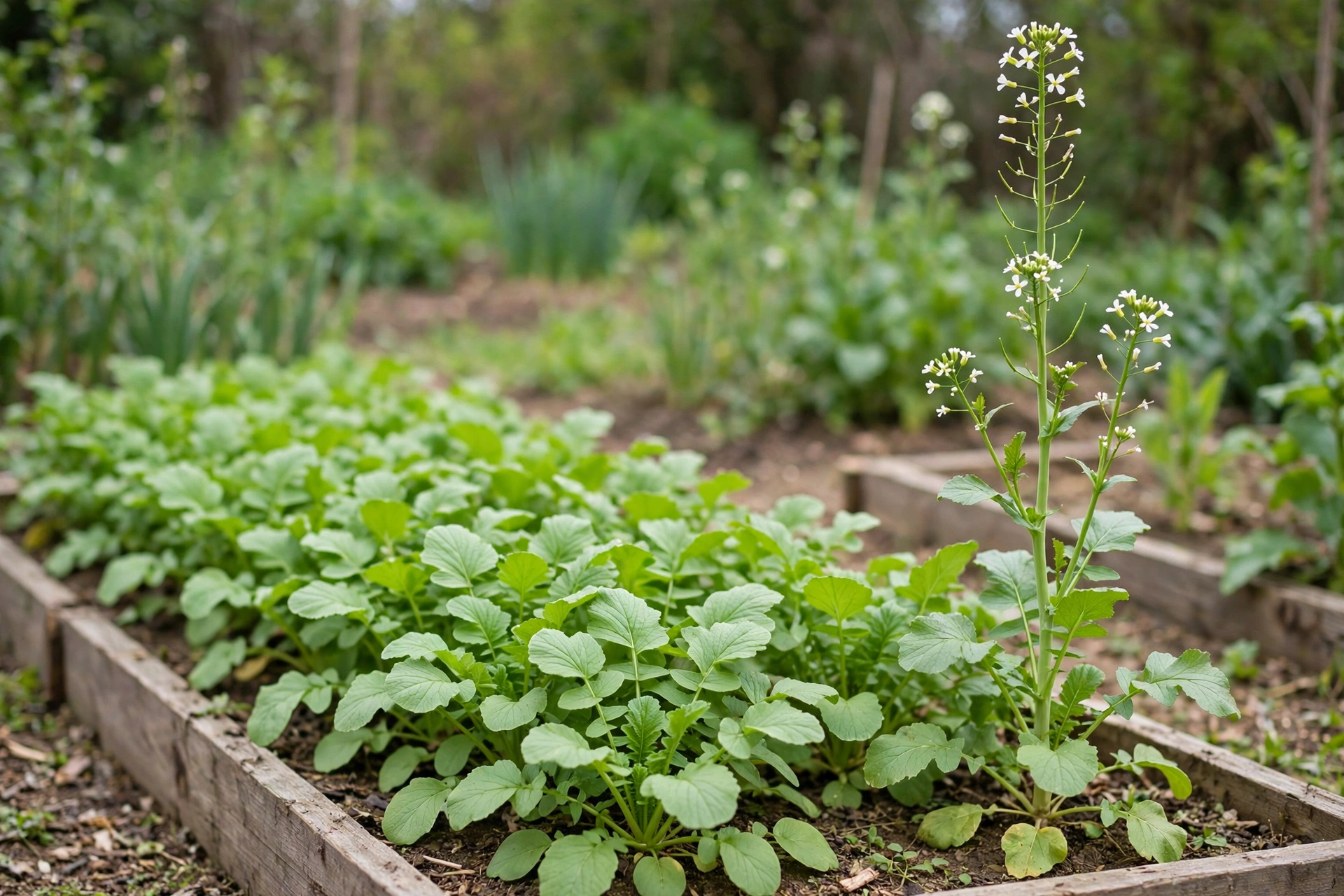
Winter radishes run the opposite schedule, because they need shortening days and cool temperatures before the root swells. Sow them in late summer or fall, give them room and time, and they repay you with big roots that store well. Plant a winter radish in April and you will mostly grow leaves and a flower stalk, which is a variety problem, not a gardener problem.
Best Overall: French Breakfast
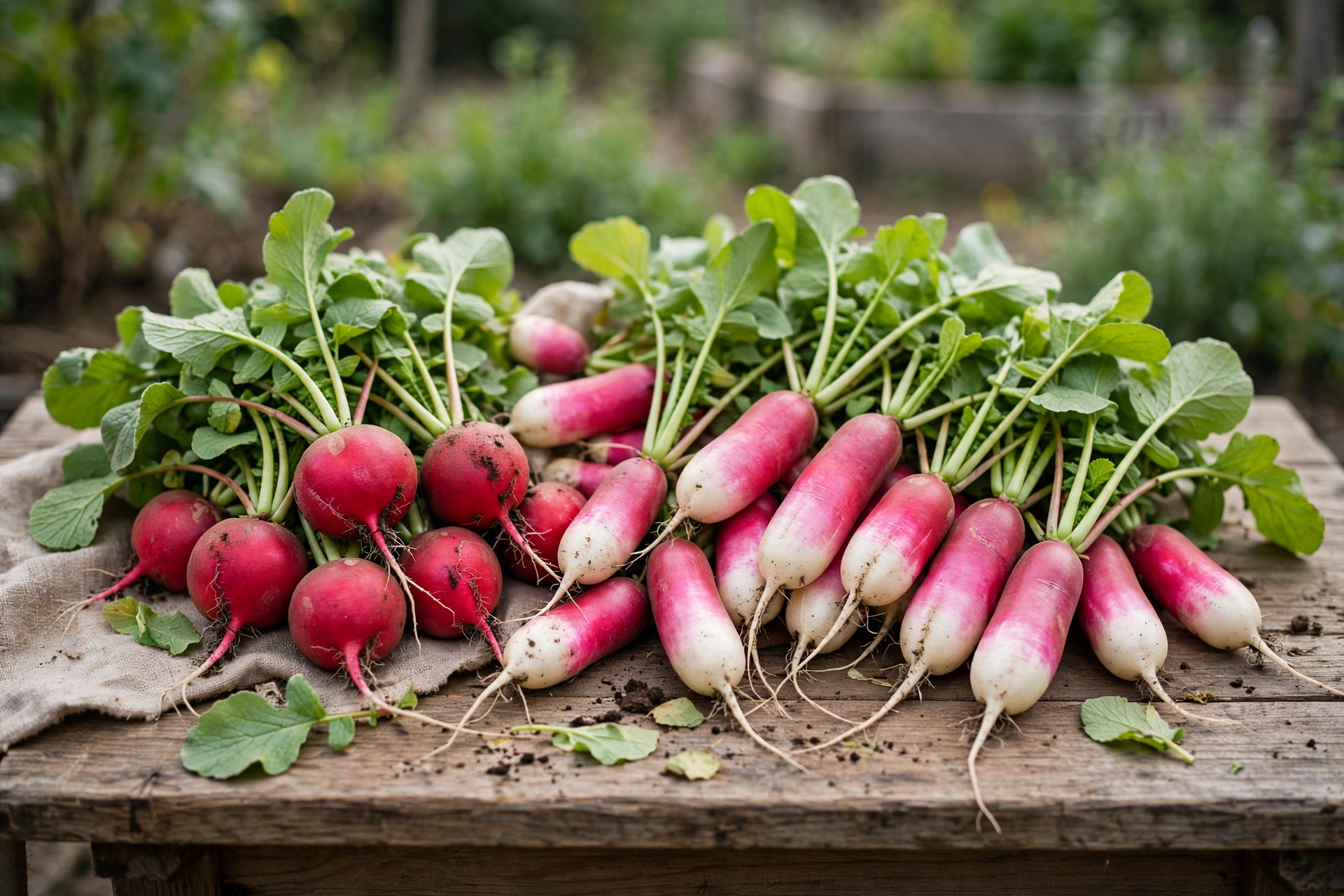
There is a reason this elongated, red-and-white spring radish has stayed in gardens for over 100 years. The flavor is delicate rather than fiery, the roots look beautiful on a vegetable platter, and the variety tolerates a little summer heat better than most spring types, which buys you a wider sowing window at both ends of the season.
Gardeners rate French Breakfast 4.9 out of 5 from 58 reviews, the strongest rating on this page, and at $3.49 it is the packet we would hand a first-time radish grower without a second thought. If you only plant one radish, plant this one.
Pros: delicate flavor; 4.9 out of 5 from 58 reviews; withstands some summer heat; handsome on a platter.
Cons: still a spring radish at heart, so midsummer sowings in hot climates will bolt; the elongated roots need a reasonably loose bed to grow straight.
French Breakfast Radish Seeds
Delicate, elongated spring radishes gardeners rate 4.9 out of 5 — the one packet to start with.
Best for Color: Easter Egg Blend
Easter Egg Blend turns one short row into a harvest-time hunt. A single packet mixes red, white, rose pink, purple, and bi-color roots, all with crisp white interiors and a mild flavor, so a bunch pulled for lunch looks like you planned a tasting.
The blend matures in 30 days and rates 4.8 out of 5 from 44 reviews at $2.69. It is a genuinely good choice for gardening with kids, because every pull is a surprise, and the roots hold the same rule as every spring radish here: harvest at 1½ inches or smaller, before they turn pithy and hot.
Pros: five colors from one packet; mild flavor; 30 days to harvest; 4.8 out of 5 from 44 reviews.
Cons: a blend means you cannot choose which color fills the row; like all spring radishes, it wants cool weather and prompt picking.
Easter Egg Blend Radish Seeds
Red, white, pink, purple, and bi-color roots in 30 days — one packet, a whole platter of color.
Fastest Harvest: Cherry Belle
Cherry Belle is the radish for the impatient, and we mean that as praise. This 1949 All-America Selections winner, a Holland heirloom with bright red skin and a firm, crisp, white interior, is ready in 24 days — the fastest variety on this page.
At $2.69, with a 4.2 out of 5 rating from 33 reviews, Cherry Belle is also the container pick, since the compact roots are happy in a deep pot on a sunny step. The one discipline it asks for is timing: pull at an inch to an inch and a half, because roots left to swell past that size can turn pithy and hot.
Pros: ready in 24 days; AAS-winning heirloom; good for containers; mild and crisp pulled young.
Cons: the lowest rating among our spring picks at 4.2 out of 5; unforgiving if you leave roots in the ground too long.
Cherry Belle Radish Seeds
Bright red, crisp, and ready in 24 days — the quickest radish here, and a natural for containers.
Best Winter Radish: Mantanghong Watermelon
Slice a Mantanghong open at the table and the room pays attention. The greenish-white exterior hides a vivid fuchsia center, and the big, round roots can reach 3 inches across and weigh up to a pound each, with a mild, sweet flavor that works raw, cooked, or pickled.
Mantanghong is a winter radish, so it plays by winter rules: sow in late summer or fall and let shortening days trigger the root. Gardeners rate it 4.4 out of 5 from 21 reviews at $3.49. The trade-off against the spring types is patience, since this one takes a good two months rather than a quick four weeks.
Pros: dramatic fuchsia interior; roots up to 3 inches and a pound each; mild, sweet flavor; stores as a winter radish should.
Cons: needs a late-summer or fall sowing and a long, cool run; heat makes it sulk and bolt rather than bulb.
Mantanghong Watermelon Radish Seeds
Pale outside, fuchsia inside — big, mild winter radishes worth the late-summer sowing.
Best for Heavy Soil and Storage: Miyashige White Daikon
Miyashige White is the working radish of the group. Its deep roots are used as a cover crop to break up heavy soils, so a fall sowing does double duty in a clay bed, and the harvested roots themselves store well and eat mild, with just a light spicy edge — shredded young for salads, or pickled and cooked when mature.
Like the other winter types, Miyashige wants shortening days and cool temperatures, so sow it after mid-summer or in fall rather than spring. It rates 4.8 out of 5 from 20 reviews at $2.99, tied for the second-strongest rating here, and it is the pick we would add to any fall bed that needs loosening.
Pros: deep roots break up heavy soil; stores well; mild flavor raw or cooked; 4.8 out of 5 from 20 reviews.
Cons: a fall crop, not a spring one; the long roots need depth, so shallow containers and rocky beds frustrate it.
Miyashige White Daikon Radish Seeds
A fall daikon that loosens clay as it grows and stores well after harvest.
The Five Picks, Side by Side
| Variety | Type | Days | Rating | Best for |
|---|---|---|---|---|
| French Breakfast | Spring | Fast spring type | 4.9/5 (58) | Flavor, first plantings |
| Easter Egg Blend | Spring | 30 days | 4.8/5 (44) | Color, kids, platters |
| Cherry Belle | Spring | 24 days | 4.2/5 (33) | Speed, containers |
| Mantanghong Watermelon | Winter | About two months | 4.4/5 (21) | Fall sowings, slicing |
| Miyashige White Daikon | Winter | Fall crop | 4.8/5 (20) | Heavy soil, storage |
One We Would Skip: Round Black Spanish
Every roundup owes you an honest pass, and ours is Round Black Spanish. It is a storied winter radish, grown in the United States since the 1800s, and it stores for long periods — but gardeners rate it just 3.3 out of 5 from 9 reviews, the lowest here by a wide margin, and a recurring complaint in those reviews is bitter skin and roots that turn hard and woody when left too long. If you want a winter radish, Mantanghong and Miyashige give you the storage without the gamble.
Bottom Line
Start with French Breakfast for spring and fall rows, add Easter Egg Blend when you want color on the plate, and sow Miyashige White in late summer if your soil needs loosening. That trio covers nearly every radish job in a home garden, and each packet costs less than a single bunch at the store.