Landscape & Leisure is reader-supported. When you buy through links on our site, including Botanical Interests seed links, we may earn a commission at no extra cost to you. Prices change, so click through to confirm current pricing.
You bite into a radish expecting snap and get sponge and heat instead, or you come back to a promising row and find flower stalks shooting up where the roots should be swelling. Both failures look like bad luck, and both have specific, fixable causes — the job is telling them apart before you sow the next row the same way.
Start with what you are seeing, match it to the likely cause below, and the fix follows from there. Our radish varieties roundup matches each variety to its right season, and our succession sowing guide gives the timing rhythm that prevents most of these faults in the first place.
Symptom 1: Plants Bolt — Flower Stalks, No Root
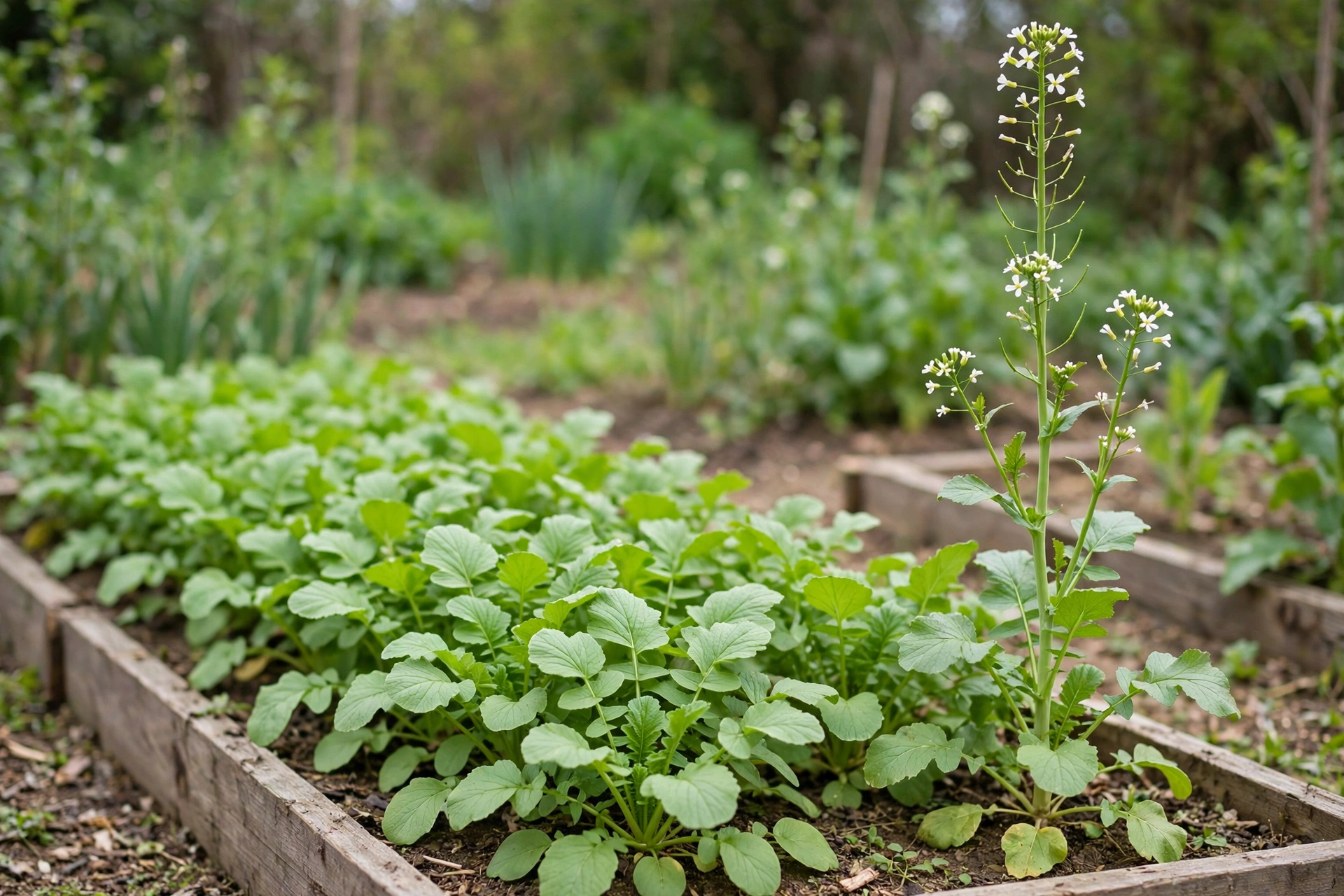
What you see: the plant sends up a tall flower stalk, the leaves turn coarse, and the root stays thin and stringy underneath.
Likely causes, ranked: heat and lengthening days are the usual trigger for spring radishes, which are built for the cool periods of spring and fall. The second cause is a season mismatch: winter radishes such as daikon and watermelon types require shortening day length and cool temperatures to form a root, so a spring sowing of a winter variety bolts almost by design.
The fix: sow spring radishes early, while the weather is still cool, and again in late summer for a fall harvest rather than pushing sowings into summer. Save winter varieties for an after-midsummer sowing. A bolted plant will not recover into a root, so pull it, compost it, and resow in the right window — radishes are fast enough that a resowing costs you weeks, not the season.
Symptom 2: Roots Are Pithy, Hot, or Woody
What you see: the root looks right from above ground, but the cut flesh is spongy or hollow, the bite is fiercely hot, or the texture turns fibrous and hard to slice.
Likely causes, ranked: a late harvest is the most common one — spring radishes left to grow larger than about 1½ inches turn pithy and hot, and winter types left far too long can turn genuinely woody, a complaint that shows up repeatedly in reviews of long-keeping winter varieties. Heat during the root’s final week runs a close second, sharpening flavor and hollowing the center, and uneven watering, with dry spells followed by a soak, makes both faults worse.
The fix: harvest on size, not on hope. Check the row every day or two once root shoulders show at the soil line, pull spring radishes at 1½ inches or smaller, and keep the bed evenly moist while roots are swelling. There is a sound a good radish makes when you bite it — a clean, wet snap — and a root that has gone spongy loses that sound before it loses its looks, so test one from each row before you pick the rest for company.
Symptom 3: All Leaves, No Root at All
What you see: lush tops, and underneath, a thin root that never swells.
Likely causes, ranked: crowding comes first, because a radish root cannot swell into space another plant is already using. Warm weather without bolting is second, since the plant puts its energy into leaves when nights stay hot, and a winter variety sown in spring produces the same picture for the day-length reason above.
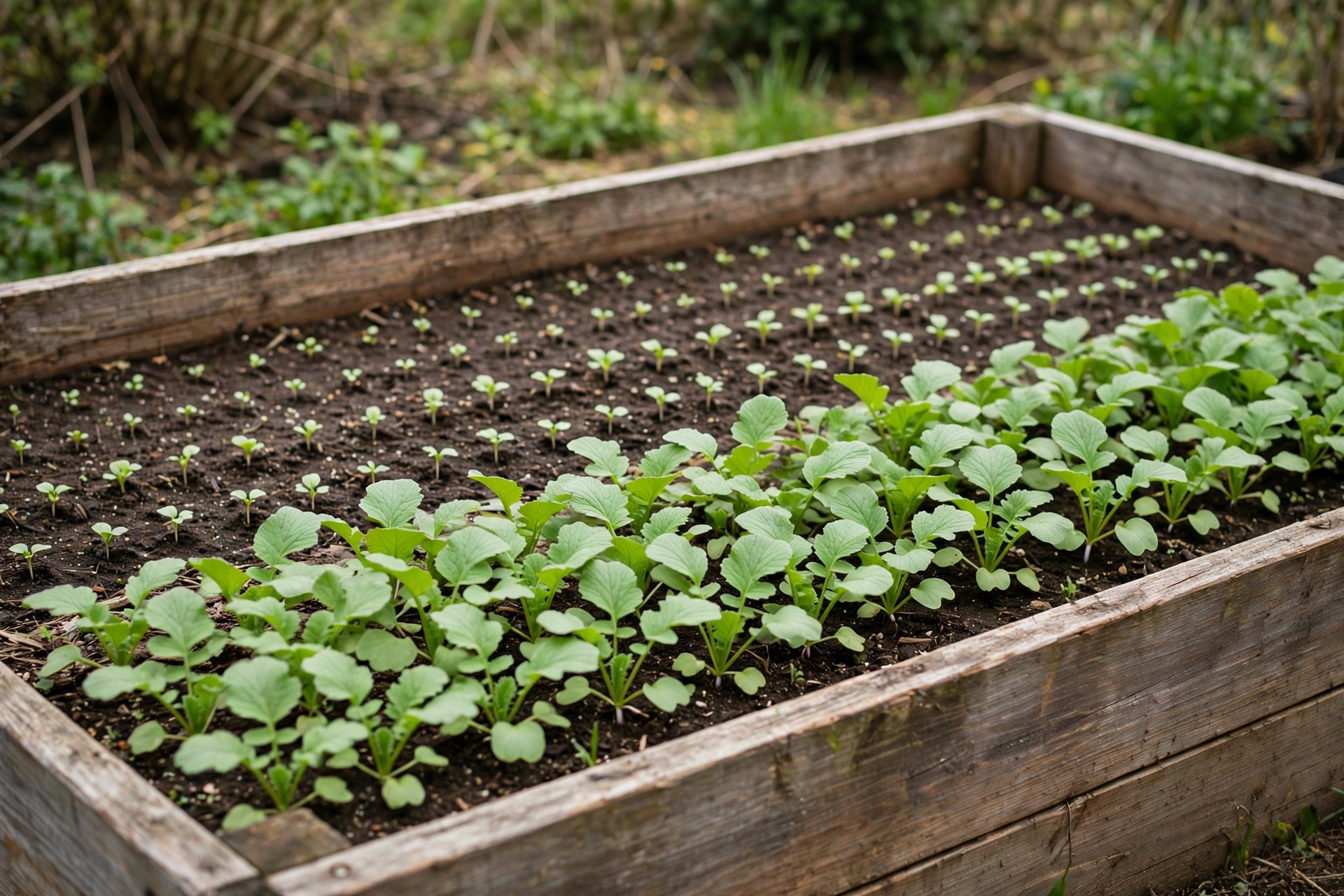
The fix: thin seedlings to 2 inches apart when they are 1 inch tall, every time, and match the variety to the sowing season before the seed goes in. If the row is young and only crowded, thinning today can still save it; if it is crowded and warm, pull it and resow thinly in cooler weather.
| Symptom | Most likely cause | Fix |
|---|---|---|
| Flower stalk, thin root | Heat, long days, or a winter variety sown in spring | Sow in cool windows; winter types after mid-summer |
| Pithy, hot, spongy flesh | Harvested too large or too late | Pull at 1½ inches or smaller; check daily |
| Woody, hard root | Left in the ground far past maturity | Harvest winter types on time; do not overwinter in the row by default |
| All leaves, no root | Crowding, then heat | Thin to 2 inches at 1 inch tall |
Three Varieties That Forgive Beginners
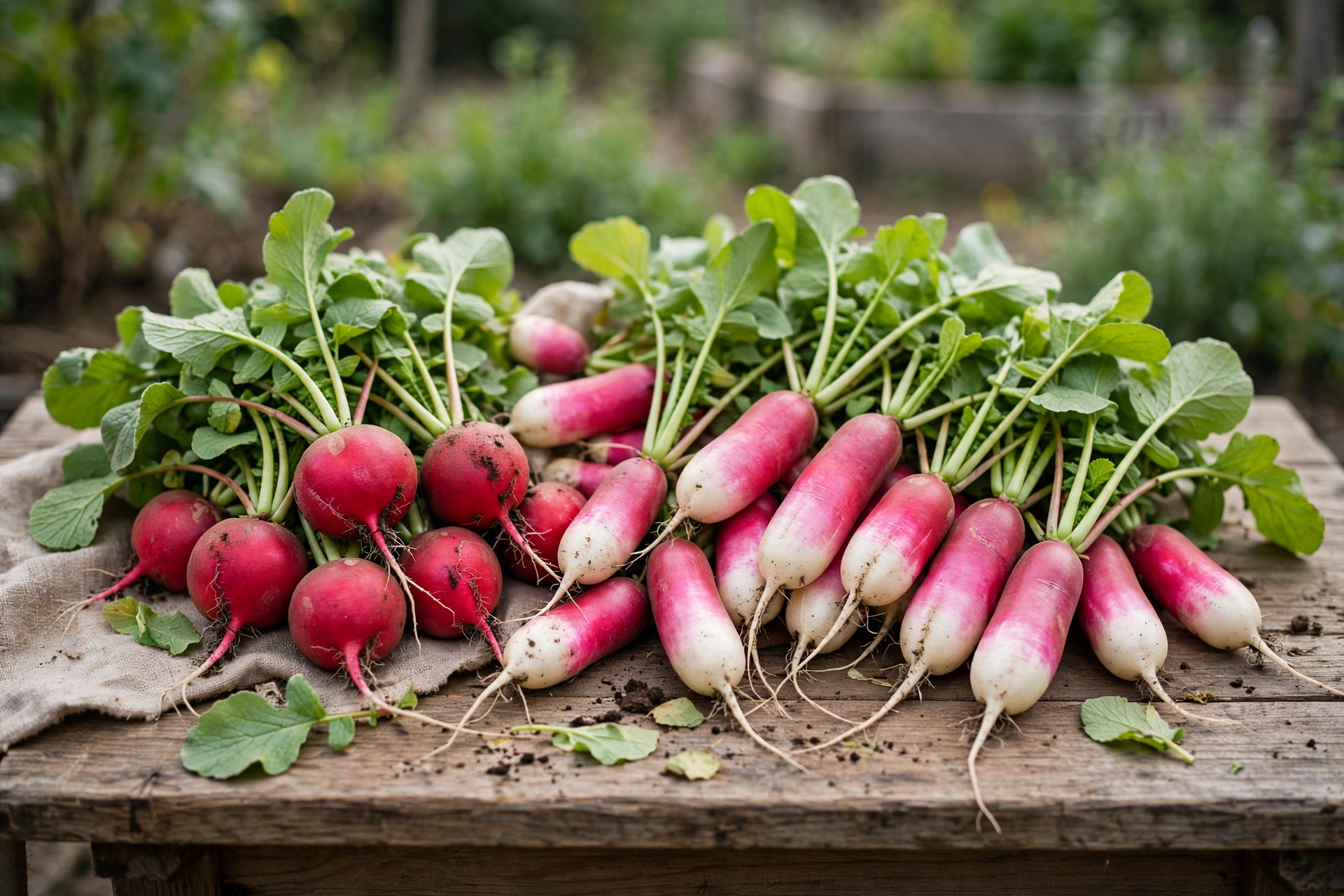
If faults keep finding you, choose varieties with a little slack in them. Cherry Belle is ready in 24 days, which shortens the window in which heat can ruin it, Easter Egg Blend gives you the same quick spring habit in a mix, and Miyashige White daikon moves the whole crop into fall, where cool weather does half the diagnostic work for you.
Cherry Belle Radish Seeds
Bright red, crisp, and ready in 24 days — the quickest radish here, and a natural for containers.
Easter Egg Blend Radish Seeds
Red, white, pink, purple, and bi-color roots in 30 days — one packet, a whole platter of color.
Miyashige White Daikon Radish Seeds
A fall daikon that loosens clay as it grows and stores well after harvest.
What Success Looks Like
A fixed row announces itself plainly: roots that swell on schedule, flesh that snaps instead of tearing, and flavor with a pleasant edge rather than a burn. Sow Cherry Belle this week in cool weather, thin it on time, and pull it at an inch — that single row, done right, teaches you more than a season of rescuing the wrong sowing.