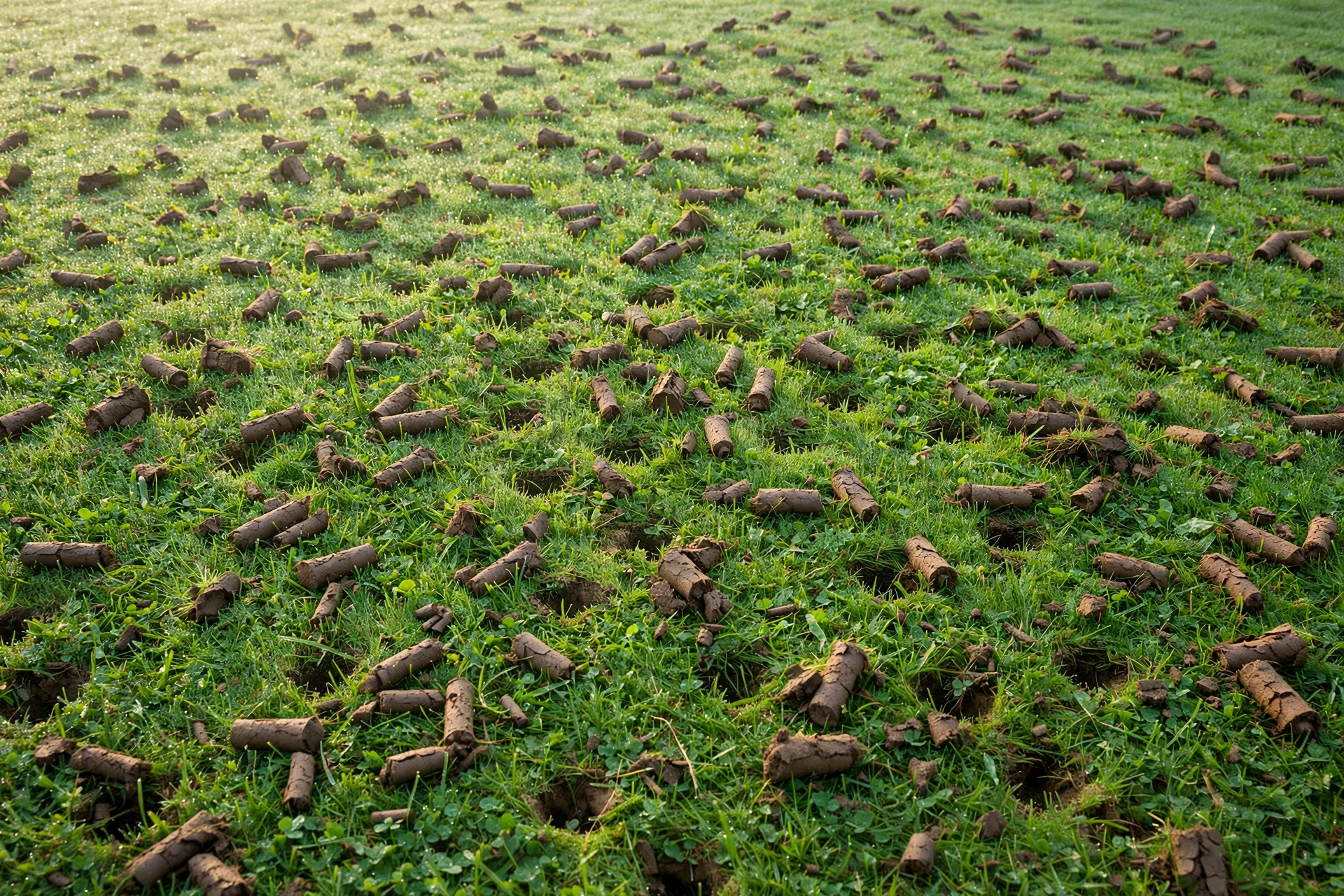
Your lawn looks like a flock of geese moved in overnight — little soil cylinders everywhere, muddy at breakfast and drying by lunch — and the urge to rake them all up before anyone sees is completely understandable and completely wrong.
Leave the plugs. Those cores are the soil your lawn was missing at the surface: they break down in one to two weeks, they carry soil microbes back into the thatch layer where those microbes help decompose it, and raking them up removes the benefit you just paid a rental fee to create. The only work the plugs ask of you is patience, plus one optional pass with the mower once they dry.
What the plugs actually do
They return soil to the surface. A core aerator pulls plugs about half to three-quarters of an inch wide and two to three inches deep. Spread across the lawn, that soil topdresses the thatch layer in exactly the places the holes opened it.
They feed thatch breakdown. Thatch persists partly because it sits above the soil, away from the microbes that would digest it. Cores put microbe-rich soil on top of thatch, and the layer thins faster in the weeks after aeration than it does on its own.
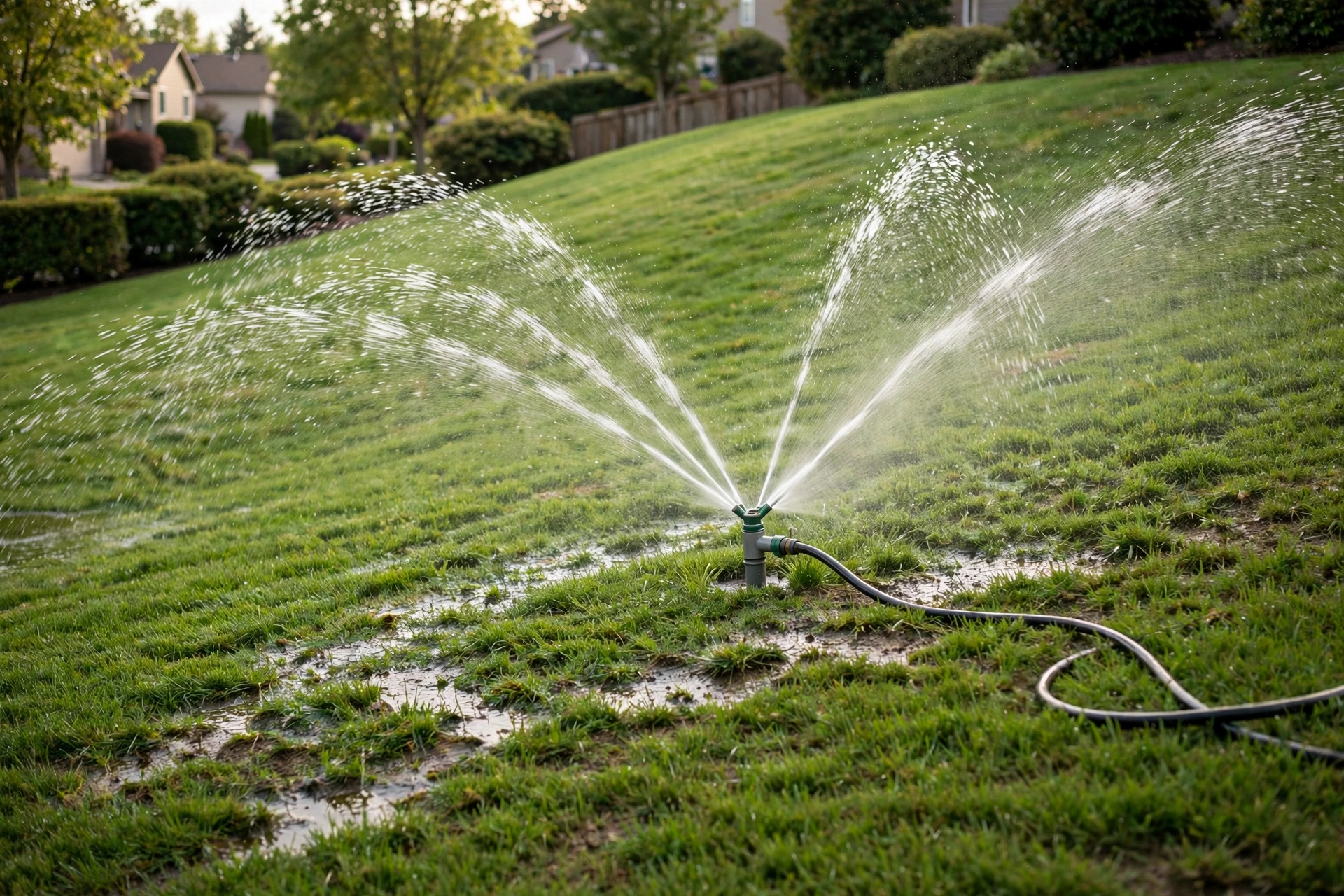
They disappear on a schedule. Rain, watering, and mowing crumble dry cores within one to two weeks. A plug that still looks intact at two weeks is usually sitting on dry, hard ground — a watering cycle softens it, and the next mow finishes it.
When breaking them up helps
Leaving plugs does not mean ignoring them. Once they have dried — a day or two of sun — running the mower over the lawn chops the cores and spreads the soil evenly, which is the fastest tidy finish that keeps the benefit. A light raking that breaks cores in place does the same job. What to avoid is raking them into piles and bagging them: that is removal wearing a tidier name.
Mid-breakdown, the lawn has a speckled look — pale soil dots on green — that reads as messy from the kitchen window and invisible from the sidewalk. It lasts days, not weeks, and it is the visible sign the aeration is finishing its work. How often this whole cycle needs repeating is covered in how often to aerate your lawn.
The exceptions
Clay plugs on a play lawn. Wet clay cores are slippery underfoot for a day. Keep play off the lawn until they dry, then mow them down — still leave the soil, just flattened sooner.
Plugs on hard surfaces. Cores that land on the driveway or sidewalk do no good there. Sweep those back onto the lawn rather than into the street, and the soil ends up where it belongs.
Bottom line
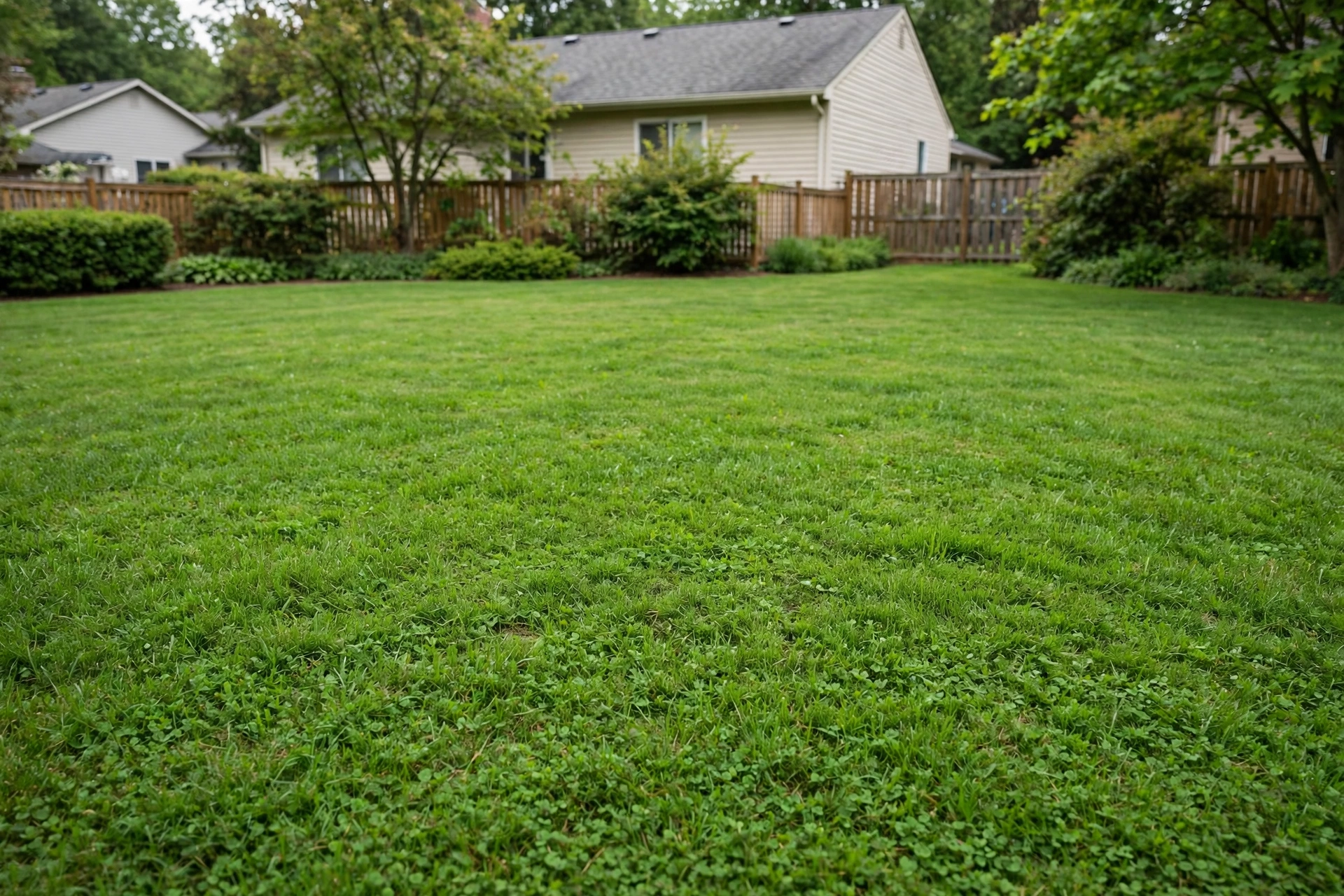
Leave the plugs, let them dry, and mow over what remains. The cores are not debris from the job — they are the second half of the job, and a lawn raked clean the same day got only half the aeration you paid for.