When the lawn starts shedding water instead of drinking it — rain pooling on the surface, footprints that linger, grass that thins in the same worn paths every year — the calendar question is rarely whether to aerate, it is how often the job actually needs doing.
For most home lawns, core aeration once a year is the working answer. Lawns on sandy or loamy soil with light traffic can go every two to three years, while clay soil and heavy use push the answer back to every year, and the timing matters as much as the frequency: early fall for cool-season grass, late spring to early summer for warm-season grass, always while the grass is actively growing so it can recover.
How often to aerate, by lawn
| Your lawn | Aerate | Why |
|---|---|---|
| Clay soil, heavy traffic | Once a year | Clay compacts fast, and traffic recompacts it every season |
| Average loam, normal use | Once a year to every 2 years | Compaction builds slowly; test before you rent |
| Sandy soil, light traffic | Every 2 to 3 years | Sand resists compaction; aerate the worn areas only |
| Thatch over 1/2 inch | Once a year until it thins | Cores and the soil they bring up help thatch break down |
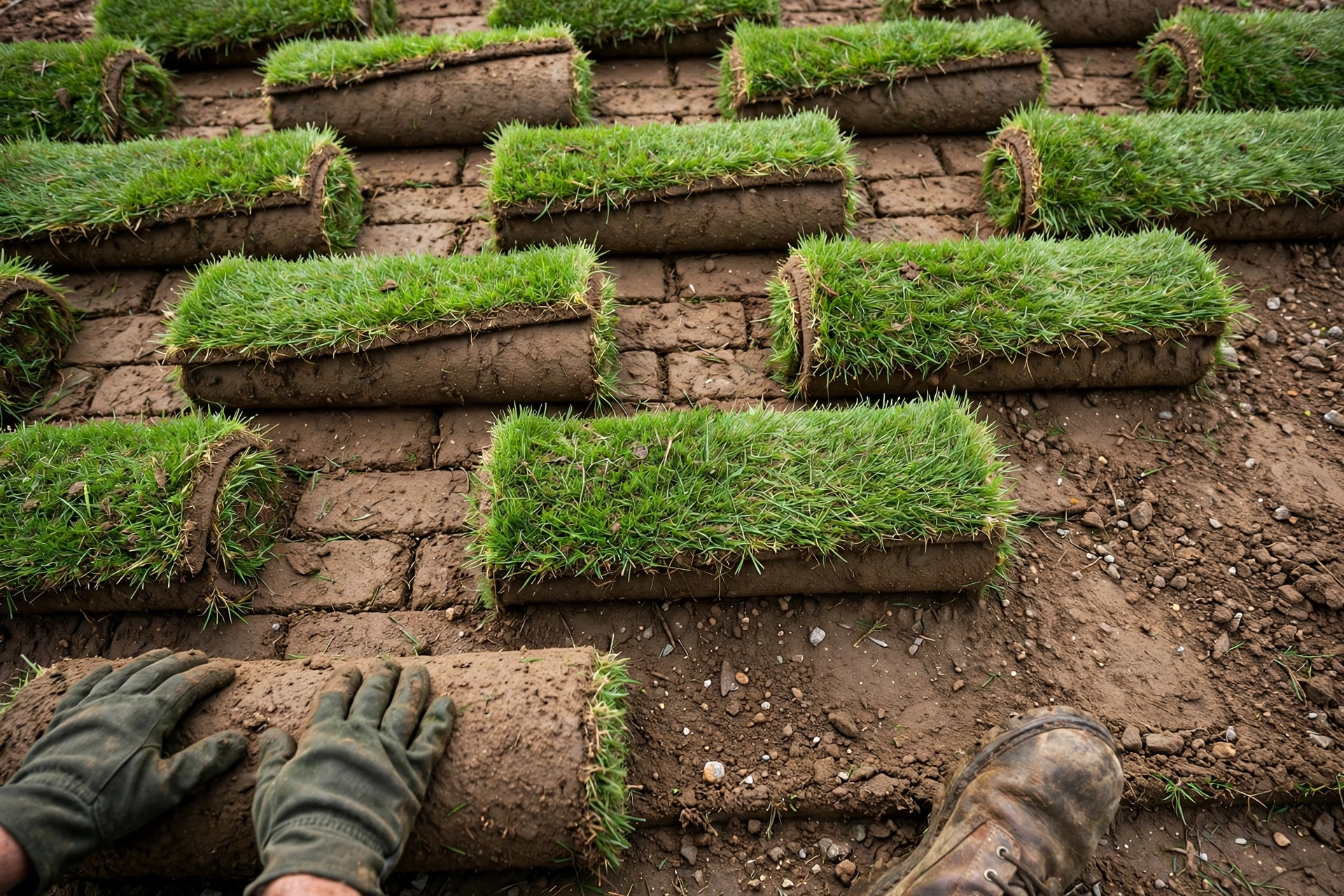
| New lawn | Wait at least one full growing season | Young roots need to knit before tines pull cores |
Signs your lawn is due now
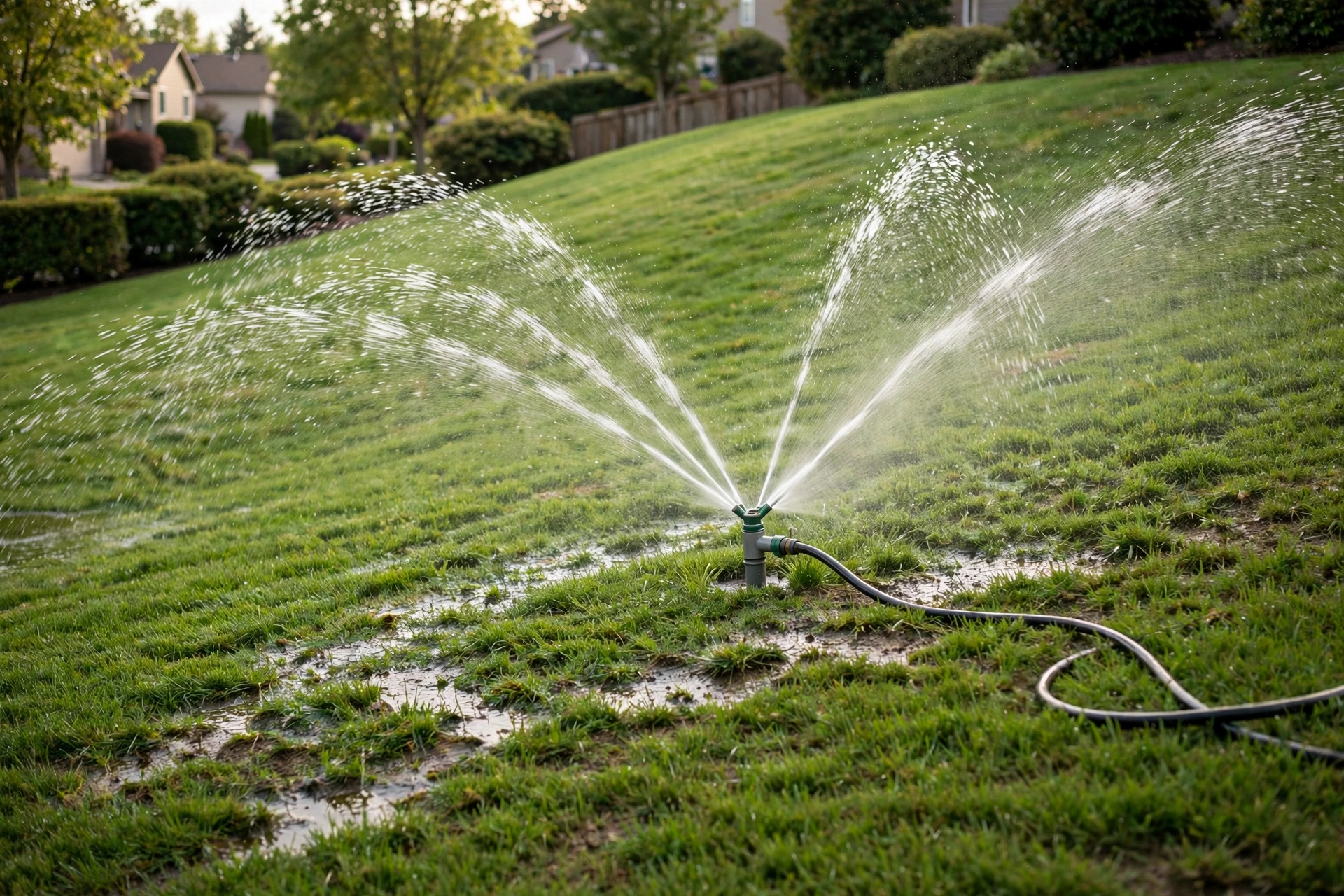
Water runs off or pools. When a sprinkler cycle leaves puddles on the surface while the soil two inches down stays dry, the top layer has sealed. That is compaction you can see.
The screwdriver test fails. Push a screwdriver into moist soil. If it slides in easily, compaction is not your problem yet. If you have to force it, the lawn is due — this simple test is more honest than any calendar.
Thatch passes half an inch. Cut a small wedge and measure the spongy layer between grass and soil. Past half an inch, water and fertilizer sit in thatch instead of reaching roots, and aeration belongs on this year’s list. Our diagnostic guide to telling whether your lawn needs aerating walks through each sign in order.
When in the year
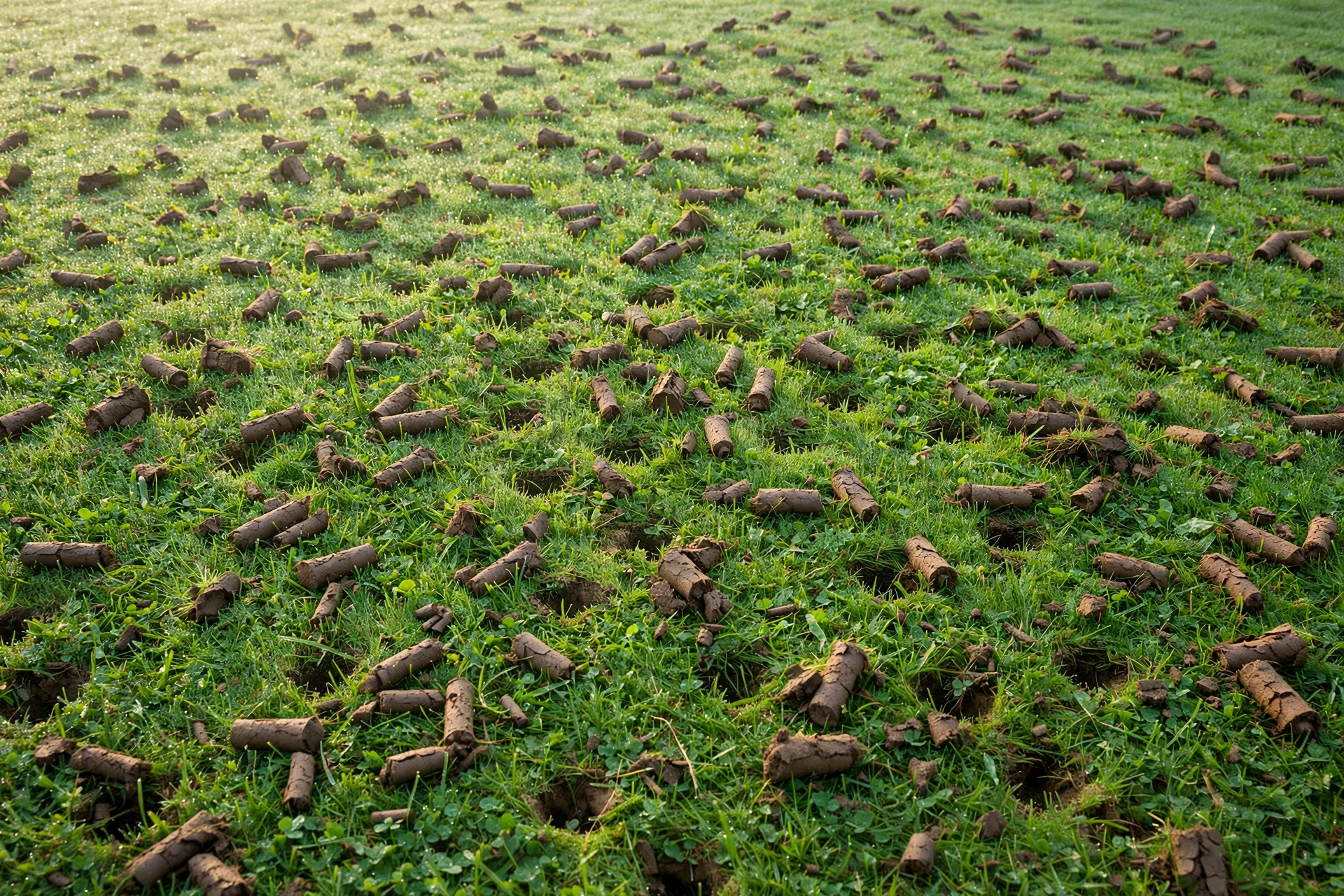
Aerate when grass can grow into the holes. Cool-season lawns do that best in early fall, with spring as the second window. Warm-season lawns do it in late spring and early summer. Aerating into summer heat or winter dormancy opens the lawn at exactly the moment it cannot close itself, so frequency counted in years only works when the one time you pick is the right season. What you do with the cores afterward is its own question — see whether to pick up aeration plugs.
Can you aerate too often?
Yes, in the sense that extra passes buy nothing. A lawn that passes the screwdriver test gains no measurable benefit from a second aeration in the same year, and every pass stresses turf and brings weed seed to the surface. Aeration is a response to compaction, not a ritual — the lawns that need it yearly are the ones life compacts yearly, with kids, dogs, and clay doing the work.
Bottom line
Once a year for clay and busy lawns, every two to three years for sandy, quiet ones, and always in the grass’s growing season. Test with a screwdriver before you rent the machine, and let the soil — not habit — set your schedule.