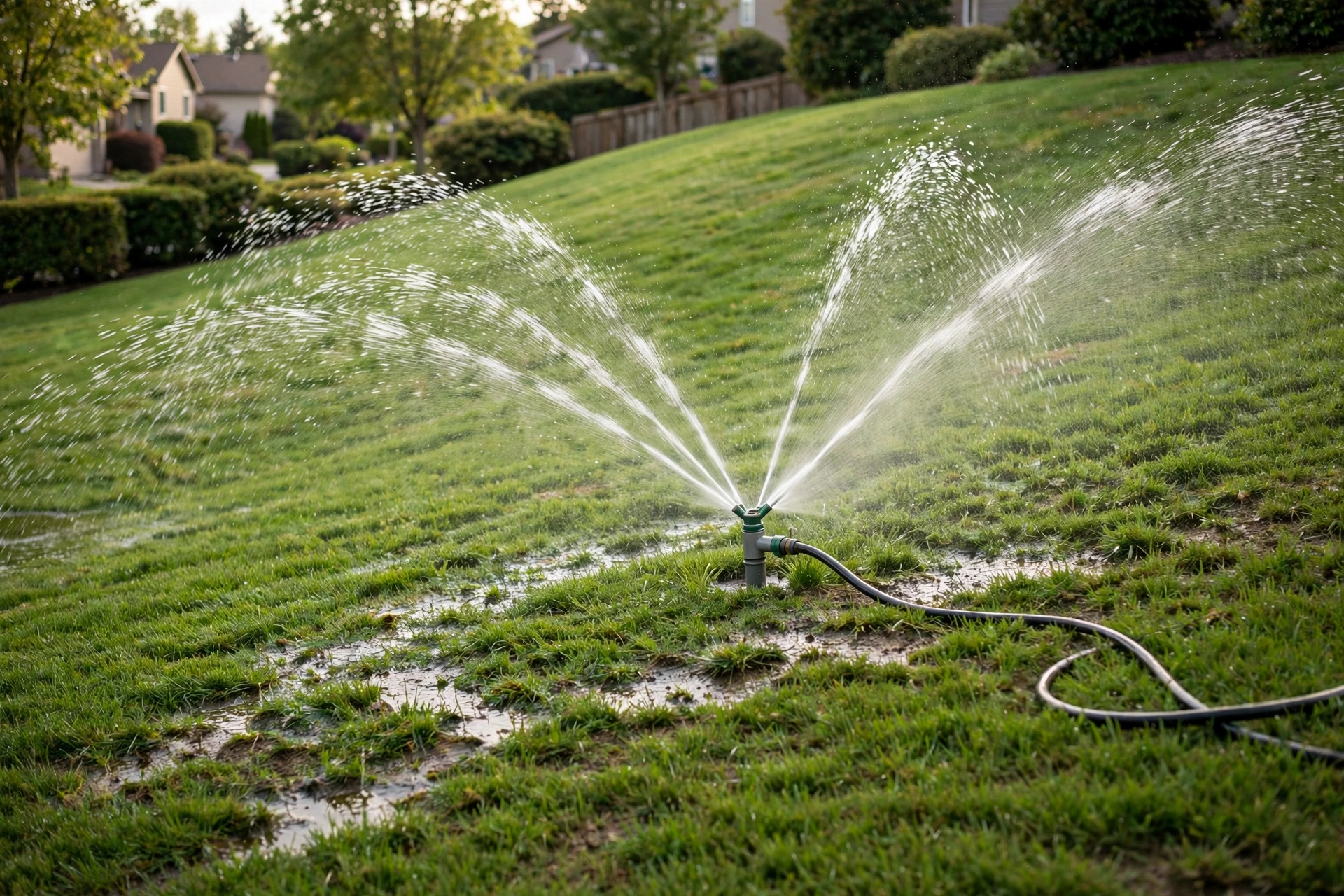
The top of the slope stays pale and thirsty while water sheets past it, pools at the bottom, and runs a clear little river out to the sidewalk — same sprinkler, same minutes, and the hill gets almost none of it.
Water runs off a slope because it arrives faster than soil can absorb it, and slope gives the excess somewhere to go. The fix is not more water, which only feeds the runoff. The fix is slower water, in shorter drinks, with rests between them — a method called cycle and soak — plus a few changes that help a slope hold what it receives.
Cycle and soak, step by step
1. Cut one long run into short cycles. Instead of one 30-minute watering, run three 10-minute cycles. On a steep slope or clay soil, go shorter still — five or six minutes a cycle is a sensible starting point.
2. Rest 30 to 60 minutes between cycles. The pause is the method. It lets each drink move down into the soil before the next one arrives, so water goes into the root zone instead of across the surface.
3. Watch the first cycle. Note the minute when water first starts to sheet or run. Next time, end each cycle a minute or two before that point. Your slope just told you its absorption speed, and that number beats any general chart.
4. Water in the morning. Morning watering loses less to evaporation and gives the surface the day to dry, which matters on slopes where evening water lingers at the bottom and invites disease in the wettest strip.
Why slopes shed water
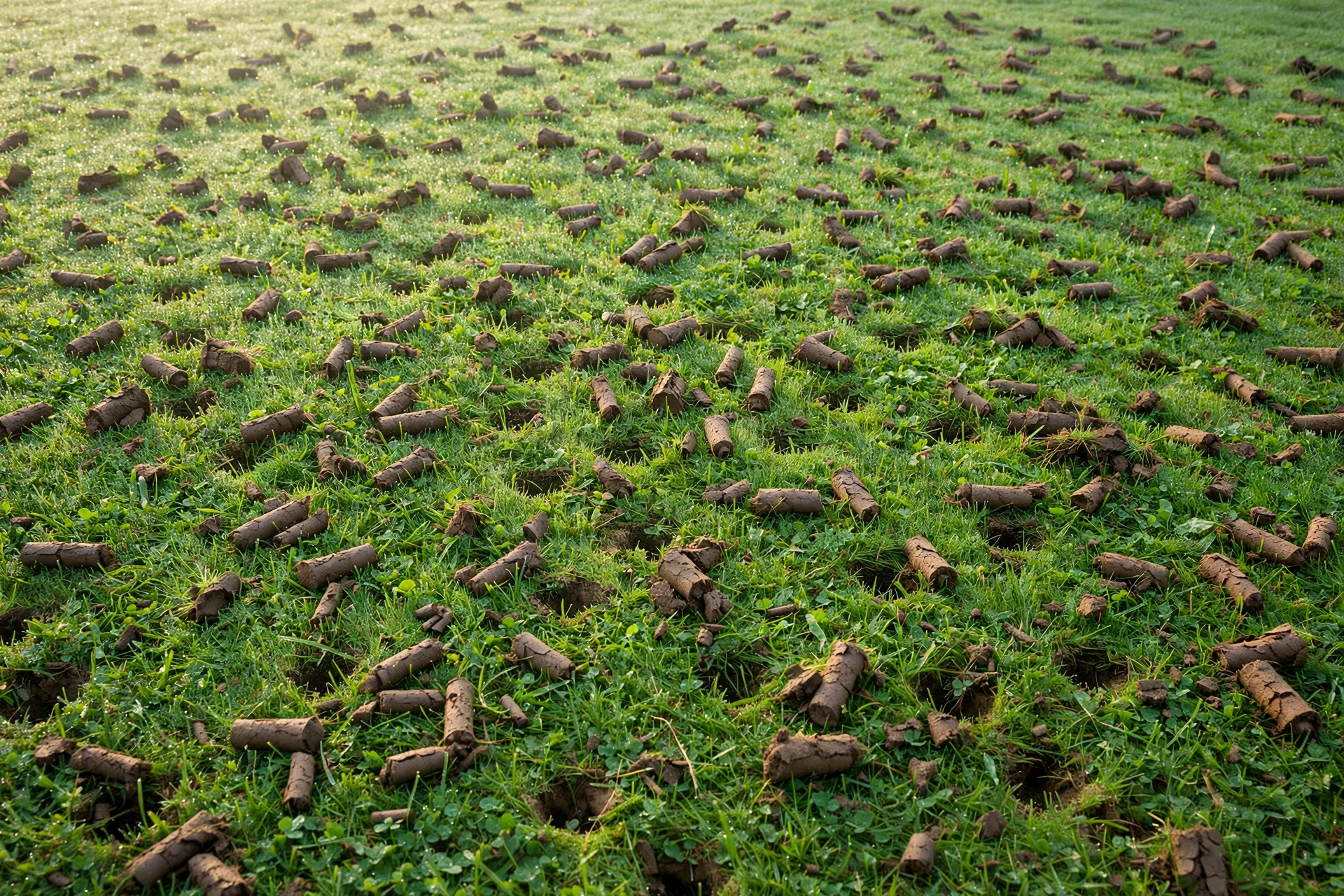
Soil absorbs water at a limited rate — roughly half an inch per hour for clay, about an inch per hour for loam, and faster for sand — while common spray heads apply water faster than that. On flat ground the excess puddles and eventually soaks in. On a slope it leaves. Compaction makes it worse, because slopes erode and pack at the surface over time, which is why aerating a slope helps its watering as much as its grass; see how often to aerate for the schedule.
Halfway through a cycle-and-soak morning, the change is visible: the bottom of the slope stays damp instead of flooded, and the top finally darkens with moisture instead of watching the water go by. That darkening at the top is the sign the method is working.
Changes that help a slope hold water
Choose slower heads. Rotary nozzles apply water more slowly than fixed sprays, narrowing the gap between application and absorption. On a slope zone, that single swap can end runoff without changing the schedule at all.
Run soaker lines across, not down. For beds and narrow sloped strips, a soaker hose laid across the slope releases water slowly along its length instead of sending it downhill in a channel.
Build organic matter over time. Topdressing and leaving plugs after aeration raise how much water the surface layer holds between waterings, so each cycle starts from a less desperate place.
Bottom line
Short cycles, real rests, morning timing, and slower heads — that combination gets water into a slope instead of past it. Water the hill the way it can drink, and the pale top and the flooded bottom meet in the middle within a few weeks.