Landscape & Leisure is reader-supported. When you buy through links on our site, including Botanical Interests seed links, we may earn a commission at no extra cost to you. Prices change, so click through to confirm current pricing.
Four packets on the potting bench, and every one of them shows the same glossy green leaves — the difference is hiding underneath, in the stems. One grows broad white stalks thick enough to cook like celery, one lights up the row in pink and orange, and one keeps its mild flavor long after the summer heat has turned other greens bitter, so the packet you pick decides what lands in your pan all season.
The four packets below cover the real jobs: a white-stemmed workhorse for steady harvests, a rainbow mix for gardeners who want color they can eat, a thin-stemmed Italian heirloom that shrugs off hot weather, and a fast mix for baby greens. Our growing Swiss chard guide covers the sowing, thinning, and cut-and-come-again harvest that get any of them to size, and our bolting and bitterness FAQ explains what to do when a plant sends up a stalk or the leaves turn sharp. If chard is sharing the bed with other leafy greens, our spinach vs. kale vs. chard comparison settles which green earns which corner.
Start with the Stems, Not the Leaves

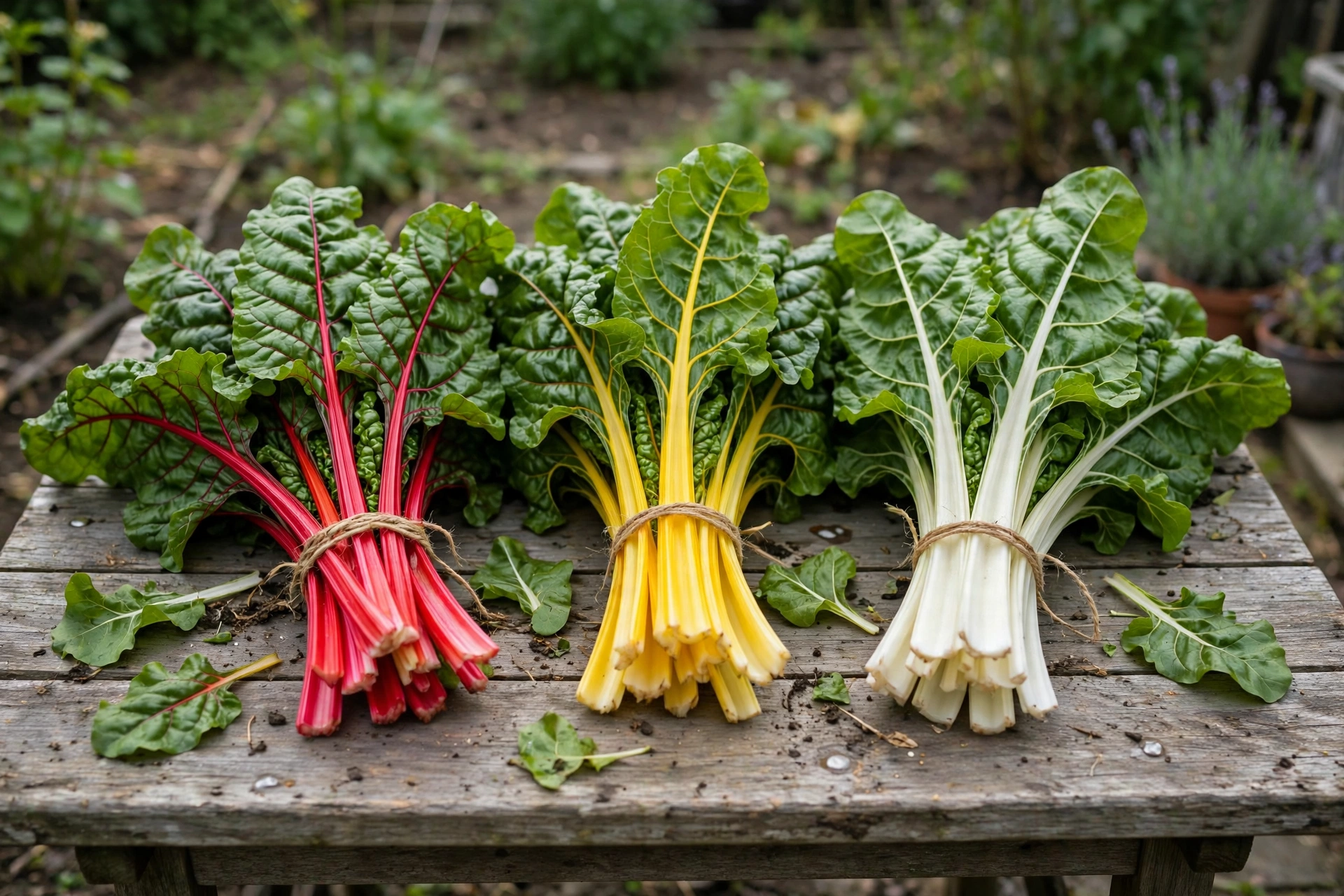
Chard leaves all read as some shade of green, so gardeners choose by stem, and the stem tells you more than color. White-stemmed types are the steady producers, generally more bolt tolerant and more cold tolerant than the colored types. Colored stems — red, pink, orange, yellow, gold — cook up exactly like the white ones, and they make a bed pretty enough to plant where the neighbors can see it.
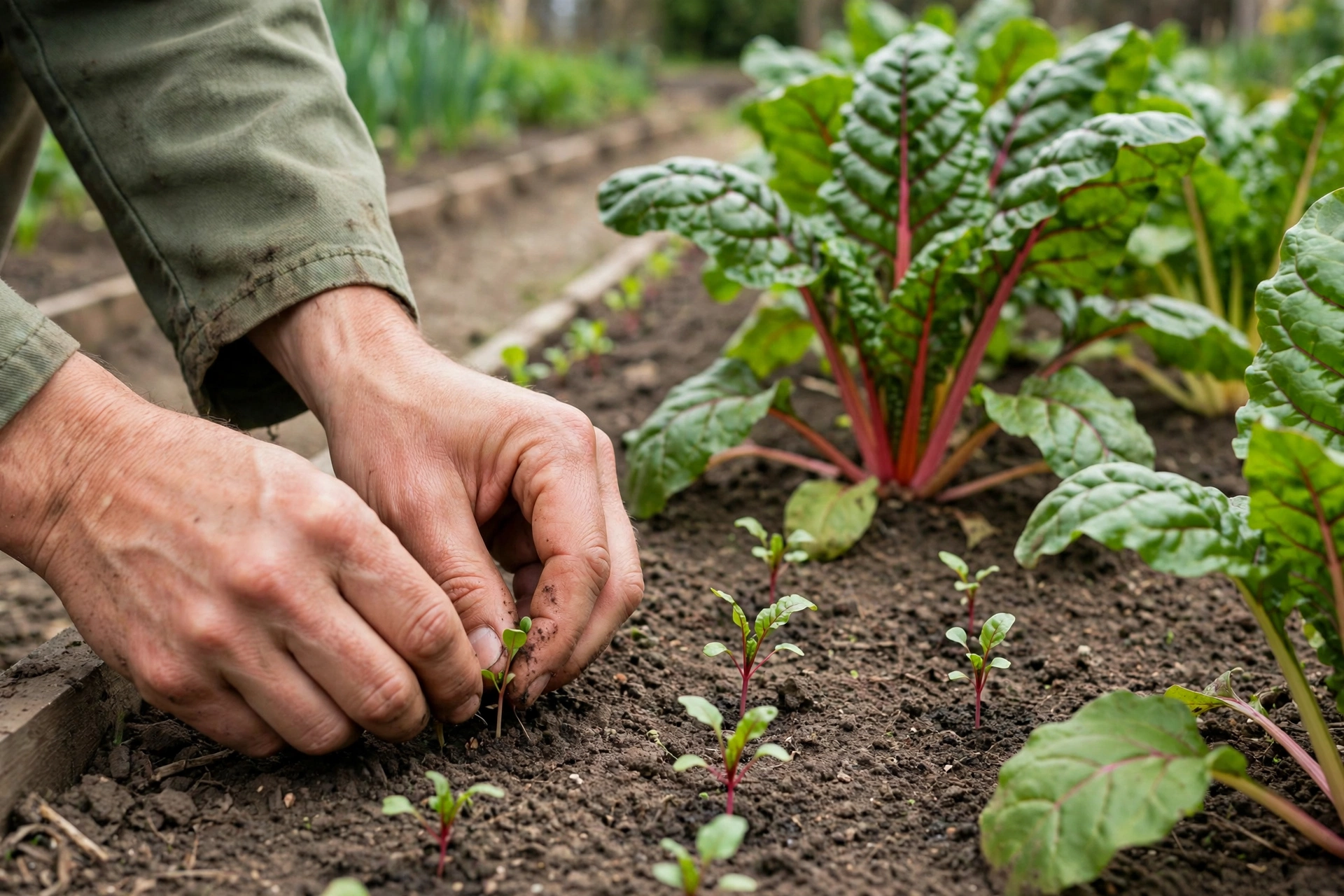
Every variety here shares the same basic manners, which makes choosing easier. All of them sow a half inch deep, germinate in 5 to 10 days, and want a group of 2 seeds every 8 inches in rows 18 inches apart, thinned to one plant every 8 inches once the seedlings stand a half inch tall. All of them grow 12 to 24 inches tall, tolerate frost, and take full sun to part shade. Pick the stem you want to cook with, and the growing takes care of itself.
Best Overall: Fordhook Giant Swiss Chard
If you plant one chard, plant this one. Fordhook Giant is an old favorite with large, glossy, dark green, deeply crumpled leaves on broad white stalks, and it is built for gardeners who want a row that produces from early summer into fall without fuss — and year-round where winters are mild.
The numbers back that up. Fordhook Giant matures in 50 to 60 days, one packet sows up to 46 feet of row, and the packet costs $2.99, the longest row for the least money on this page. Gardeners rate it 4.6 out of 5 from 9 reviews, and because white-stemmed chards are generally more bolt and cold tolerant and more productive than colored types, this is the variety least likely to quit on you in a hot spell or a cold snap. The thick stalks cook separately like celery, while the young leaves go straight into salads.
Pros: matures in 50 to 60 days; one packet sows up to 46 feet; broad stalks cook like celery; white-stemmed bolt and cold tolerance; $2.99.
Cons: plain white stems, if you garden for color; only 9 reviews behind its rating, the smallest base among our full picks.
Fordhook Giant Swiss Chard Seeds
The white-stemmed workhorse — big crumpled leaves, 46 feet of row from one $2.99 packet.
Best for Color: Celebration Swiss Chard
Celebration is the chard that earns a spot in the flower bed. Red, magenta, orange, pink, yellow, and white stems hold up glossy, dark green leaves, and this newer selection was bred for deeper colors with less white in the mix, so a row reads as a rainbow rather than a suggestion of one.
It grows like a proper vegetable while it shows off. Celebration matures in 55 days, grows 12 to 24 inches tall, works in large containers, and rates 4.8 out of 5 from 17 reviews — the strongest rating here with a real review base behind it. The packet holds about 43 seeds and sows up to 15 feet for $4.99, which makes it the priciest pick on this page per foot of row. You are paying for the color show, and on a patio or in a front-yard bed, that show is the whole point.
Pros: six stem colors on uniform plants; 4.8 out of 5 from 17 reviews; good for large containers; harvest all summer or cut as baby greens.
Cons: $4.99 sows only about 15 feet, the shortest row here; colored stems are generally less bolt tolerant than white-stemmed types.
Celebration Swiss Chard Seeds
Red, magenta, orange, pink, yellow, and white stems under glossy leaves — color you can eat.
Best for Warm Climates: Perpetual Spinach Swiss Chard
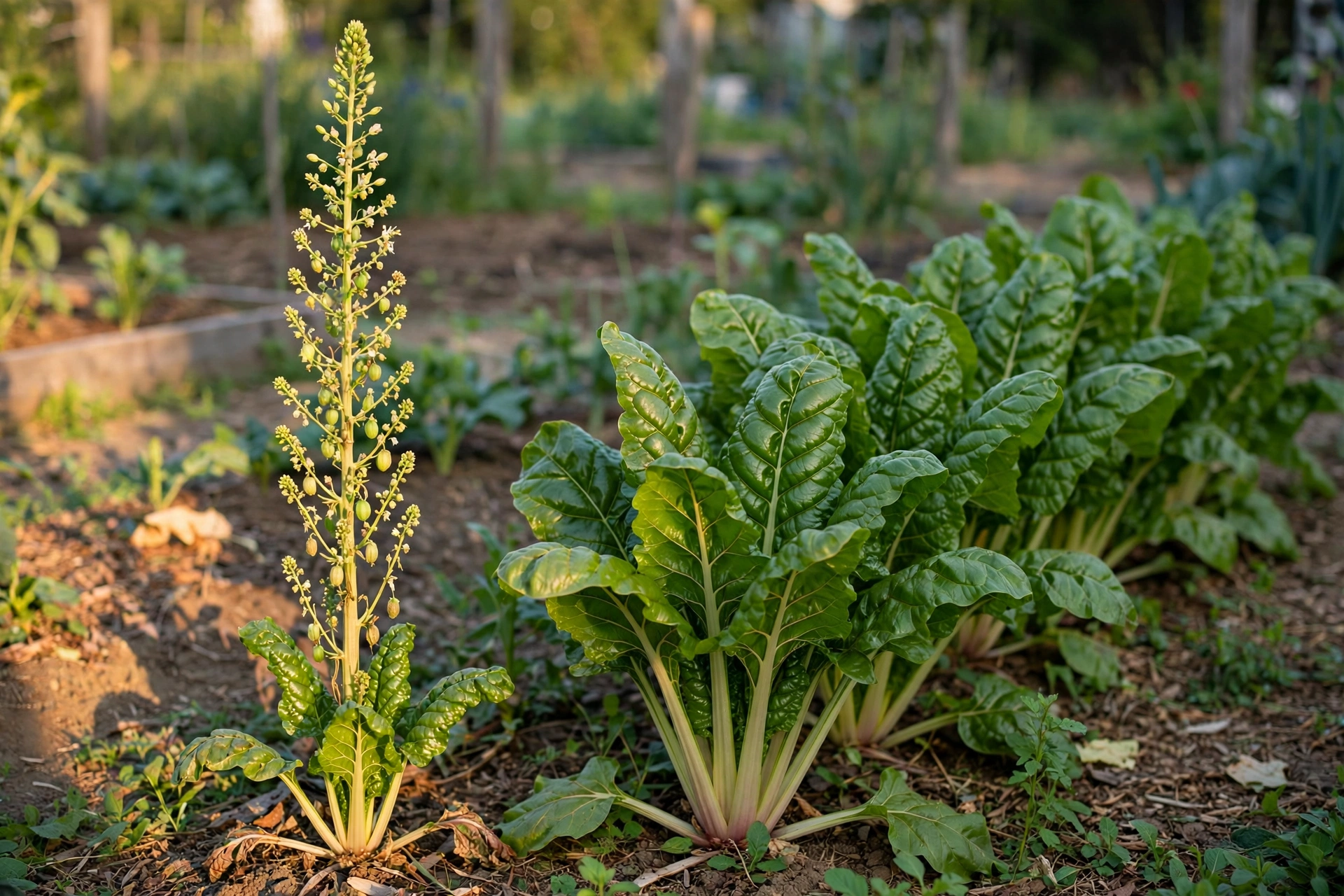
First, the name, because it confuses everyone: Perpetual Spinach is not spinach. It is an old Italian heirloom chard, also known as Bietola a Costa Fine — chard with thin ribs — and those thin, bright green stems are exactly what make it pleasant to cook, since there is almost no thick stalk to trim away.
Its real gift is patience in the heat. Perpetual Spinach is slower to bolt in hot weather than other chards, which makes it the pick for warmer climates and for any gardener whose spring greens quit by July. The flavor is mild and the texture tender, it eats well as baby greens and at full size, and gardeners rate it 4.5 out of 5 from 6 reviews at $2.69. The honest trade-off is that thin-ribbed leaf: if you love cooking the thick stalks as a vegetable of their own, Fordhook Giant gives you more stalk to work with.
Pros: slower to bolt in hot weather; mild flavor and tender texture; thin stems need almost no trimming; good as baby greens and full size; $2.69.
Cons: thin stems, if you cook the stalks as their own dish; only 6 reviews behind its rating.
Perpetual Spinach Swiss Chard Seeds
A thin-ribbed Italian heirloom chard that is slower to bolt when the weather turns hot.
Best for Baby Greens: Five Color Silverbeet Swiss Chard
Five Color Silverbeet is the sprinter of the group. Its tall, wide, fan-like crinkled leaves can be cut as tender baby greens in as little as 20 days, and the thick, crunchy stalks come in yellow, gold, orange, pink, crimson, or white, sometimes streaked with color on a single stem.
Left to size up, plants mature across a 20 to 60 day window, one packet sows up to 30 feet, and the price is $3.49. Gardeners rate it 4.4 out of 5 from 23 reviews — the lowest rating among our full picks, though also the largest review base here, and 4.4 is a respectable score for a mix. Sow it where you want an early cut while the slower varieties size up, and let a few plants grow on for full-size leaves and those crunchy stalks.
Pros: baby greens in as little as 20 days; thick, crunchy, multicolored stalks; one packet sows up to 30 feet; 23 reviews behind its rating.
Cons: 4.4 out of 5 is the lowest rating among our full picks; the color mix varies, so a single-color row is not guaranteed.
Five Color Silverbeet Swiss Chard Seeds
Baby greens in as little as 20 days, then thick crunchy stalks in five colors.
The Four Picks, Side by Side
| Variety | Stems | Days | Rating | Best for |
|---|---|---|---|---|
| Fordhook Giant | Broad white | 50–60 days | 4.6/5 (9) | All-round harvests |
| Celebration | Red, magenta, orange, pink, yellow, white | 55 days | 4.8/5 (17) | Color, containers |
| Perpetual Spinach | Thin green ribs | Baby greens early; slow to bolt | 4.5/5 (6) | Warm climates |
| Five Color Silverbeet | Yellow, gold, orange, pink, crimson, white | 20–60 days | 4.4/5 (23) | Baby greens |
One to Wait On: Ruby Red Rhubarb Chard
A name needs clearing up before anything else, because Ruby Red Rhubarb chard is not rhubarb. It is Beta vulgaris, a true Swiss chard with dark green crinkled leaves and red veins and stalks — true rhubarb is a different plant entirely, grown from crowns for its tart stalks, and no part of this chard substitutes for it in a pie.
The variety itself is a good one on paper: an 1850s vigorous grower, ready in 50 to 60 days, rated 5.0 out of 5 — from just 5 reviews, which is a small base to trust — and a good container plant at $2.99. It is out of stock right now, though, so it gets no card here. Plant Fordhook Giant for the harvest and Celebration for the color this season, and give Ruby Red a look when its packet is back on the shelf.
Bottom Line
Plant Fordhook Giant first — it gives you the longest row, the thickest stalks, and the steadiest harvest for $2.99. Add Celebration where the bed shows from the patio, Perpetual Spinach where summers run hot, and Five Color Silverbeet when you want baby greens on the table in three weeks. That ordering spends your seed money where the harvest is longest and the ratings hold up.